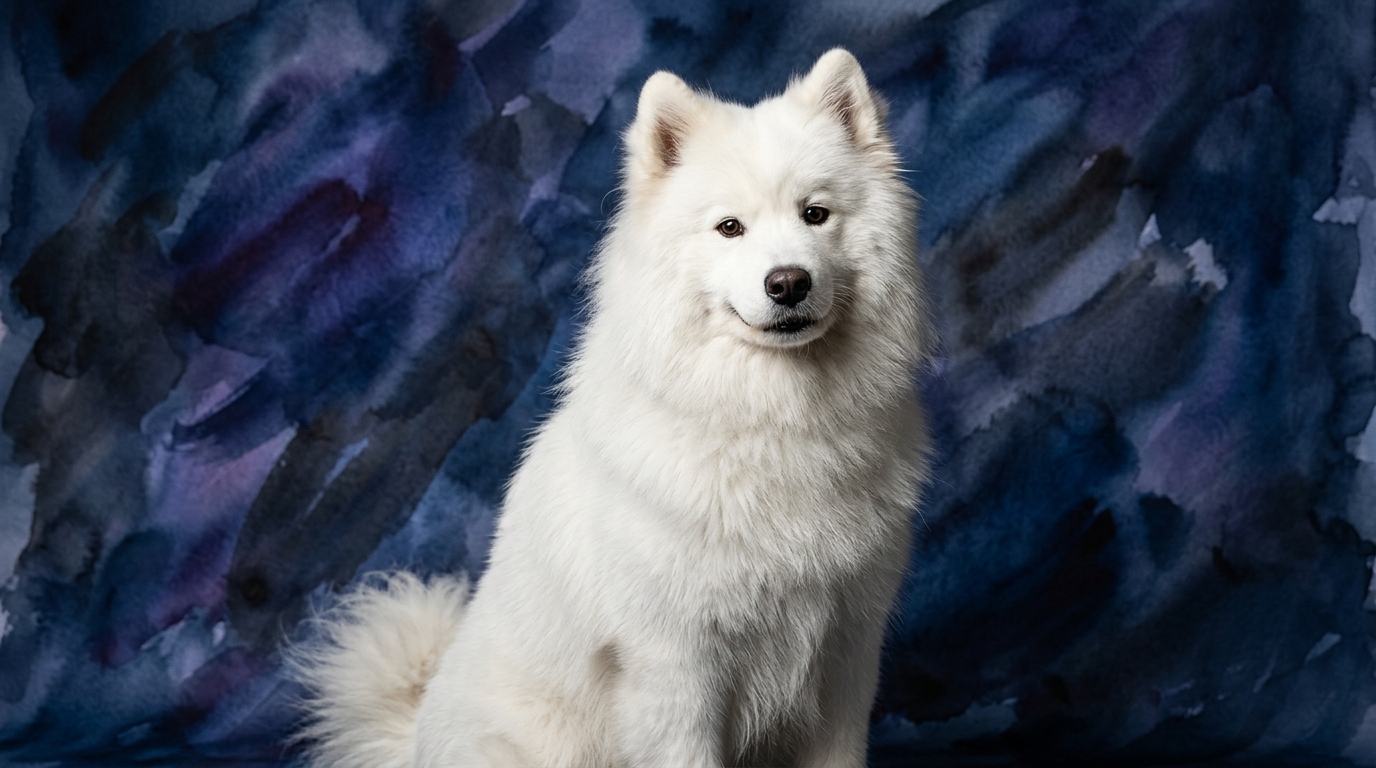

Side-by-Side IQ Profile: Samoyed vs. Boerboel
The Cosmic Pet Pet IQ Lab employs a five-dimensional framework to assess canine intelligence, offering a granular view beyond general rankings. For the Samoyed, a breed recognized by Stanley Coren as #33 in working and obedience intelligence, their cognitive scores paint a picture of balanced abilities with a distinct social flair. They score 3/5 for Problem Solving, indicating a capacity for independent thought and navigating novel situations. Their Training Speed is also rated 3/5, suggesting a moderate pace for acquiring new commands. Where the Samoyed truly shines is in Social Intelligence, earning a remarkable 5/5, reflecting their exceptional ability to read and respond to human cues and social dynamics. Instinctive Drive is strong at 4/5, hinting at deep-seated breed-specific behaviors, while Memory stands at 3/5, allowing for retention of learned experiences and associations.
In contrast, the Boerboel, a formidable guardian breed currently not ranked by Coren, presents a different cognitive blueprint, tailored to its protective heritage. Across Problem Solving, Training Speed, Social Intelligence, Instinctive Drive, and Memory, the Boerboel consistently scores 3/5. This uniform scoring suggests a consistent, practical intelligence, perhaps less outwardly diverse than the Samoyed but deeply effective within its specific functional domain. While their Social Intelligence at 3/5 indicates a capacity for connection, it suggests a more reserved or selective social engagement compared to the Samoyed's effusive nature. Their Instinctive Drive, also 3/5, points to a focused, perhaps less varied, set of innate behaviors, primarily centered around vigilance and protection.
Where the Samoyed Wins Cognitively
The Samoyed's most pronounced cognitive advantage lies in its exceptional Social Intelligence, scoring a perfect 5/5. This isn't merely about friendliness; it signifies a profound capacity to interpret human emotions, body language, and vocal inflections. A Samoyed can often anticipate a handler's wishes or react appropriately to a change in household mood, making them incredibly attuned companions. This high social acumen contributes to their adaptability in various social settings and their willingness to engage in cooperative tasks, often striving to please their human counterparts.
Furthermore, the Samoyed's Instinctive Drive, rated at 4/5, provides a broader range of inherent behaviors that can be channeled into productive activities. Originating as working sled dogs and reindeer herders, their instincts encompass a drive for pulling, exploring, and engaging in sustained physical activity. This robust instinctive foundation, combined with their social intelligence, means they are often eager participants in activities like agility, sledding, or even complex trick training, driven by both their innate predispositions and their desire for interaction. Their problem-solving (3/5) benefits from this social inclination; they may look to their owner for guidance in novel situations, using their social intelligence to decipher solutions collaboratively.
Unique Cognitive Strengths of the Boerboel
While the Boerboel's numerical scores are consistently 3/5, their cognitive strengths are profoundly expressed through the *application* of these abilities within their guardian role. Their Problem Solving, though rated 3/5, is acutely honed for territorial assessment and threat evaluation. A Boerboel's mental processes are geared towards discerning subtle changes in their environment, identifying potential intrusions, and determining appropriate responses to protect their family and property. This involves a complex form of situational problem-solving, requiring keen observation and decisive, often independent, judgment.
The Boerboel's Instinctive Drive, also 3/5, is a testament to its focused protective nature. Unlike breeds with broader instinctive repertoires, the Boerboel's drive is singularly directed towards vigilance and defense. This means their cognitive energy is channeled into an unwavering commitment to their perceived duties. Their memory (3/5) supports this by allowing them to recall past encounters, recognize familiar faces, and remember established boundaries, reinforcing their role as steadfast protectors. This specific cognitive architecture, while not numerically superior in variety, is exceptionally potent in its dedicated purpose, making them unparalleled in specific security contexts.
Which is Easier to Train and Why?
Determining which breed is 'easier' to train is nuanced, as both the Samoyed and Boerboel score 3/5 for Training Speed. However, their underlying behavioral differences significantly impact the training experience. The Samoyed's superior Social Intelligence (5/5) often translates into a greater desire to please and a more cooperative attitude during training sessions. They are generally more responsive to positive reinforcement and eager for interaction, making them highly motivated by praise and social engagement. Their occasional independent streak, a remnant of their working heritage, might surface, but their strong bond and social acumen usually ensure they remain receptive to instruction.
The Boerboel, with a 3/5 for Social Intelligence, tends to be more independent and less overtly driven by the desire to please. Their training requires consistency, clear leadership, and a deep understanding of their guardian instincts. While they are capable of learning, their motivation is often rooted in respect for their owner and understanding their role within the 'pack' structure, rather than an inherent eagerness for social cooperation. Their focused instinctive drive means they can be single-minded; if a perceived threat arises, it will take precedence over a 'sit' command. Effective Boerboel training leverages their intelligence for understanding commands and boundaries, emphasizing structure and purpose, rather than relying on their social pliability. Therefore, while both learn at a similar pace, the Samoyed might *feel* easier to train due to its more outwardly cooperative and socially responsive nature.
Which Suits Active Owners vs. Relaxed Owners?
For active owners seeking a highly interactive and engaged companion, the Samoyed is generally a more fitting choice. Their 4/5 Instinctive Drive translates into a need for consistent physical activity, often enjoying long walks, runs, or engaging in dog sports like agility or sledding. Their high Social Intelligence (5/5) means they thrive on being an integral part of family activities and will actively seek out interaction and play. A Samoyed requires an owner who can commit to fulfilling both their physical and social needs, integrating them fully into an active lifestyle. They are not suited to being left alone for extended periods without mental and physical stimulation, as their social nature can lead to distress or boredom-induced behaviors.
Conversely, while no large working breed is truly 'relaxed' in the sense of being sedentary, the Boerboel's cognitive profile aligns better with owners who appreciate a steadfast, watchful presence rather than constant interactive play. Their consistent 3/5 scores across the board suggest a practical, purposeful energy. They require regular exercise to maintain physical condition and mental stability, but their activities are often more structured around patrolling, guarding, or focused training sessions rather than high-energy, free-form play. Owners who value a dedicated protector, are experienced in assertive leadership, and can provide a secure environment where the Boerboel's instincts can be managed responsibly, will find them a rewarding companion. They are less likely to demand constant social interaction but thrive on a clear routine and a defined role within the family unit.
The Verdict: When to Choose Each Breed
The Verdict
Choose a Samoyed if you desire a highly social, interactive companion eager to participate in family life and various activities, and you can fulfill their need for consistent physical and mental engagement.
Opt for a Boerboel if you seek a dedicated, discerning guardian with a strong protective instinct, and you are prepared to provide firm, consistent leadership and specific training tailored to their purposeful nature.
🧠 Find Your Pet's IQ Score
Our Pet IQ Lab assessment covers 25+ tests across 5 cognitive dimensions — personalized to your breed.
Take the Full IQ Test →Frequently Asked Questions
Is a Samoyed a good family dog?
Yes, Samoyeds generally make wonderful family dogs due to their high social intelligence and affectionate nature. They thrive on interaction with all family members, including children, provided they are properly socialized and exercised.
Do Boerboels require a lot of exercise?
Boerboels require a moderate to high amount of regular exercise to maintain their physical health and mental well-being. This typically includes daily walks, structured play, and opportunities to patrol a secure yard, rather than constant high-intensity activity.
Which breed is better for first-time dog owners?
The Samoyed, with its higher social intelligence and eagerness to please, is generally more manageable for first-time dog owners who are committed to training and socialization. The Boerboel's strong protective instincts and need for firm leadership make them more suitable for experienced owners.