The Standard Poodle and Samoyed: An IQ Snapshot
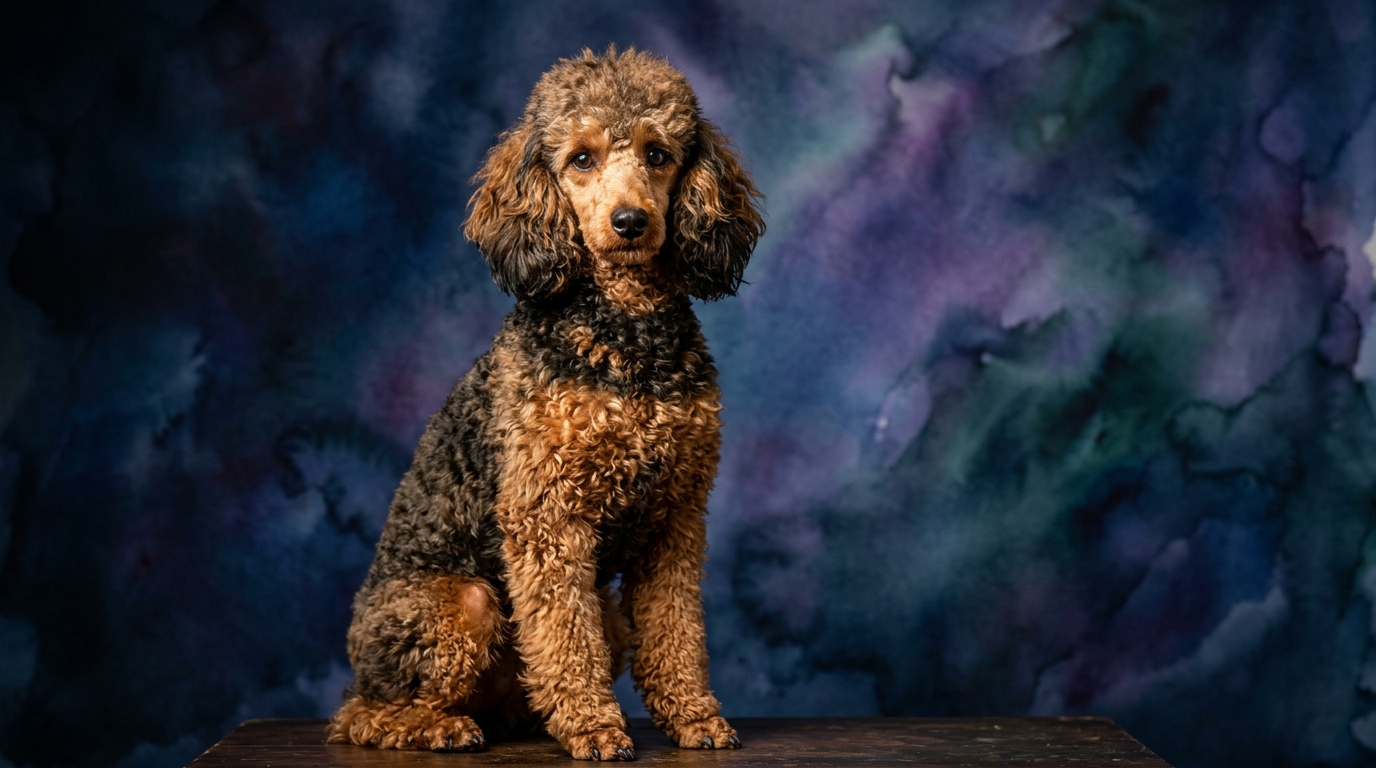
At The Cosmic Pet Pet IQ Lab, we analyze canine intelligence across five critical dimensions to provide a nuanced understanding of each breed's cognitive profile. The Standard Poodle, a Non-Sporting dog, earns a remarkable Coren rank of #2, indicating a profound capacity for understanding and executing commands. Its IQ scores reflect this: Problem Solving 5/5, Training Speed 5/5, Social Intelligence 5/5, Instinctive Drive 4/5, and Memory 5/5.
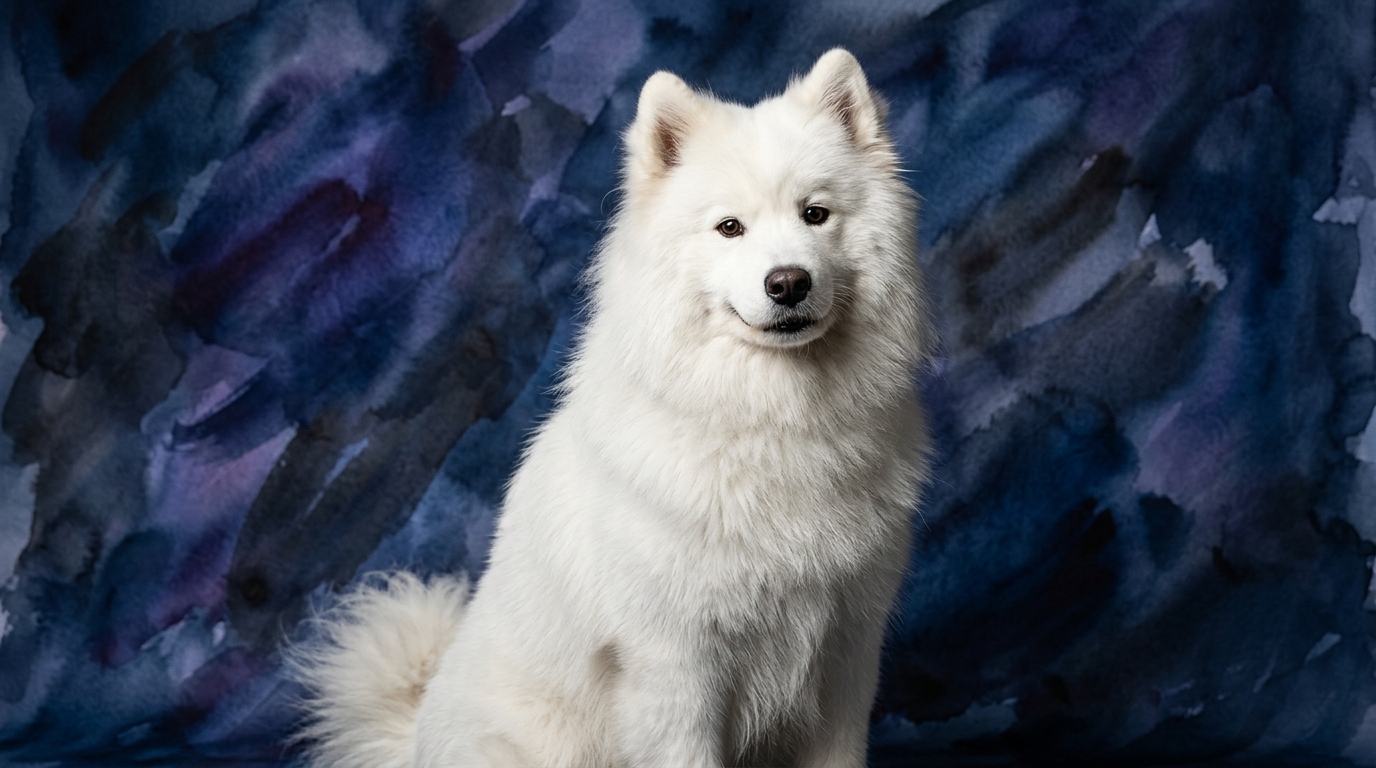
In contrast, the Samoyed, a Working dog with a Coren rank of #33, presents a different, yet equally compelling, cognitive blueprint. While its Problem Solving and Training Speed scores are moderate at 3/5 each, it matches the Poodle in Social Intelligence at 5/5 and Instinctive Drive at 4/5. Its Memory score stands at 3/5. These scores highlight distinct evolutionary paths and inherent aptitudes, shaping how each breed interacts with the world and its human companions.
Where the Standard Poodle's Mind Shines
The Standard Poodle's cognitive strengths are evident in its exceptional Problem Solving ability (5/5). This breed excels at understanding complex, multi-step tasks and can often figure out novel solutions to environmental challenges or puzzle toys with minimal human intervention. Their capacity for abstract reasoning allows them to generalize learned concepts, applying a skill taught in one context to a new, unfamiliar situation.
Coupled with an outstanding Training Speed (5/5) and Memory (5/5), the Standard Poodle absorbs new information with remarkable rapidity. They require fewer repetitions to grasp commands and retain an extensive repertoire of learned behaviors over long periods. This makes them highly adaptable to various training disciplines, from advanced obedience to intricate agility courses, consistently demonstrating a desire to engage their intellect in cooperative tasks with their human partners. Their Social Intelligence (5/5) further enhances this, as they are acutely aware of human cues and intentions, facilitating a seamless learning partnership.
The Cognitive Strengths of the Samoyed
While the Samoyed's Problem Solving score is 3/5, its intelligence is profoundly practical and rooted in its working heritage. This breed demonstrates a robust capacity for situational awareness and resourceful problem-solving related to its environment, such as navigating varied terrains or figuring out how to achieve a desired outcome like reaching a favorite toy. Their cognitive strengths are less about abstract puzzles and more about pragmatic solutions that serve their immediate goals or comfort.
The Samoyed's Social Intelligence (5/5) is a significant asset, characterized by a deep, reciprocal bond with its human family. They are highly attuned to social dynamics and thrive on companionship, often initiating interaction and displaying empathy. Their Instinctive Drive (4/5) is powerfully geared towards endurance, pulling, and cooperative living within a pack structure, whether that pack is canine or human. This drive, while sometimes manifesting as an independent streak, is a testament to their heritage as nomadic herders and sled dogs, where self-sufficiency and group cohesion were paramount for survival.
Training Receptiveness: Poodle vs. Samoyed
The difference in Training Speed scores (Poodle 5/5, Samoyed 3/5) directly translates into distinct training experiences. The Standard Poodle's eagerness to learn, coupled with its superior Problem Solving and Memory, makes it an exceptionally receptive student. They actively seek to understand commands and delight in executing them, often requiring only a few repetitions before a new behavior is integrated into their repertoire. Their high social intelligence means they are highly motivated by human approval and engagement, making positive reinforcement training highly effective and rewarding for both dog and owner.
The Samoyed, while possessing high social intelligence, approaches training with a more discerning and independent mindset. Their moderate Training Speed means they require more patience, consistency, and a clear understanding of 'what's in it for them.' Their strong instinctive drive, particularly for exploration and movement, can sometimes override immediate obedience if a more compelling stimulus is present. Training a Samoyed often feels more like a negotiation or a partnership, where the owner must consistently demonstrate value and make learning an engaging, positive experience that aligns with the Samoyed's inherent desires rather than simply issuing commands. Their memory, while sufficient for essential tasks, may not retain extensive lists of complex commands as readily as the Poodle.
Matching Canine Intellect to Lifestyle
For active owners seeking a canine companion deeply engaged in mental challenges and advanced training, the Standard Poodle is an ideal match. Their exceptional Problem Solving and Training Speed mean they thrive on activities like competitive obedience, agility, rally, or even complex trick training. Owners who enjoy teaching intricate behaviors and providing consistent intellectual stimulation will find the Poodle a highly rewarding and cooperative partner. While physically capable, their primary need is for cognitive engagement.
Conversely, the Samoyed is best suited for highly active owners who embrace an outdoor lifestyle and appreciate a companion with robust physical endurance and a strong social drive. Owners who enjoy long hikes, trail running, or even dog sports like cani-cross or skijoring will find a Samoyed an enthusiastic partner. Their high social intelligence necessitates significant interaction and inclusion in family activities. A Samoyed requires an owner prepared to channel their inherent energy and independence into constructive outlets, ensuring both physical exertion and social connection are consistently met.
The Cosmic Pet Verdict
Understanding the nuanced intelligence of these two breeds is key to a harmonious partnership. Both offer profound companionship, but their cognitive strengths guide them towards different life roles and owner expectations. Choosing between a Standard Poodle and a Samoyed involves reflecting on your own lifestyle, training philosophy, and what kind of intellectual engagement you seek in a canine companion.
The Verdict
Choose the Standard Poodle if you desire a highly trainable, cognitively agile partner for complex problem-solving, advanced obedience, and a wide array of mental challenges.
Choose the Samoyed if you seek a robust, socially connected companion for extensive outdoor adventures, who appreciates a cooperative partnership and thrives on physical exertion.
🧠 Find Your Pet's IQ Score
Our Pet IQ Lab assessment covers 25+ tests across 5 cognitive dimensions — personalized to your breed.
Take the Full IQ Test →Frequently Asked Questions
Are Samoyeds difficult to train?
Samoyeds are not inherently difficult, but their moderate training speed and independent nature mean they require consistent, patient, and positive reinforcement-based training. Owners need to make learning engaging and ensure it aligns with the Samoyed's natural drives for best results.
Do Standard Poodles need a lot of mental stimulation?
Absolutely. With their exceptional problem-solving and memory, Standard Poodles thrive on mental challenges. Without sufficient cognitive engagement, they can become bored, potentially leading to undesirable behaviors, so puzzle toys, training, and interactive play are crucial.
Which breed is better for first-time dog owners?
For a first-time owner committed to consistent training, the Standard Poodle's high training speed and eagerness to please often make them a more straightforward choice. Samoyeds, due to their independent streak and high energy, may be more challenging for those without prior dog ownership experience.