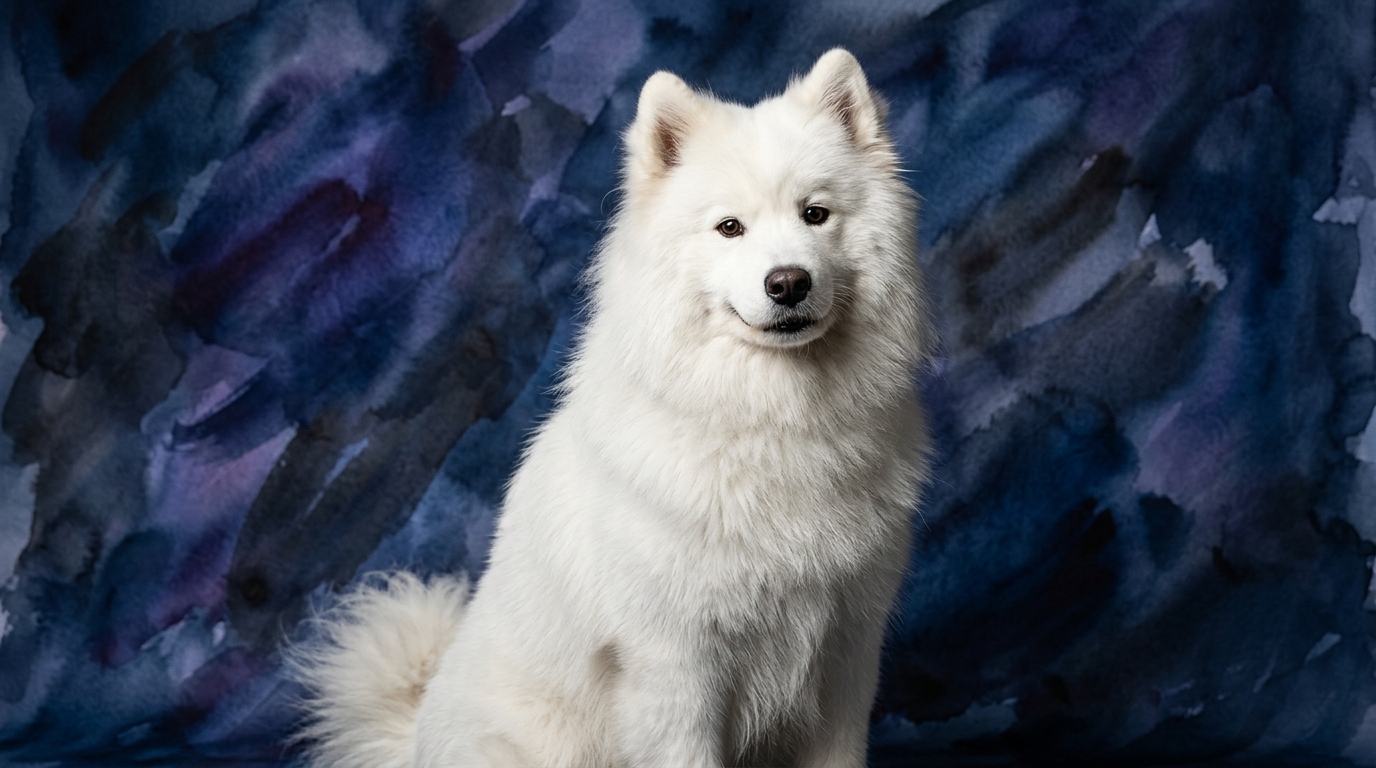

Side-by-Side Cognitive Profiles
The Samoyed, a Working breed with a Coren rank of #33, presents a unique cognitive makeup. Their Problem Solving rates 3/5, indicating a moderate capacity for independent thought in novel situations, often preferring familiar solutions or human guidance. Training Speed is also 3/5; while they learn, their independent streak means consistent, patient reinforcement is key. Where they truly shine is Social Intelligence, scoring a perfect 5/5, demonstrating an exceptional ability to read and respond to human emotions. Their Instinctive Drive, at 4/5, reflects their heritage for sustained work, and their Memory is a practical 3/5, sufficient for daily routines but not for intricate detail recall.
In contrast, the Brittany, a Sporting breed with a Coren rank of #19, exhibits a different set of cognitive strengths. Their Problem Solving scores higher at 4/5, indicating a greater aptitude for analyzing situations and devising effective strategies, particularly in pursuit of goals. Training Speed is also stronger at 4/5, as they are generally eager to please and quick to absorb new commands with appropriate motivation. Social Intelligence is 3/5, meaning they are friendly and affectionate but process social cues with a more utilitarian focus compared to the Samoyed. Their Instinctive Drive is 3/5, rooted in specific hunting and retrieving tasks rather than broad endurance. Most remarkably, their Memory is an outstanding 5/5, allowing for exceptional recall of complex patterns, scent trails, and detailed sequences.
Where the Samoyed Excels Cognitively
The Samoyed's clearest cognitive advantage lies in their unparalleled Social Intelligence, earning a perfect 5/5 compared to the Brittany's 3/5. This breed possesses a profound ability to read and respond to human emotions and social dynamics, fostering an intuitive companionship. They excel at forming deep, empathic bonds, often anticipating their owner's moods or needs, which makes them exceptionally attuned family members capable of subtle communication and emotional support. This strength means a Samoyed often feels like a true partner, deeply integrated into the emotional fabric of the household, understanding nuances that other breeds might overlook.
Where the Brittany Excels Cognitively
The Brittany demonstrates a significant cognitive edge in two key areas. Their Memory, rated at an exceptional 5/5 against the Samoyed's 3/5, allows them to recall complex patterns, scent trails, and intricate sequences of information with remarkable accuracy. This capacity is invaluable for tasks requiring detailed recall, such as remembering specific locations for retrieves, navigating vast terrains, or executing multi-step commands flawlessly over time, making them incredibly reliable in performance settings.
Furthermore, the Brittany also shows superior independent Problem Solving capabilities, scoring 4/5 compared to the Samoyed's 3/5. They display a greater inclination to analyze novel situations and devise effective strategies on their own, whether it involves figuring out how to retrieve a toy from a tricky spot or navigating an obstacle course. This proactive and inventive approach to overcoming challenges makes them quick adapters and resourceful companions in various environments.
Ease of Training: Brittany vs. Samoyed
When it comes to ease of training, the Brittany generally presents as the more straightforward student due to their faster Training Speed (4/5) and strong desire to please. Their focus and enthusiasm for learning, coupled with their exceptional memory, mean they typically pick up new commands and routines with impressive alacrity. Brittanys thrive on structured training sessions and respond very well to positive reinforcement, quickly associating actions with rewards, which can be highly gratifying for an owner seeking rapid progress.
Samoyeds, while certainly trainable, introduce more nuance into the training process with their moderate Training Speed (3/5). Their notable independent streak means they may require more patience, consistency, and creative motivation. A Samoyed is more likely to question a command or prioritize their own agenda, necessitating an owner who understands how to make training engaging and rewarding on the Samoyed's terms. This requires a deeper understanding of their motivations and a willingness to adapt training methods to maintain their interest.
Matching Cognitive Profiles to Lifestyles
Both Samoyeds and Brittanys benefit immensely from active owners, though their activity needs stem from different cognitive drives. Samoyeds, with their instinctive drive (4/5) for work and endurance, require activities that tap into their heritage as sled dogs, such as long hikes, pulling sports, or sustained outdoor adventures. They need a purpose to channel their energy, often thriving when given a 'job' to do, even if it's simply accompanying their owner on a vigorous trek. Their high social intelligence also means these activities are best shared.
Brittanys, with their strong hunting and retrieving instincts, thrive on activities that engage their keen senses and problem-solving skills, like scent work, agility, or extensive fetch sessions in varied environments. Their activity is often more focused on specific tasks and challenges that allow them to utilize their exceptional memory and problem-solving. Neither breed is particularly suited for a truly 'relaxed' owner in terms of physical and mental engagement; both possess significant cognitive needs that, if unmet, can lead to boredom and undesirable behaviors. A relaxed owner might struggle with the Samoyed's persistent need for companionship and activity, or the Brittany's drive for mental stimulation and physical exertion, which can manifest as restlessness or destructive tendencies if not properly channeled.
The Verdict
Opt for a Samoyed if you prioritize a deeply empathic companion who excels in social interactions and offers profound emotional connection, and you are prepared for consistent, patient training tailored to their independent yet loving nature.
Select a Brittany if you value a highly trainable, task-oriented partner with exceptional memory and problem-solving skills, ideal for active pursuits like scent work or agility where their sharp mind and enthusiasm can truly shine.
🧠 Find Your Pet's IQ Score
Our Pet IQ Lab assessment covers 25+ tests across 5 cognitive dimensions — personalized to your breed.
Take the Full IQ Test →Frequently Asked Questions
Do Samoyeds and Brittanys need different types of mental stimulation?
Absolutely. Samoyeds benefit from social interaction, puzzle toys that encourage independent thought, and activities that tap into their endurance. Brittanys thrive on challenges that engage their exceptional memory and problem-solving, such as complex scent games, retrieving drills, and learning intricate command sequences.
How does their social intelligence impact their family life?
A Samoyed's high social intelligence means they are deeply attuned to family dynamics, often acting as an emotional barometer and seeking close companionship, potentially making them more prone to separation anxiety if left alone too long. Brittanys, while affectionate, are generally more task-focused in their social interactions, happy to engage for play or training but perhaps less instinctively aware of subtle human emotional shifts.
Which breed might be better for a first-time dog owner?
Given their higher training speed and eagerness to please, the Brittany might be a slightly more manageable choice for a first-time owner willing to provide ample exercise and mental engagement. A Samoyed's independent streak and need for consistent, patient motivation could be more challenging for someone new to dog training.