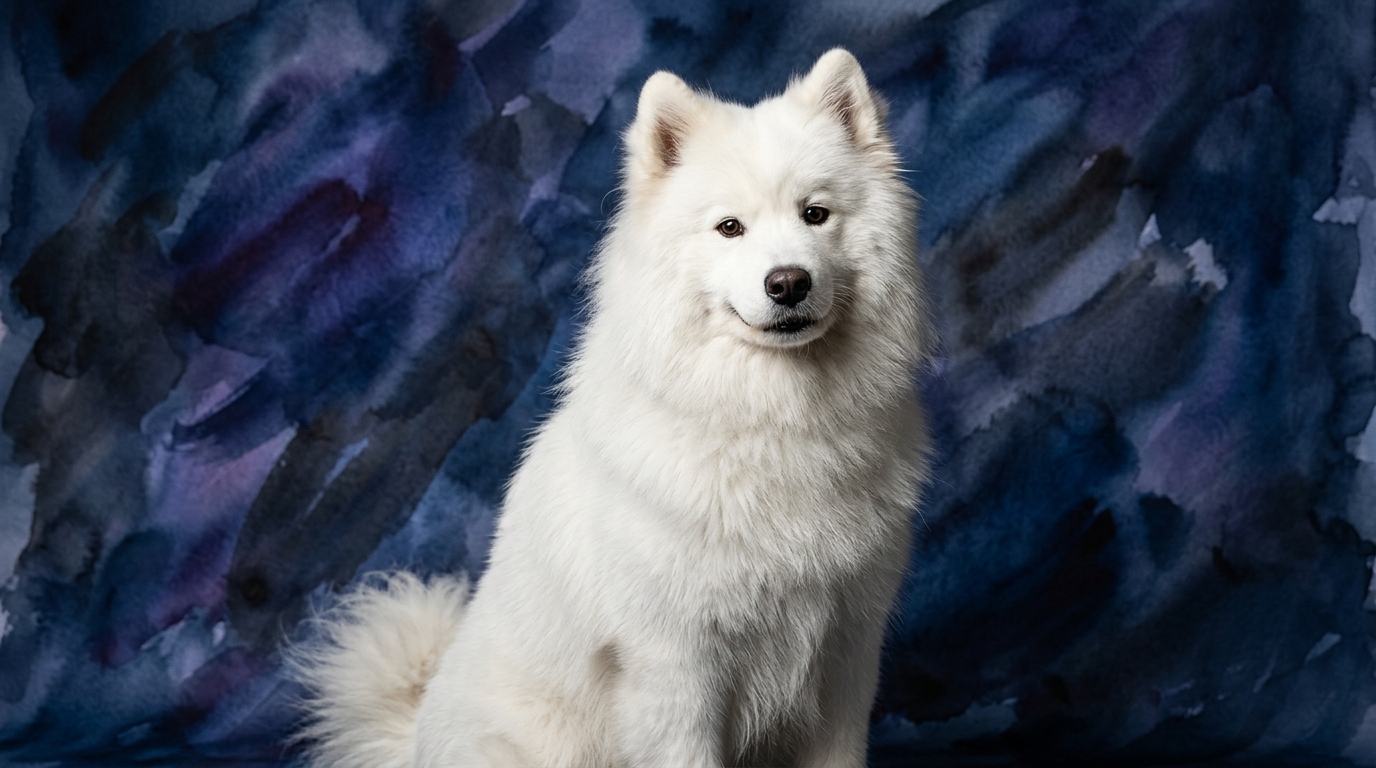

Side-by-Side IQ Profile: Samoyed vs Irish Water Spaniel
At The Cosmic Pet Pet IQ Lab, we evaluate canine intelligence across five key dimensions, providing a nuanced understanding of each breed's cognitive strengths. The Samoyed, a Working breed ranked #33 by Coren, and the Irish Water Spaniel, a Sporting breed ranked #24, present contrasting cognitive blueprints.
The Samoyed's profile includes: Problem Solving (3/5), indicating they often rely on learned behaviors or human guidance rather than independent strategizing when facing novel obstacles. Their Training Speed (3/5) suggests learning commands requires consistent, patient repetition, as their independent spirit means compliance may not always be immediate without strong motivation. Social Intelligence (5/5) is a core strength, showing exceptional understanding of human emotions and social cues, thriving on companionship and interaction and easily forming deep bonds. Their Instinctive Drive (4/5) reflects a robust drive for activity and purpose, often expressed in pulling, exploring, or vocalizing due to their working heritage. Finally, their Memory (3/5) is adequate for routines and learned commands, but they might not recall complex sequences or intricate details with high precision.
The Irish Water Spaniel's profile features: Problem Solving (4/5), meaning these spaniels exhibit a higher capacity for independent thought, often showing cleverness in retrieving or navigating obstacles. Their Training Speed (4/5) indicates they tend to pick up new commands and routines relatively quickly, eager to engage and respond to instruction, making them responsive students. Social Intelligence (3/5) suggests that while affectionate with family, their social acumen is more focused on their immediate pack, potentially making them more reserved towards strangers. Their Instinctive Drive (3/5) stems from their sporting heritage, giving them a focused drive for retrieving and swimming, generally less prone to independent wanderlust than the Samoyed. Their Memory (4/5) is strong, demonstrating good recall for complex training sequences, specific locations, and past experiences with accuracy.
Where the Samoyed Wins Cognitively
The Samoyed's most striking cognitive advantage lies in their unparalleled social intelligence, scoring a perfect 5/5. This isn't just about friendliness; it reflects a profound capacity to read human emotional states, fostering an intuitive bond. A Samoyed often senses when a family member needs comfort, offering a gentle nudge or settling close, demonstrating deep understanding. Their exceptional empathy allows seamless integration into diverse family structures, making them incredibly attuned companions. This social aptitude also fuels a strong desire for consistent interaction and inclusion in family activities. Furthermore, their instinctive drive, rated 4/5, translates to a robust internal motivation for purposeful activity. This persistent drive to be engaged, whether 'helping' with chores or exploring, combined with their social intelligence, makes them exceptionally eager to be part of the 'pack' and contribute meaningfully to the household dynamic, often in their own vocal way.
Where the Irish Water Spaniel Wins Cognitively
The Irish Water Spaniel showcases clear cognitive strengths in areas demanding mental agility and retention. Their problem-solving ability, rated 4/5, allows them to navigate novel situations with more independent thought, figuring out how to retrieve a toy or understanding complex agility sequences. They are less likely to get stuck on a challenge and more inclined to experiment. Complementing this is their superior training speed, also 4/5, meaning they grasp new commands and routines with impressive efficiency. They enjoy processing and applying information, making them highly responsive students. Furthermore, their memory, scoring 4/5, is a significant asset. An Irish Water Spaniel can recall intricate training sequences, specific locations, and nuanced instructions over extended periods. This combination of quick learning, effective problem-solving, and strong memory makes them particularly adept at complex tasks requiring sustained mental engagement and recall, such as advanced obedience or competitive dog sports.
Which is Easier to Train and Why
When considering ease of training, the Irish Water Spaniel generally holds an advantage due to its higher scores in both training speed (4/5) and problem-solving (4/5). Their capacity to quickly process and retain new commands, coupled with an inherent desire to understand and execute tasks, translates into a more straightforward training experience. They tend to be more focused during training and often motivated by the challenge itself, alongside positive reinforcement. Their robust memory ensures learned commands are well-embedded. In contrast, the Samoyed, with a training speed of 3/5, often requires more patience and creative motivation. While socially intelligent and eager to please, their independent nature and strong instinctive drive (4/5) can sometimes override immediate compliance. They might 'consider' a command or offer their own interpretation. Training a Samoyed involves harnessing their social bond, making training feel like a shared, enjoyable activity to overcome occasional 'selective hearing.' The Irish Water Spaniel's eagerness to learn and apply new information makes them generally more pliable in formal training contexts.
Which Suits Active Owners vs Relaxed Owners
For owners seeking a highly active companion thriving on mental and physical challenges, the Irish Water Spaniel is often the more suitable choice. Their strong problem-solving skills and higher training speed mean they excel in activities like agility, obedience, and retrieving sports, demanding both physical exertion and cognitive engagement. They benefit from owners providing consistent mental stimulation and structured exercise, channeling their sporting instincts. The Samoyed, while possessing a robust instinctive drive (4/5) for activity, might appeal more to active owners who appreciate a companion with a strong social presence and desire for shared experiences. Their exercise needs are significant, but motivation often stems from being with family rather than intense task focus. They thrive with owners who enjoy long walks or hikes, valuing a dog deeply involved in family life. For truly relaxed owners, neither breed is ideal, as both require significant attention and exercise.
The Verdict
Choose the Samoyed if you prioritize an exceptionally social, empathetic companion offering deep emotional connection and thriving as an integral family member, understanding that training requires patient, positive reinforcement.
Opt for the Irish Water Spaniel if you seek a highly trainable, intelligent partner for dog sports or complex tasks, valuing their independent problem-solving and quick learning, provided you can meet their consistent need for mental and physical stimulation.
🧠 Find Your Pet's IQ Score
Our Pet IQ Lab assessment covers 25+ tests across 5 cognitive dimensions — personalized to your breed.
Take the Full IQ Test →Frequently Asked Questions
Is the Samoyed's social intelligence a disadvantage in any way?
While generally a strength, the Samoyed's extreme social intelligence means they can become distressed or develop separation anxiety if left alone for extended periods. Their need for constant companionship requires owners who are frequently present or can provide adequate social interaction.
Does the Irish Water Spaniel's lower social intelligence score mean they aren't affectionate?
Not at all. A 3/5 social intelligence score simply indicates they might be more reserved with strangers or less overtly expressive of empathy compared to a Samoyed. They form very strong, affectionate bonds with their immediate family and are devoted companions, just perhaps less universally outgoing.
What kind of challenges might an owner face with the Samoyed's 3/5 problem-solving and training speed?
Owners might find Samoyeds require more creative and consistent training methods to overcome their independent streak. They may not immediately grasp complex commands and might need more repetition. Their problem-solving approach often leans towards trying existing learned behaviors or seeking human help rather than novel, independent solutions.