Side-by-Side Cognitive Profile
The Cosmic Pet Pet IQ Lab provides a structured framework for understanding feline cognition across five key dimensions. For the Savannah, a breed known for its wild Serval lineage, and the Egyptian Mau, an ancient breed with a rich history, these scores illuminate distinct mental aptitudes.
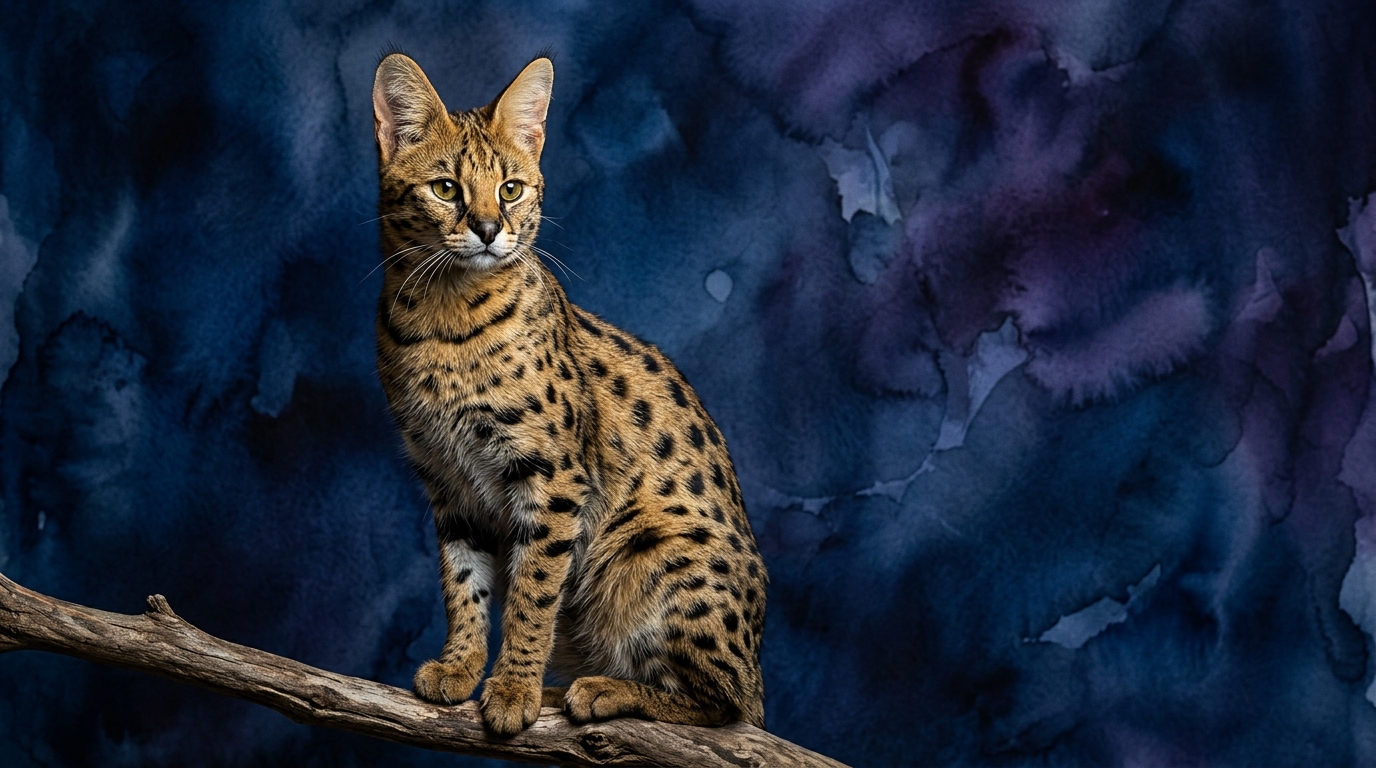
For the Savannah:
Problem Solving (5/5): This score indicates an exceptional capacity for figuring out complex puzzles, manipulating objects to achieve goals, and adapting strategies when faced with novel situations. A Savannah might learn to open intricate latches, navigate multi-step obstacle courses, or even operate simple household mechanisms, not through trial and error alone, but by understanding cause and effect. Their cognitive flexibility allows them to quickly assess and devise solutions.
Training Speed (4/5): Savannahs assimilate new commands and behaviors with remarkable alacrity. Their keen attention and ability to link actions with desired outcomes mean they can pick up complex tricks, leash walking, and even agility courses faster than many other breeds. This rapid learning curve suggests a neurological efficiency in processing and retaining new information.
Social Intelligence (4/5): While often forming strong bonds with their chosen humans, a Savannah's social intelligence extends to understanding nuanced cues and social hierarchies within their household. They can interpret human moods, respond to specific vocal tones, and engage in reciprocal play, demonstrating a sophisticated awareness of their social environment and the roles of its inhabitants.
Instinctive Drive (5/5): Reflecting their wild Serval ancestry, the Savannah possesses an extraordinarily potent instinctive drive. This manifests as a strong prey drive, an insatiable curiosity for exploration, and a profound need for physical and mental stimulation. Their cognitive processes are heavily geared towards detecting, pursuing, and interacting with their environment in an active, investigative manner.
Memory (5/5): A Savannah's memory is outstanding, enabling them to recall complex sequences of events, remember the location of hidden objects over long periods, and retain learned behaviors or routes for extended durations. This robust memory contributes to their problem-solving prowess and their ability to navigate their territory with precision, often remembering specific interactions or training cues even after significant time has passed.
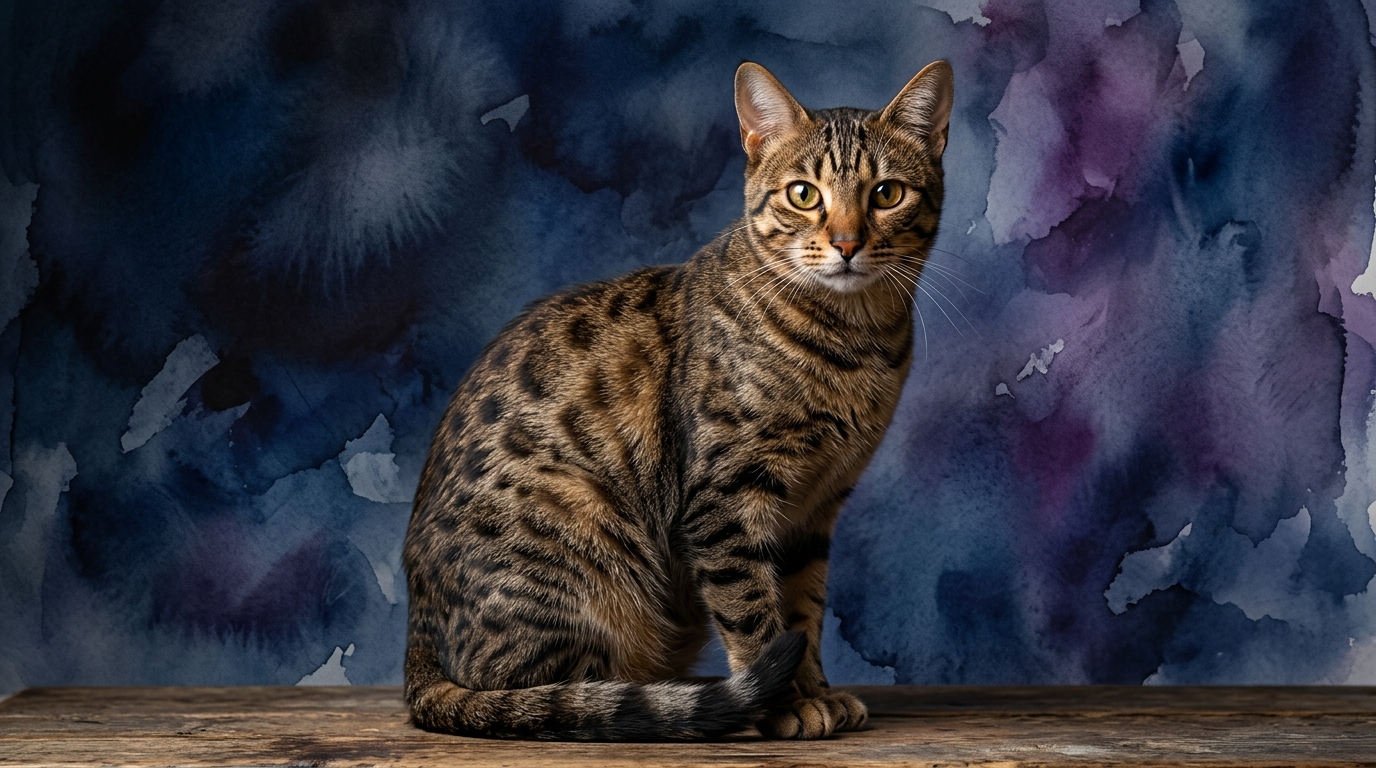
For the Egyptian Mau:
Problem Solving (3/5): Egyptian Maus exhibit a moderate capacity for problem-solving. They can learn to navigate familiar environments and solve routine challenges, such as finding a favored toy or opening a simple cabinet. Their approach to new puzzles tends to be more through persistent trial and error rather than immediate strategic deduction, indicating a practical, rather than highly analytical, cognitive style.
Training Speed (3/5): Maus learn at a steady pace, capable of mastering basic commands and routines with consistent positive reinforcement. While not as quick to grasp complex sequences as some breeds, they are receptive to training and can learn specific behaviors like coming when called or using a scratching post reliably. Their learning progress is consistent and predictable.
Social Intelligence (3/5): The Egyptian Mau's social intelligence allows them to form deep, discerning bonds with their human companions, often displaying specific communicative behaviors to express needs or affection. They are perceptive of household routines and can recognize familiar faces and voices. While they connect profoundly with their inner circle, their social circle might be smaller, exhibiting a more selective social engagement.
Instinctive Drive (3/5): Maus possess a moderate instinctive drive, manifesting as a playful curiosity and a desire for interactive hunting games. They enjoy chasing toys and exploring their immediate surroundings but typically do not exhibit the intense, relentless drive for exploration or prey interaction seen in breeds with wilder lineage. Their activity levels are balanced, enjoying both energetic play and quiet companionship.
Memory (3/5): Egyptian Maus have a functional memory, allowing them to remember routines, favored people, and their home's general layout. They recall simple commands and previous interactions. While retaining important daily information, their memory capacity may not extend to recalling highly complex sequences or intricate details over extended periods compared to breeds with higher scores.
Where Savannah Wins Cognitively
The Savannah's cognitive strengths distinctly outshine the Egyptian Mau in areas requiring advanced strategic thinking and environmental manipulation. Their 5/5 problem-solving score means they are not just reacting to stimuli but actively strategizing, often demonstrating multi-step solutions to challenges. For instance, a Savannah might learn to open a specific cupboard, then retrieve a treat, and finally close the door, a sequence far more complex than a Mau's typical approach. Their robust memory (5/5) allows them to retain these intricate methods and routes indefinitely, making them incredibly adept at navigating complex home environments or remembering past successes. This combination fuels a proactive curiosity, where the Savannah seeks out mental challenges rather than merely encountering them, constantly testing boundaries and exploring possibilities with a depth of understanding that is less pronounced in the Mau.
Where the Egyptian Mau's Cognitive Profile Shines Differently
While the Egyptian Mau's scores are consistently moderate, their cognitive profile offers a different kind of advantage, particularly in a home environment prioritizing calm predictability. Their 3/5 instinctive drive, for example, means they are less likely to channel excessive energy into potentially destructive behaviors stemming from boredom, a common issue with breeds possessing higher drives. This translates to a more manageable domestic presence, where their curiosity is satisfied with less intense engagement. Their social intelligence, while not as outwardly demonstrative as a Savannah's, allows for a deep, focused bond with their chosen humans. They are acutely aware of routine and subtle emotional shifts within their trusted circle, offering a quiet, perceptive companionship that doesn't demand constant, high-octane interaction, making them less prone to anxiety when their human is less actively engaging.
Which Is Easier to Train and Why
Training a Savannah involves harnessing their exceptional cognitive abilities and high drive, making the process faster but often more demanding. Their 4/5 training speed means they pick up commands quickly, but their 5/5 instinctive drive requires consistent mental and physical challenges to prevent boredom-induced behaviors. They thrive on complex tasks and positive reinforcement, often seeing training as a rewarding puzzle. Conversely, the Egyptian Mau, with a 3/5 training speed and 3/5 instinctive drive, might take longer to master new commands but is generally more compliant and less prone to 'out-thinking' their owner. Their motivation is often rooted in affection and routine, making them receptive to consistent, gentle training methods without the added complexity of managing an overwhelming drive for constant activity or exploration. The Mau is easier to train in the sense of requiring less intense management of their inherent cognitive energy.
Which Suits Active Owners vs. Relaxed Owners
The Savannah is unequivocally suited for active owners who can meet their substantial cognitive and physical demands. Their peak problem-solving and instinctive drives mean they require extensive environmental enrichment, interactive play, and opportunities for exploration and mental puzzles. Owners who enjoy teaching complex tricks, providing puzzle feeders, and engaging in regular, stimulating play sessions will find a Savannah to be a reciprocally engaging companion. In contrast, the Egyptian Mau is an ideal fit for more relaxed owners. Their moderate drives and social intelligence mean they appreciate companionship, routine, and gentle interaction without the constant need for intense mental or physical exertion. While they enjoy play, it's typically less demanding and more focused on bonding, making them content with regular but not overwhelming attention and a predictable home life.
The Verdict
Choose a Savannah if you are prepared for a highly interactive, intellectually demanding companion who thrives on constant engagement, complex challenges, and an active lifestyle that mirrors their profound cognitive capabilities.
Opt for an Egyptian Mau if you seek a perceptive, affectionate companion whose moderate cognitive needs align with a calmer home, offering deep bonds and a predictable presence without requiring intense daily mental exertion.
🧠 Find Your Pet's IQ Score
Our Pet IQ Lab assessment covers 25+ tests across 5 cognitive dimensions — personalized to your breed.
Take the Full IQ Test →Frequently Asked Questions
Do Savannah cats need a lot of mental stimulation?
Absolutely, Savannahs, with their 5/5 problem-solving and instinctive drive, require significant daily mental stimulation. They thrive on puzzle toys, interactive play, and opportunities to explore and strategize, preventing boredom and potential behavioral issues.
Are Egyptian Maus good with other pets?
Egyptian Maus, with their 3/5 social intelligence, can coexist peacefully with other pets, especially if introduced thoughtfully. Their discerning nature means they might form selective bonds but can adapt well to a multi-pet household given proper socialization and a calm environment.
How do their memories affect daily life?
A Savannah's 5/5 memory means they recall complex routines, hidden objects, and training cues for extended periods, making them efficient learners but also prone to remembering how to outsmart barriers. The Egyptian Mau's 3/5 memory supports daily routines and familiar interactions, remembering their favorite people and safe places without retaining intricate details for long.