Side-by-Side IQ Profile
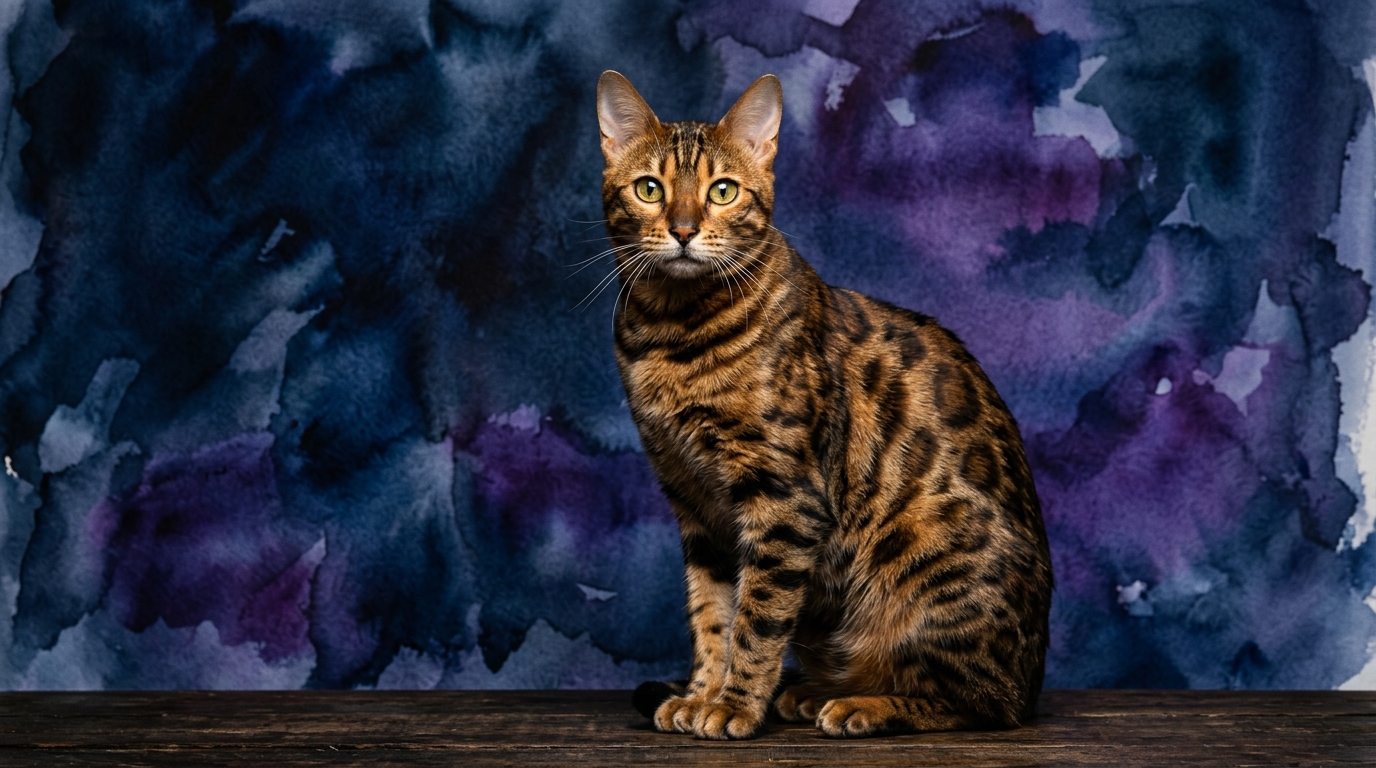
The Bengal, a captivating hybrid of the Asian Leopard Cat, exhibits a cognitive profile marked by impressive versatility. Their Problem Solving rates a 5/5, often manifesting in intricate manipulation of puzzle toys, opening latches, or figuring out how to access treats stored in seemingly inaccessible places, driven by a profound curiosity. Training Speed, at 4/5, reflects their eagerness to learn new commands and tricks, especially when accompanied by positive reinforcement and engaging interaction. Social Intelligence, also 4/5, allows them to forge deep, responsive bonds with their chosen humans, reading emotional cues and often participating actively in household activities. Their Instinctive Drive, a perfect 5/5, fuels a constant need for physical and mental engagement, expressed through vigorous play, climbing, and their notable fascination with water. Finally, their Memory, a strong 5/5, ensures they recall complex sequences, past lessons, and the location of hidden treasures, enabling consistent demonstration of learned behaviors over time.
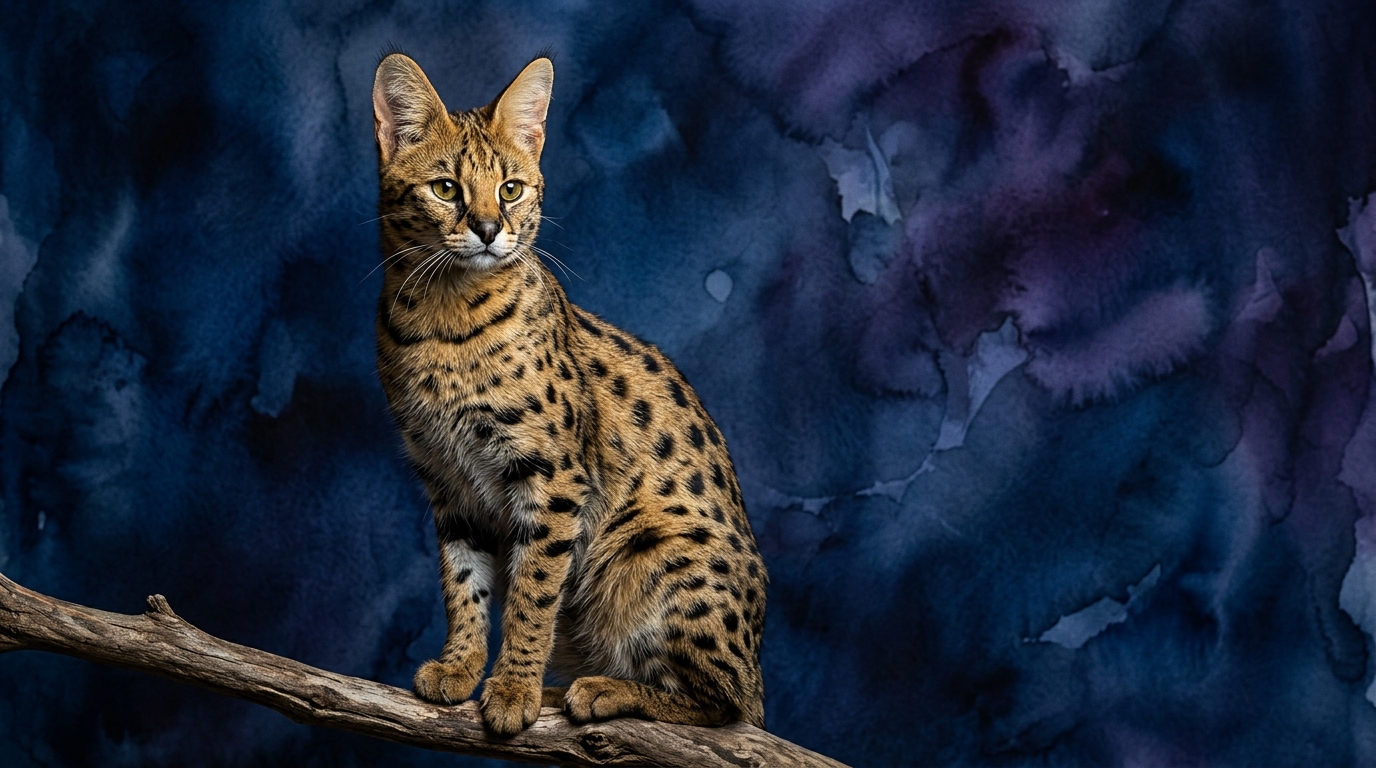
The Savannah, a striking cross between a domestic cat and the wild African Serval, showcases an equally formidable yet distinct set of cognitive strengths. A 5/5 in Problem Solving is evident in their strategic approach to their environment, whether it's devising elaborate escape routes, meticulously planning leaps to high perches, or mimicking human actions to achieve goals like opening doors. Their Training Speed of 4/5 means they absorb new information quickly, but their independent spirit often necessitates patient, stimulating methods that leverage their natural curiosity rather than strict rote learning; they are quick to understand cause and effect. Social Intelligence, rated 4/5, allows them to navigate complex household dynamics with keen observation, forming selective but profound bonds while often expressing affection on their own terms. The Savannah's Instinctive Drive, a full 5/5, manifests as an intense drive for exploration, vertical scaling, and a powerful prey instinct, demanding immense physical and mental outlets for their boundless energy. Their Memory, a perfect 5/5, underpins their ability to remember complex spatial layouts, learned routines, and the history of interactions, contributing to their adaptable and observant nature.
Where Bengal Wins Cognitively
While both breeds exhibit top-tier cognitive abilities, the Bengal often demonstrates a slight edge in the speed and enthusiasm with which they engage in human-directed intellectual challenges. Their Problem Solving (5/5) is often intrinsically linked to their social nature (4/5); they seem to enjoy the process of solving puzzles with or for their owners, often presenting their solutions with an almost triumphant demeanor. This collaborative spirit can make them appear more amenable to structured cognitive games, quickly grasping novel situations and adapting learned strategies to new variations of puzzles. Their memory (5/5) is particularly potent for recalling the specific steps to achieve a desired outcome, making them adept at remembering multi-stage sequences in interactive toys designed for feline enrichment.
This inclination toward social problem-solving allows Bengals to integrate seamlessly into a household's daily rhythms, often predicting routines and even attempting to 'help' with tasks through their understanding of patterns. Their strong instinctive drive (5/5), while demanding, is often expressed in ways that are easily channeled into structured play like fetch or agility courses, where their cognitive strengths in rapid processing and memory are on full display. They excel at understanding and executing complex sequences of actions when there's a clear, interactive reward, demonstrating a particularly agile application of their cognitive resources in social contexts.
Where Savannah Wins Cognitively
The Savannah's cognitive strengths, though equally formidable, often lean towards a more independent and environmentally focused application. Their Problem Solving (5/5) is frequently directed at mastering their surroundings, from sophisticated escape artistry—figuring out how to open latches or manipulate doors—to strategically navigating the highest reaches of a home. This often stems from their profound Instinctive Drive (5/5) for exploration and vertical dominance, translating into a cognitive approach that prioritizes understanding spatial relationships and physical mechanics within their territory. Their memory (5/5) is exceptional for mapping complex environments and recalling the precise steps required for intricate physical feats, such as a multi-stage jump to an unreachable shelf.
Savannahs also exhibit a nuanced social intelligence (4/5) that, while not always overtly effusive, makes them highly observant of household dynamics and human behaviors. They are adept at learning by observation, often internalizing complex sequences of actions simply by watching their human companions, then replicating them with astounding accuracy to achieve their own objectives. This observational learning contributes to their Training Speed (4/5); while they may not always be eager 'students' in the traditional sense, they are incredibly quick to understand and adapt once a concept piques their interest or serves their purpose. Their cognitive prowess in these areas allows them to be incredibly resourceful and often one step ahead in any attempt to 'cat-proof' a home.
Which Is Easier to Train and Why
Despite both breeds sharing a 4/5 Training Speed, the nuances of their social intelligence and instinctive drives create distinct training experiences. Bengals, with their strong social inclination, often approach training as a collaborative game. Their motivation often stems from the interaction itself and the desire to please their primary human. They respond exceptionally well to positive reinforcement, clicker training, and praise, making the initial stages of teaching tricks, leash training, or even simple commands relatively straightforward. Their problem-solving (5/5) and memory (5/5) quickly connect actions with rewards, and their sustained focus on human interaction helps maintain engagement during training sessions.
Savannahs, while equally capable of learning rapidly, can present a different set of considerations for trainers. Their independence and strong instinctive drive (5/5) mean they are often motivated by curiosity, exploration, or the pursuit of a valuable resource rather than direct human approval. Training a Savannah frequently requires more creativity, often integrating their natural behaviors like jumping, chasing, or exploring into the learning process. While they quickly grasp concepts (4/5 Training Speed) and remember them (5/5 Memory), their willingness to perform a command on demand might depend on whether they perceive it as worthwhile or if it aligns with their current interests. Their problem-solving (5/5) can sometimes be applied to 'outsmarting' the trainer, necessitating consistent and engaging training methods to keep them invested. Consequently, while neither is 'difficult' in terms of cognitive capacity, Bengals often feel 'easier' due to their eagerness for collaborative learning, whereas Savannahs require a more strategic, often enrichment-based training approach.
Which Makes a Better Family Pet for Active Owners vs. Relaxed Owners
For active owners seeking a feline companion to match their energetic lifestyle, both Bengals and Savannahs present compelling options, though with different demands. A Bengal, with its 5/5 Instinctive Drive and 5/5 Memory, thrives on structured, interactive play like fetch, agility courses, and complex puzzle feeders that challenge their problem-solving (5/5) mind. Their social intelligence (4/5) means they actively seek out engagement with their family, making them excellent companions for owners who enjoy dedicating time to play sessions and training. They adapt well to indoor environments when provided with ample vertical space, engaging toys, and consistent mental stimulation, often forming strong, almost dog-like bonds with their humans.
Savannahs, with their equally intense 5/5 Instinctive Drive for exploration and verticality, are perhaps better suited for owners who can provide vast, enriched environments, ideally with secure outdoor access or large cat enclosures. Their problem-solving (5/5) and memory (5/5) are constantly at work, finding new ways to scale, explore, and interact with their surroundings, demanding owners who are prepared for dynamic and often boisterous activity. Their training speed (4/5) means they can learn routines and boundaries, but their independent spirit and need for physical outlets often require a more hands-off yet equally committed approach to enrichment, potentially making them a match for very experienced, highly active owners.
Neither the Bengal nor the Savannah is truly suited for a relaxed owner in the traditional sense, as both breeds possess profoundly high energy and cognitive demands. However, if forced to choose for an owner who might have moments of less structured activity, a Bengal might be marginally more adaptable due to their slightly greater willingness to engage in human-initiated play rather than constantly creating their own (potentially disruptive) adventures. Their social intelligence (4/5) can make them more amenable to curling up with an owner after a vigorous play session, whereas a Savannah's independent problem-solving (5/5) might lead them to continue exploring or finding new challenges even during quieter periods. Ultimately, both breeds require significant mental and physical engagement to prevent boredom and destructive behaviors, making them unsuitable for truly 'relaxed' or passive ownership.
The Verdict
Choose a Bengal if you desire a highly interactive, playful companion who thrives on collaborative problem-solving and enjoys learning tricks as a form of social engagement. They are excellent for owners who appreciate structured play, consistent interaction, and a cat that will actively participate in household life.
Opt for a Savannah if you are an experienced, active owner ready to provide immense environmental enrichment for a fiercely independent and exploratory cat whose cognitive strengths lie in mastering their territory and learning through keen observation. They are ideal for those who admire a wilder spirit and are prepared for a cat that often thinks several steps ahead.
🧠 Find Your Pet's IQ Score
Our Pet IQ Lab assessment covers 25+ tests across 5 cognitive dimensions — personalized to your breed.
Take the Full IQ Test →Frequently Asked Questions
Are Bengal and Savannah cats good for first-time cat owners?
Generally, no. Both breeds require significant commitment due to their intense energy, strong instinctive drives, and need for extensive mental and physical stimulation, making them better suited for experienced cat owners. Their complex cognitive profiles demand an owner who understands how to channel their problem-solving and exploratory behaviors constructively.
Can these breeds be left alone for long periods?
Neither breed thrives when left alone for extended durations. Their high social intelligence and deep memory mean they form strong bonds and remember routines, leading to potential boredom or anxiety if their needs for interaction and enrichment are not consistently met. If unavoidable, enrichment, puzzle feeders, and robust playtime before and after absence are crucial.
Do Bengal or Savannah cats get along with other pets?
With proper, early socialization and careful introductions, both breeds can cohabitate with other pets, especially other active, cat-friendly dogs or felines. Their strong instinctive drives (5/5) and social intelligence (4/5) mean they will assess and interact with other animals, but their prey drive means smaller, vulnerable pets might not be suitable companions.