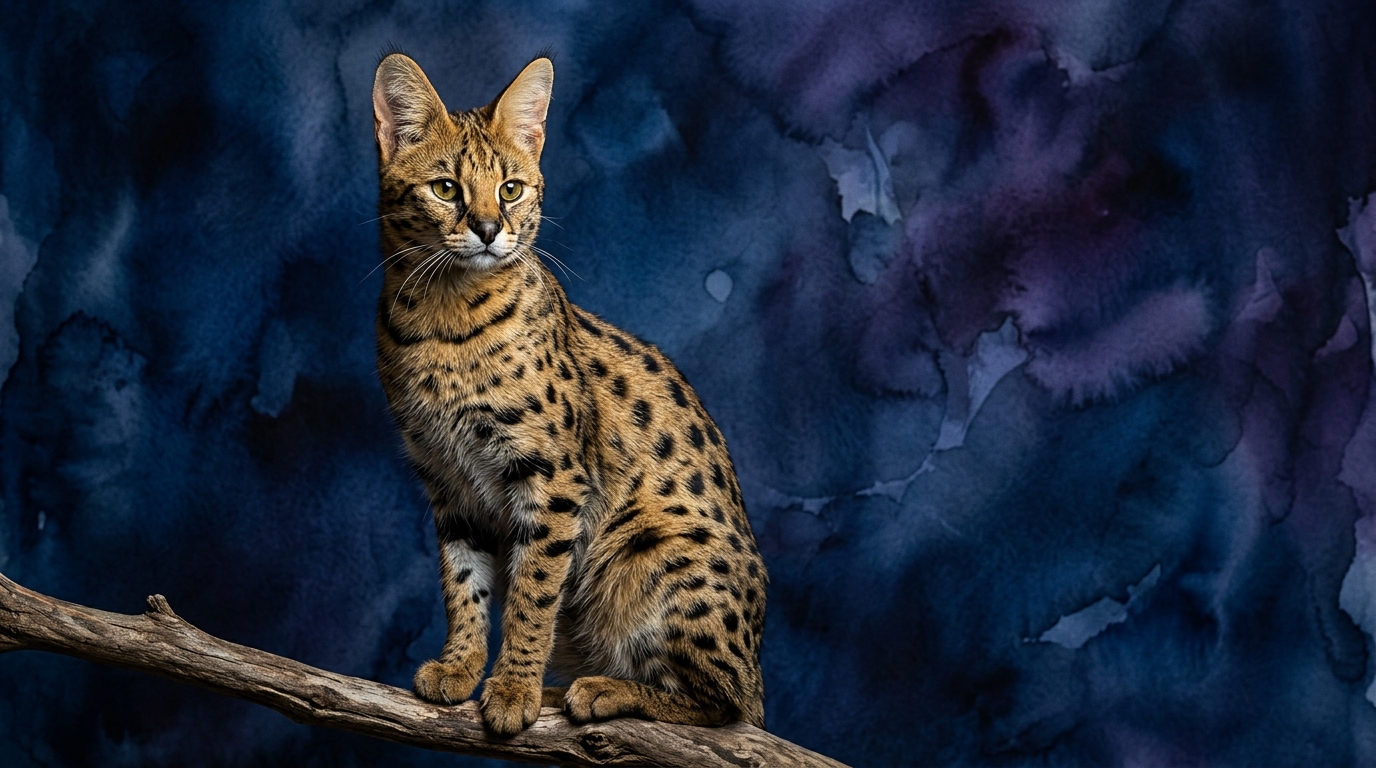
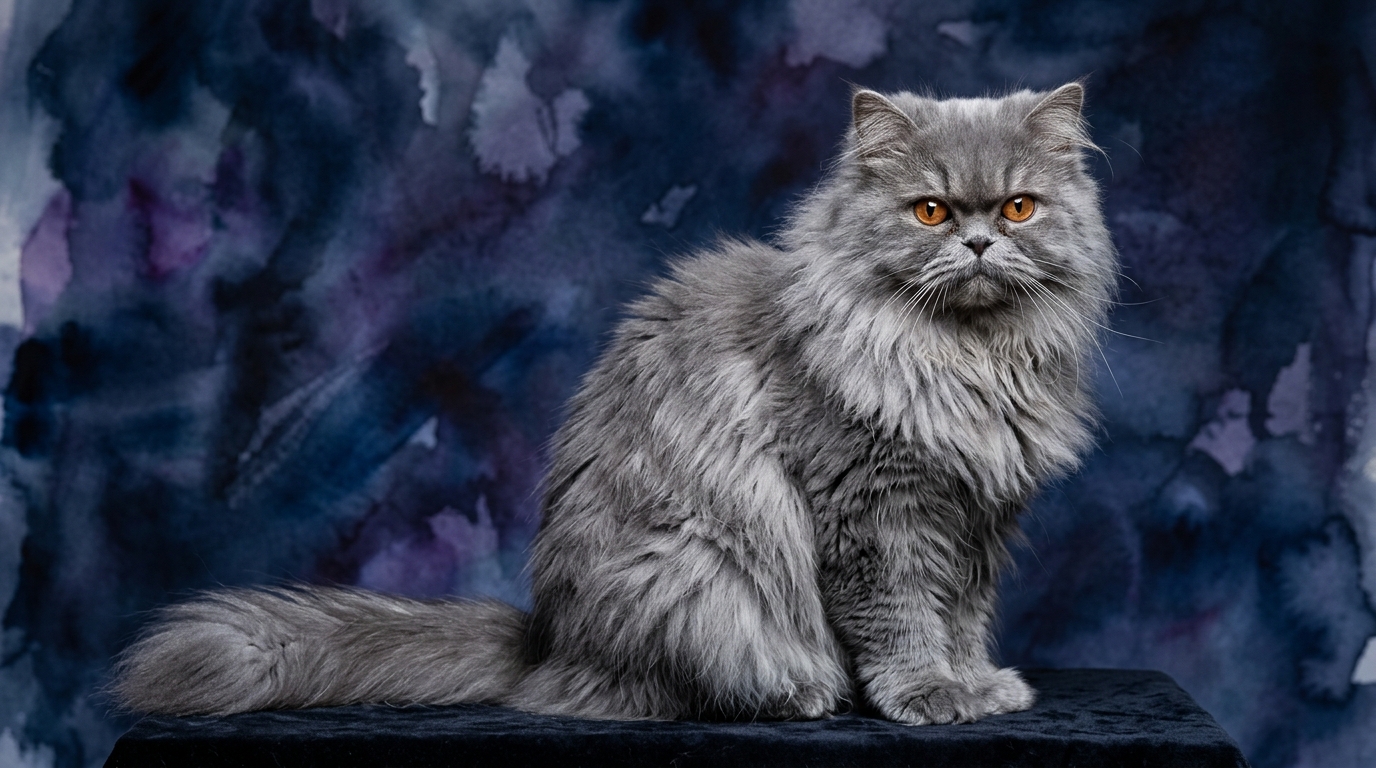
Side-by-Side Cognitive Profiles: Savannah vs. Persian
The Cosmic Pet Pet IQ Lab provides a detailed lens through which to examine the distinct cognitive landscapes of these two breeds, revealing how their evolutionary paths have shaped their mental aptitudes. This side-by-side comparison offers specific insights into how each cat processes information and interacts with its world.
Savannah Cat:
Problem Solving (5/5): The Savannah demonstrates exceptional ingenuity in navigating its environment and achieving goals, often devising multi-step solutions to access desired objects or overcome obstacles. This breed exhibits a remarkable capacity for understanding cause-and-effect relationships and adapting strategies in real-time, constantly assessing and experimenting.
Training Speed (4/5): Savannahs pick up new commands and routines with impressive swiftness, often requiring fewer repetitions than many other breeds. Their attentiveness and eagerness to engage make them receptive pupils, particularly when training involves stimulating challenges or rewards that tap into their natural curiosity.
Social Intelligence (4/5): These cats display a nuanced understanding of social cues, both from humans and other animals, and can form strong, complex bonds. While often independent, they are adept at communicating their needs and responding to interactions in a sophisticated manner, often observing and learning from social dynamics.
Instinctive Drive (5/5): Possessing a powerful connection to their wild ancestry, Savannahs exhibit intense hunting, exploring, and territorial instincts. This drive manifests as a constant curiosity and a need for mental and physical engagement, reflecting a deep-seated behavioral repertoire that requires significant outlets.
Memory (5/5): Savannahs possess an excellent memory, allowing them to recall complex sequences, locations of hidden items, and learned behaviors over extended periods. This contributes significantly to their problem-solving abilities and their capacity for consistent training, as they rarely forget a successful strategy or a learned boundary.
Persian Cat:
Problem Solving (2/5): The Persian typically approaches challenges with a more straightforward, less experimental mindset. While capable of basic problem-solving, they are less inclined to invent intricate solutions or persist with complex puzzles, preferring simpler, more direct approaches to their immediate comfort and needs.
Training Speed (2/5): Persians generally learn new behaviors at a more leisurely pace, often requiring patience and consistent reinforcement from their owners. Their learning style is less about rapid acquisition and more about gentle, repetitive exposure, making them less suited for advanced obedience or trick training.
Social Intelligence (3/5): Persians are generally amiable and enjoy companionship, understanding basic social interactions and expressing affection in a calm manner. Their social needs are typically less demanding and more predictable than those of more active breeds, thriving on quiet, consistent human presence.
Instinctive Drive (2/5): The instinctive drive in Persians is considerably muted compared to their wilder counterparts. Their focus is less on hunting or extensive exploration and more on comfort, routine, and a peaceful domestic existence, making them less prone to energetic bursts or destructive curiosity.
Memory (3/5): Persians possess a functional memory for routines, familiar faces, and preferred spots, allowing them to navigate their daily lives comfortably. While not as prodigious as some breeds, it serves their generally less complex needs effectively, ensuring they remember important aspects of their tranquil existence.
Where Savannahs Shine Cognitively
The Savannah's cognitive strengths are particularly evident in its remarkable capacity for complex thought and environmental mastery. Its 5/5 problem-solving score means it doesn't just react to its surroundings; it actively manipulates them. Owners often report Savannahs learning to open cabinets, doors, and even intricate pet puzzles, demonstrating a profound grasp of mechanics and spatial reasoning. This is further amplified by their 5/5 memory, enabling them to recall these solutions and apply them consistently, making them formidable strategists in their own environment.
Their 5/5 instinctive drive fuels this mental activity, compelling them to explore, hunt, and interact with their world in a deeply engaged manner, turning every new object or sound into a cognitive exercise. This combination creates a feline that is perpetually learning and adapting, thriving on intellectual stimulation and requiring an environment that can keep pace with their active minds. They are thinkers and doers, constantly seeking to understand and interact with their surroundings on a sophisticated level.
Where Persians Excel in Their Own Right
While the Persian's cognitive profile might appear less dynamic on paper, its strengths lie in areas that align perfectly with a tranquil household. Their moderate 3/5 social intelligence allows them to form affectionate bonds without the intense demands or intricate social negotiations of a more instinct-driven cat. This makes them wonderfully predictable and low-stress companions, content with gentle interaction rather than constant engagement.
Furthermore, their lower 2/5 instinctive drive translates into a cat less prone to destructive exploration or constant demands for stimulation, preferring a calm, settled existence. Their 3/5 memory is perfectly adequate for remembering their beloved humans, mealtimes, and preferred napping spots, contributing to their serene and undemanding nature. The Persian's cognitive makeup is optimized for peaceful coexistence, where comfort and companionship are prioritized over constant intellectual challenge, making them masters of domestic tranquility.
Training Dynamics: A Tale of Two Temperaments
Training a Savannah versus a Persian involves vastly different approaches, largely dictated by their respective cognitive profiles. The Savannah, with its 4/5 training speed, 5/5 problem-solving, and 5/5 memory, is a highly receptive learner. They respond well to positive reinforcement, clicker training, and even leash training, often quickly grasping complex commands and tricks. Their high instinctive drive means training can be leveraged to channel their boundless energy and curiosity constructively, preventing boredom-induced behaviors and making them enjoyable to teach.
Conversely, the Persian's 2/5 training speed means patience is paramount. They will learn, but at their own pace, often requiring more repetition and a calmer, less demanding approach. Their lower instinctive drive means they are less motivated by complex challenges and more by comfort and gentle praise, making simple routines and basic manners their training sweet spot. Attempting to force a Persian into rigorous training regimens is likely to be met with disinterest, highlighting the need for understanding their intrinsic cognitive pace.
Matching Felines to Lifestyles: Active vs. Relaxed Owners
The cognitive blueprints of the Savannah and Persian naturally align with distinct owner lifestyles. Active owners who relish interaction, engagement, and providing constant mental enrichment will find a kindred spirit in the Savannah. This breed thrives with puzzle toys, supervised outdoor exploration, agility training, and consistent playtime that taps into their high problem-solving and instinctive drive. They are not content to simply observe; they want to participate fully in their environment, requiring owners who can match their enthusiasm and provide consistent stimulation.
In contrast, relaxed owners seeking a serene, undemanding companion will find the Persian a perfect fit. Their lower instinctive drive and moderate social intelligence mean they are content with quiet companionship, gentle petting, and a predictable routine. They are the ideal lap cat, requiring minimal stimulation beyond affection and a comfortable, stable home environment. For those who value a calm presence and a less demanding pet, the Persian's cognitive makeup is perfectly tailored to a peaceful, low-key household.
The Verdict
Choose a Savannah if you are an experienced cat owner eager for a highly interactive, intellectually demanding companion who thrives on engagement and consistent mental and physical challenges.
Opt for a Persian if you desire a tranquil, affectionate, and predictable feline friend whose calm demeanor and lower activity needs perfectly complement a peaceful, relaxed household.
🧠 Find Your Pet's IQ Score
Our Pet IQ Lab assessment covers 25+ tests across 5 cognitive dimensions — personalized to your breed.
Take the Full IQ Test →Frequently Asked Questions
Do Savannah cats require more dedicated playtime than Persians?
Absolutely. Savannahs possess a 5/5 instinctive drive and thrive on extensive, engaging playtime that challenges their problem-solving skills and taps into their innate curiosity. Persians, with a 2/5 instinctive drive, are typically content with much less intense and frequent play sessions, preferring quiet companionship and a more sedentary lifestyle.
Can a Persian cat be taught tricks or complex commands?
While Persians can learn basic commands and routines, their 2/5 training speed and 2/5 problem-solving mean they are less inclined towards complex tricks. Success requires immense patience, consistent positive reinforcement, and realistic expectations regarding their learning pace and repertoire, focusing on simple, comfortable behaviors.
How does a Savannah's high memory impact its behavior at home?
A Savannah's 5/5 memory means it quickly learns household routines, remembers where forbidden items are stored, and recalls complex solutions to access them. This sharp recall contributes to their problem-solving prowess and means owners must be consistent with training and enrichment to prevent them from outsmarting boundaries and engaging in unwanted behaviors.