Side-by-Side IQ Profile: Unpacking Cognitive Dimensions
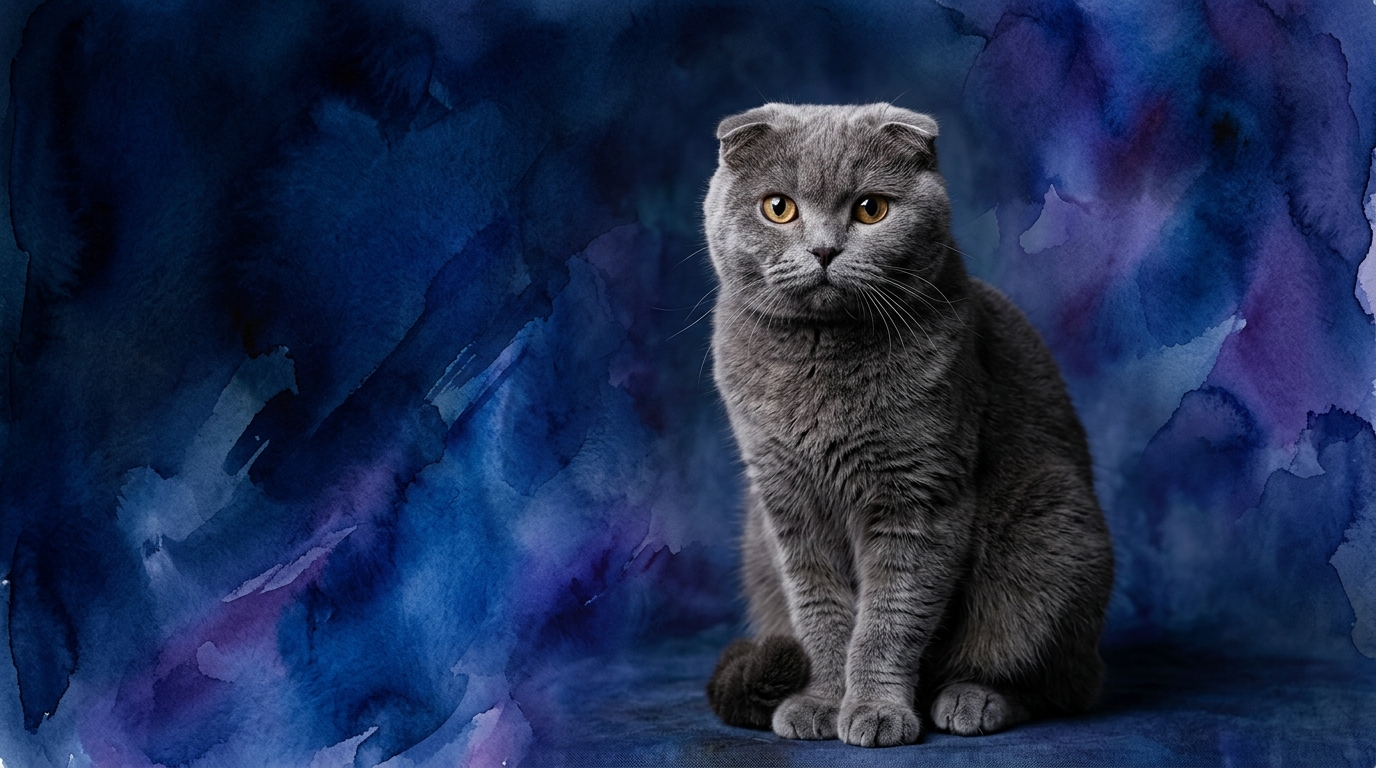
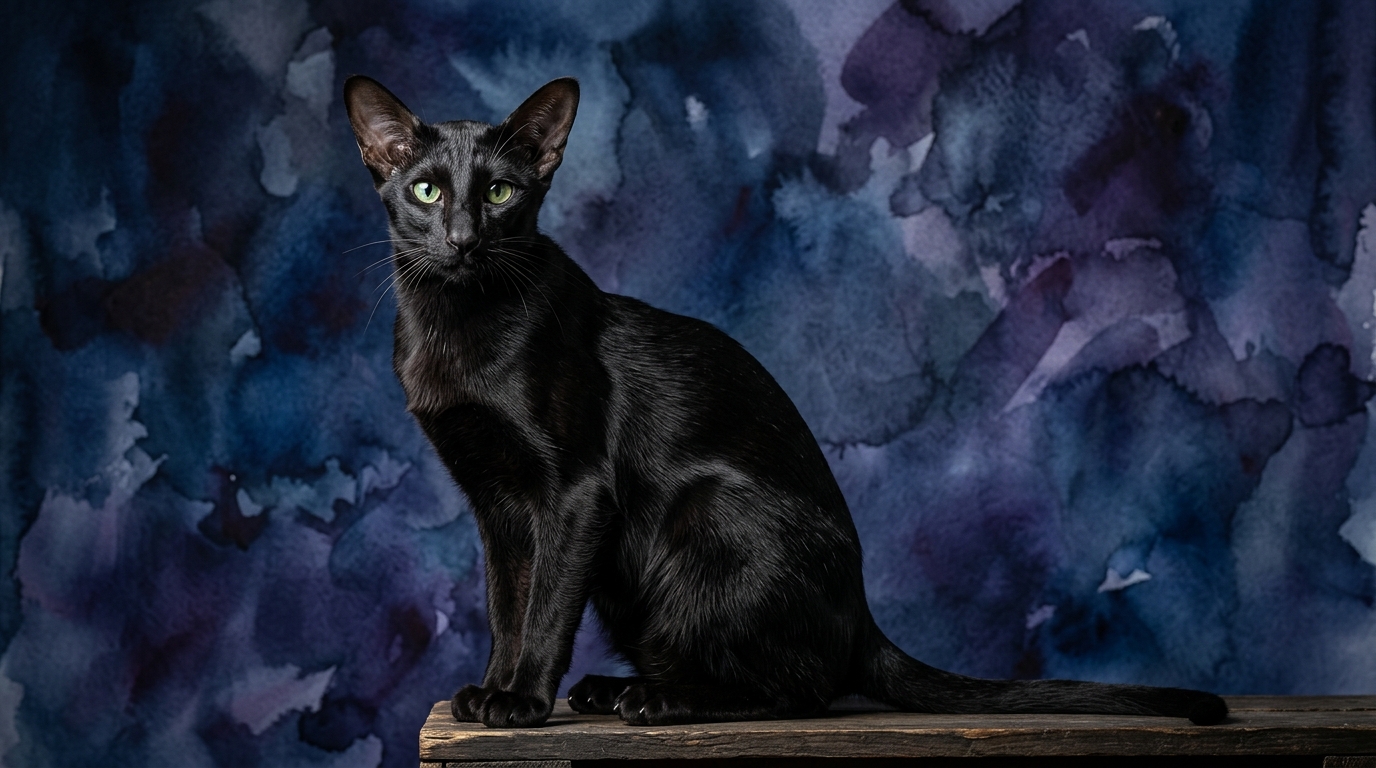
The Cosmic Pet Pet IQ Lab employs five key dimensions to evaluate feline intelligence, providing a detailed lens through which to understand each breed's unique cognitive strengths. For the Scottish Fold, its profile reveals a particular aptitude in social understanding, while the Oriental Shorthair presents a consistently balanced set of capabilities across the board.
The Scottish Fold demonstrates a Problem Solving score of 3/5, indicating a practical capacity to navigate moderate environmental challenges, such as figuring out how to access favored toys or opening simple, unlatched cabinets. Its Training Speed is also 3/5, meaning it possesses a moderate learning curve, capable of picking up basic commands and routines with consistent, positive reinforcement over time. A standout trait is its Social Intelligence at 4/5, signifying a strong capacity for understanding human emotions, cues, and social dynamics; they often seek interaction and are remarkably attuned to their owner's mood. Its Instinctive Drive is 3/5, showing a moderate level of natural hunting and exploration instincts, enjoying play that simulates predatory behavior without being overly dominant. Finally, its Memory is 3/5, reflecting a solid ability to recall past experiences, routines, and the locations of preferred items or people with moderate consistency.
The Oriental Shorthair, in contrast, consistently scores 3/5 across all five dimensions. Its Problem Solving at 3/5 means it is equally adept at solving practical problems as the Scottish Fold, demonstrating resourcefulness in its environment and mastering various puzzles. Its Training Speed is 3/5, matching the Scottish Fold in its ability to learn new tasks and commands, responding well to structured training sessions and positive reinforcement. Social Intelligence for the Oriental Shorthair is 3/5, indicating a good level of social understanding, capable of forming strong bonds and interacting meaningfully with humans, though perhaps with a slightly more independent social style. Its Instinctive Drive is 3/5, showing a moderate, balanced level of natural instincts for hunting, climbing, and exploring, enjoying interactive play and mental stimulation without excessive drive. Lastly, its Memory is 3/5, exhibiting a reliable recall for routines, learned behaviors, and significant past events, remembering people, places, and commands consistently.
Where the Scottish Fold Excels Cognitively
The Scottish Fold's most notable cognitive advantage lies in its superior Social Intelligence, scoring a 4/5 compared to the Oriental Shorthair's 3/5. This higher score isn't just a number; it translates into a distinctly richer, more nuanced interaction style. Scottish Folds are often more attuned to the subtle non-verbal cues from their human companions, capable of 'reading' body language or vocal inflections with greater precision.
This heightened social awareness means a Scottish Fold might more readily understand an owner's mood, offering comfort during stressful times or initiating play when sensing an invitation. Their capacity for deeper emotional bonding makes them exceptionally responsive to human interaction, and they may even use their understanding of human behavior to 'ask' for things more effectively, perhaps by making eye contact or performing a specific gesture that they know elicits a desired response. This makes them profoundly engaging companions who thrive on being an integral, emotionally connected part of the family unit.
Where the Oriental Shorthair's Cognitive Profile Shines
While the Oriental Shorthair doesn't outscore the Scottish Fold in any single dimension, its distinct strength emerges from its consistently balanced cognitive profile, with all scores at a solid 3/5. This equilibrium suggests a highly versatile and self-reliant intellect, making it a 'jack of all trades' in the feline cognitive world. Its problem-solving ability, rated equally to the Scottish Fold, often manifests with a greater degree of independent initiative.
The Oriental Shorthair might be less inclined to seek human assistance for puzzles or challenges, preferring to figure things out on its own. This self-sufficiency, combined with its robust memory and moderate instinctive drive, allows it to adapt creatively to various situations without constant external prompting. Owners might observe an Oriental Shorthair methodically exploring its environment, devising its own strategies for reaching high places or manipulating objects, demonstrating a persistent and balanced application of its cognitive faculties in a self-directed manner.
Training Dynamics: Which Breed is Easier to Train and Why?
Both the Scottish Fold and the Oriental Shorthair share a Training Speed score of 3/5, indicating they are equally capable of learning new commands and routines at a moderate pace. However, the experience of training each breed can feel distinctly different due to their varying social intelligence levels.
The Scottish Fold, with its 4/5 Social Intelligence, often appears 'easier' to train because it is profoundly motivated by pleasing its human companion and understanding their intentions. They are more likely to respond to social rewards like praise and affection, making training feel like a collaborative and intuitive process. Their eagerness to engage and their sensitivity to human cues can lead to faster comprehension of what is expected, even if the raw cognitive processing speed is the same.
Conversely, the Oriental Shorthair, with its 3/5 Social Intelligence, is certainly trainable but might require a more direct, consistent approach. While they enjoy interaction, their motivation might lean more towards tangible rewards like treats or specific toys, rather than solely social approval. Training an Oriental Shorthair may involve clearer, more structured cues and perhaps a bit more patience to establish the desired behavior, as they might be less inclined to 'guess' what their human wants without explicit instruction. They are capable learners, but their approach to the training dynamic is more independent.
Matching Lifestyles: Active vs. Relaxed Owners
The subtle differences in their cognitive profiles make each breed a better fit for different owner lifestyles, particularly concerning the level and type of interaction desired. Understanding these nuances can ensure a harmonious partnership.
For active owners who relish constant engagement, interaction, and a feline companion deeply involved in their daily lives, the Scottish Fold is an ideal match. Its high social intelligence means it thrives on being part of family activities, whether it's interactive play, 'conversations,' or simply cuddling on the couch. They will actively seek out their owner's company and appreciate an environment rich in human interaction, making them a wonderfully responsive and emotionally connected pet.
The Oriental Shorthair, with its balanced cognitive scores, is well-suited for owners who appreciate a cat capable of independent activity and self-entertainment, while still cherishing affectionate interactions. These cats are curious and enjoy exploring their environment on their own terms, finding ways to fulfill their cognitive and physical needs without constant human intervention. While they certainly enjoy and require attention, they might not demand it with the same intensity as a Scottish Fold, making them an excellent choice for relaxed owners who enjoy periods of independent activity from their pet alongside cherished moments of connection.
The Verdict
For individuals seeking a feline companion deeply attuned to human emotions and highly responsive to social cues, the Scottish Fold is an exceptional choice, offering a profound interactive bond. Its strong social intelligence makes it a delightful partner for engaging activities and shared moments.
The Oriental Shorthair appeals to owners who value a consistently capable and independently curious cat, one that approaches its environment with a balanced set of cognitive skills. It's an excellent fit for those who appreciate a cat that can entertain itself while still enjoying affectionate interactions.
🧠 Find Your Pet's IQ Score
Our Pet IQ Lab assessment covers 25+ tests across 5 cognitive dimensions — personalized to your breed.
Take the Full IQ Test →Frequently Asked Questions
Can Scottish Folds learn complex tricks despite their moderate training speed?
Yes, while their training speed is rated 3/5, their elevated social intelligence (4/5) means they are highly motivated by pleasing their owners. This responsiveness often allows them to master complex behaviors, especially when training is consistent and reward-based, making the process feel more intuitive and rewarding for both cat and owner.
Do Oriental Shorthairs require a lot of mental stimulation to prevent boredom?
Oriental Shorthairs possess a balanced cognitive profile with moderate problem-solving and instinctive drive, meaning they certainly benefit from mental stimulation. Providing puzzle toys, interactive play sessions, and opportunities for safe exploration helps keep their minds engaged and prevents boredom, ensuring they remain happy and well-adjusted.
Which breed is generally more adaptable to new environments or changes in routine?
Both breeds demonstrate good adaptability, but their approaches differ. The Scottish Fold's higher social intelligence might make it adapt well when its human companions provide comfort and reassurance. The Oriental Shorthair, with its balanced and consistent cognitive scores, is often adaptable through its independent curiosity and ability to self-regulate, exploring and understanding new situations on its own terms.