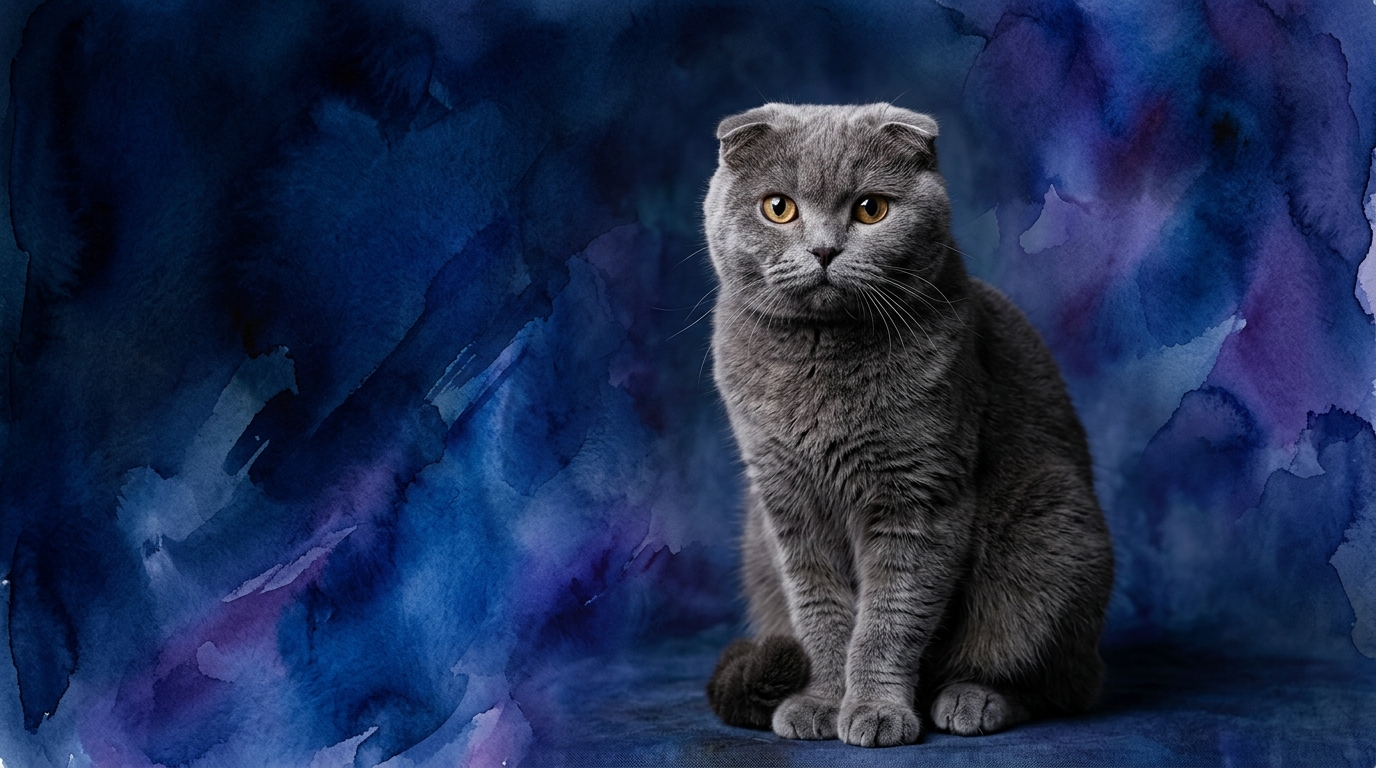
Scottish Fold at a glance
| IQ Rank / Score | 16/25 |
|---|---|
| Trainability | ★★★☆☆ (3/5) |
| Social Intelligence | ★★★★☆ (4/5) |
| Lifespan | 12-16 years |
| Shedding | Low to moderate |
| Exercise Needs | Moderate (20-40 min play/day) |
| Origin | Scotland |
The Calm Observer: Understanding Scottish Fold Intelligence
Many cat breeds express their mental acuity through active hunting or boisterous play, but the Scottish Fold offers a fascinating counterpoint. Their primary intelligence angle revolves around calm pattern recognition, meaning these felines are exceptionally adept at learning through observation rather than direct, active exploration. This makes them remarkably quick to adapt to new environments and household routines, often picking up cues and schedules by simply watching their human companions.
Imagine a cat that understands the subtle shift in your morning routine signals breakfast, or the particular sound of your keys means you're leaving. Scottish Folds excel at connecting these dots, absorbing information from their surroundings with a quiet intensity. This observational learning isn't a passive trait; it's a sophisticated cognitive process that highlights their capacity for detailed environmental assessment and memory, allowing them to anticipate events and interact seamlessly within their domestic sphere.
Decoding the Fold's Feline Mind: An IQ Profile
While cats weren't included in Coren's classic obedience scale, we can still assess Scottish Fold intelligence across key cognitive dimensions. For Problem Solving, they score a 3/5. Their approach is less about brute-force trial and error and more about applying learned patterns to new, similar situations. They’re practical problem-solvers, often waiting to observe before acting.
Training Speed for a Scottish Fold is also a solid 3/5. They respond well to positive reinforcement and consistent routines, quickly associating actions with rewards. However, their learning style is less about immediate, high-energy engagement and more about calm, repetitive practice. In Social Intelligence, Folds truly shine with a 4/5. They are deeply attuned to human moods and subtle body language, forming strong bonds and often seeking proximity to their favorite people.
Their Instinctive Drive registers at a 3/5, meaning while they retain natural feline instincts, these are often expressed in a more subdued or companion-oriented manner compared to some highly predatory breeds. Finally, their Memory is rated 3/5; they remember routines, faces, and associations effectively, which is crucial for their pattern-recognition abilities and allows them to anticipate daily life with ease.
Beyond the Ears: The Physicality of a Fold's Intellect
The defining characteristic of the Scottish Fold, their distinctive ears, is the result of a genetic mutation affecting cartilage. What's less commonly known, however, is that this Scottish Fold mutation affects cartilage throughout the body, not just the ears. Folds often sit in a 'Buddha position' — flat on their rump with legs stretched out — because their joints are genuinely more flexible. This unique physical trait might subtly influence their behavior, contributing to their calm demeanor and preference for observation over highly agile, active pursuits.
Their more flexible joints mean they might choose a comfortable, observational perch over high-energy acrobatics, further reinforcing their quiet learning style. This physical predisposition doesn't diminish their cognitive capacity; rather, it shapes how their intelligence is expressed, encouraging a methodical and thoughtful interaction with their environment. Their physical comfort and relaxed posture can also contribute to the perception of them as tranquil and contemplative companions.
Living with a Thoughtful Feline: Practical Insights
For Scottish Fold owners, understanding their cat's calm pattern recognition means creating an enriched environment that caters to their specific cognitive strengths. Regular routines, predictable playtimes, and consistent interaction schedules allow them to flourish. They thrive when they can observe and participate in the rhythm of your home, subtly absorbing information and cues that make them feel secure and connected.
You'll notice their intellect in their keen observation of new objects, their swift adaptation to a new piece of furniture, or how they anticipate your return home from the sounds of your car. They might not be the most boisterous problem-solvers, but they are masters of understanding cause and effect within their familiar world. Engaging them with puzzle feeders that require gentle manipulation rather than intense physical exertion can be particularly rewarding for these thoughtful felines.
3 At-Home Tests to Measure Your Scottish Fold's IQ
These tests are adapted from peer-reviewed ethology research. No equipment is needed beyond items you have at home. Run each test 5–10 times for reliable results.
The Myth: "Scottish Folds are simple, passive cats with no cognitive complexity."
✅ Far from simple, Scottish Folds exhibit a sophisticated form of intelligence centered on calm pattern recognition and observational learning, allowing them to quickly adapt and understand complex household routines. Their social intelligence is particularly nuanced, as they keenly read human cues, demonstrating a deep capacity for connection and understanding their environment. They may not always be actively 'doing' things, but they are constantly absorbing and processing information.
Scottish Fold vs. Similar Breeds
🧠 What's Your Cat's IQ Score?
Our full Pet IQ Lab assessment includes 12+ tests across 5 cognitive dimensions, calibrated for Scottish Folds specifically.
Take the Full IQ Test →Frequently Asked Questions
How smart is a Scottish Fold?
Our Pet IQ Lab framework scores cognition across five dimensions (max 25). The Scottish Fold totals 16/25 — high for a domestic cat. The full article breaks down each dimension with at-home tests.
Are Scottish Folds easy to train?
Scottish Folds can learn most cues, but expect to repeat lessons and keep sessions short. They score 3/5 on Training Speed in our breed profile.
Are Scottish Folds good with children and other pets?
Yes — their Social Intelligence rates 4/5 in our Pet IQ Lab framework. With early socialization and supervised play, most Scottish Folds integrate well into families with respectful children and other pets.
Do Scottish Folds need a lot of mental stimulation?
Scottish Folds benefit from 10-15 minutes of focused enrichment a day: food puzzles, short training drills, or novel toys rotated weekly.
How much exercise does a Scottish Fold need?
Scottish Folds do well with 20-40 minutes of interactive play plus a few short training moments.
How good is a Scottish Fold's memory?
Scottish Folds score 3/5 on memory. They remember high-value associations well; less-used cues fade without refresher sessions.
What is the typical lifespan of a Scottish Fold?
Most Scottish Folds live 12-16 years with good veterinary care, quality diet, and indoor living.
The Scottish Fold invites us to look beyond their distinctive ears and appreciate a nuanced, observant intelligence that thrives on routine and subtle connection. By understanding their unique cognitive profile, pet parents can truly unlock the quiet brilliance of these captivating felines.