
Side-by-Side Cognitive Profiles
While both the Scottish Terrier and the Bluetick Coonhound register a consistent 3/5 across the Pet IQ Lab's five cognitive dimensions, the manifestation of these scores is profoundly shaped by their distinct breed histories and primary functions. Understanding these nuances moves beyond raw numbers to reveal the specific ways each breed navigates its world.
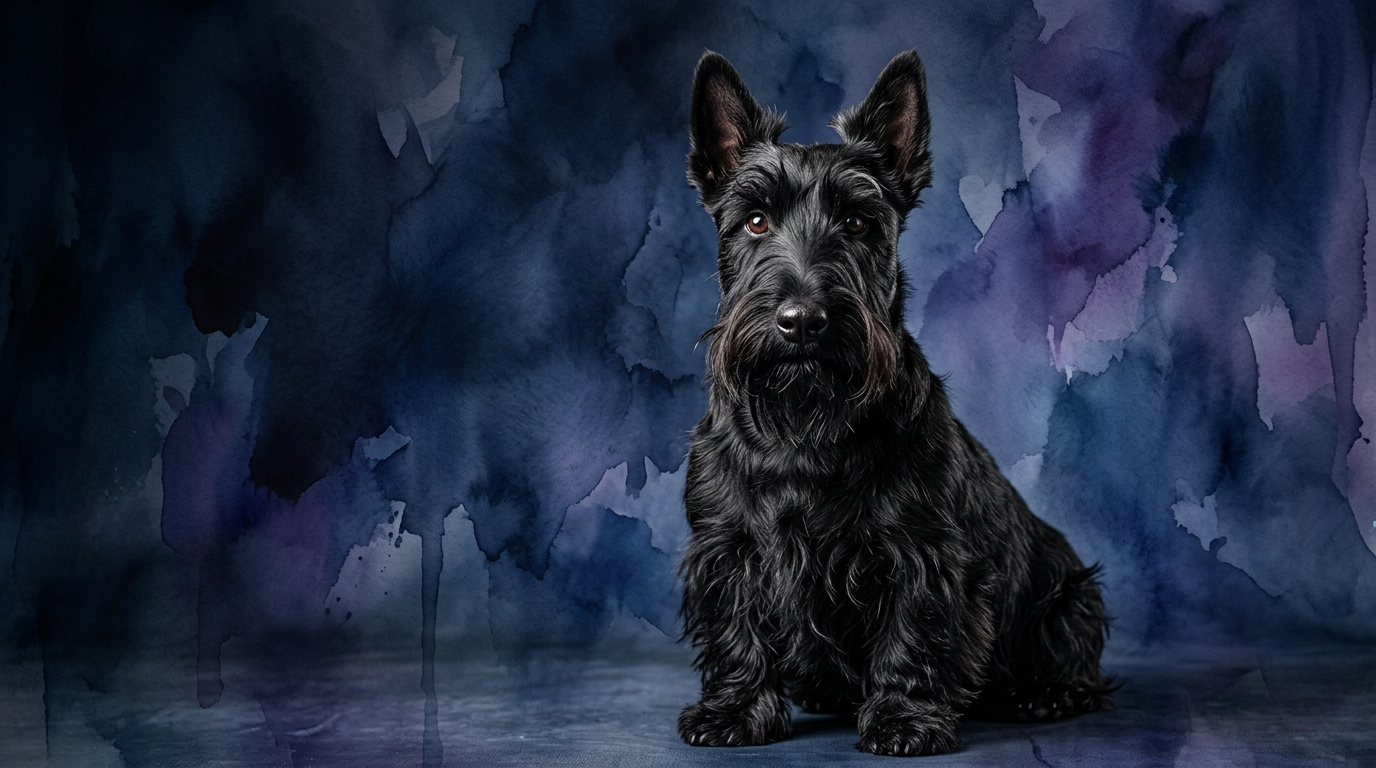
The Scottish Terrier, a breed with a Coren ranking of #65 for working and obedience intelligence, exhibits a particular brand of tenacity. Their **Problem Solving (3/5)** is often self-directed, focusing on tasks that satisfy their independent and often stubborn nature. This might involve strategizing how to access a forbidden treat, outmaneuver a squeaky toy, or persistently dig under a perceived barrier. Their solutions are often creative and determined, born from an inner drive to accomplish a self-appointed goal. When it comes to **Training Speed (3/5)**, Scotties are capable learners, quickly grasping commands. However, their independent spirit means that compliance is often contingent on motivation and consistency from their owner; they learn what you want, but frequently decide if they'll perform it. Their **Social Intelligence (3/5)** is keenly attuned to their immediate family, showing a deep understanding of human moods and routines, often leveraging this for comfort or advantage. With strangers, they tend to be more reserved and observant. The **Instinctive Drive (3/5)** in a Scottie is strong, characterized by a potent prey drive for small animals, a territorial instinct, and a confident, watchful demeanor. Lastly, their **Memory (3/5)** is robust, allowing them to recall specific commands, routines, and past experiences—both positive and negative—which significantly shapes their future behaviors.
The Bluetick Coonhound, a breed not individually ranked by Coren but celebrated for its specialized abilities, demonstrates its cognitive strengths through a different lens. Their **Problem Solving (3/5)** is intrinsically linked to their extraordinary olfactory capabilities. They excel at deciphering complex scent trails, navigating challenging terrains, and overcoming obstacles to pinpoint a scent source. This requires intricate mental mapping and unwavering focus, often for extended periods. Their **Training Speed (3/5)** is generally good, as they can learn commands and routines efficiently. However, their dominant scent drive means that environmental stimuli, particularly compelling odors, can easily divert their attention, making consistent focus a training challenge. The Bluetick's **Social Intelligence (3/5)** shines within their 'pack'—be it human family or other canines. They are often cooperative and gregarious, understanding group dynamics well, though their primary focus can shift externally when a captivating scent is present. Their **Instinctive Drive (3/5)** is powerful and singular: the relentless pursuit of scent. This drive dictates much of their behavior, leading to their characteristic 'hound music' and tireless tracking. Finally, their **Memory (3/5)** is exceptional for scent profiles and geographical layouts. They can recall intricate routes and the precise locations of previous scents, a crucial asset for their hunting legacy, alongside remembering training cues, though scent overrides can occasionally occur.
Where the Scottish Terrier Excels Cognitively
The Scottish Terrier's cognitive strengths lie in their independent decision-making and their ability to apply learned information to novel, self-initiated challenges. Their 3/5 problem-solving often manifests as an ingenious resourcefulness in domestic environments, such as figuring out how to open a cabinet or manipulate a puzzle toy without direct human guidance. This breed's tenacity means they will often persist in a task long after other breeds might give up, driven by their internal motivation rather than external reward. Their reserved social intelligence also grants them a sharp observational capacity, allowing them to 'read' their immediate human companions with notable accuracy, predicting routines and anticipating needs or weaknesses. This nuanced understanding contributes to their ability to subtly influence household dynamics. Furthermore, their confident and territorial instinctive drive translates into an alertness that makes them adept at identifying and reacting to unusual sounds or presences, often acting as diligent, albeit vocal, home guardians.
Where the Bluetick Coonhound Excels Cognitively
The Bluetick Coonhound's cognitive prowess is undeniably rooted in their specialized sensory abilities and endurance. Their 3/5 problem-solving is unparalleled in the realm of scent work; they can process and prioritize an astonishing amount of olfactory data, distinguishing a target scent from a myriad of competing odors and following complex, broken trails over vast distances. This requires a sophisticated form of abstract reasoning and sustained focus that few other breeds possess. Their social intelligence, while sometimes outwardly focused, allows for remarkable cooperative hunting or tracking efforts when working with a human partner or another dog, demonstrating a deep understanding of teamwork and roles. The Bluetick's powerful instinctive drive, once engaged on a scent, transforms into an unwavering dedication that allows them to overcome physical and mental fatigue, showcasing a profound mental fortitude. Their memory for scent and terrain is an almost photographic recall, enabling them to return to previous locations or pick up a trail days later, a testament to their specialized cognitive architecture.
Training: Scottie Independence vs. Bluetick Distractibility
When considering ease of training, both breeds score 3/5 in training speed, but their behavioral differences lead to distinct challenges. The Scottish Terrier's independence means they learn quickly but require an owner who understands their innate stubbornness. Training a Scottie often involves making them believe the command was their idea or presenting a reward so compelling it outweighs their desire to do their own thing. Their memory for both positive and negative experiences means that inconsistent training or harsh methods can quickly lead to resentment and a shutdown in cooperation. Effective Scottie training relies on consistent, positive reinforcement, mental stimulation to channel their problem-solving, and patience to navigate their strong will.
The Bluetick Coonhound, while also scoring 3/5 in training speed, presents a different set of considerations. They are generally eager to please within their pack, but their overwhelming instinctive scent drive is their primary distraction. A Bluetick might perfectly execute a 'sit' command indoors, only to become completely deaf to it the moment a captivating scent crosses their path outdoors. Training a Bluetick necessitates understanding and working with this powerful drive, rather than against it. Early socialization, consistent recall training in increasingly distracting environments, and using scent-based games as rewards can be highly effective. Patience is key, as is acknowledging that their 'disobedience' often stems from an instinctual response rather than defiance. Their social intelligence makes them responsive to fair, consistent leadership within their 'pack structure'.
Lifestyle Match: Active Pursuit vs. Confident Companion
The choice between a Scottish Terrier and a Bluetick Coonhound also hinges significantly on owner lifestyle. A Scottish Terrier, despite its compact size, is not a sedentary companion. Their 3/5 instinctive drive for digging, chasing, and guarding, coupled with their problem-solving nature, means they thrive with owners who can provide consistent mental engagement and moderate physical activity. They enjoy structured walks, puzzle toys, and opportunities to 'hunt' (even if it's just for a hidden treat). They are confident and self-possessed, making them excellent companions for individuals or families who appreciate a dog with a strong personality and who can provide firm, consistent guidance. They fit well with owners who enjoy a dog that is alert and engaged with its immediate surroundings, but also appreciates quiet time indoors.
In contrast, the Bluetick Coonhound is built for endurance and pursuit, making them ideal for active owners. Their 3/5 instinctive drive for scenting and tracking demands significant outlets; daily, long walks or runs are crucial, and opportunities for scent work, like tracking or nose work, are immensely beneficial. They are not suited for apartment living without substantial outdoor activity. Owners who enjoy hiking, running, or have a large, securely fenced yard where a Bluetick can explore scents will find a fulfilling partnership. Their social intelligence makes them wonderful family dogs, but their powerful drive requires an owner committed to managing their boundless energy and providing outlets for their innate purpose. They are best suited for owners who are active, patient, and prepared to embrace the characteristic 'hound' lifestyle.
The Verdict
Choose the Scottish Terrier if you appreciate a confident, independent companion who thrives on mental engagement and consistent boundaries, and you are prepared for their tenacious problem-solving and unique personality.
Opt for the Bluetick Coonhound if you lead an active lifestyle, can provide extensive outdoor exercise, and are eager to channel their exceptional scenting abilities and boundless energy into fulfilling activities.
🧠 Find Your Pet's IQ Score
Our Pet IQ Lab assessment covers 25+ tests across 5 cognitive dimensions — personalized to your breed.
Take the Full IQ Test →Frequently Asked Questions
Do identical IQ scores mean these breeds are equally easy to train?
No, identical 3/5 training speed scores indicate they both grasp concepts at a similar rate, but their underlying motivations and distractions differ significantly. The Scottish Terrier's independence requires consistent motivation, while the Bluetick Coonhound's powerful scent drive means overcoming external distractions is a primary training challenge.
How does 'problem-solving' differ between a Scottish Terrier and a Bluetick Coonhound with the same 3/5 score?
For a Scottish Terrier, problem-solving often involves independent, tenacious efforts to achieve self-selected goals like getting a toy or accessing an area. For a Bluetick Coonhound, it centers on complex scent discrimination, navigation, and persistent tracking to locate a scent source, showcasing a highly specialized form of cognitive effort.
Which breed is better for a first-time dog owner?
Neither breed is typically recommended for a completely novice owner due to their strong, distinct personalities and drives. Both require an understanding of their specific breed characteristics and a commitment to consistent training and suitable outlets for their energy and instincts.