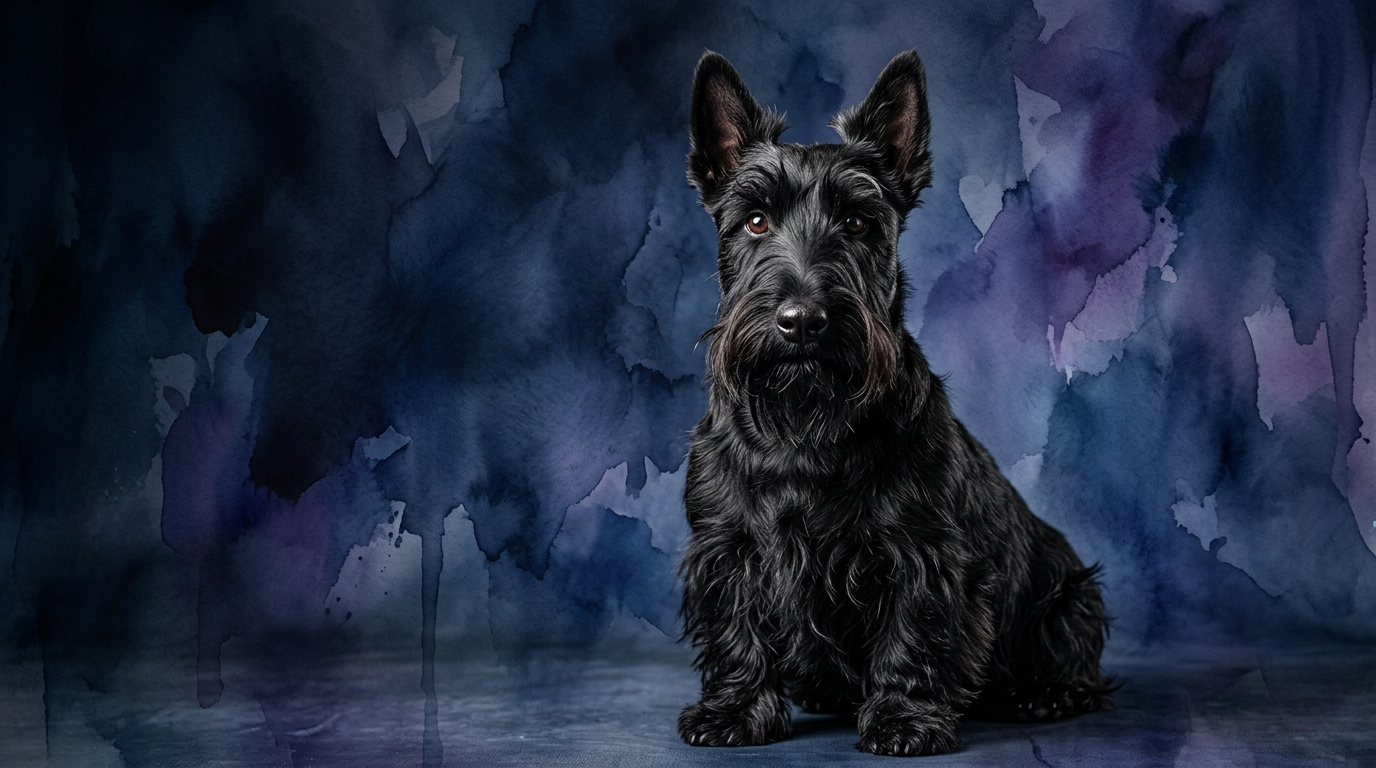

Side-by-Side IQ Profile
**Scottish Terrier (Coren Rank #65)**
**Problem Solving (3/5):** The Scottish Terrier shows moderate capacity for independent thought, often solving problems through persistent effort to achieve personal goals like digging or accessing specific items. Their solutions are frequently practical and instinct-driven rather than abstract.
**Training Speed (3/5):** Scotties possess moderate ability to grasp new commands, but their strong will and independent nature can lead to selective compliance. Consistency and positive reinforcement are vital to overcome stubbornness and ensure effective learning.
**Social Intelligence (3/5):** This breed exhibits moderate understanding of human cues within their family, forming deep bonds. However, they can be reserved or aloof with strangers, indicating a selective application of their social awareness.
**Instinctive Drive (3/5):** The Scottish Terrier's instinctive drive is moderately strong, primarily focused on prey drive, digging, and territoriality, reflecting their vermin-hunting heritage. This translates to natural urges to explore, mark, and pursue small creatures.
**Memory (3/5):** Scotties demonstrate moderate memory for learned behaviors, routines, and specific people or places. They recall training cues over time, though performance can depend on current motivation rather than flawless command recall.
**Redbone Coonhound (Not Coren-ranked)**
**Problem Solving (3/5):** The Redbone Coonhound displays moderate problem-solving, particularly in scent tracking and navigating complex environments to locate prey. Their solutions are often persistent and practical, driven by powerful olfactory senses and stamina.
**Training Speed (3/5):** Redbones learn at a moderate pace, especially when training involves scent work. However, their single-minded focus on scent can distract them from conventional obedience, requiring patience and creative methods.
**Social Intelligence (3/5):** This breed typically shows moderate social intelligence, being amiable and responsive to family. They are good-natured but may become overly fixated on external stimuli, like a scent, even during social interaction.
**Instinctive Drive (3/5):** The Redbone Coonhound's instinctive drive is moderately strong, overwhelmingly centered on scenting, tracking, and treeing game. This deep-seated drive compels them to follow compelling trails, often to the exclusion of other stimuli.
**Memory (3/5):** Redbones possess moderate memory, especially for scent trails, hunting grounds, and routines. They remember commands, but recall might be overridden by a powerful scent stimulus that captures their full attention.
Where Scottish Terrier Wins Cognitively
The Scottish Terrier's cognitive strength lies in its tenacious, goal-oriented problem-solving, particularly when achieving personal desires. Their moderate problem-solving, coupled with terrier persistence, allows them to cleverly navigate obstacles or manipulate situations for a treat or access to a digging spot. This involves adaptive application of learned behaviors and instinctual drives toward a specific outcome. Their selective social intelligence enables them to accurately gauge owner moods and intentions, fostering subtle communication within their inner circle.
Where Redbone Coonhound Wins Cognitively
The Redbone Coonhound truly excels in its specialized application of instinctive drive and memory for scent-based tasks. Their moderate problem-solving and memory scores are profoundly amplified in their natural element: trail following. They possess an extraordinary capacity to process and recall intricate scent patterns, differentiate trails, and navigate complex terrain by smell alone. This requires significant cognitive processing to interpret olfactory data, make directional decisions, and maintain focus over long periods, showcasing a unique, specialized intelligence.
Which is Easier to Train and Why
Neither breed is effortlessly easy to train, both scoring 3/5 in training speed, but their challenges differ. The Scottish Terrier's difficulty stems from independence and occasional stubbornness; they understand commands but might prioritize their own desires. Training a Scottie demands consistency, patience, and making sessions highly rewarding. The Redbone Coonhound's primary hurdle is its overwhelming scent drive. While they learn commands, a strong scent can instantly override learned behavior. Training a Redbone requires a robust recall, engaging their natural drives constructively, and extensive proofing in distracting environments. For general obedience in a busy home, the Scottie might be marginally easier if motivation is consistent, as their distractions are more internal. However, the Redbone excels where training aligns with their powerful olfactory world.
Which Suits Active Owners vs Relaxed Owners
For active owners, the Redbone Coonhound is a better fit. Their powerful instinctive drive and stamina demand significant daily exercise, ideally involving long walks, runs, or structured scent work. A relaxed owner might struggle to meet a Redbone's substantial physical and mental needs, potentially leading to restlessness. The Scottish Terrier, while needing regular activity, is content with moderate daily walks and secure yard play. Their moderate instinctive drive means they adapt more readily to a less intense schedule. Therefore, a more relaxed owner, or one seeking focused bursts of activity, might find the Scottish Terrier more suitable, provided they manage its independent streak.
The Verdict
Choose a Scottish Terrier if you appreciate a clever, independent companion offering deep loyalty within their immediate circle, thriving on consistent, engaging interaction.
Opt for a Redbone Coonhound if you are an active individual passionate about outdoor activities, especially scent work, and can provide ample physical and mental stimulation for their powerful drives.
🧠 Find Your Pet's IQ Score
Our Pet IQ Lab assessment covers 25+ tests across 5 cognitive dimensions — personalized to your breed.
Take the Full IQ Test →Frequently Asked Questions
Do Scottish Terriers get along with other pets, given their instinctive drive?
Scottish Terriers have a moderate prey drive. While they can coexist with other pets, especially if raised together, careful introductions and supervision are crucial, particularly with smaller animals like rodents or birds, due to their natural hunting instincts.
How does the Redbone Coonhound's memory for scent trails compare to other breeds?
The Redbone Coonhound's memory for scent trails is exceptional, a specialized facet of their moderate memory score. They excel at recalling and interpreting complex olfactory information over long distances and time, a hallmark of their hound heritage.
Can a Redbone Coonhound live in an apartment despite its activity needs?
While a Redbone Coonhound can technically live in an apartment, it's generally not recommended due to their high activity needs and strong instinctive drive. They require significant daily outdoor exercise and mental stimulation, making a home with a secure yard more ideal.