Side-by-Side Cognitive Profiles
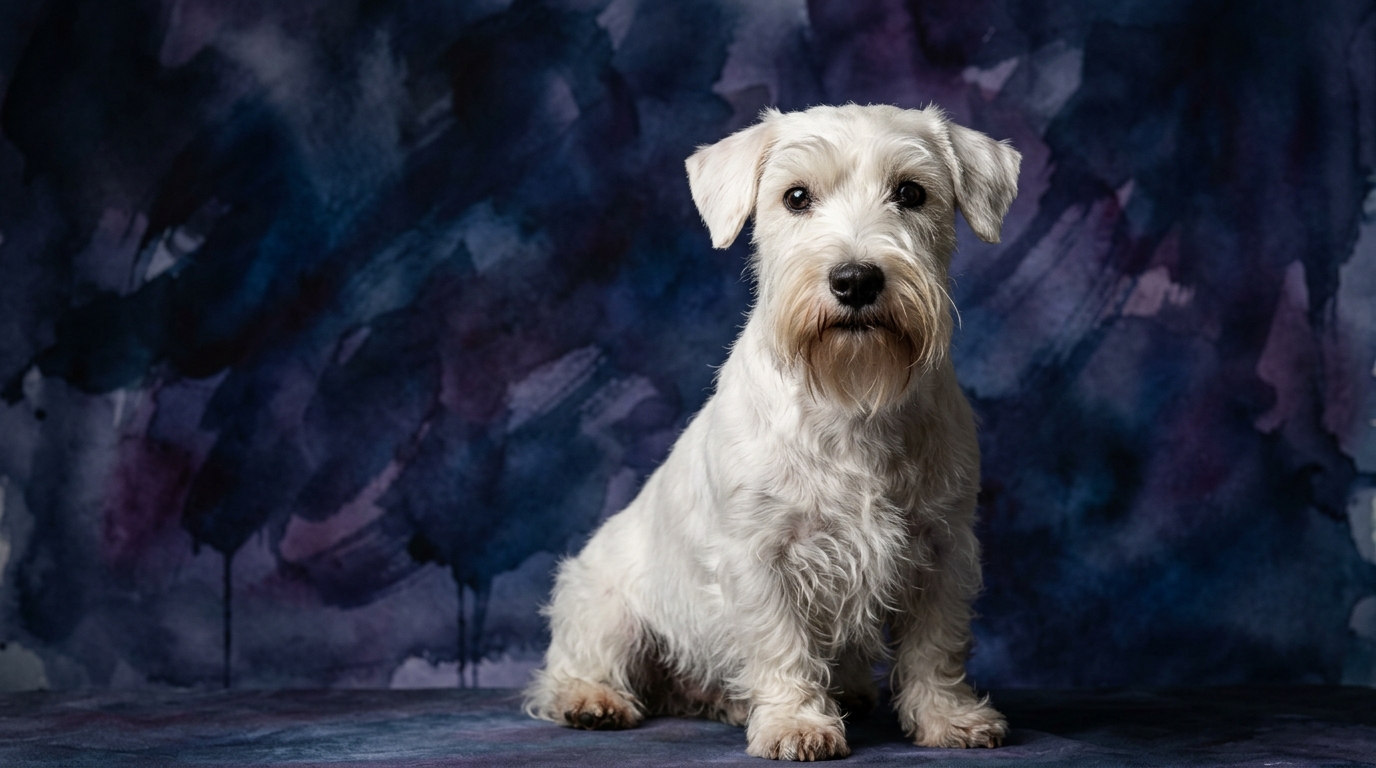
The Cosmic Pet Pet IQ Lab provides a comprehensive framework for understanding canine intelligence across five key dimensions. For the Sealyham Terrier, a tenacious breed from the Terrier group, its profile paints a picture of balanced, moderate cognitive abilities. Its problem-solving capacity is rated at 3/5, suggesting a moderate ability to figure out novel situations or puzzles, often relying on persistence and a practical approach rather than abstract reasoning. Training speed is also 3/5, indicating that they require a moderate number of repetitions to grasp new commands, benefiting from consistent and patient reinforcement. Social intelligence stands at 3/5, meaning they possess a moderate understanding of human cues and social dynamics, capable of forming bonds but perhaps not as finely attuned to subtle emotional shifts as some breeds. Their instinctive drive is rated 3/5, reflecting a moderate expression of inherent breed-specific behaviors like digging or chasing, present but generally manageable. Finally, the Sealyham Terrier's memory is 3/5, signifying a moderate retention of learned behaviors and experiences, remembering commands and routines but potentially needing occasional refreshers to maintain sharp recall.
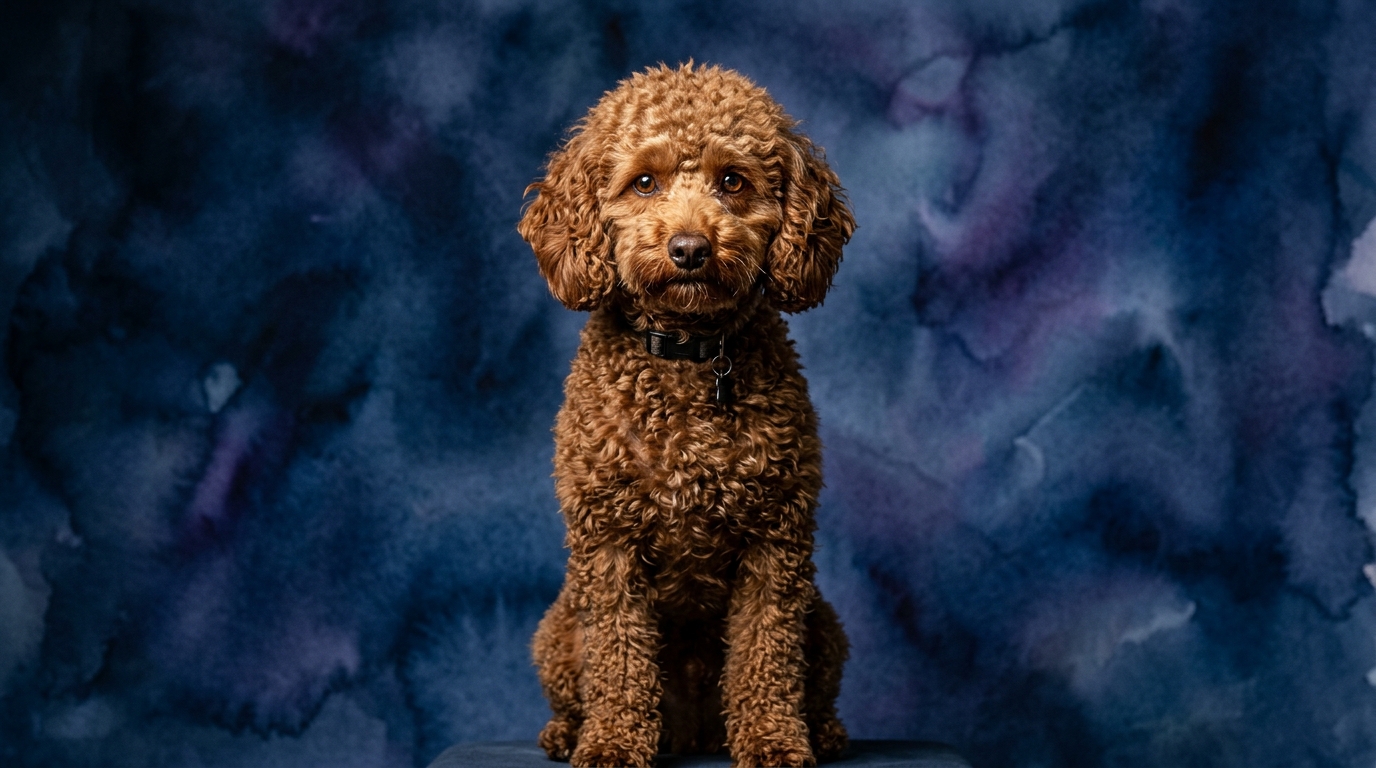
In contrast, the Miniature Poodle, a dog from the Non-Sporting group and ranked #2 by Dr. Stanley Coren for working and obedience intelligence, showcases a profile of exceptional cognitive prowess in several areas. Its problem-solving ability is an outstanding 5/5, demonstrating an exceptional capacity for analytical thought and quickly figuring out complex tasks or novel challenges, often displaying strategic foresight. Training speed matches this at 5/5, meaning they acquire new commands and routines with remarkable swiftness, frequently needing very few repetitions to achieve mastery. Social intelligence for the Miniature Poodle is 3/5, similar to the Sealyham, indicating a moderate understanding of human cues and social dynamics; they are companionable but not necessarily exceptional in interpreting complex human emotions. Their instinctive drive is also 3/5, reflecting a moderate expression of inherent breed behaviors which, for Poodles, might include retrieving or a keen observational sense, rather than a strong prey drive. Crucially, the Miniature Poodle's memory is rated 5/5, signifying an outstanding ability to recall commands, routines, and past experiences over long periods, rarely forgetting what they have learned.
Where the Sealyham Terrier Cognitively Shines
While the Sealyham Terrier's individual cognitive scores are consistently at a moderate 3/5, these attributes, when combined with their inherent breed characteristics, create a distinct cognitive strength. Their problem-solving at a 3/5 level, coupled with a tenacious terrier spirit, means they excel at tasks requiring sustained effort and persistence rather than immediate, elegant solutions. For instance, successfully navigating a complex scent trail or persistently working through a tricky burrow requires a unique kind of cognitive stamina, where moderate, consistent application of intelligence can be more effective than rapid, abstract reasoning. This persistence, rooted in their instinctive drive (3/5), allows them to focus intensely on a goal, undeterred by initial setbacks and willing to try multiple approaches until success is achieved.
Furthermore, their social intelligence at 3/5, while not indicating exceptional empathy, suggests a certain independent focus that can be an advantage in specific situations. This allows them to rely on their own judgment and drive to complete a task, rather than constantly seeking human reassurance or direction. They learn to trust their own assessment of a situation, making them self-reliant partners in activities that demand a degree of autonomy. Their moderate memory (3/5) ensures they retain crucial learned behaviors and routines, but their engagement in the learning process might be deeper, as it requires more active participation and reinforcement from the owner, fostering a profound working relationship built on mutual effort.
Where the Miniature Poodle Cognitively Excels
The Miniature Poodle's cognitive profile showcases distinct strengths, particularly in areas demanding rapid acquisition and sophisticated application of knowledge. Their problem-solving ability, rated at an exceptional 5/5, means they can quickly analyze novel situations and devise effective solutions. This manifests in their capacity to understand complex sequences, figure out puzzle toys with minimal prompting, or even adapt to changing environments with remarkable ease, often approaching challenges with an almost strategic foresight. They don't just solve problems; they often demonstrate an understanding of underlying principles.
Coupled with their training speed, also a perfect 5/5, Miniature Poodles absorb new commands and routines with astonishing swiftness. This makes them incredibly versatile, capable of excelling in diverse canine sports like obedience, agility, and even intricate trick training, where mastering new behaviors quickly is paramount. Their ability to generalize learned concepts to new situations is also a hallmark of this high training speed. Furthermore, their memory, rated at 5/5, ensures that once a Poodle learns something, it tends to stick. This robust recall contributes to their reliability in performance tasks and their consistent adherence to household rules, making them predictable and dependable companions. They build a vast mental library of associations and experiences, allowing them to draw upon past knowledge to inform current actions with remarkable accuracy.
Trainability: Patience vs. Pace
When assessing ease of training, the Miniature Poodle holds a clear advantage, primarily due to its exceptional scores in training speed (5/5), problem-solving (5/5), and memory (5/5). These combined attributes mean a Miniature Poodle can grasp new commands and complex routines with remarkable swiftness, often requiring only a handful of repetitions before understanding. For instance, teaching a Poodle a multi-step fetch command or a complex agility sequence can be a relatively smooth process, as they quickly connect actions with consequences and retain these associations over time. Their analytical minds allow them to anticipate human intentions and generalize learned behaviors to novel contexts, making them highly adaptable students who often seek to understand what is being asked of them.
In contrast, the Sealyham Terrier, with its 3/5 ratings across training speed, problem-solving, and memory, requires a more patient and consistent approach. While certainly trainable, they may take more repetitions to solidify a new command, and their problem-solving might lean more towards persistent trial-and-error than quick, abstract reasoning. Behavioral differences also play a role; Sealyhams, as working terriers, possess a degree of independent thought and a tenacious spirit that, while valuable in their original role, can sometimes be perceived as 'stubbornness' in a training context. They might question the necessity of a command more readily or be less intrinsically motivated by pleasing their handler compared to a Poodle, which often thrives on interaction and mental engagement. Training a Sealyham often benefits from making tasks feel like a game or a challenge they can 'win,' appealing to their inherent drive, whereas a Poodle might be motivated by the sheer joy of learning and performing, making them eager participants in almost any training endeavor.
Matching Canine Cognition to Owner Lifestyles
The choice between a Sealyham Terrier and a Miniature Poodle hinges significantly on an owner's lifestyle and their preferred mode of engagement. Active owners who relish the challenge of advanced training, dog sports, or intricate mental games will find the Miniature Poodle an exceptionally rewarding companion. Their 5/5 problem-solving and training speed mean they thrive on consistent mental stimulation, quickly mastering new skills in agility, obedience, or even canine freestyle. A Poodle left without sufficient mental engagement can become bored, potentially leading to undesirable behaviors, making them ideal for owners who are proactive in providing structured learning and varied activities that tap into their deep well of cognitive capacity.
Conversely, while also requiring regular physical activity, the Sealyham Terrier's needs are often met by owners who appreciate their tenacity and desire for purposeful work. An active owner for a Sealyham might be someone who enjoys long, exploratory walks, engaging in scent work, or even participating in earthdog trials which tap into their instinctive drive (3/5). They benefit from activities that allow them to use their senses and moderate problem-solving skills in a more grounded, persistent manner. For more relaxed owners, neither breed is a true 'couch potato,' but the Sealyham's lower cognitive demand for *complex* mental puzzles might make them slightly less prone to frustration from under-stimulation, provided their physical and instinctive needs are met. A relaxed owner for a Poodle might find themselves needing to dedicate significant time to mental enrichment, even if physical activity is moderate. Ultimately, both breeds require dedicated owners, but the *nature* of that dedication differs considerably.
The Verdict
Choose the Sealyham Terrier if you appreciate a dog with a steadfast, independent spirit and a tenacious approach to life, valuing persistence over rapid understanding. They are ideal for owners who enjoy a dog with character and are prepared to engage in patient, consistent training that appeals to their inherent drives.
Choose the Miniature Poodle if you are seeking a highly adaptable, exceptionally quick learner who thrives on complex mental challenges and excels in diverse training disciplines. They are perfect for owners who want a dog eager to engage in intricate interactions and master a vast repertoire of skills.
🧠 Find Your Pet's IQ Score
Our Pet IQ Lab assessment covers 25+ tests across 5 cognitive dimensions — personalized to your breed.
Take the Full IQ Test →Frequently Asked Questions
Is a Sealyham Terrier hard to train?
A Sealyham Terrier is not inherently hard to train, but they require more patience and consistency than some breeds. Their moderate training speed (3/5) means they learn at a steady pace, and their independent terrier spirit benefits from positive reinforcement and making training feel like a rewarding game.
What kind of activities are best for a Miniature Poodle's IQ?
Miniature Poodles excel in activities that challenge their high problem-solving (5/5) and training speed (5/5). Dog sports like agility, obedience, rally, and even trick training or puzzle toys are excellent for keeping their keen minds engaged and preventing boredom.
How do their social intelligence scores (3/5 for both) compare?
Both breeds share a moderate social intelligence, meaning they are capable of forming strong bonds and understanding basic human cues but might not exhibit the same nuanced empathy as some breeds. They are companionable without being overly sensitive to every subtle human emotional shift, offering a balanced social dynamic.