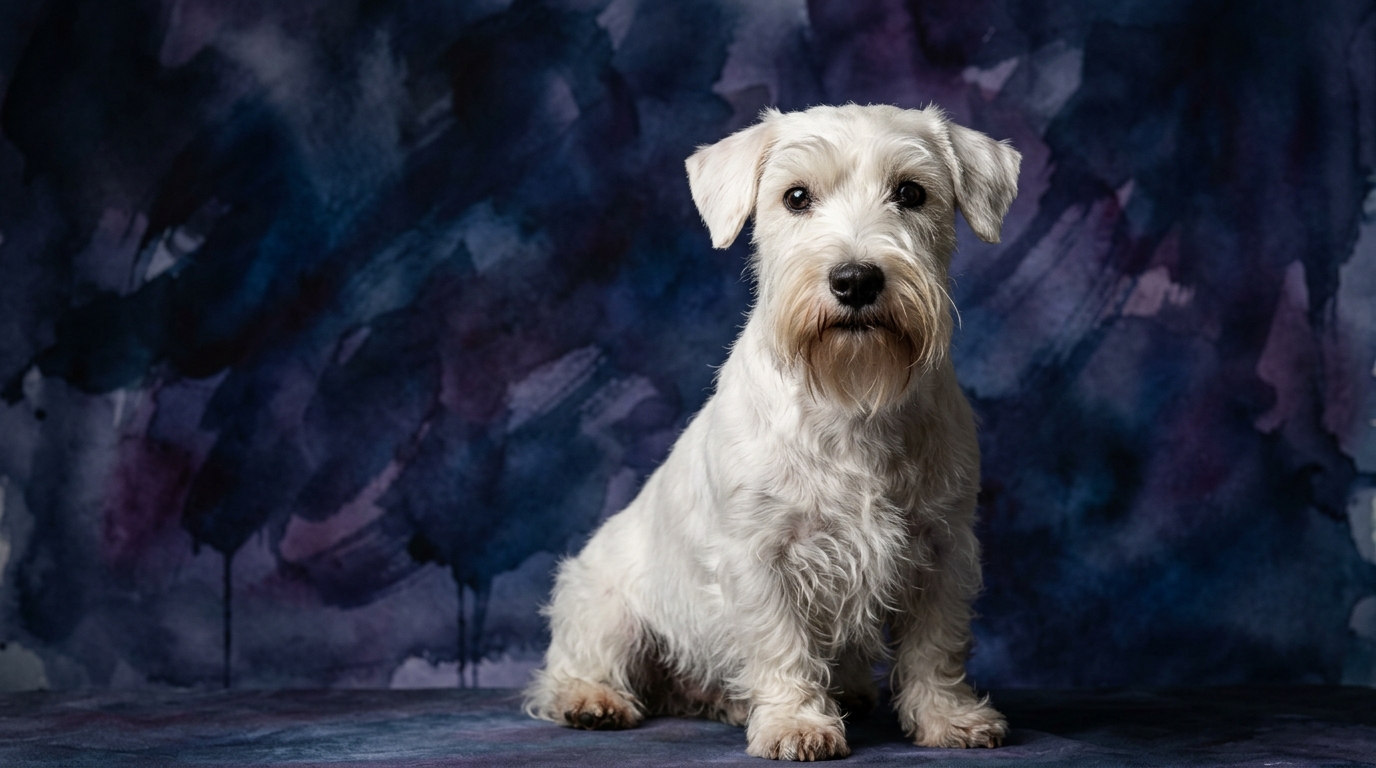

Side-by-Side IQ Profile: Sealyham Terrier vs. Russian Toy
**Problem Solving (3/5):** For the Sealyham Terrier, a 3/5 in problem solving often manifests as a tenacious, physical approach to challenges. They are quite capable of figuring out how to navigate their environment, perhaps by digging under a barrier or persistently working at a puzzle toy, relying on their inherent terrier drive more than intricate planning. The Russian Toy's 3/5 in problem solving, by contrast, is often geared towards social dynamics. They excel at understanding how to manipulate their environment through human interaction, perhaps by 'figuring out' the best way to solicit attention, treats, or access to comfortable spots, displaying a cleverness rooted in their companion nature.
**Training Speed (3/5):** A 3/5 training speed for the Sealyham Terrier indicates they are responsive learners, but their independent terrier spirit means consistency and engaging methods are paramount. They will learn commands at a moderate pace, but distractions, especially those related to their keen senses and prey drive, can sometimes slow progress. The Russian Toy also scores 3/5 in training speed, suggesting a similar moderate pace of learning. However, their sensitivity and strong desire for companionship mean they thrive on positive reinforcement and gentle guidance, potentially becoming discouraged or shutting down if training methods are too harsh or inconsistent.
**Social Intelligence (3/5):** The Sealyham Terrier's 3/5 social intelligence typically means they are attuned to their immediate family and can read their cues well, but may exhibit a more reserved or independent demeanor with strangers. They understand household routines and their position within the family unit, often expressing affection on their own terms. For the Russian Toy, a 3/5 in social intelligence often signifies a profound connection with their human companions, demonstrating a high degree of empathy and an ability to pick up on subtle emotional shifts. They are adept at using social cues to foster closeness and secure comfort, embodying the quintessential companion dog.
**Instinctive Drive (3/5):** The Sealyham Terrier's 3/5 instinctive drive is deeply rooted in their working heritage, manifesting as a notable prey drive, a propensity for digging, and a watchful, alert nature. They possess a natural inclination to explore, scent, and respond to perceived threats in their environment, requiring appropriate outlets for these inherent behaviors. The Russian Toy's 3/5 instinctive drive, while not focused on hunting, expresses itself as a strong desire for close companionship, an alert nature that often leads to barking at novel sounds or visitors, and a tendency to "shadow" their favorite person, driven by their need for social connection and security.
**Memory (3/5):** A 3/5 memory for the Sealyham Terrier means they generally retain commands, routines, and past experiences effectively. They will remember training lessons and familiar environments, which aids in their overall adaptability and ability to navigate their world, though complex, multi-stage tasks might require more repetition. The Russian Toy also scores 3/5 in memory, indicating they are quite good at recalling where desired items are kept, remembering their human's habits, and associating specific behaviors with positive outcomes, which is particularly useful in their role as a highly interactive companion.
Where the Sealyham Terrier 'Wins' Cognitively
Despite identical numerical scores, the Sealyham Terrier's cognitive strengths often shine in areas requiring robust determination and physical engagement. Their 3/5 problem-solving, combined with their instinctive drive, makes them particularly effective at overcoming physical obstacles or pursuing a goal with unwavering tenacity, such as navigating a complex outdoor environment or persistently working on a challenging puzzle. This breed’s independent spirit means their 3/5 cognitive abilities are well-suited for situations demanding autonomous decision-making, where they might rely on their own judgment and physical prowess rather than constant human direction, a trait stemming from their historical role as independent hunters.
Where the Russian Toy 'Wins' Cognitively
The Russian Toy's cognitive strengths, while also rated 3/5, are uniquely tailored to their role as a dedicated companion, excelling in social and emotional intelligence. Their 3/5 social intelligence allows them to read and respond to subtle human emotions and cues with exceptional accuracy, making them highly adept at fostering deep bonds and even "manipulating" their owners for affection, comfort, or resources in a charming way. Furthermore, their problem-solving and memory, while not geared towards physical tasks, are remarkably effective in learning and adapting to the intricate routines and social expectations of a human household, making them masters of domestic harmony and ensuring their needs for companionship are met.
Which is Easier to Train and Why?
Determining which breed is "easier" to train, given their identical 3/5 training speed, comes down to understanding their motivational drivers and behavioral nuances. The Sealyham Terrier, with its inherent terrier independence and 3/5 instinctive drive, can present a training challenge due to its strong will and potential for stubbornness. They often require a handler who can be consistently firm, fair, and creative, using high-value rewards and making training feel like a game to channel their energy and focus past environmental distractions like scents or small critters. Their learning speed is moderate, but overcoming their natural inclination to follow their nose or dig requires significant patience and understanding of their breed-specific traits.
The Russian Toy, conversely, often responds well to training due to its 3/5 social intelligence and strong desire to please and connect with its owner. They thrive on positive reinforcement, praise, and gentle methods, quickly associating desired behaviors with rewards and human approval. However, their sensitivity means harsh corrections can be counterproductive, potentially leading to anxiety or shutdown, which can impede their learning progress despite their moderate training speed. While generally eager, their small size can sometimes lead to owners inadvertently allowing undesirable behaviors (e.g., barking, not walking on a leash) to persist, mistakenly thinking they are less impactful, which can make training more challenging in the long run if not addressed consistently from the start.
Active Owners vs. Relaxed Owners: Cognitive Fit
For owners leading an active lifestyle, the Sealyham Terrier is often a more fitting match. Their 3/5 instinctive drive and robust energy levels mean they thrive on regular, engaging physical activity beyond simple walks. They enjoy exploring, scent work, digging opportunities, and active play sessions that challenge both their bodies and their 3/5 problem-solving minds. Owners who appreciate a dog with a resilient spirit and a need for outdoor adventure will find a strong companion in the Sealyham.
The Russian Toy, while certainly enjoying play, typically has lower physical exercise requirements, making them well-suited for more relaxed owners or those with smaller living spaces. Their 3/5 social intelligence means their primary need is for consistent, close companionship and mental stimulation through interaction with their humans. They thrive on lap time, indoor games, learning tricks, and being an integral part of daily household life. While adaptable, they are ideal for owners who prioritize devotion and connection, and who can provide ample social interaction and gentle engagement over strenuous outdoor activities.
The Verdict
If you appreciate a tenacious, independent canine companion with a good sense of humor, who enjoys engaging in active pursuits and challenges, the Sealyham Terrier is an excellent choice. They thrive with owners who understand their terrier spirit and can provide consistent, stimulating engagement.
Opt for the Russian Toy if you seek a highly attuned, charming companion who excels at reading human cues and thrives on close social interaction within the home. They are ideal for owners who enjoy consistent positive reinforcement training and value a devoted, albeit sometimes delicate, presence.
🧠 Find Your Pet's IQ Score
Our Pet IQ Lab assessment covers 25+ tests across 5 cognitive dimensions — personalized to your breed.
Take the Full IQ Test →Frequently Asked Questions
Do Sealyham Terriers and Russian Toys have similar exercise needs?
No, despite similar IQ scores, their exercise needs differ significantly due to their breed types. Sealyham Terriers, as terriers, require more vigorous and consistent physical activity, including opportunities for digging, exploring, and active play to satisfy their instinctive drives. Russian Toys have lower physical exercise requirements, often satisfied with indoor play and short walks, but crave significant social interaction and mental engagement through companionship.
How does "instinctive drive 3/5" manifest differently in these two breeds?
For the Sealyham Terrier, a 3/5 instinctive drive typically means a noticeable prey drive, a tendency to dig, and a watchful, alert nature, reflecting their heritage as vermin hunters and independent workers. In the Russian Toy, a 3/5 drive often translates to a strong desire for companionship, alertness to household sounds (leading to barking at novelties), and a tendency to "shadow" their favorite person, rooted in their role as devoted companion dogs.
Are both breeds suitable for first-time dog owners given their identical IQ scores?
While both score 3/5 in training speed and problem-solving, their underlying temperaments and needs make a difference for first-time owners. A first-time owner comfortable with consistency and understanding of terrier independence might manage a Sealyham, but it requires dedication to their specific needs. The Russian Toy's strong social intelligence and desire to please, coupled with generally lower physical demands, might make them a slightly more forgiving choice for a novice owner willing to commit to gentle, positive training methods and provide ample companionship.