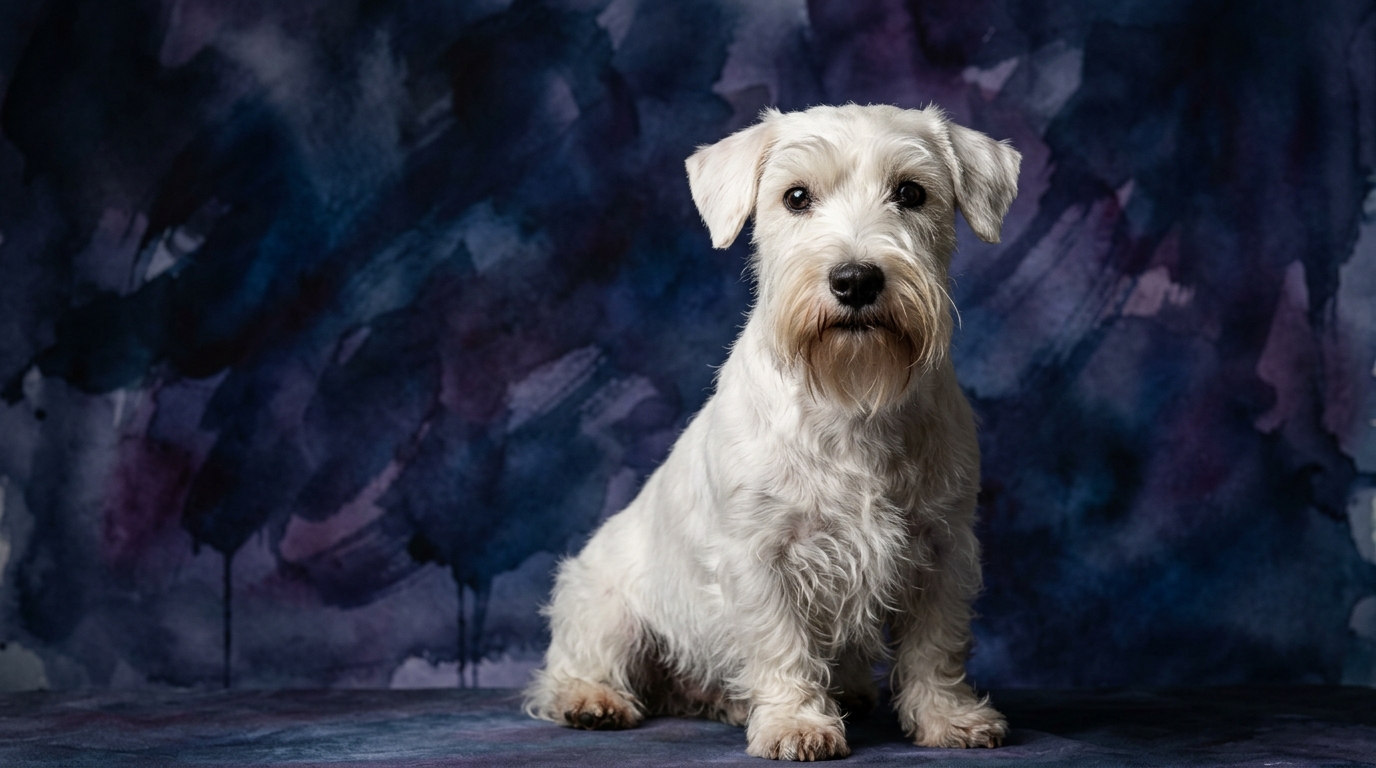
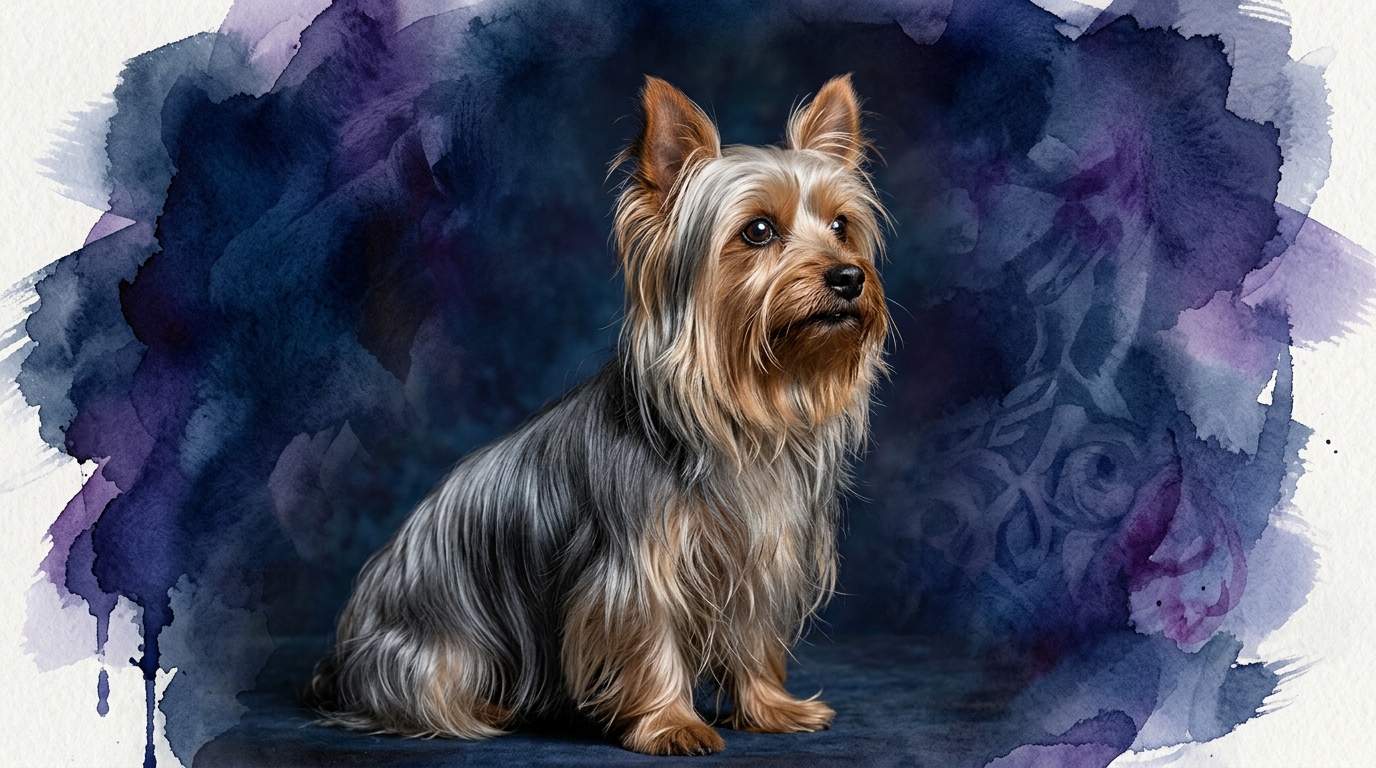
Side-by-Side Cognitive Profiles: Sealyham vs. Silky
Even with identical scores across the board, the everyday application of these cognitive traits varies considerably between the tenacious Sealyham Terrier and the spirited Silky Terrier, reflecting their distinct breed histories and purposes. Understanding these nuances is key to appreciating their individual brilliance.
**Sealyham Terrier:**
**Problem Solving (3/5):** This score for a Sealyham often manifests as tenacity in overcoming physical obstacles or figuring out how to access a desired item. Their persistence in tasks mimicking hunting or digging is notable, learning through trial and error to achieve goals tied to their instincts.
**Training Speed (3/5):** Sealyhams learn commands at a moderate pace, but their independent nature means compliance can be selective. Consistency and tangible rewards are crucial, as they are motivated by satisfaction of a task rather than pure desire to please.
**Social Intelligence (3/5):** A Sealyham’s social intelligence involves keen awareness of their immediate family and territory. They are discerning with strangers, adept at reading owner moods, but might not always adjust their strong-willed behavior accordingly.
**Instinctive Drive (3/5):** This 3/5 drive is intensely focused on predatory behaviors like digging, chasing, and investigating. They possess a strong prey drive and an inherent need to root out hidden things, reflecting their original purpose.
**Memory (3/5):** Sealyhams possess a good memory for routines, specific commands, and locations of favored objects or past 'prey' encounters. They quickly recall behaviors yielding desired outcomes and places with interesting smells.
**Silky Terrier:**
**Problem Solving (3/5):** For a Silky, this often presents as cleverness in navigating their environment to gain attention or access. They might quickly figure out how to open a cupboard for treats or position for maximum lap space, often geared towards social interaction.
**Training Speed (3/5):1** Silkys pick up commands at a moderate speed, often motivated by praise and treats, eager to engage. Their spirited nature requires consistency, thriving in fun, engaging sessions over repetitive drills.
**Social Intelligence (3/5):** Silkys excel in reading human emotions and social cues, often leveraging this understanding. They are highly attuned to family dynamics, sometimes charmingly manipulative to secure attention or affection.
**Instinctive Drive (3/5):** While still a terrier, the Silky's 3/5 drive is expressed more as chasing small, moving objects, barking down perceived intruders, and asserting presence. Their prey drive exists but typically less intense for sustained hunting.
**Memory (3/5):** Silkys have a good memory for commands, routines, and who gives the best belly rubs. They remember past interactions to inform future behaviors, especially concerning social dynamics and securing comfort or desires.
Where the Sealyham Terrier Cognitively Excels
The Sealyham Terrier’s cognitive strengths truly shine in scenarios demanding independent focus and unwavering persistence, a direct legacy of their earthdog heritage. Their 3/5 problem-solving, combined with a robust 3/5 instinctive drive, means they excel at tasks requiring sustained, self-directed effort. For instance, if presented with a puzzle feeder that requires multiple steps or significant manipulation to release a reward, a Sealyham is more likely to methodically work through it, ignoring distractions, until the objective is met. This isn't about speed, but about a deep-seated drive to complete a perceived 'mission.' They demonstrate superior cognitive resilience when faced with frustration, often trying various approaches until success is achieved, rather than giving up. Their memory (3/5) also aids in recalling successful strategies for such independent tasks, reinforcing their problem-solving efficacy in practical, physical challenges. They are less likely to seek human intervention for a task they believe they can solve themselves, showcasing a robust self-reliance.
Where the Silky Terrier Cognitively Excels
The Silky Terrier, while sharing the terrier spirit, often displays a different set of cognitive advantages, particularly in areas involving social dynamics and adaptability within a human household. Their 3/5 social intelligence, though numerically identical to the Sealyham’s, manifests as a more nuanced ability to read and respond to human emotions and subtle cues. A Silky might be quicker to pick up on a change in an owner's mood or anticipate a request before it's explicitly given, using this information to adjust their behavior – perhaps offering a comforting nudge or initiating a game. Their problem-solving (3/5) is often directed towards 'cracking the code' of human behavior to get what they want, whether it's more cuddles or an extra treat. They might be more adept at learning complex sequences of actions to get a human to open a door or fetch a toy. This isn't about independent hunting, but about sophisticated social manipulation and integration, making them remarkably astute companions in a domestic setting. Their memory (3/5) reinforces these social learnings, helping them remember which gestures or vocalizations reliably elicit desired human responses.
Training Dynamics: Which Breed Offers a Smoother Experience?
While both breeds have a 3/5 training speed, the *ease* of training often hinges on their motivational drivers and inherent independence. The Silky Terrier, with its strong social intelligence and desire to be involved with its human family, can often be perceived as easier to train for obedience and tricks. They are typically eager to please their primary person and respond well to positive reinforcement, especially praise and interactive play. Their spirited nature can mean occasional stubbornness, but their fundamental drive for companionship often outweighs this, making them more pliable for consistent training. They are generally less distracted by environmental stimuli that doesn't involve their human.
The Sealyham Terrier, conversely, presents a different training dynamic. While equally capable of learning due to their 3/5 training speed, their profound 3/5 instinctive drive and independent problem-solving mean they often have their own agenda. Training a Sealyham requires immense patience, creativity, and a deep understanding of their terrier mindset. They are less inherently driven by human approval and more by the satisfaction of their own pursuits, such as digging or exploring. They might learn a command quickly but choose to ignore it if a more interesting scent or perceived 'prey' captures their attention. Training needs to tap into their working instincts, making it a partnership rather than simple instruction. They require a handler who can make training feel like a challenging game or a meaningful task, rather than just rote obedience. Therefore, for a typical owner seeking straightforward obedience, the Silky might offer a smoother experience, while the Sealyham demands a more dedicated and nuanced approach.
Matching Breeds to Lifestyles: Active vs. Relaxed Owners
Defining 'active' and 'relaxed' is crucial here, as both terriers require engagement, but of different kinds. The **Sealyham Terrier** suits an owner who is 'active' in a specific, task-oriented sense. This isn't necessarily about running marathons, but about providing consistent mental stimulation and outlets for their strong instinctive drive. Owners need to be active in engaging their Sealyham in scent work, puzzle toys, structured walks that allow for exploration, or even earthdog trials. They thrive with owners who are prepared to manage their tenacity and independent problem-solving with consistent training and engaging activities, preventing boredom-driven destructive behaviors. A Sealyham owner must be actively involved in shaping their dog's environment and daily routine to satisfy their cognitive needs.
The **Silky Terrier**, while spirited and requiring regular exercise, can suit an owner who is 'relaxed' in the sense of enjoying more companion-focused activities. This owner enjoys daily walks, playtime in the yard, and interactive games, but also values a dog content to cuddle on the couch. Their activity needs are more about bursts of energy and social engagement rather than sustained, independent work. A Silky owner needs to be actively engaged socially with their dog, providing plenty of attention, training, and opportunities for interaction, but the nature of that activity is often less about channeling intense working drives and more about shared companionship. They need an owner who can provide consistent boundaries and socialization to temper their feisty spirit, but their overall energy profile allows for more 'relaxed' downtime together.
The Verdict
Choose the Sealyham Terrier if you are a dedicated owner prepared to channel a strong, independent spirit into engaging, task-oriented activities, appreciating a dog with robust self-reliance and a tenacious problem-solving approach.
Opt for the Silky Terrier if you seek a spirited, socially astute companion who thrives on interaction and can cleverly integrate into family life, offering a dynamic blend of playful energy and affectionate companionship.
🧠 Find Your Pet's IQ Score
Our Pet IQ Lab assessment covers 25+ tests across 5 cognitive dimensions — personalized to your breed.
Take the Full IQ Test →Frequently Asked Questions
Do Sealyham Terriers and Silky Terriers learn at the same pace?
While both breeds have a 3/5 training speed, their learning *style* and motivation differ. Sealyhams learn well through task-oriented engagement, while Silkys are often more responsive to social praise and interactive training.
Which breed is better at adapting to new environments?
The Silky Terrier, with its higher social adaptability and focus on integrating with its human family, generally adjusts more readily to new social settings and environments. Sealyhams, while adaptable, often prefer their established routines and territory.
How do their problem-solving skills differ in practical terms?
A Sealyham's 3/5 problem-solving often involves tenacious, independent efforts to overcome physical obstacles or hunt-like challenges. A Silky's 3/5 problem-solving is frequently directed at cleverly manipulating social situations to gain attention or access to desired comforts.