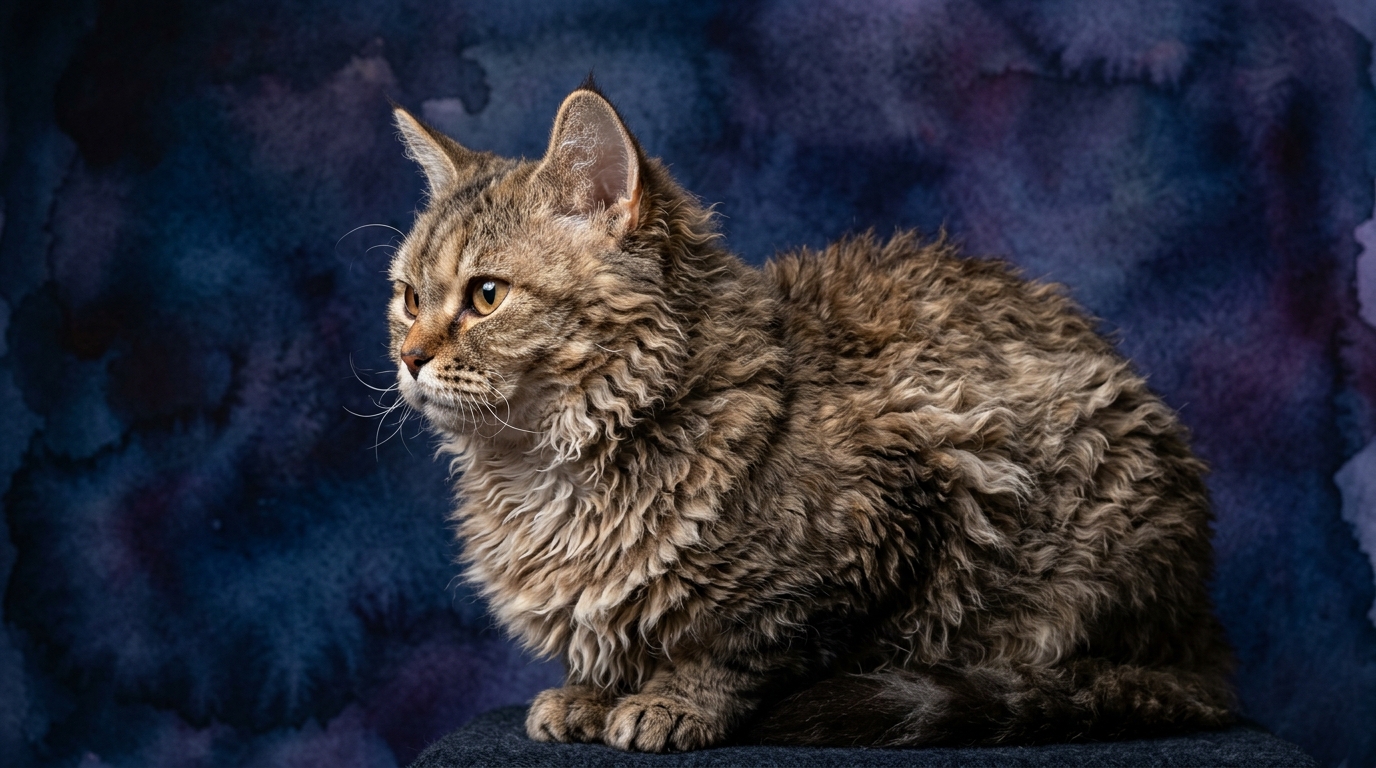
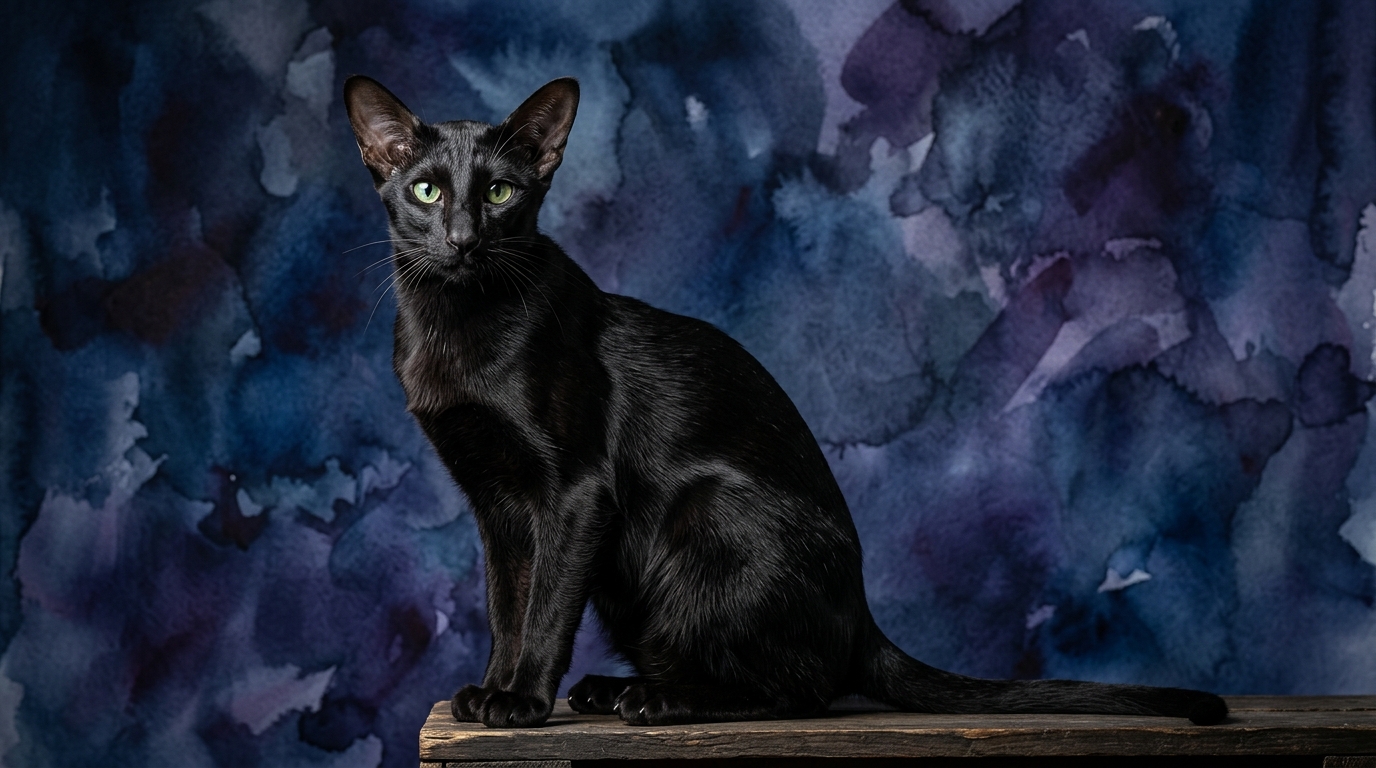
Side-by-Side Cognitive Profiles
Despite their distinct physical attributes, both the Selkirk Rex and the Oriental Shorthair register an identical 3/5 across all five dimensions of our Pet IQ Lab assessment. This parity doesn't mean their cognitive expressions are identical; rather, it highlights how a similar underlying capacity can manifest through unique breed temperaments and preferred modes of interaction. Let's explore how this 3/5 rating translates into their specific cognitive behaviors.
In **Problem Solving (3/5)**, the Selkirk Rex typically approaches challenges with a thoughtful, patient demeanor, often observing a situation before engaging. They might systematically try different methods to open a cupboard or retrieve a hidden toy, driven by a gentle curiosity and a desire for resolution rather than immediate frustration. The Oriental Shorthair, by contrast, engages with problem-solving tasks with focused intensity, quickly experimenting with solutions. They are more likely to persistently manipulate objects or figure out mechanisms to achieve a goal, often vocalizing their efforts and displaying a more direct, hands-on approach.
Regarding **Training Speed (3/5)**, the Selkirk Rex responds well to consistent, positive reinforcement, learning routines and simple commands at a steady, agreeable pace. Their cooperative nature makes them receptive to guidance, though they may not always initiate training interactions, preferring to follow their owner's lead. The Oriental Shorthair demonstrates a rapid grasp of new commands and tricks, often eager to participate in training sessions. Their desire for interaction and mental engagement drives their quick acquisition of behaviors, particularly those involving agility, fetch, or puzzle-solving, thriving on engaging, interactive lessons.
For **Social Intelligence (3/5)**, the Selkirk Rex forms deep, abiding bonds with their human companions, subtly discerning moods and responding with a comforting presence. They are adept at integrating into multi-pet households, showing sensitivity to the social dynamics of their environment and generally maintaining harmonious relationships. The Oriental Shorthair exhibits a pronounced need for social interaction, actively seeking attention and engaging in "conversations" with their distinctive vocalizations. They are particularly skilled at reading human cues and anticipating intentions, often becoming highly attuned to their chosen person, displaying a profound, almost dog-like devotion.
Their **Instinctive Drive (3/5)** also presents nuanced differences. The Selkirk Rex possesses a moderate prey drive that manifests in playful stalking and pouncing, enjoying interactive toys that mimic hunting scenarios. Their instincts are balanced with a generally calm disposition, making their play less intense but consistently engaging. The Oriental Shorthair displays a robust and persistent instinctive drive, channeling their energy into vigorous play and exploration. They excel at chasing, climbing, and "hunting" toys, often exhibiting an almost dog-like enthusiasm for games of fetch and retrieval, demanding outlets for their natural predatory behaviors.
Finally, in **Memory (3/5)**, the Selkirk Rex retains information about routines, favored people, and preferred play objects with reliable consistency. They remember positive and negative experiences, influencing their future interactions and comfort levels in various situations, contributing to their adaptable nature. The Oriental Shorthair shows a strong capacity for remembering complex sequences, locations of hidden items, and specific individuals. Their memory aids in navigating their environment efficiently and recalling training cues over long periods, reinforcing their capacity for elaborate learned behaviors and routines.
Where the Selkirk Rex Excels Cognitively
The Selkirk Rex's cognitive strength lies in their serene adaptability and patient observational learning. While the Oriental Shorthair might dive headfirst into a new puzzle, the Selkirk Rex often takes a more measured approach, processing information and assessing situations with a calm deliberation that can lead to equally effective, albeit less frenetic, solutions. This thoughtful processing allows them to integrate smoothly into diverse home environments, showing a quiet competence in understanding household dynamics and individual preferences without needing constant direct engagement. Their capacity for gentle discernment of human emotions, providing comfort without overt demands, subtly demonstrates a nuanced social intelligence that thrives on quiet companionship and stable routines.
Where the Oriental Shorthair Excels Cognitively
The Oriental Shorthair's cognitive edge manifests in their dynamic engagement and rapid, interactive learning style. Their assertive curiosity drives them to actively explore, manipulate, and master their surroundings with remarkable alacrity, often figuring out complex mechanisms or retrieving specific items through persistent effort. This breed's profound social intelligence is expressed through their "conversational" nature and their uncanny ability to anticipate human actions, making them highly attuned partners in games and daily routines. Their powerful memory and robust instinctive drive contribute to their exceptional ability to learn and recall elaborate tricks and games, reflecting a vibrant, action-oriented intellect that thrives on constant mental stimulation and interaction.
Which is Easier to Train and Why
While both breeds achieve a 3/5 in Training Speed, the "easier" label depends significantly on the owner's approach and desired outcomes. The Selkirk Rex, with its patient and agreeable disposition, tends to be an easier training partner for basic commands and routine establishment, responding well to calm, consistent positive reinforcement without requiring intense engagement. Their cooperative nature means they are generally less resistant to learning house rules and simple tricks, making the training process feel less like a challenge and more like a shared, gentle activity.
In contrast, the Oriental Shorthair's quick learning is coupled with a pronounced need for constant mental stimulation and interaction. They can be trained rapidly for complex behaviors, agility courses, and even leash walking, but require an owner who can match their high energy and keep training sessions engaging, varied, and frequent to prevent boredom or mischievous redirection of their intellect. For an owner who enjoys active, consistent training, the Oriental Shorthair might feel "easier" due to their eagerness, but for a more laid-back approach, the Selkirk Rex's inherent cooperativeness shines.
Suitability for Active vs. Relaxed Owners
For active owners seeking a feline companion to match their energetic lifestyle, the Oriental Shorthair is an ideal match. Their robust instinctive drive and desire for constant interaction mean they thrive on engaging play sessions, puzzle toys, and even leash training for outdoor adventures, providing a dynamic partnership that requires consistent mental and physical stimulation. They will actively seek out engagement, making them perfect for owners who enjoy dedicating significant time to interactive play and mental enrichment activities, thriving in environments where their curiosity and energy are consistently met.
Conversely, relaxed owners who appreciate a calm, affectionate presence will find the Selkirk Rex exceptionally fitting. This breed's gentle social intelligence and thoughtful problem-solving manifest in a companionship that is present and loving without being overtly demanding, content with quiet cuddles and moderate interactive play. They adapt well to quieter home environments, offering a comforting presence and enjoying gentle attention without needing constant stimulation, making them perfect for those seeking a tranquil yet deeply bonded feline companion.
The Verdict
Choose the Selkirk Rex if you seek a patient, affectionate, and adaptable companion who thrives on calm routines and offers subtle, comforting social intelligence.
Opt for the Oriental Shorthair if you desire an energetic, highly interactive, and vocal feline partner who thrives on constant mental stimulation, active play, and a close, communicative bond.
🧠 Find Your Pet's IQ Score
Our Pet IQ Lab assessment covers 25+ tests across 5 cognitive dimensions — personalized to your breed.
Take the Full IQ Test →Frequently Asked Questions
Are Selkirk Rex cats good family pets?
Yes, Selkirk Rex cats are generally known for their patient and tolerant nature, making them excellent companions for families with children and other pets. Their calm demeanor and affectionate disposition allow them to adapt well to various household dynamics, thriving on companionship without being overly demanding, offering a gentle presence.
Do Oriental Shorthair cats require a lot of attention?
Oriental Shorthair cats are highly social and do require significant attention from their owners. They thrive on interaction, often following their humans from room to room and engaging in "conversations" with their distinctive vocalizations. Owners should be prepared to provide ample playtime and mental stimulation to keep these curious and devoted felines happy and well-adjusted.
Can both breeds be trained to do tricks?
Absolutely! Both Selkirk Rex and Oriental Shorthair cats possess a 3/5 Training Speed, indicating a solid capacity for learning tricks. The Oriental Shorthair's eagerness for interaction and quick grasp makes them particularly adept at learning complex tricks and fetch, while the Selkirk Rex's cooperative nature allows them to learn at a steady pace with consistent, positive reinforcement.