
Unpacking Their Minds: A Side-by-Side IQ Profile
The Cosmic Pet Pet IQ Lab employs five key dimensions to assess canine intelligence, providing a granular view into each breed's cognitive strengths and inclinations. For the Shih Tzu, a Toy breed, its Coren rank of #70 gives us a starting point, but the detailed IQ metrics offer a deeper understanding of its mental makeup. The Black Russian Terrier, a Working breed without a Coren rank, presents a different cognitive blueprint, reflecting its distinct heritage and purpose.
The Shih Tzu exhibits a moderate capacity for problem-solving (3/5), adept at navigating straightforward environmental challenges or figuring out how to access a favorite toy hidden in plain sight. Their approach to overcoming obstacles is often pragmatic rather than highly inventive, relying on trial and error for simple puzzles. Learning new commands takes a measured pace for the Shih Tzu, reflected in its Training Speed of 2/5; they often require more repetitions and consistent positive reinforcement compared to many breeds. This isn't a lack of ability, but rather a preference for processing information at a speed that aligns with their relaxed, companion-focused nature. This breed truly excels in Social Intelligence (5/5), demonstrating an exceptional ability to read human emotions, body language, and social cues. They are incredibly attuned to their family's moods, often anticipating needs or offering comfort without explicit prompts, making them profoundly empathetic companions. With a low instinctive drive (2/5), the Shih Tzu shows minimal inclination for traditional working tasks, hunting, or intense guarding behaviors. Their cognitive focus is primarily directed towards social bonding and domestic comfort, rather than external, purpose-driven activities. Finally, the Shih Tzu possesses a moderate memory (3/5), capable of recalling familiar routines, people, and places with ease; they remember learned commands and household rules, though complex sequences or infrequent instructions might require a refresher.
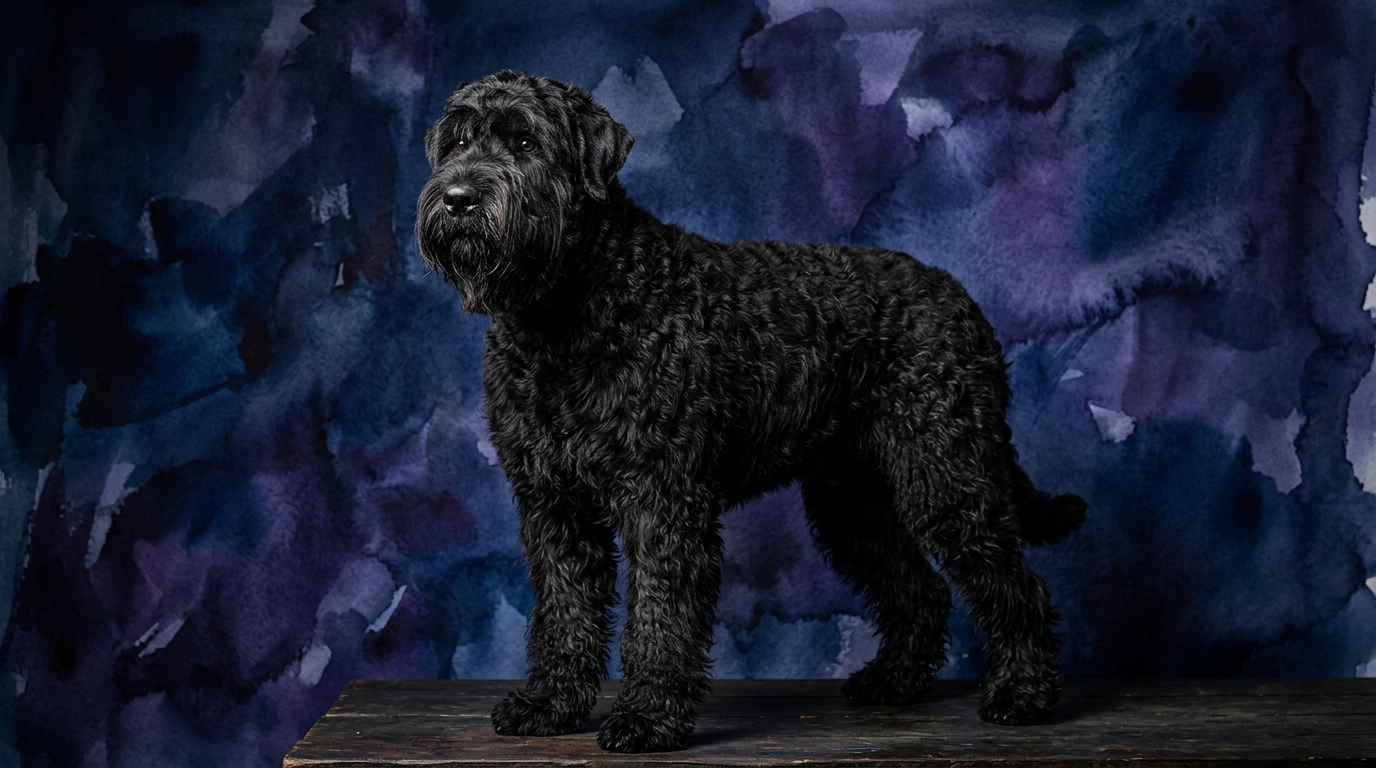
The Black Russian Terrier shares a similar moderate problem-solving capacity (3/5), capable of figuring out how to open gates, retrieve objects from tricky spots, or navigate complex obstacle courses. Their intelligence in this area is practical, focused on achieving a clear objective rather than abstract thought. This breed learns new commands at a moderate, steady pace (Training Speed 3/5); they are receptive to instruction and, with consistent, clear methods, can master a wide range of tasks and behaviors, as their working background means they are often eager to engage in structured learning. The Black Russian Terrier displays moderate social intelligence (3/5), understanding hierarchical structures within a family and responding to human moods. While they form deep bonds, their expression of social connection is typically more reserved and discerning than overtly demonstrative, often observing before interacting. Possessing a moderate instinctive drive (3/5), the Black Russian Terrier exhibits natural guarding tendencies, a desire to work, and sometimes a moderate prey drive. This drive provides a valuable foundation for engagement in protection sports, obedience, or other purposeful activities. Their memory is also moderate (3/5), allowing them to retain a substantial repertoire of commands, remember specific people and perceived threats, and recall past experiences relevant to their daily lives and training, contributing to their reliability in learned behaviors.
Where the Shih Tzu's Mind Shines Brightest
The Shih Tzu's most compelling cognitive advantage lies unequivocally in its exceptional Social Intelligence, rated a perfect 5/5. This isn't merely about being friendly; it reflects a profound capacity to interpret and respond to the subtle nuances of human emotional states and social dynamics. A Shih Tzu will often sense a change in your mood, offering comfort or adapting its behavior without any verbal cues, demonstrating an almost uncanny empathy.
This high social acuity translates into a dog that integrates seamlessly into family life, becoming a highly intuitive and emotionally responsive companion. Their cognitive strength allows them to form incredibly strong, reciprocal bonds, making them masters of cohabitation and emotional support. They thrive on companionship, and their mental energy is primarily directed towards understanding and engaging with their human family, rather than external tasks or independent ventures.
Furthermore, their low instinctive drive (2/5) complements this social focus. Without strong urges to hunt, herd, or guard, the Shih Tzu's cognitive resources are largely dedicated to observing, learning from, and participating in the human social world. This makes them remarkably adaptable to various household routines and environments, as long as they are close to their people, showcasing a unique form of cognitive specialization geared towards intimate companionship.
The Black Russian Terrier's Cognitive Edge
The Black Russian Terrier demonstrates its unique cognitive strengths through a balanced blend of moderate Training Speed (3/5) and Instinctive Drive (3/5), setting it apart from the Shih Tzu. While their problem-solving and memory scores are similar, the BRT's slightly quicker learning curve and inherent drive for purpose enable it to engage with and excel in structured, task-oriented environments with greater efficiency. This breed possesses a mind that seeks engagement beyond mere companionship.
Their moderate instinctive drive means they naturally possess a desire to work, protect, or follow through on tasks, a trait deeply rooted in their history as military working dogs. Cognitively, this translates into a dog that often requires a “job” or a clear purpose to feel fulfilled. They are capable of understanding and executing complex sequences of commands, making them excellent candidates for advanced obedience, protection sports, or even therapy work where specific tasks are required.
This cognitive profile allows the Black Russian Terrier to process and apply learned information effectively in practical scenarios. Their ability to learn at a steady pace, combined with their inherent drive, means they can develop a sophisticated understanding of rules and boundaries, and reliably perform duties. This makes them a discerning and capable partner for owners who appreciate a dog that can think through and execute purposeful actions.
Training Dynamics: Which Breed Learns with More Ease?
When evaluating ease of training, the differences in Training Speed and Social Intelligence between these two breeds become particularly pronounced. The Shih Tzu, with a Training Speed of 2/5, generally requires more patience and repetition from its trainers. New commands might take longer to solidify, and distractions can easily divert their attention. Their strong social intelligence, however, can be a powerful lever; they are often eager to please and respond well to positive reinforcement delivered with warmth and affection, leveraging their desire for connection.
Conversely, the Black Russian Terrier, with a Training Speed of 3/5, typically grasps new commands at a more average pace. Their moderate instinctive drive means they often benefit from training that provides a clear purpose or challenge. They respond well to consistent, firm-but-fair methods and appreciate understanding the 'why' behind a command, even if implicitly. While they form deep bonds, their motivation in training might stem more from a desire for structure and accomplishment than from pure emotional reciprocity, making them responsive to a clear leader.
Consider house-training as a practical example: a Shih Tzu might take longer to generalize the concept of outdoor elimination, partly due to their smaller bladder capacity but also their slower processing of complex behavioral rules. A Black Russian Terrier, while still requiring consistency, might pick up such routines more readily, especially if the training is presented as a clear task with expected outcomes. Ultimately, both are trainable, but the methodology and expected timeline for mastery will differ significantly, reflecting their unique cognitive profiles.
Lifestyle Match: Active Owners vs. Relaxed Owners
For individuals seeking a companion whose primary cognitive engagement is rooted in close emotional connection and relaxed domesticity, the Shih Tzu is an unparalleled match. Their exceptional social intelligence and notably low instinctive drive mean they thrive on human interaction and do not demand extensive physical exertion or complex mental tasks to feel fulfilled. Their cognitive needs are largely met through being present with their family, observing household dynamics, and engaging in gentle play, making them ideal for a more sedate or home-centered lifestyle.
In contrast, the Black Russian Terrier's cognitive makeup aligns more closely with active owners who can provide consistent structure, mental stimulation, and a sense of purpose. While not necessarily requiring extreme physical activity, their moderate instinctive drive and training speed mean they benefit from regular training sessions, obedience work, and activities that challenge their problem-solving abilities. Owners who appreciate engaging their dog in learning new skills, participating in dog sports, or even just long, structured walks with clear boundaries will find the BRT's cognitive profile highly rewarding.
The choice between these two breeds, therefore, hinges not just on physical activity levels but profoundly on the owner's willingness to engage with their dog's unique cognitive demands. A Shih Tzu will flourish with an owner who values emotional reciprocity and proximity, while a Black Russian Terrier will thrive with an owner who provides consistent leadership, mental challenges, and opportunities for purposeful engagement, aligning with their working heritage and balanced cognitive abilities.
The Verdict
Choose the Shih Tzu if your priority is an emotionally intuitive, highly social companion who thrives on close human interaction and doesn't require extensive training or task-oriented engagement.
Opt for the Black Russian Terrier if you seek a capable, trainable dog with a moderate drive for purpose, one that will respond well to consistent, structured training and values a clear role within the family.
🧠 Find Your Pet's IQ Score
Our Pet IQ Lab assessment covers 25+ tests across 5 cognitive dimensions — personalized to your breed.
Take the Full IQ Test →Frequently Asked Questions
Are Shih Tzus difficult to train?
While their training speed is rated 2/5, indicating a slower grasp of new commands, Shih Tzus are certainly trainable. Success hinges on consistent, positive reinforcement methods and understanding their strong social intelligence means they respond best to emotionally connected guidance rather than harsh corrections.
Do Black Russian Terriers need a lot of mental stimulation?
Yes, Black Russian Terriers benefit significantly from mental stimulation due to their moderate instinctive drive and working heritage. Engaging them in regular training sessions, puzzle toys, and purposeful activities helps keep their minds sharp and prevents boredom.
How does social intelligence differ between these two breeds?
The Shih Tzu boasts exceptional social intelligence (5/5), making them highly attuned to human emotions and social cues, thriving on companionship. The Black Russian Terrier's social intelligence (3/5) is more moderate; they understand social dynamics but are typically more reserved and less overtly demonstrative in their emotional connection, valuing a clear hierarchy and purpose.