
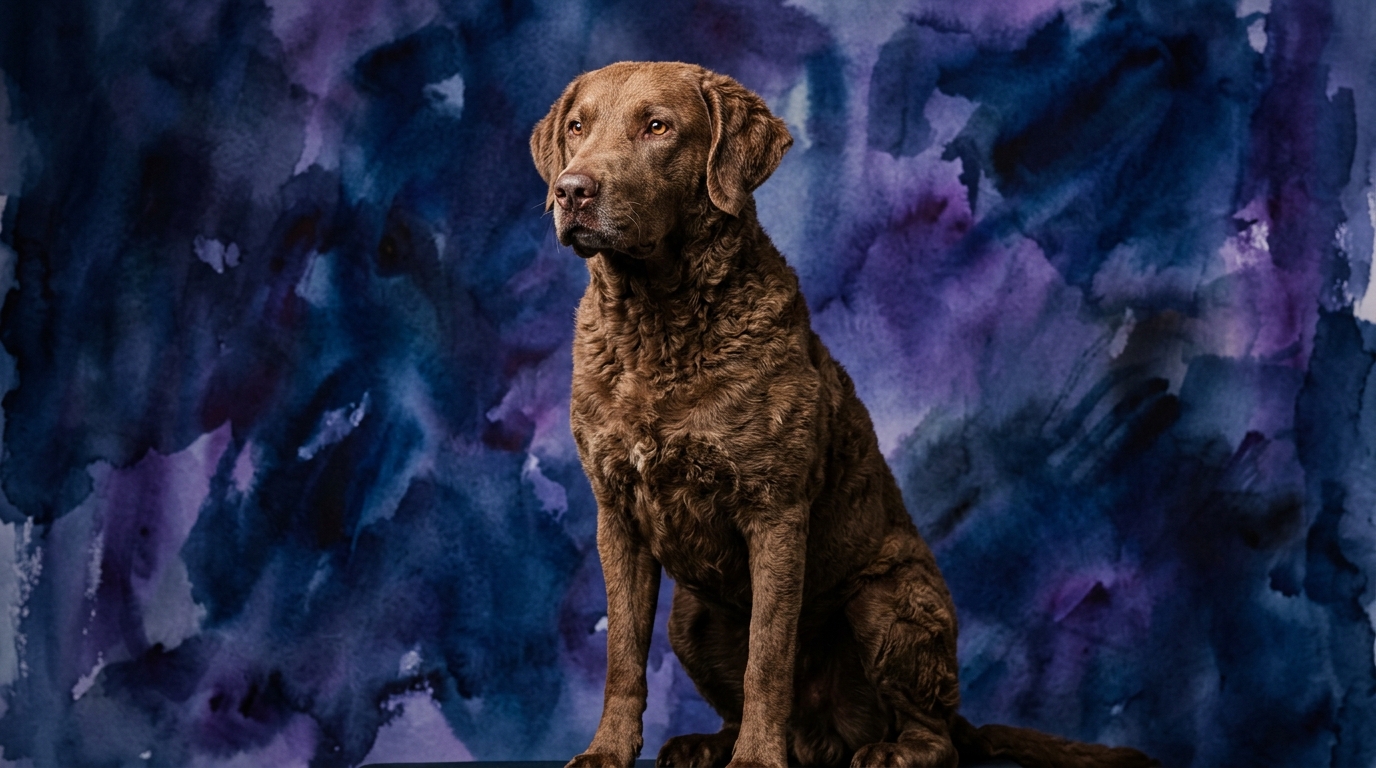
Side-by-Side Cognitive Profile: Shih Tzu vs. Chesapeake Bay Retriever
Delving into the Pet IQ Lab's detailed metrics, we uncover distinct cognitive landscapes for these two breeds. The Shih Tzu, a Toy group member ranked #70 by Coren, presents a profile emphasizing relational acumen: Problem Solving 3/5, Training Speed 2/5, Social Intelligence 5/5, Instinctive Drive 2/5, and Memory 3/5. This suggests a dog whose cognitive strengths lean heavily towards understanding and interacting with its human companions.
In stark contrast, the Chesapeake Bay Retriever, a Sporting group powerhouse with a Coren rank of #27, exhibits a more performance-oriented intelligence. Its metrics are: Problem Solving 4/5, Training Speed 4/5, Social Intelligence 3/5, Instinctive Drive 3/5, and Memory 4/5. This profile indicates a breed adept at practical application, rapid learning, and robust recall, traits crucial for its traditional working roles.
Where the Shih Tzu Shines Cognitively
The Shih Tzu's preeminent cognitive strength lies in its exceptional Social Intelligence, scoring a perfect 5/5. This isn't merely about being friendly; it reflects a profound capacity to read human emotions, understand subtle social cues, and adapt seamlessly to household dynamics. A Shih Tzu can often anticipate its owner's mood or needs, offering comfort or companionship with remarkable intuition.
While its Problem Solving (3/5) and Training Speed (2/5) are moderate, the Shih Tzu’s keen social awareness allows it to navigate complex human environments with grace. They might not be decoding elaborate puzzle toys with lightning speed, but they excel at 'solving' social situations and forming deeply empathetic bonds. Their memory (3/5), while not outstanding for complex sequences, is highly effective for remembering social interactions and routines, further enhancing their role as an attuned companion.
Chesapeake Bay Retriever's Cognitive Edge
The Chesapeake Bay Retriever demonstrates its cognitive prowess through a combination of strong Problem Solving (4/5), efficient Training Speed (4/5), and reliable Memory (4/5). This breed possesses a robust capacity for independent thought and strategic action, particularly when faced with practical, task-oriented challenges. They are adept at figuring out how to retrieve an object from a difficult spot or navigating complex terrain, showcasing an applied form of intelligence.
Their elevated instinctive drive (3/5) complements these abilities, fueling a desire to engage in activities that demand both physical and mental engagement. A Chessie can rapidly grasp multi-step commands and retain them over time, essential for their historical roles as hunting dogs. This combination makes them highly effective at learning and executing complex tasks, demonstrating a focused and purposeful mental framework.
Training Dynamics: Which Breed is Easier to Shape?
When considering ease of training, the Chesapeake Bay Retriever generally presents a more straightforward path. With a Training Speed of 4/5 and strong Problem Solving (4/5) and Memory (4/5), Chessies are typically quick to learn, eager to please, and responsive to consistent, structured training. Their inherent drive to work and cooperate with their handler makes them amenable to formal obedience, advanced commands, and specialized tasks. They thrive on having a 'job' and are often motivated by the opportunity to apply their mental and physical energies.
The Shih Tzu, with a Training Speed of 2/5, requires a different approach. While certainly capable of learning, they can be more independent and may require more repetitions and patience. Their primary motivation isn't task completion but social interaction and comfort. Training sessions should be kept short, positive, and engaging, framed as fun bonding activities rather than strict drills. House training can sometimes be a particular challenge due to their smaller size and potential for stubbornness if not approached with consistent, positive reinforcement, highlighting the need for an owner who understands their unique motivational triggers.
Matching Breeds to Lifestyles: Active vs. Relaxed Owners
For active owners seeking a partner in adventure and mental stimulation, the Chesapeake Bay Retriever is an excellent fit. Their higher Problem Solving (4/5), Training Speed (4/5), and Instinctive Drive (3/5) mean they thrive with owners who enjoy outdoor activities like hiking, swimming, dog sports (e.g., agility, obedience, dock diving), or hunting. They require consistent physical exertion and mental challenges to prevent boredom and channel their considerable energy constructively. An owner committed to providing a 'job' and regular engagement will find a highly capable and devoted companion in a Chessie.
Conversely, the Shih Tzu is ideally suited for more relaxed owners who prioritize companionship and emotional connection. Their superior Social Intelligence (5/5) and lower Instinctive Drive (2/5) mean they are content with moderate indoor play and short, leisurely walks. They are happiest when spending quality time with their humans, whether cuddling on the couch or observing household activities. Their cognitive profile aligns perfectly with a less demanding, more companion-centric lifestyle, making them wonderful pets for those seeking a deeply affectionate and intuitively understanding presence in their home.
The Verdict: When to Choose Each Breed
The Verdict
Choose the Shih Tzu if your priority is an emotionally attuned companion who excels in social interactions and thrives in a relaxed home environment, offering unwavering affection and intuitive understanding.
Opt for the Chesapeake Bay Retriever if you seek a capable, task-oriented partner eager for mental and physical challenges, performing best with an active owner committed to consistent training and outdoor adventures.
🧠 Find Your Pet's IQ Score
Our Pet IQ Lab assessment covers 25+ tests across 5 cognitive dimensions — personalized to your breed.
Take the Full IQ Test →Frequently Asked Questions
Are Shih Tzus difficult to train?
Shih Tzus can require more patience during training due to their moderate training speed (2/5) and lower instinctive drive for tasks. Success comes from making training a positive, social experience rather than a strict regimen, focusing on consistency and high-value rewards.
Do Chesapeake Bay Retrievers make good family pets?
Chesapeake Bay Retrievers can be devoted family pets, especially for active families, given their problem-solving (4/5) and training speed (4/5) capacities. However, their social intelligence (3/5) can mean they are more reserved with strangers and require early socialization to ensure they are well-adjusted.
What kind of mental stimulation does a Shih Tzu need?
A Shih Tzu benefits greatly from social interaction, puzzle toys that aren't overly complex, and short, engaging training sessions focused on basic manners or fun tricks. Their high social intelligence (5/5) means quality time with their human is often their most valued form of mental enrichment.