
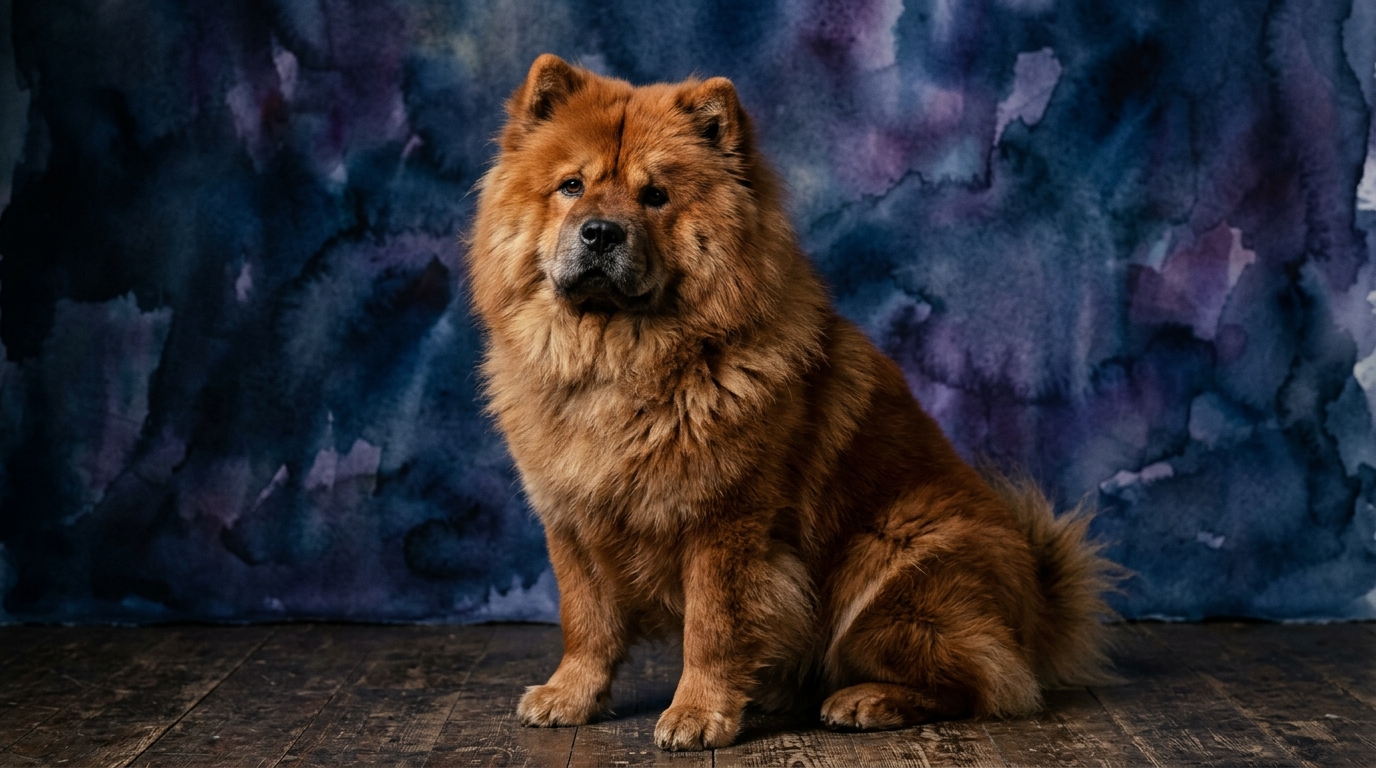
Side-by-Side IQ Profile: Shih Tzu vs. Chow Chow
The Cosmic Pet Pet IQ Lab evaluates canine cognition across five distinct dimensions, offering a nuanced view beyond a simple "smartness" score. For the Shih Tzu, a member of the Toy group with a Coren rank of #70, its profile highlights a problem-solving ability of 3/5, indicating an average capacity to navigate novel situations or puzzles. Its training speed is rated at 2/5, suggesting it may take more repetitions to master new commands. However, the Shih Tzu truly excels in social intelligence at a perfect 5/5, reflecting an exceptional ability to understand human emotions and cues, fostering deep companionship. Its instinctive drive is a modest 2/5, meaning it has a lower propensity for self-directed behaviors like hunting or herding, while its memory stands at 3/5, an average retention of learned experiences.
In contrast, the Chow Chow, a Non-Sporting breed ranked #76 by Coren, presents a different cognitive blueprint. It matches the Shih Tzu in problem-solving at 3/5 and memory at 3/5, showing similar baseline cognitive processing and retention. Where it diverges significantly is in training speed, scoring a 3/5, suggesting a quicker grasp of commands than the Shih Tzu, though still not among the fastest learners. The Chow Chow's social intelligence is rated 3/5, indicating a solid but more reserved understanding of human interaction compared to the Shih Tzu's effusive nature. Its instinctive drive is 3/5, a moderate level that points to a greater inclination for inherent breed-specific behaviors, often tied to its historical roles as a guardian and hunter.
These profiles, while close in overall Coren ranking, reveal distinct cognitive priorities shaped by their ancestral roles. The Shih Tzu, bred for companionship, shows a profound aptitude for social bonding, while the Chow Chow, with its more independent heritage, demonstrates a slightly greater ease in structured learning and a more pronounced internal motivation.
Where the Shih Tzu Wins Cognitively
The Shih Tzu's undisputed cognitive strength lies in its exceptional social intelligence, scoring a perfect 5/5. This dimension reflects a dog's ability to interpret human body language, vocal tones, and emotional states, and to respond appropriately. A Shih Tzu with such a high social intelligence is inherently attuned to its human companions, often anticipating needs, offering comfort, and seeking interaction. This profound capacity for connection makes them incredibly empathetic and responsive pets, thriving on reciprocal relationships within the household.
This superior social cognition is a direct outcome of its breeding history as a lap dog and companion for Chinese royalty. Unlike breeds developed for working tasks, the Shih Tzu's primary "job" was to engage with and please its human family. This intense focus on human interaction has refined their ability to read and react to subtle human cues, making them masters of social bonding and emotional reciprocity within a household setting.
Where the Chow Chow Wins Cognitively
The Chow Chow demonstrates a cognitive edge in both training speed and instinctive drive, each scoring 3/5 compared to the Shih Tzu's 2/5. A higher training speed means Chow Chows generally require fewer repetitions to learn new commands and behaviors, potentially making the initial stages of obedience training more efficient. This suggests a slightly quicker processing of cause-and-effect relationships when paired with appropriate motivation and clear instruction.
Furthermore, its 3/5 instinctive drive indicates a more pronounced internal motivation for behaviors rooted in its ancestral purpose. Historically, Chow Chows served as guardians, hunters, and haulers, roles that demanded a degree of independence and self-reliance. This higher instinctive drive can manifest as a greater propensity for independent decision-making and a stronger sense of territoriality, which, while requiring careful management, represents a cognitive advantage in self-directed tasks compared to the Shih Tzu's lower drive.
Which is Easier to Train and Why
When considering ease of training, the raw "training speed" scores suggest the Chow Chow, with its 3/5, might learn commands faster than the Shih Tzu, rated at 2/5. However, the practical reality is often more complex, heavily influenced by their divergent social intelligence and instinctive drives. The Shih Tzu's exceptional social intelligence (5/5) means it possesses an innate desire to please its human companions and thrives on positive reinforcement and close interaction. While it may take more repetitions to ingrain a command, its motivation to engage and cooperate is exceptionally high, often making training a joyful, bonding experience fueled by mutual understanding.
Conversely, the Chow Chow's moderate social intelligence (3/5) and higher instinctive drive (3/5) can present unique training challenges. While it might grasp a command quicker, its independent nature means it may not always be inclined to *perform* it unless it perceives a clear benefit or respects the trainer's authority. Chow Chows are known for their strong will and aloofness; they learn quickly but may choose when and if to obey. This requires a consistent, firm, and patient approach, focusing on building a respectful relationship rather than relying solely on eager compliance. Therefore, while the Chow Chow has a faster learning curve, the Shih Tzu's social eagerness often makes it *feel* easier to train for owners seeking a highly compliant and interactive companion.
Which Suits Active vs. Relaxed Owners
For owners seeking a highly interactive and relatively relaxed companion, the Shih Tzu is often the more suitable choice. Its low instinctive drive (2/5) means it has minimal need for strenuous physical activity or complex working tasks, preferring indoor comfort and close companionship. The Shih Tzu's perfect 5/5 social intelligence makes it an ideal fit for relaxed owners who value emotional connection and a dog that is deeply attuned to their moods and desires, content to be a lap warmer or a gentle presence by their side. Its robust memory (3/5) ensures it retains routines and house rules, contributing to a calm household environment.
The Chow Chow, with its higher instinctive drive (3/5) and more reserved social intelligence (3/5), aligns better with owners who appreciate a dog with a more independent spirit and a need for clear structure. While not requiring the same athletic exertion as a sporting breed, Chow Chows benefit from consistent training and mental stimulation that respects their self-sufficient nature and historical roles. Active owners in this context might not mean constant physical activity, but rather owners who are proactive in establishing boundaries, providing consistent training, and engaging in activities that satisfy a dog with a moderate drive and a desire for purpose, even if that purpose is simply guarding the home. Their moderate training speed (3/5) and memory (3/5) mean they can learn complex routines but require an owner committed to consistent, respectful guidance rather than expecting constant eagerness to please.
The Verdict
When seeking an emotionally deeply connected, adaptable companion for a relaxed lifestyle, the Shih Tzu's exceptional social intelligence and lower drive make it an ideal choice.
For owners who appreciate a dignified, independent companion with a slightly quicker learning aptitude and a moderate self-directed nature, the Chow Chow offers a rewarding, albeit more challenging, partnership.
🧠 Find Your Pet's IQ Score
Our Pet IQ Lab assessment covers 25+ tests across 5 cognitive dimensions — personalized to your breed.
Take the Full IQ Test →Frequently Asked Questions
Does a higher Coren rank mean a dog is universally "smarter"?
The Coren rank primarily assesses "working and obedience intelligence," focusing on trainability and command following. It doesn't encompass all aspects of canine cognition, such as social intelligence or problem-solving, which can be equally important for different lifestyles.
How does social intelligence impact a dog's daily life?
High social intelligence means a dog is highly attuned to human emotions and cues, fostering strong bonds and making them responsive companions. A dog with moderate social intelligence might be more independent or reserved, still capable of bonding but perhaps less overtly expressive or eager to please.
Can I improve my dog's training speed or memory?
While genetic predispositions exist, consistent positive reinforcement training, mental enrichment activities, and a stimulating environment can significantly enhance a dog's learning capabilities, problem-solving skills, and memory retention, regardless of breed scores.