
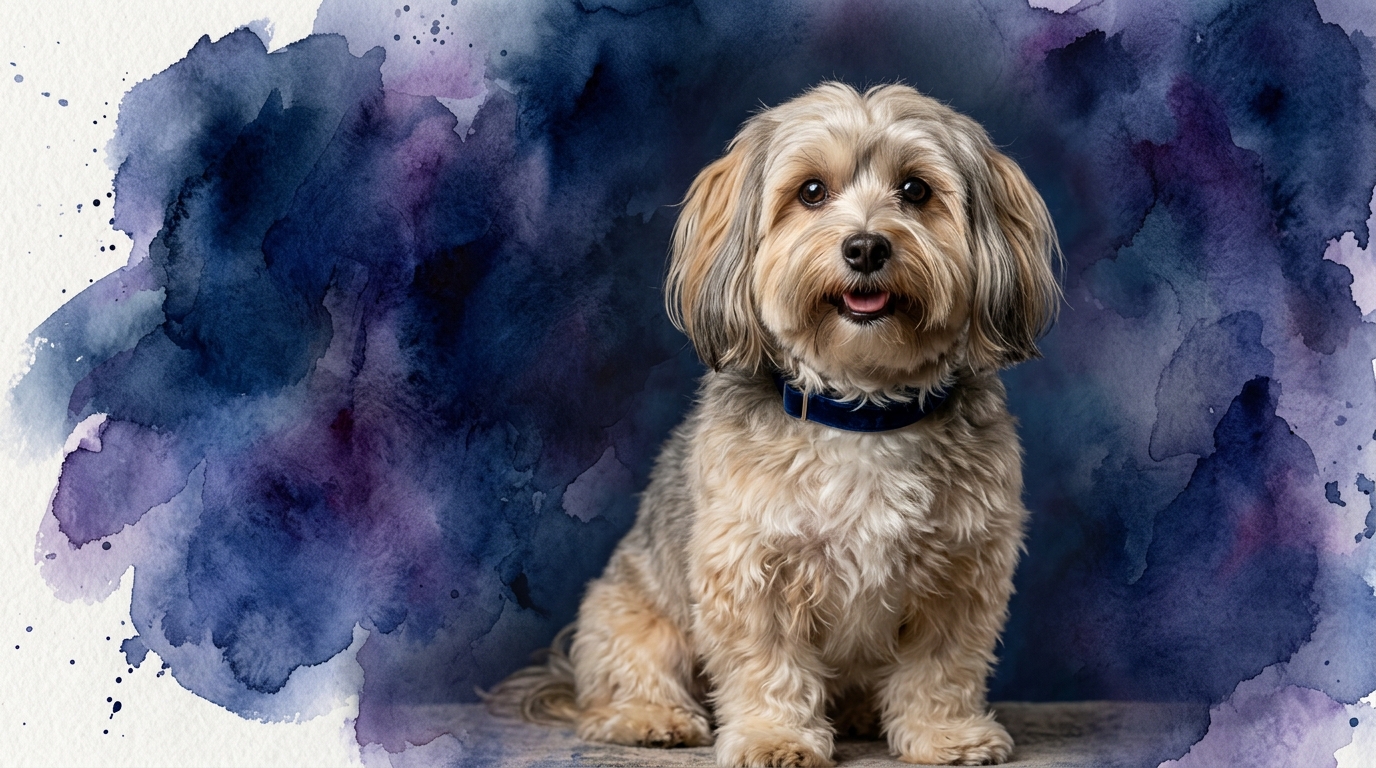
Side-by-Side Cognitive Profile: Shih Tzu vs. Havanese
At The Cosmic Pet Pet IQ Lab, we analyze canine intelligence across five key dimensions. While both the Shih Tzu and Havanese are cherished for their affectionate natures, their cognitive blueprints show distinct nuances that influence their behavior and trainability.
The Shih Tzu, historically bred as a companion for Chinese royalty, holds a Coren rank of #70. Its cognitive scores reflect its long history as a lap dog, emphasizing social connection over complex tasks. Its Problem Solving is rated 3/5, indicating a moderate ability to navigate challenges, often relying on charm or persistence rather than intricate strategy. Training Speed scores 2/5, suggesting that while capable of learning, a Shih Tzu typically requires more patience and repetition to master new commands. Where it truly excels is Social Intelligence, scoring a perfect 5/5, showcasing an exceptional capacity to read and respond to human emotions. Its Instinctive Drive is low at 2/5, meaning it lacks strong predatory or working urges, aligning with its companion role. Finally, its Memory is 3/5, sufficient for remembering routines, familiar faces, and basic commands.
The Havanese, the national dog of Cuba, is not Coren-ranked but shares many traits with its toy breed counterparts. Its cognitive profile positions it as an agile and engaging companion. Like the Shih Tzu, its Problem Solving is 3/5, indicating a moderate ability to figure things out, often with a playful approach. However, the Havanese shows a slight advantage in Training Speed, scoring 3/5, suggesting it generally picks up new commands and routines with greater alacrity. It matches the Shih Tzu’s outstanding Social Intelligence at 5/5, highlighting its deep connection to its human family and keen awareness of social dynamics. Its Instinctive Drive is also 2/5, reflecting its primary role as a cheerful companion rather than a working dog. Its Memory stands at 3/5, allowing it to retain information about its environment and learned behaviors effectively.
Where the Shih Tzu Wins Cognitively
While the numerical scores show great overlap, the Shih Tzu’s cognitive profile, particularly its exceptional social intelligence (5/5) paired with a lower training speed (2/5), suggests a specialized strength. Its cognitive prowess shines in its profound, almost intuitive, ability to forge deep emotional connections and provide empathetic companionship. This isn't about solving complex tasks quickly, but about an unparalleled capacity for emotional attunement. A Shih Tzu might not rapidly learn a new trick, but it often seems to understand unspoken cues, offering comfort or seeking attention precisely when needed, leveraging its memory (3/5) to recall specific human preferences and moods. Their problem-solving (3/5) often manifests in creative ways to gain affection or achieve comfort, rather than abstract challenges. This deep emotional intelligence, combined with a persistent charm, forms the core of its cognitive advantage in a companionship role.
Where the Havanese Wins Cognitively
The Havanese holds a distinct cognitive advantage in its training speed (3/5) compared to the Shih Tzu (2/5). This higher score translates to a more agile mind when it comes to learning new commands, tricks, and adapting to novel situations. Their problem-solving (3/5) combined with this quicker learning aptitude means they can more readily grasp cause-and-effect relationships in training scenarios and respond to cues with greater efficiency. This cognitive quickness also contributes to their adaptability, allowing them to adjust to new environments or routines with less effort. While equally socially intelligent (5/5), their slightly faster cognitive processing for learning formal behaviors makes them more amenable to structured training and mental engagement activities.
Which Is Easier to Train and Why
Based on our Pet IQ Lab scores, the Havanese generally presents as the easier breed to train, primarily due to its higher Training Speed score of 3/5 compared to the Shih Tzu's 2/5. This numerical difference reflects real behavioral tendencies. Havanese typically demonstrate a more eager-to-please attitude and a greater responsiveness to positive reinforcement, often picking up new commands in fewer repetitions. Their lively and curious nature means they are often more engaged in training sessions and less prone to the "what's in it for me?" attitude sometimes observed in Shih Tzus.
The Shih Tzu, while equally capable of learning (Problem Solving 3/5, Memory 3/5), requires more patience and consistency. Their independent streak and occasional stubbornness can make training a longer process, demanding a creative approach to keep them motivated. While both breeds respond best to reward-based methods, the Havanese's slightly faster cognitive processing for learning makes the journey generally smoother and potentially more rewarding for first-time dog owners seeking quicker results.
Which Suits Active Owners vs. Relaxed Owners
The choice between a Shih Tzu and a Havanese often hinges on an owner's lifestyle and preferred level of activity. For owners seeking a more relaxed, serene companion, the Shih Tzu is an excellent fit. Their lower instinctive drive (2/5) and slightly slower training speed mean they are generally content with moderate exercise, such as short walks or indoor play. Their exceptional social intelligence (5/5) makes them thrive on close companionship and cuddles, making them ideal for individuals or families who enjoy a calm home environment and desire a deeply affectionate lap dog.
The Havanese, while also a devoted companion, often suits slightly more active owners. Their higher training speed (3/5) and playful disposition mean they enjoy engaging in more interactive activities, like learning tricks, participating in obedience classes, or even dabbling in dog sports like agility. They possess an inherent curiosity and a desire for mental stimulation that benefits from consistent engagement beyond just cuddles. While not high-energy athletes, they appreciate varied daily activities and thrive with owners who can provide consistent mental and physical enrichment, making them suitable for those who enjoy playful interaction and structured learning.
The Verdict
Choose a Shih Tzu if your priority is a deeply empathetic, calm, and affectionate companion who excels at intuitive emotional connection, and you're prepared for a more patient training journey.
Opt for a Havanese if you desire a playful, adaptable companion that enjoys learning new things and engaging in interactive activities, and you appreciate a slightly quicker training response.
🧠 Find Your Pet's IQ Score
Our Pet IQ Lab assessment covers 25+ tests across 5 cognitive dimensions — personalized to your breed.
Take the Full IQ Test →Frequently Asked Questions
Do Shih Tzus understand human emotions well?
Absolutely. With a Social Intelligence score of 5/5, Shih Tzus are exceptionally attuned to human emotions and social cues. They often seem to intuitively understand their owner's moods, offering comfort or seeking interaction at just the right moment, making them incredibly empathetic companions.
Can Havanese be trained for tricks or dog sports?
Yes, Havanese are quite capable! Their Training Speed score of 3/5 indicates they pick up new commands relatively quickly, and their playful nature makes them enjoy engaging in activities like learning tricks, obedience, or even beginner dog sports such as agility.
Are there significant differences in problem-solving between the two breeds?
Both breeds score 3/5 in Problem Solving, indicating a moderate capacity. They can navigate simple challenges and learn routines, but neither is typically driven by complex intellectual puzzles. Their problem-solving often manifests in practical ways to achieve comfort or affection.