
Side-by-Side IQ Profile: Unpacking Breed Cognition
To truly appreciate the distinct cognitive landscapes of the Shih Tzu and Komondor, we must examine their intelligence dimensions through The Cosmic Pet Pet IQ Lab's framework. This detailed breakdown reveals how each breed's evolutionary path and intended purpose have sculpted their unique mental aptitudes.
For the Shih Tzu, a cherished Toy breed with a Coren rank of #70, cognitive strengths lean heavily into social engagement. Their problem-solving ability, rated 3 out of 5, suggests a capacity for navigating common household challenges or figuring out simple puzzle toys, but not an inherent drive for complex mental work. Training speed, at 2 out of 5, indicates that consistent, patient repetition is often necessary for them to fully grasp and reliably perform commands. However, their social intelligence shines brightest at a perfect 5 out of 5, signifying an exceptional ability to read and respond to human emotions and social cues, fostering profound companionship. Instinctive drive, at 2 out of 5, is low, meaning they have minimal natural inclination for tasks like guarding or hunting, preferring a life of affectionate leisure. Their memory, a solid 3 out of 5, allows them to recall routines and familiar commands adequately, contributing to their adaptability in a home environment.
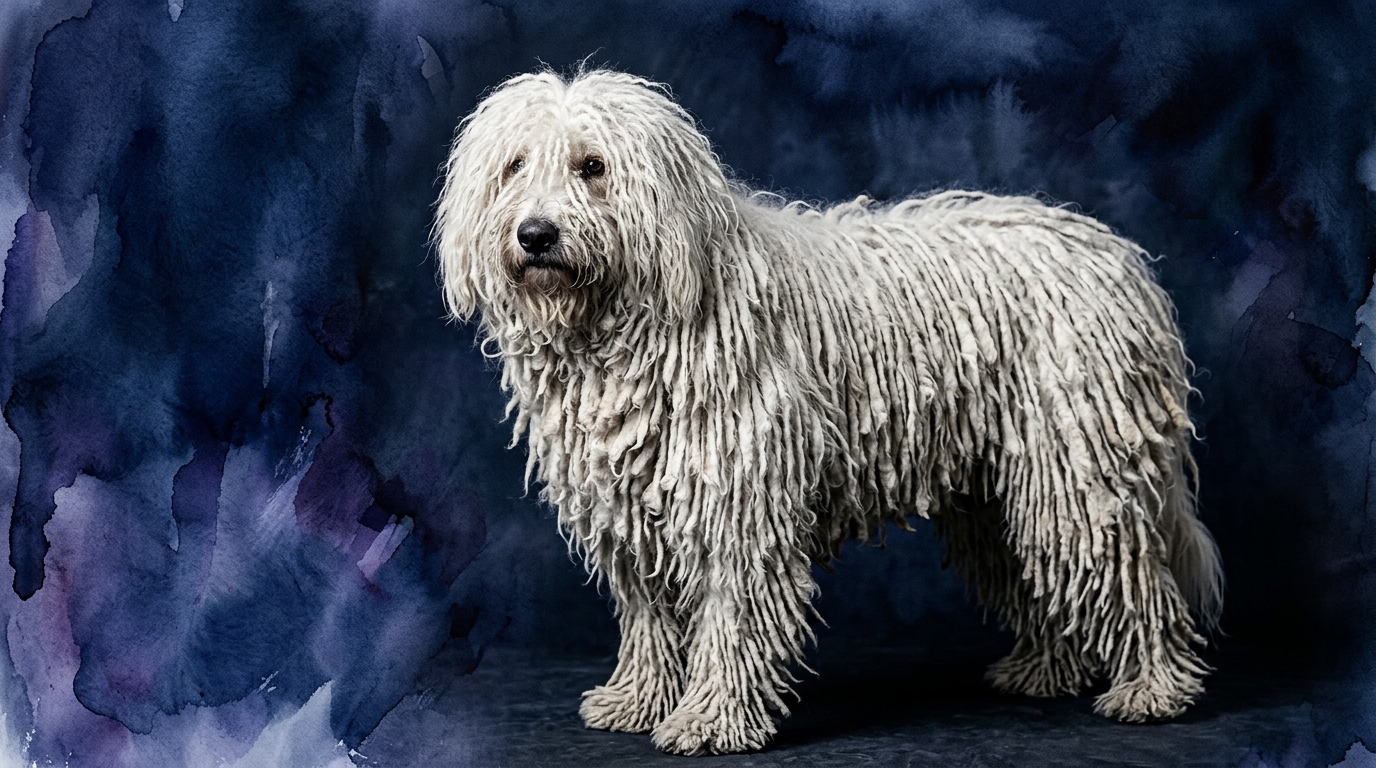
The Komondor, a formidable Working breed with a Coren rank of #67, presents a cognitive profile shaped by centuries of independent guardianship. Their problem-solving score, also 3 out of 5, is often applied to situational assessment, such as identifying potential threats or navigating their protected territory, rather than abstract puzzles. Their training speed registers at 3 out of 5, suggesting they can learn new commands with moderate repetition, though their independent nature means they might choose to comply when it aligns with their perceived purpose. Social intelligence, at 3 out of 5, indicates they are capable of forming strong bonds with their immediate family, but are typically reserved, cautious, and less outwardly effusive with strangers, reflecting their protective instincts. Their instinctive drive, rated 3 out of 5, is a significant component of their intelligence, embodying a powerful, inherent motivation for vigilance, territorial defense, and independent decision-making in guardian roles. A memory score of 3 out of 5 ensures they reliably retain information crucial for their duties, such as who belongs and who doesn't, and the layout of their domain.
Where the Shih Tzu Wins Cognitively
The Shih Tzu's most pronounced cognitive advantage lies in its exceptional social intelligence, scoring a perfect 5 out of 5 compared to the Komondor's 3/5. This breed possesses an innate, profound ability to interpret human emotions, subtle body language, and even vocal inflections, making them incredibly attuned companions. They excel at adapting their demeanor to suit various social situations, whether it's offering quiet comfort during distress or engaging playfully when invited. This high social acumen allows a Shih Tzu to navigate complex household dynamics with remarkable grace, often anticipating needs and responding with empathetic understanding, a trait far beyond simple learned behaviors.
Where the Komondor Wins Cognitively
The Komondor's cognitive strengths are rooted deeply in its historical role as a livestock guardian, manifesting in a superior instinctive drive, rated 3 out of 5 compared to the Shih Tzu's 2/5. This isn't merely a general 'drive,' but a finely tuned capacity for independent judgment and protective action, allowing them to assess potential threats and respond appropriately without direct human command. While their problem-solving score is identical to the Shih Tzu at 3/5, the Komondor's application of this skill often involves strategic assessment of their environment for security purposes, a practical intelligence tied to vigilance. Additionally, their training speed, at 3 out of 5, indicates a slightly quicker grasp of new commands compared to the Shih Tzu, suggesting a more direct learning pathway when motivation aligns with their inherent purpose.
Training Aptitude: Which Breed Learns More Readily?
When considering ease of training, the Komondor generally presents a more straightforward learning curve, primarily due to its slightly higher training speed of 3 out of 5 compared to the Shih Tzu's 2 out of 5. A Komondor tends to process and retain commands with fewer repetitions, especially when the training aligns with their intrinsic desire for purpose or protection. While their strong instinctive drive for independent guarding can sometimes translate to a perceived stubbornness, they respond well to clear, consistent instruction.
The Shih Tzu, conversely, might require more patience and repetition during training sessions. Their profound social intelligence means they are highly motivated by positive human interaction and praise, yet this very trait can also make them easily distracted by social cues or the desire to simply 'be with' their person rather than focus on a task. Their lower instinctive drive means they aren't inherently driven to perform complex jobs, making engagement crucial for successful training.
Matching Breeds to Lifestyles: Active vs. Relaxed Owners
The choice between these two breeds largely depends on an owner's lifestyle and expectations for canine companionship. The Shih Tzu, with its low instinctive drive and unparalleled social intelligence, is ideally suited for relaxed owners seeking a devoted, affectionate lap companion. They thrive in environments where their primary 'job' is to offer and receive affection, making them excellent choices for apartment dwellers or individuals who prefer less physically demanding activities. Their cognitive profile makes them content with shorter walks and ample cuddle time, valuing human presence above all else.
The Komondor, on the other hand, requires a more specific type of 'active' ownership. While not necessarily demanding endless miles of running, they need owners who are active in managing their powerful instinctive drive and independent decision-making. These are dogs that historically patrolled vast areas; they need space and a clear sense of purpose, often finding fulfillment in guarding their home and family. Owners must be prepared for consistent training, socialization, and providing a secure environment that allows their protective instincts to be channeled appropriately, rather than suppressed. They are not for the passive or inexperienced owner.
The Verdict
Choose a Shih Tzu if you prioritize a deeply empathetic, affectionate companion who thrives on social connection and requires less structured activity. Their cognitive strengths lie in emotional attunement and charming interaction, making them perfect for relaxed households seeking a devoted presence.
Conversely, opt for a Komondor if you are an experienced owner with ample space, seeking a powerful, independent guardian whose cognitive strengths are rooted in protective instincts and discerning vigilance. This breed thrives with a clear purpose and an owner who respects their self-reliant nature.
🧠 Find Your Pet's IQ Score
Our Pet IQ Lab assessment covers 25+ tests across 5 cognitive dimensions — personalized to your breed.
Take the Full IQ Test →Frequently Asked Questions
Is a Shih Tzu difficult to train?
While a Shih Tzu's training speed is rated 2/5, indicating they may require more repetitions than some breeds, they are not inherently difficult. Their high social intelligence means they respond wonderfully to positive reinforcement, praise, and training methods that feel like engaging interactions rather than strict drills. Patience and consistency are key to success, leveraging their desire to please and connect with their owners.
Does a Komondor need a lot of exercise?
A Komondor's exercise needs are more about purposeful activity than high-intensity bursts. While they benefit from regular walks and opportunities to patrol their territory, their historical role as guardians means they are adapted to sustained vigilance rather than constant running. Providing a secure, spacious yard where they can observe and 'guard' often satisfies their instinctive drives more than long-distance runs.
How do their Coren ranks compare?
The Shih Tzu ranks #70 and the Komondor #67 in Coren's intelligence rankings, placing them very close despite their vastly different breed types. This proximity highlights that 'intelligence' is multifaceted; while the Komondor shows a slight edge in working intelligence, the Shih Tzu excels in adaptive social cognition, demonstrating that both breeds possess valuable, distinct cognitive strengths.