
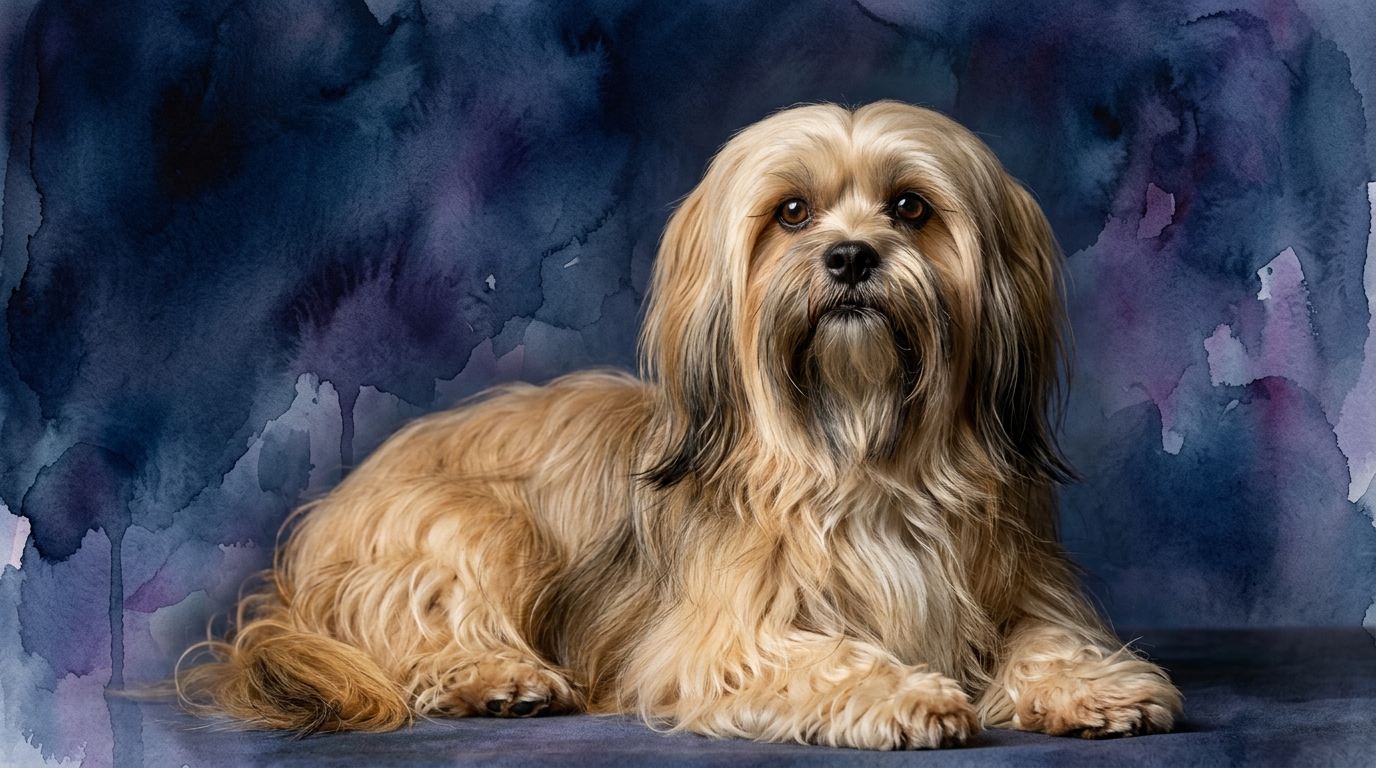
Side-by-Side IQ Profile: Unpacking Cognitive Dimensions
To truly appreciate the cognitive nuances of the Shih Tzu and Lhasa Apso, we must examine their individual IQ profiles across five critical dimensions. The Shih Tzu, a member of the Toy group, holds a Coren rank of #70, indicating a specific set of mental aptitudes. In problem-solving, they rate 3/5, suggesting a moderate capacity for navigating novel challenges, often leaning on their human companions for guidance or solutions. Their training speed is 2/5, meaning new commands may require consistent repetition and a patient, engaging approach to embed. Where they truly excel is in social intelligence, scoring an impressive 5/5; they are exceptionally attuned to human emotions and social dynamics, making them deeply intuitive companions. Their instinctive drive is 2/5, indicating a low inherent motivation for tasks like hunting or guarding, preferring interaction over independent pursuits. Finally, their memory is 3/5, allowing them to retain learned behaviors and routines competently.
In contrast, the Lhasa Apso, from the Non-Sporting group, has a Coren rank of #68, placing it slightly higher in the general obedience and working intelligence hierarchy. Their problem-solving ability also stands at 3/5, similar to the Shih Tzu, demonstrating an average capacity for overcoming obstacles, though perhaps with a touch more independent thought. Their training speed is a slightly higher 3/5, suggesting they may grasp new concepts with a bit more efficiency than the Shih Tzu, though still requiring commitment. Social intelligence for the Lhasa Apso is 3/5; they connect with humans but maintain a more independent, self-possessed demeanor compared to the overtly people-focused Shih Tzu. Their instinctive drive is 3/5, reflecting their historical role as watchful sentinels with a more pronounced territorial awareness. Like the Shih Tzu, their memory is rated 3/5, indicating a solid, but not extraordinary, ability to recall past experiences and learned information.
Where the Shih Tzu Shines Cognitively
The Shih Tzu's undeniable cognitive strength lies in its profound social intelligence, achieving a perfect 5/5 in this dimension. This isn't merely about being affectionate; it represents a sophisticated capacity to perceive, interpret, and respond to human emotions, intentions, and subtle social cues. A Shih Tzu can often anticipate an owner's mood or desires, offering comfort or seeking interaction with remarkable timing. This acute emotional radar makes them extraordinarily empathetic companions, capable of forming deep, reciprocal bonds that feel intuitively understood by their human counterparts. They excel at navigating complex household dynamics, effortlessly integrating into family life by adapting their behavior to suit the social atmosphere. Their world is deeply intertwined with human interaction, and their cognitive architecture is finely tuned to enhance this connection, making them masters of companionate living. This exceptional social acumen is what truly sets their cognitive profile apart.
Where the Lhasa Apso Holds Cognitive Advantages
Conversely, the Lhasa Apso demonstrates distinct cognitive advantages in areas related to independence and foundational learning. Their training speed, rated at 3/5, is a notch above the Shih Tzu's 2/5, indicating a generally quicker uptake of new commands and routines when properly motivated. While still requiring patience, they may process and integrate instructions with slightly more efficiency. Coupled with this is their stronger instinctive drive, also rated 3/5. This reflects their historical purpose as watchdogs in the high altitudes of Tibet, imbuing them with a greater inherent awareness of their surroundings and a more pronounced, independent decision-making capacity. This drive manifests as a subtle, persistent purposefulness; they are observant and often deliberate in their actions, more inclined to survey their environment or respond to novel stimuli with a sense of self-reliance. Their cognitive makeup supports a dog that is both teachable and possessing a quiet, inherent sense of duty, distinct from the Shih Tzu's purely social focus.
Training Dynamics: Which Breed is Easier to Guide?
When assessing ease of training, the Lhasa Apso, with its 3/5 training speed, often presents a slightly smoother experience compared to the Shih Tzu, rated 2/5. This difference isn't about one breed being inherently 'smarter' but rather how their cognitive predispositions align with typical training methodologies. The Lhasa Apso's moderate instinctive drive and historical role suggest a dog that, while independent, can be more readily motivated by task-oriented reinforcement. They tend to respond well to consistent, structured learning sessions, often showing a quiet determination to understand and perform. Their slightly more self-contained nature means they might find the challenge of learning more intrinsically rewarding, provided the trainer is clear and engaging.
The Shih Tzu, on the other hand, with its exceptional social intelligence, is primarily motivated by human approval and connection. While this makes them eager to please, their lower training speed score means they may require more consistent repetition, creative engagement, and patience to solidify commands. They might perceive a training session as another opportunity for social interaction, sometimes preferring cuddles over strict adherence to instructions. Their deep bond means they learn *from* you and *for* you, but the actual processing of new commands can take longer. Therefore, while both breeds benefit immensely from positive reinforcement, the Lhasa Apso's slightly quicker processing of commands and more task-oriented focus can make the training journey feel a bit more straightforward for an owner seeking quicker results in obedience.
Matching Breed to Lifestyle: Active vs. Relaxed Owners
The ideal match between owner and breed hinges significantly on lifestyle and expectations for canine companionship. For individuals seeking a deeply empathetic, socially engaged, and largely sedentary companion, the Shih Tzu is an unparalleled choice. Their 5/5 social intelligence means they thrive on close human interaction, content to be a lap dog, a constant shadow, and a gentle presence, absorbing and reflecting the household's calm energy. Their lower instinctive drive means they are less prone to independent exploration or demanding strenuous physical activity, preferring the comfort and security of human presence. They are perfectly suited for apartment living and owners who prefer quiet evenings and ample cuddle time.
Conversely, owners who appreciate a dog with a more independent spirit, a subtle protective instinct, and a slightly more engaged approach to their surroundings might find the Lhasa Apso a better fit. While not requiring intense physical activity, their moderate instinctive drive and slightly higher training speed mean they can engage in more structured play, enjoy short, purposeful walks, and benefit from mental stimulation that taps into their observant and somewhat self-reliant nature. They appreciate routine and a sense of purpose, making them suitable for owners who enjoy consistent, gentle engagement that acknowledges their quiet dignity without the constant demand for effusive social attention. They are adaptable but prefer a clear sense of their role and boundaries.
The Verdict
Opt for a Shih Tzu if you prioritize an exceptionally socially intelligent companion who thrives on deep emotional connection and provides empathetic, comforting presence.
Select a Lhasa Apso if you value a dog with a slightly quicker training speed, a more independent spirit, and a subtle, observant protective streak.
🧠 Find Your Pet's IQ Score
Our Pet IQ Lab assessment covers 25+ tests across 5 cognitive dimensions — personalized to your breed.
Take the Full IQ Test →Frequently Asked Questions
Are Shih Tzus good at problem-solving?
Shih Tzus have a problem-solving rating of 3/5, meaning they are capable of navigating moderate challenges, often relying on their keen social intelligence to interpret human cues rather than purely independent thought.
How does Lhasa Apso memory compare to Shih Tzu memory?
Both breeds have a memory rating of 3/5, indicating they retain learned behaviors and experiences adequately. Neither stands out as having exceptional long-term recall, but they are competent in remembering routines and commands.
Which breed is more independent, Shih Tzu or Lhasa Apso?
The Lhasa Apso, with its 3/5 social intelligence and 3/5 instinctive drive, tends to be more independent than the Shih Tzu, which scores 5/5 in social intelligence. The Lhasa Apso often exhibits a more self-reliant and observant demeanor, stemming from its historical role as a sentinel.