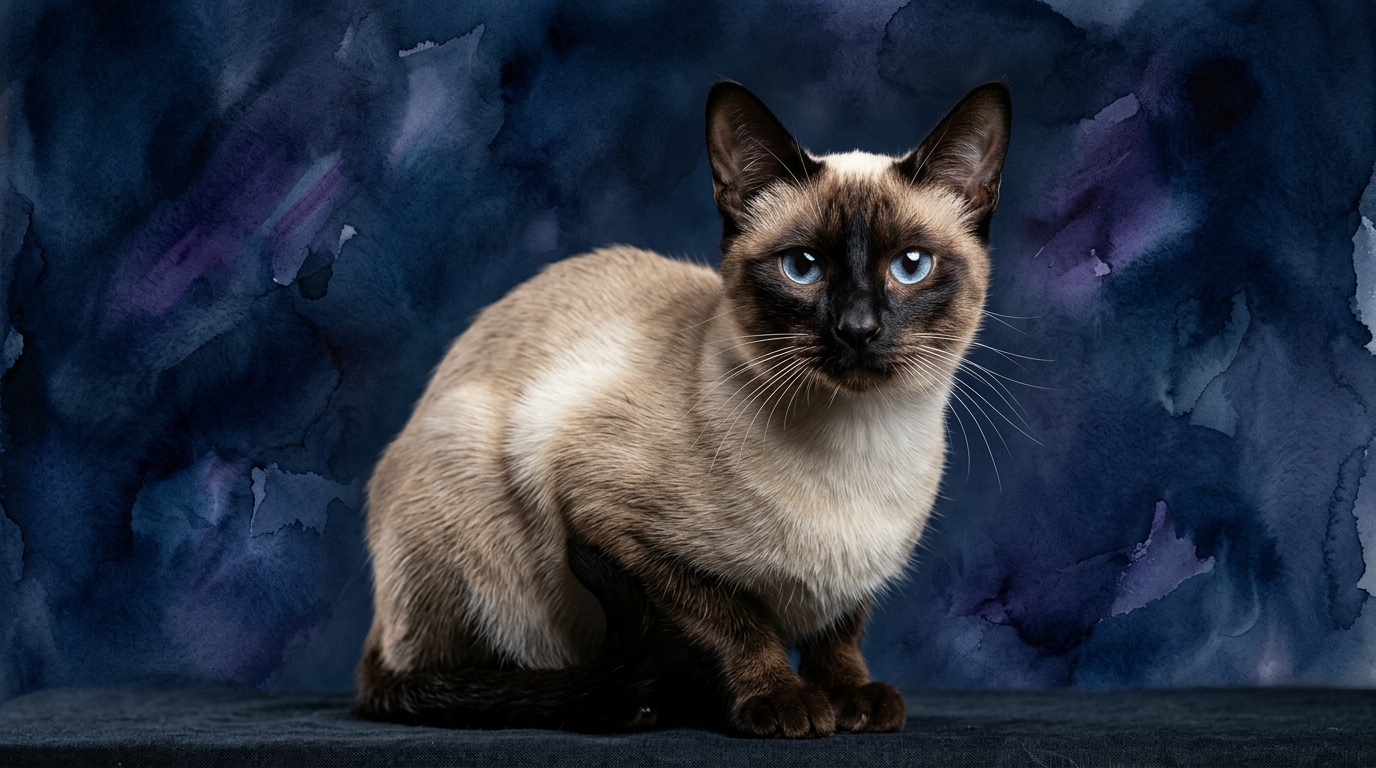
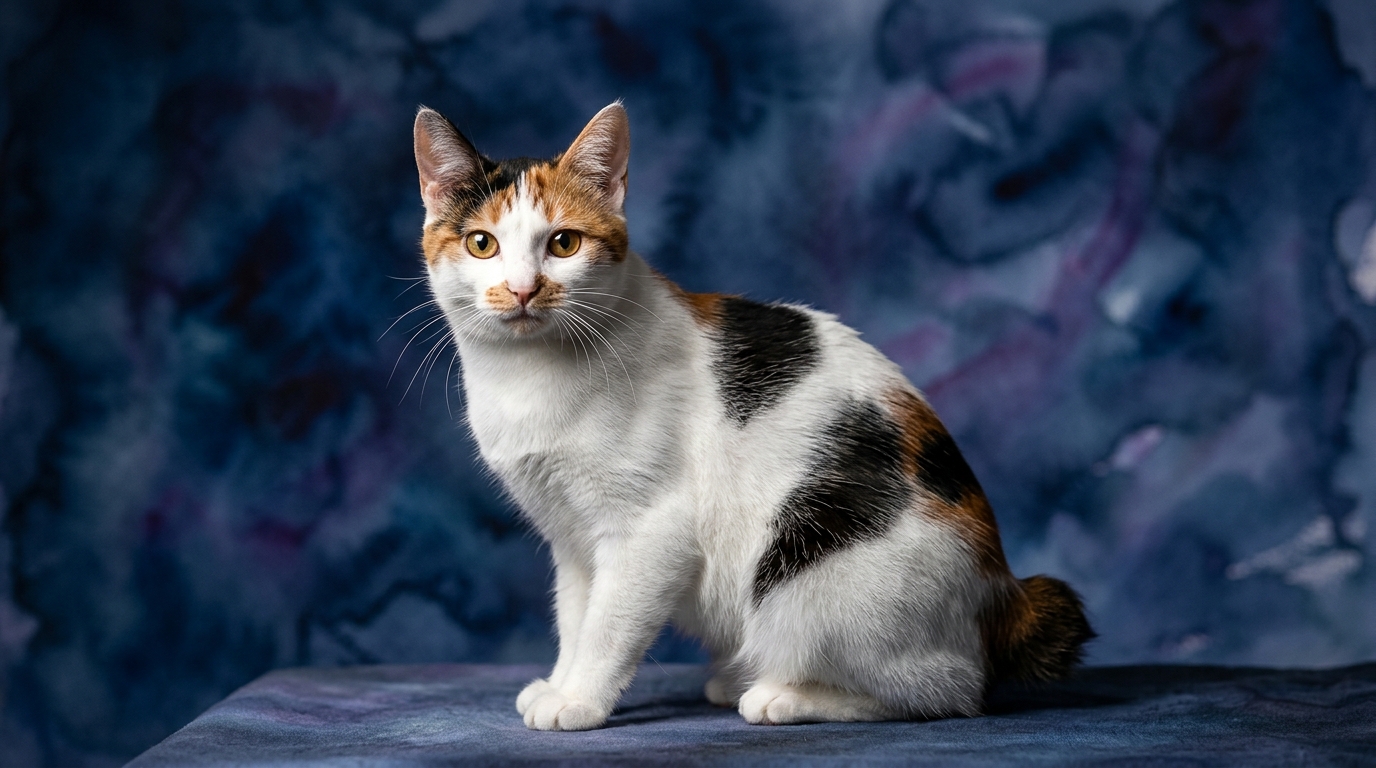
Side-by-Side Cognitive Profiles
To understand the nuanced differences between these two captivating breeds, The Cosmic Pet Pet IQ Lab evaluates five key dimensions of feline intelligence: Problem Solving, Training Speed, Social Intelligence, Instinctive Drive, and Memory. Each dimension is scored out of five, providing a clear picture of their cognitive strengths.
The Siamese cat consistently demonstrates a highly advanced cognitive toolkit across most dimensions. Their Problem Solving is rated an exceptional 5/5, indicating a remarkable ability to understand mechanisms and devise strategies. Training Speed is a strong 4/5, reflecting their quick grasp of concepts. Social Intelligence shines at a perfect 5/5, highlighting their profound understanding of human cues. Their Instinctive Drive is a robust 4/5, showcasing keen natural behaviors, and their Memory is an outstanding 5/5, allowing for clear recall of routines and experiences.
In contrast, the Japanese Bobtail presents a balanced and moderate cognitive profile across all dimensions. Their Problem Solving is rated 3/5, suggesting a practical approach to challenges rather than deeply analytical. Training Speed is also 3/5, meaning they learn steadily with consistency. Social Intelligence stands at 3/5, indicating a pleasant awareness of their human family without overwhelming intensity. Their Instinctive Drive is a moderate 3/5, providing healthy play behaviors, and their Memory is a reliable 3/5, supporting consistent daily habits rather than intricate recall.
These scores highlight fundamental differences in how each breed perceives and interacts with their environment and human companions, influencing their behaviors and suitability for various lifestyles.
Where the Siamese Cat Wins Cognitively
The Siamese cat's cognitive profile demonstrates a clear advantage in processing complex information and engaging deeply with its environment and companions. Their exceptional 5/5 Problem Solving score means they excel at tasks requiring strategic thinking; a Siamese might methodically figure out how to open a child-proof latch or manipulate a complex puzzle feeder. This translates into a cat that actively seeks challenges and often finds creative solutions.
Furthermore, their 5/5 Social Intelligence allows them to form incredibly intricate bonds, often seeming to anticipate a human's needs or moods with startling accuracy. They are master communicators, using a wide range of vocalizations and body language to express desires and respond to human interaction. The Siamese's 5/5 Memory further enhances these traits, enabling them to recall past interactions and learned behaviors with remarkable clarity, influencing their future actions. This combination creates a cat that is highly interactive, perceptive, and adaptably clever in its daily life.
Where the Japanese Bobtail's Cognitive Profile Shines
While the Japanese Bobtail's cognitive scores are consistently moderate at 3/5 across all dimensions, this balanced profile presents distinct advantages, particularly for owners seeking a more harmonious and less demanding companion. The Bobtail's moderate Problem Solving (3/5) means they are capable of navigating their world effectively without constantly seeking to outwit it; they are less likely to become bored and destructive if not perpetually challenged. This contentment with simpler engagements can lead to a more relaxed household environment.
Their 3/5 Social Intelligence provides a comfortable level of companionship without overwhelming intensity. They enjoy being part of the family and interacting warmly, but don't necessarily demand the same deep, constant emotional engagement, making them excellent for those appreciating affection alongside personal space. The Japanese Bobtail's moderate Instinctive Drive (3/5) ensures healthy play behaviors and curiosity without intense predatory focus. This balanced cognitive makeup contributes to a generally adaptable and easygoing temperament, thriving in a stable, predictable home.
Which is Easier to Train and Why
When it comes to trainability, the Siamese cat generally presents a quicker, more enthusiastic learner compared to the Japanese Bobtail, reflected in their respective Training Speed scores of 4/5 for Siamese and 3/5 for Bobtail. The Siamese's superior Problem Solving (5/5) and Memory (5/5) are significant contributors; they quickly grasp command-action associations and remember them reliably. Their high Social Intelligence (5/5) also plays a crucial role, as they often enjoy the interactive process of training, highly motivated by human attention.
This combination allows Siamese cats to pick up tricks like fetch or leash walking with remarkable speed and consistency. In contrast, while the Japanese Bobtail is certainly trainable, their more moderate scores mean they typically require more patience, repetition, and consistent positive reinforcement. They will learn house rules and basic commands, but the pace might be slower, and they might not exhibit the same eagerness for complex tricks. For owners seeking a cat that actively participates in and quickly masters training sessions, the Siamese holds a distinct advantage.
Which Suits Active Owners vs. Relaxed Owners
Understanding these breeds' cognitive profiles is crucial for matching them with the right owner. The Siamese, with its high scores across Problem Solving (5/5), Social Intelligence (5/5), and Memory (5/5), is ideal for active, engaged owners who thrive on interaction and can provide substantial mental and emotional enrichment. These cats demand intellectual stimulation, often inventing games or "helping," and will vocalize displeasure if under-stimulated. They flourish with consistent attention, interactive play, and opportunities to "solve" things. Their intense social needs mean they require an owner who genuinely enjoys deep, communicative companionship.
Conversely, the Japanese Bobtail, with its balanced 3/5 scores, is perfectly suited for more relaxed owners who appreciate an affectionate companion without intense cognitive demands. While they enjoy playtime and interaction, their needs are less insistent. They are content with predictable routines and do not constantly seek complex challenges, making them a wonderful fit for individuals or families seeking a pleasant, adaptable feline friend who adds warmth without dominating home dynamics.
The Verdict
If you are an active, highly engaged owner seeking a profoundly interactive and intellectually demanding feline companion who thrives on complex mental stimulation and deep social bonds, the Siamese is an exceptional choice.
Opt for the Japanese Bobtail if you desire a charming, adaptable, and affectionate cat that offers balanced companionship without intense cognitive demands, fitting seamlessly into a more relaxed household rhythm.
🧠 Find Your Pet's IQ Score
Our Pet IQ Lab assessment covers 25+ tests across 5 cognitive dimensions — personalized to your breed.
Take the Full IQ Test →Frequently Asked Questions
Are Siamese cats truly more vocal than Japanese Bobtails?
Yes, Siamese cats are renowned for their extensive vocalizations, using a wide range of meows, chirps, and "conversations," often linked to their high social intelligence and desire for communication. Japanese Bobtails are generally quieter, using softer chirps and purrs, reflecting their more moderate social engagement style.
Do Siamese cats require more attention than Japanese Bobtails?
Based on their cognitive profiles, Siamese cats indeed require more consistent and intense attention due to their high social intelligence and memory, often demanding interaction and mental stimulation. Japanese Bobtails are affectionate but typically less demanding, content with more moderate levels of engagement.
Can Japanese Bobtails be trained to do tricks like Siamese cats?
While Japanese Bobtails can certainly be trained to perform tricks and learn commands, their training speed and problem-solving scores suggest they may take longer and require more patient repetition than a Siamese. Siamese cats often pick up complex tricks more readily due to their superior cognitive abilities and eagerness to engage.