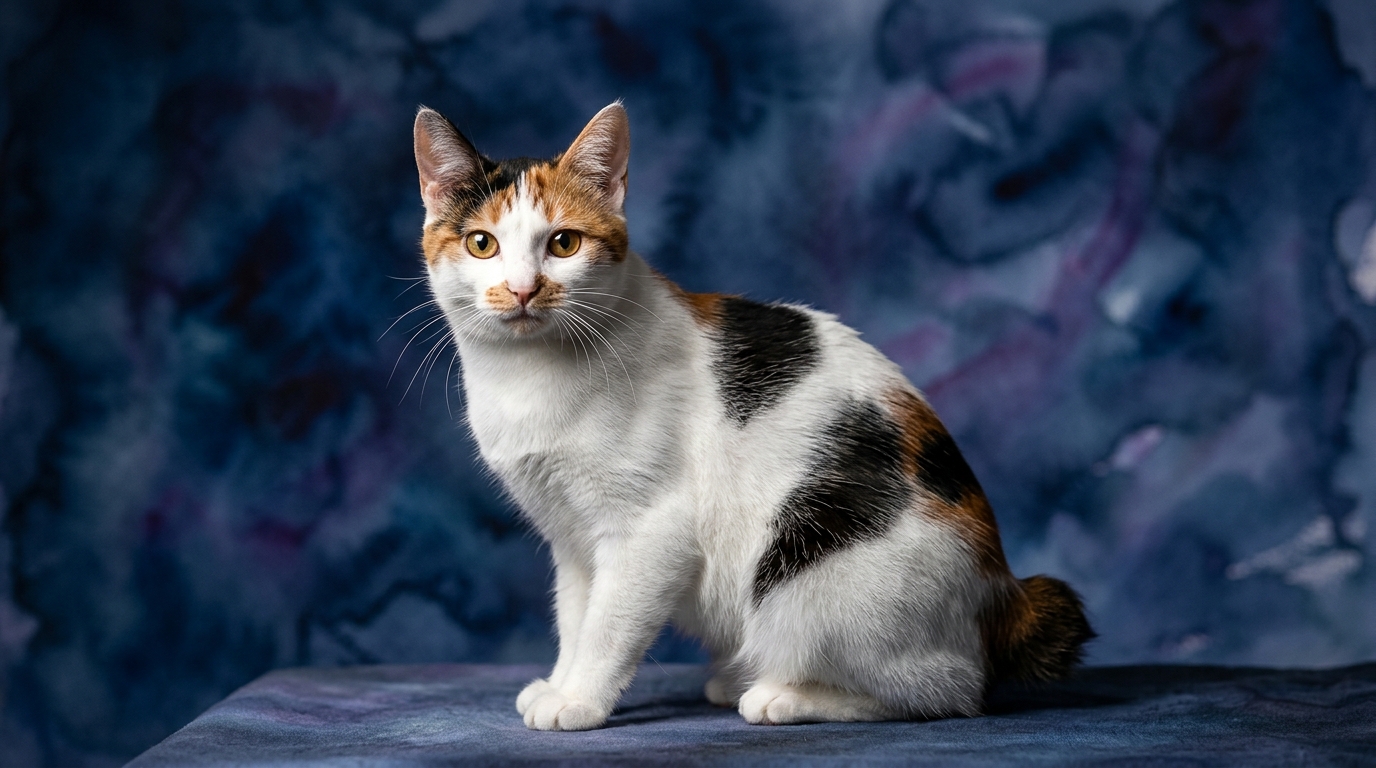
Japanese Bobtail at a glance
| IQ Rank / Score | 20/25 |
|---|---|
| Trainability | ★★★★☆ (4/5) |
| Social Intelligence | ★★★★★ (5/5) |
| Lifespan | 12-16 years |
| Shedding | Low to moderate |
| Exercise Needs | Moderate (20-40 min play/day) |
| Origin | Japan |
The Communicative Prodigy: Japanese Bobtail's Primary Intelligence Angle
The Japanese Bobtail’s primary cognitive strength lies in its advanced communicative intelligence, specifically its nuanced and extensive vocal repertoire paired with an exceptional capacity to engage in two-way 'conversations' with humans to achieve social and environmental goals. Unlike many felines who might offer a limited range of meows, Bobtails possess a diverse vocabulary of chirps, trills, warbles, and coos, often used in direct, reciprocal exchanges with their human companions. This isn't merely expressing a need; it's an active participation in social dialogue, demonstrating a sophisticated understanding of interaction and an inherent desire to connect.
Their ability to 'talk' is remarkable, often responding to human speech with appropriate vocalizations, creating an almost conversational flow. This advanced social responsiveness indicates high emotional intelligence and an acute awareness of their human's presence and intentions. They don't just listen; they process and respond, showing a cognitive flexibility that allows them to adapt their communication strategies based on the context and the human they are interacting with. This makes them not just intelligent companions, but active participants in the household's social fabric.
Unraveling History: The Lucky Bobtail's Cognitive Legacy
One of the most surprising scientific and historical facts about the Japanese Bobtail's cognition and history is its indelible link to the Maneki-neko, the 'beckoning cat' figurine, a globally recognized symbol of good luck and prosperity. Legend holds that the original Maneki-neko was a Japanese Bobtail named Tama who, by beckoning a feudal lord to shelter from a thunderstorm, saved him from being struck by lightning, thus elevating the breed to a revered status in Japanese culture as a bringer of fortune. This historical reverence highlights not just their physical uniqueness but their deep historical integration into human society, indicating a long-standing appreciation for their engaging and intelligent nature.
For centuries, these cats were not merely pets but working animals, valued for their mousing skills in silk farms and homes. Their intelligence, adaptability, and amiable nature made them indispensable. This long history of close cohabitation with humans, spanning over a thousand years, has undoubtedly shaped their cognitive evolution, favoring traits that promote strong social bonds and effective communication. Their presence in ancient Japanese art and folklore further cements their status as a historically significant and cognitively advanced feline, deeply woven into the cultural tapestry.
Japanese Bobtail Intelligence Profile: A Deep Dive into Cognition
At The Cosmic Pet's Pet IQ Lab, we assess feline intelligence across multiple dimensions, revealing a comprehensive profile for each breed. The Japanese Bobtail, with its unique blend of cleverness and charisma, scores remarkably well in areas that highlight its interactive nature and problem-solving prowess. Their intelligence isn't just about raw brainpower; it's about how they apply that intelligence in their daily lives to engage, learn, and thrive within their human families.
**Problem Solving (Score: 4/5):** Japanese Bobtails are known for their cleverness and ingenuity. They are often observed figuring out how to open cabinets, retrieve toys from challenging spots, or even manipulate objects to get what they want. Their persistence in tackling cognitive challenges, especially when a desired outcome like a treat or attention is involved, showcases a strong problem-solving ability that goes beyond simple trial and error.
**Training Speed (Score: 4/5):** This breed excels in trainability. Their eagerness to please and strong bond with humans make them quick learners. They can readily pick up tricks like fetch, walking on a leash, or coming when called. This high score reflects their capacity to understand and respond to human cues and commands, making them highly receptive to positive reinforcement training methods.
**Social Intelligence (Score: 5/5):** The Japanese Bobtail’s social intelligence is truly outstanding, earning them a perfect score. They form incredibly strong bonds with their families, often exhibiting 'dog-like' devotion. Their sophisticated communication, understanding of human emotions, and ability to interact harmoniously with children and other pets underscore their exceptional social acumen. They are not merely tolerant; they actively seek and thrive on social interaction.
**Instinctive Drive (Score: 3/5):** While still possessing natural feline hunting instincts, the Japanese Bobtail’s drive is often balanced by their strong social needs. They enjoy playful hunting games and are capable mousers, but their primary focus isn't solely on prey drive. Their intelligence allows them to adapt their natural instincts to interactive play with humans, rather than being solely driven by primal urges. They are playful, but their play is often directed towards social engagement.
**Memory (Score: 4/5):** Japanese Bobtails demonstrate excellent memory, particularly for routines, people, and learned behaviors. They remember where their favorite toys are, the schedule for meals, and which family members are most likely to provide treats or playtime. Their ability to retain complex tricks and commands over long periods further highlights their robust memory, making them consistent and reliable companions.
Beyond the Bobtail: Debunking Intelligence Myths
The most common myth about Japanese Bobtail intelligence is that their unique, short, 'bobbed' tail negatively impacts their balance and agility, and by extension, their overall physical and cognitive capabilities. This misconception likely stems from a superficial understanding of feline anatomy, where a long tail is often associated with balance, leading people to incorrectly assume that a naturally short or absent tail must result in a deficit. In truth, the Japanese Bobtail's bobbed tail is a natural genetic trait that does not hinder their agility, balance, or cognitive function whatsoever. They are incredibly athletic, graceful, and intelligent cats, adept at jumping, climbing, and navigating complex environments with ease. Their short tail is simply an aesthetic variation, not a functional impairment, and it does not impede their natural feline prowess or cleverness. This myth often distracts from their true cognitive strengths.
Cognitive Testing for the Clever Cat: Tailored IQ Challenges
To accurately assess the Japanese Bobtail's unique cognitive profile, The Cosmic Pet's Pet IQ Lab employs specialized tests designed to tap into their specific strengths. These tests move beyond generic assessments, focusing on their communicative nature, problem-solving skills, and social intelligence.
**Why Test a Japanese Bobtail's Intelligence?** Understanding a Japanese Bobtail's intelligence helps owners provide optimal enrichment, training, and social interaction. It allows us to tailor environments that stimulate their active minds, foster their communicative abilities, and reinforce their strong human-animal bond. For breeders, it provides valuable insights into the cognitive health and temperament of their lines, promoting the continuation of these intelligent and engaging traits. Ultimately, it compensates for the absence of cats in broader intelligence studies, enriching the lives of these remarkable cats and strengthening their connection with their human families.
3 At-Home Tests to Measure Your Japanese Bobtail's IQ
These tests are adapted from peer-reviewed ethology research. No equipment is needed beyond items you have at home. Run each test 5–10 times for reliable results.
The Myth: "The most common myth about Japanese Bobtail intelligence is that their unique, short, 'bobbed' tail negatively impacts their balance and agility, and by extension, their overall physical and cognitive capabilities."
✅ In truth, the Japanese Bobtail's bobbed tail is a natural genetic trait that does not hinder their agility, balance, or cognitive function whatsoever. They are incredibly athletic, graceful, and intelligent cats, adept at jumping, climbing, and navigating complex environments with ease. Their short tail is simply an aesthetic variation, not a functional impairment.
Japanese Bobtail vs. Similar Breeds
🧠 What's Your Cat's IQ Score?
Our full Pet IQ Lab assessment includes 12+ tests across 5 cognitive dimensions, calibrated for Japanese Bobtails specifically.
Take the Full IQ Test →Frequently Asked Questions
How smart is a Japanese Bobtail?
Our Pet IQ Lab framework scores cognition across five dimensions (max 25). The Japanese Bobtail totals 20/25 — very high for a domestic cat. The full article breaks down each dimension with at-home tests.
Are Japanese Bobtails easy to train?
Japanese Bobtails are generally easy to train when you use consistent, reward-based sessions. They score 4/5 on Training Speed in our breed profile.
Are Japanese Bobtails good with children and other pets?
Yes — their Social Intelligence rates 5/5 in our Pet IQ Lab framework. With early socialization and supervised play, most Japanese Bobtails integrate well into families with respectful children and other pets.
Do Japanese Bobtails need a lot of mental stimulation?
Absolutely. With Problem Solving 4/5 and Instinctive Drive 3/5, Japanese Bobtails need daily mental work — puzzle feeders, scent games, training sessions, or interactive wand toys — to avoid boredom.
How much exercise does a Japanese Bobtail need?
Japanese Bobtails do well with 20-40 minutes of interactive play plus a few short training moments.
How good is a Japanese Bobtail's memory?
Japanese Bobtails score 4/5 on memory. They remember routines, hiding spots, and learned cues for months, sometimes years.
What is the typical lifespan of a Japanese Bobtail?
Most Japanese Bobtails live 12-16 years with good veterinary care, quality diet, and indoor living.
The Japanese Bobtail stands out as a true intellectual marvel in the feline world, defined by its exceptional communicative intelligence and profound social acumen. Their rich history, unique vocalizations, and impressive problem-solving skills make them not just pets, but engaging, conversational companions who enrich human lives with their clever antics and affectionate nature.