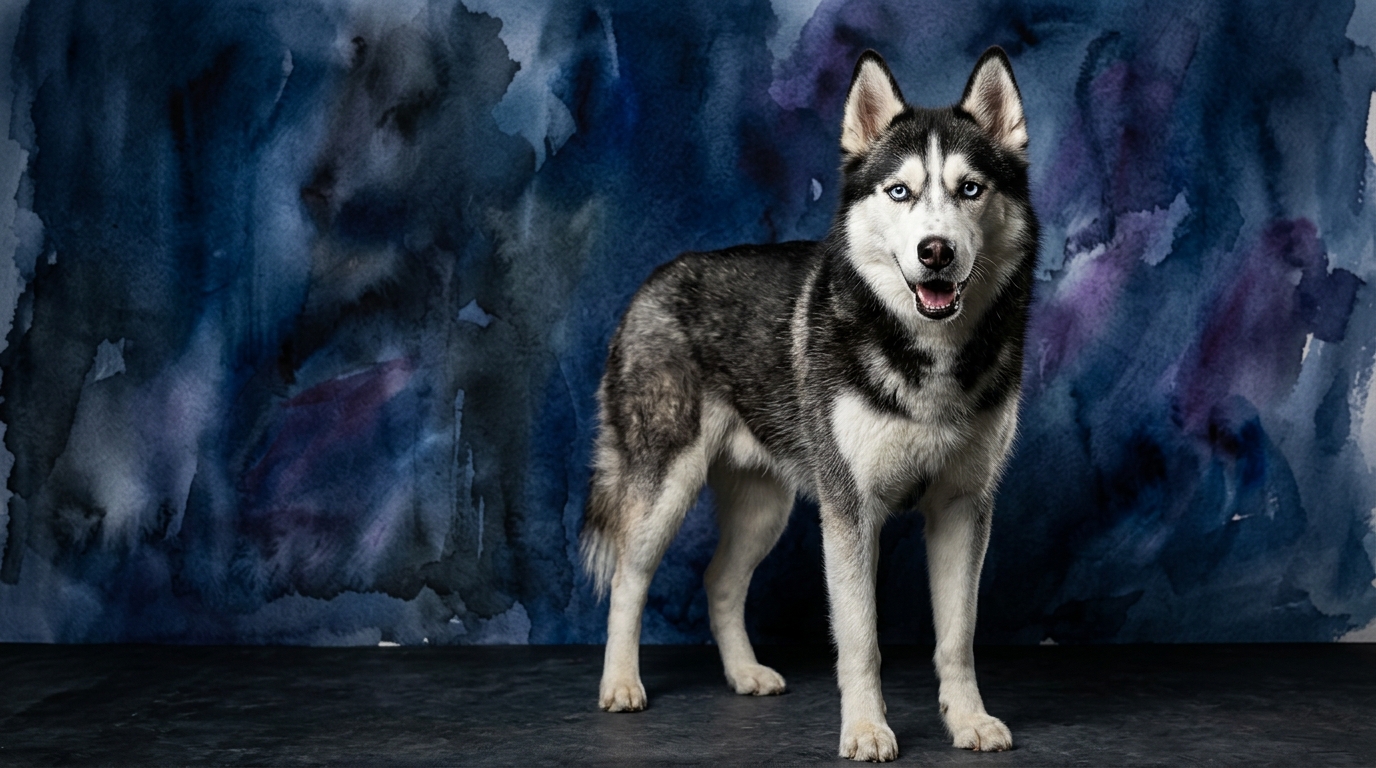
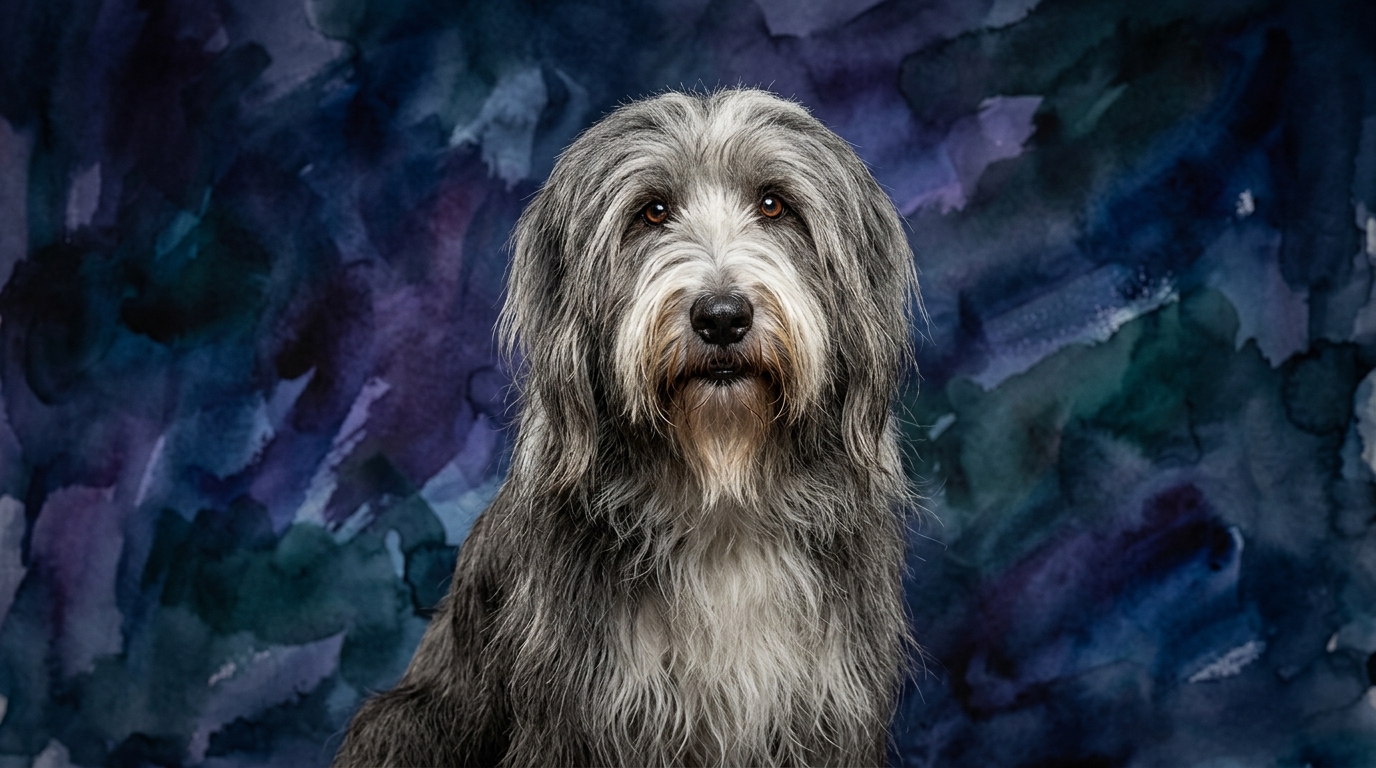
Side-by-Side Cognitive Profiles
Our Pet IQ Lab analysis places the Bearded Collie at Coren rank #34, indicating a strong capacity for obedience and working intelligence, while the Siberian Husky ranks #45, reflecting a more independent learning style. Let's explore their specific cognitive dimensions.
The Siberian Husky's cognitive profile paints a picture of rugged self-sufficiency. Their problem-solving ability scores a 4/5, adept at figuring out complex situations, often independently, like navigating challenging terrains or finding creative ways to overcome obstacles. Training speed, however, sits at 2/5, indicating that while capable of learning, they require significant repetition and motivation due to a pronounced independent streak. Social intelligence is rated 3/5, suggesting they generally read human cues and interact appropriately with other dogs, though often with their own agenda in mind. Their instinctive drive is a formidable 5/5, reflecting a powerful urge for roaming, pulling, and exploring vast landscapes, deeply rooted in their ancestral role. Finally, memory is strong at 4/5, allowing them to retain routes, past experiences, and learned behaviors over extended periods.
In contrast, the Bearded Collie offers a more cooperative cognitive blueprint. Their problem-solving ability also scores 4/5, demonstrating a keen capacity for independent thought and strategic action, particularly when managing dynamics within a group or responding to novel stimuli. Training speed is a notable 4/5, meaning they pick up new commands and routines relatively quickly, showing a strong desire to engage and cooperate in learning tasks. Social intelligence mirrors the Husky at 3/5, indicating a balanced understanding of social dynamics, interacting appropriately with family members and strangers, though sometimes with an initial reserve. Their instinctive drive is a moderate 3/5, which manifests as a herding instinct, often a desire to gather or 'manage' family members, but it is less intense than a Husky's wanderlust. Memory is also excellent at 4/5, contributing to their trainability and reliability through strong recall for commands and routines.
Where the Siberian Husky Wins Cognitively
The Siberian Husky, with its robust instinctive drive rated at an impressive 5/5, truly excels in areas demanding endurance, self-reliance, and a deep connection to ancestral working behaviors. Their innate propulsion to pull and cover vast distances is not just physical; it's a profound cognitive drive that makes them unparalleled in sustained, independent effort. This powerful internal compass means a Husky can often navigate complex terrains or situations with minimal human direction, relying on their own judgment and an intuitive understanding of their environment.
Their problem-solving at 4/5 frequently manifests as resourceful independence, like figuring out how to open gates or escape enclosures, showcasing a cunning that values self-determination over strict adherence to rules. This breed's memory, also 4/5, aids in retaining complex routes and strategies for achieving their self-appointed goals, making them incredibly resilient and often surprising in their ability to achieve what they set their minds to, particularly when it involves exploring or reaching a desired destination.
Where the Bearded Collie Wins Cognitively
The Bearded Collie shines brightest in areas where cooperation and rapid learning are paramount, evidenced by its superior training speed of 4/5. This breed displays a remarkable eagerness to engage with human instruction, quickly grasping new concepts and commands, which places it significantly higher than the Husky in terms of obedience intelligence (Coren rank #34 vs #45). This makes them exceptionally responsive to structured learning environments and positive reinforcement.
Their problem-solving acumen, also rated 4/5, often manifests in strategic thinking related to managing and directing, a hallmark of their herding heritage. Unlike the Husky's independent problem-solving for escape, a Bearded Collie's cognitive efforts are more frequently directed towards understanding and influencing their surroundings in a constructive, cooperative manner. Their moderate instinctive drive of 3/5, channeled into a desire to 'gather' their family, makes them adept at complex tasks requiring nuanced responses to stimuli, often seeking to keep their 'flock' together and safe.
Which is Easier to Train, and Why?
When evaluating ease of training, the Bearded Collie definitively holds an advantage over the Siberian Husky. The Bearded Collie's training speed is rated 4/5, signifying a strong aptitude for quickly absorbing and retaining new commands and routines. This rapid learning is coupled with a moderate instinctive drive (3/5), which, while present, is typically channeled into cooperative tasks rather than independent pursuits. They generally exhibit a desire to please and work alongside their human companions, making them highly responsive to positive reinforcement and consistent guidance.
In contrast, the Siberian Husky scores a 2/5 for training speed. Their formidable instinctive drive (5/5) often competes with human directives; a Husky's deep-seated desire to explore, roam, and follow its nose can override attempts at structured obedience. This breed requires immense patience, creativity, and a deep understanding of their independent spirit to achieve consistent training results, as they are less inclined to automatically defer to human instruction and more prone to making their own decisions based on their powerful internal motivations.
Suitability for Active vs. Relaxed Owners
For owners with an active lifestyle, both breeds offer engagement, but with different nuances. The Siberian Husky is ideal for those who embrace high-energy outdoor activities, requiring an owner who can provide rigorous daily exercise like long runs, hikes, or sledding. Their powerful instinctive drive and endurance mean they thrive when given a 'job' that satisfies their need for sustained physical and mental output, making them perfect companions for adventurers who want a dog to keep pace with them across miles. A relaxed owner, however, would likely find the Husky's relentless energy and independent nature overwhelming, as their needs extend far beyond a casual walk around the block and their cunning problem-solving can lead to escape attempts if under-stimulated.
The Bearded Collie, while also energetic and requiring regular exercise, is better suited for active owners who enjoy structured activities like agility, obedience trials, or extended walks in varied environments. Their cooperative nature means their energy is more readily channeled into shared activities, making them a good fit for owners who enjoy engaging their dog in mental challenges alongside physical exertion. While they can adapt to a slightly less intense daily routine than a Husky, a truly relaxed owner might still find their need for consistent engagement and mental stimulation a significant commitment. They are not 'couch potatoes' but offer a more manageable intensity for active but not extreme lifestyles.
The Verdict
Choose a Siberian Husky if you are an experienced, highly active owner who thrives on adventure, understands profound canine independence, and can commit to channeling an immense instinctive drive into appropriate outlets like mushing or endurance sports.
Choose a Bearded Collie if you seek a cooperative, intelligent companion for structured activities, enjoy consistent training, and can provide regular mental and physical engagement within a family-oriented, active lifestyle.
🧠 Find Your Pet's IQ Score
Our Pet IQ Lab assessment covers 25+ tests across 5 cognitive dimensions — personalized to your breed.
Take the Full IQ Test →Frequently Asked Questions
Does the Coren ranking accurately reflect a dog's overall intelligence?
The Coren ranking primarily measures obedience and working intelligence, reflecting how quickly a dog learns and obeys commands. While a valuable metric for trainability, it doesn't encompass all facets of canine cognition, such as problem-solving or social intelligence, where both Huskies and Collies score similarly well in our IQ lab.
Which breed is better for a first-time dog owner?
Given its higher training speed and more cooperative nature, the Bearded Collie is generally a more forgiving choice for a first-time owner willing to dedicate time to training and mental stimulation. The Siberian Husky's profound independence and high instinctive drive can present significant challenges for inexperienced owners.
Are Siberian Huskies or Bearded Collies better with children?
Both breeds can be good with children when properly socialized and trained, but their approaches differ. Bearded Collies often have a gentle, watchful nature and enjoy being part of family activities, sometimes exhibiting a soft herding instinct. Siberian Huskies are typically playful and tolerant, but their high energy and independent spirit mean they might be less naturally inclined to 'supervise' children and require more active management.