
Side-by-Side IQ Profile: Unpacking Cognitive Dimensions
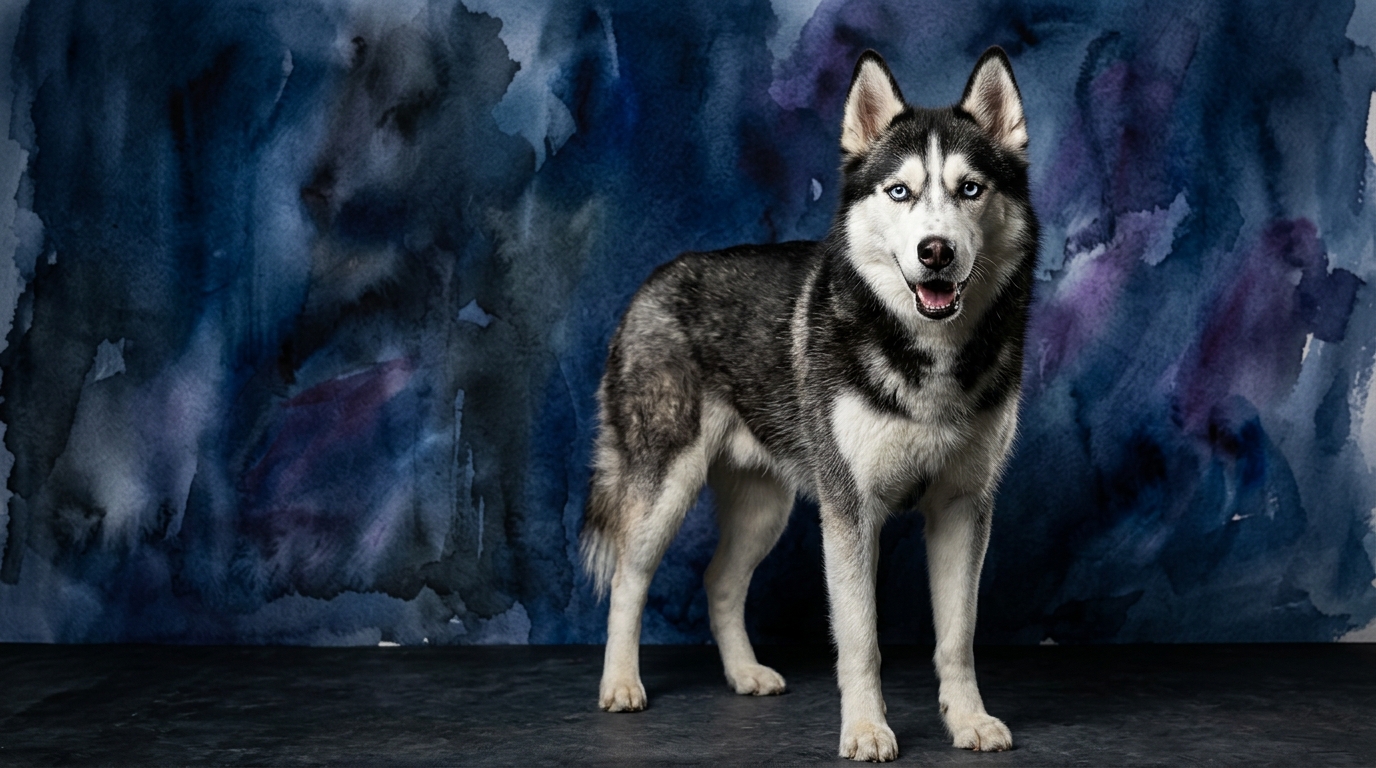
At The Cosmic Pet Pet IQ Lab, we evaluate canine intelligence across five key dimensions. For the Siberian Husky, a Working breed, its Coren rank of #45 hints at a unique cognitive makeup. Its Problem Solving is rated 4/5, reflecting a strong capacity for independent thought and resourceful action, often focused on achieving its own objectives like finding an escape route or accessing food. Training Speed, however, stands at 2/5, indicating a slower and often challenging uptake of new commands due to its independent spirit. Social Intelligence is 3/5; while capable of understanding cues, it often prioritizes its own agenda over human appeasement. Its Instinctive Drive is a powerful 5/5, manifesting as an intense urge to run, explore, and engage in scent work, deeply rooted in its sled dog heritage. Finally, Memory is 4/5, allowing it to retain complex spatial information and learned experiences effectively.
The Brussels Griffon, a Toy breed, is not Coren-ranked, but its cognitive profile offers a different picture. Its Problem Solving is 3/5, suggesting it can navigate its immediate environment and figure out ways to get attention or treats, though less focused on independent survival challenges. Training Speed is rated 3/5, placing it in the average range for learning new commands, often responding well to positive reinforcement. Social Intelligence is also 3/5; these dogs are typically attuned to their human companions' moods and social dynamics, thriving on interaction. Instinctive Drive is 3/5, meaning it possesses a moderate drive for play and activity, including some chasing instincts for small critters, but without the intense focus seen in working breeds. Memory is 3/5, enabling it to remember routines, commands, and familiar faces with reasonable consistency.
Where the Siberian Husky Excels Cognitively
The Siberian Husky's cognitive strengths are deeply intertwined with its ancestral role as a sled dog and survivalist. Its 4/5 Problem Solving ability is not about academic obedience but about practical, independent resourcefulness. Huskies frequently demonstrate ingenuity in navigating complex environments, remembering intricate routes, and devising strategies to overcome obstacles—whether that’s unlatching a gate, digging under a fence, or figuring out how to get to a coveted item. This translates into a dog that can make independent decisions in challenging situations, a valuable trait in a working capacity.
Furthermore, its 5/5 Instinctive Drive fuels a remarkable endurance and focus when engaged in activities that align with its natural inclinations, such as running vast distances or pulling. This drive isn't just physical; it's a cognitive focus that allows them to push through adverse conditions and maintain a task-oriented mindset. Coupled with a 4/5 Memory, a Husky can recall detailed spatial information, routes, and past experiences with remarkable accuracy, contributing to its navigational prowess and ability to learn from its environment, even if that learning is sometimes applied to outsmarting its human companions.
Where the Brussels Griffon Shines Cognitively
While the Brussels Griffon doesn't boast the high scores in raw drive or independent problem-solving that the Husky does, its cognitive strengths are perfectly suited for its role as a devoted companion. Its 3/5 Problem Solving capability often manifests as an ability to manipulate its environment—and its humans—to achieve comfort or attention. These dogs can be quite clever at signaling their needs, whether it's for a treat, a lap cuddle, or a walk, often using subtle cues that demonstrate an understanding of household dynamics.
The Brussels Griffon's balanced 3/5 in Training Speed and Social Intelligence makes it particularly amenable to integration into a human family. Unlike the Husky's independent streak, the Griffon's drive for companionship and attention often translates into a willingness to engage in training when motivated by praise or rewards. Its social acuity allows it to read human emotions and adapt its behavior, fostering strong bonds and making it a perceptive, interactive pet. Their moderate memory (3/5) is entirely sufficient for recalling household rules, routines, and the specific preferences of their family members, contributing to their reputation as charming and engaging small dogs.
Training Amenability: Siberian Husky vs. Brussels Griffon
When it comes to training, the differences between these two breeds become particularly pronounced, directly reflecting their IQ scores. The Siberian Husky, with its 2/5 Training Speed, often presents a significant challenge for the average owner. Their independent nature and powerful instinctive drives mean they are not inherently eager to please and can become bored quickly with repetitive drills. Training a Husky requires immense patience, creativity, and consistency, leveraging their love for running, exploring, and puzzle-solving rather than demanding strict compliance. Without engaging and stimulating training, they can be perceived as stubborn or defiant, when in reality, they are simply prioritizing their own motivations.
In contrast, the Brussels Griffon's 3/5 Training Speed, while not exceptional, generally makes it more amenable to conventional training methods. While they can possess a "big dog" attitude and occasional stubbornness, they are typically more motivated by positive reinforcement, food rewards, and the desire for human companionship and attention. This makes them more responsive to commands and easier to guide through basic obedience and house training, though their small size and sometimes short attention span can make house training a protracted effort. For an owner seeking a dog that will readily engage in training sessions and respond to commands, the Brussels Griffon typically offers a more straightforward experience.
Lifestyle Match: Active Adventurers vs. Cozy Companions
The cognitive and physical needs of these breeds dictate vastly different lifestyle matches. The Siberian Husky's powerful 5/5 Instinctive Drive and independent Problem Solving mean they require an owner who is equally active and committed to providing ample mental and physical stimulation. They thrive in environments where they can run, explore, and engage their innate drives through activities like sledding, canicross, hiking, or extensive off-leash play in secure areas. A Husky left without sufficient outlets for its energy and intelligence will often become destructive or attempt elaborate escapes, showcasing its problem-solving skills in undesirable ways. They are best suited for experienced, outdoorsy owners who appreciate a resourceful, but demanding, companion.
The Brussels Griffon, with its more moderate 3/5 Instinctive Drive and balanced cognitive profile, adapts well to a wider range of living situations. While they enjoy daily walks and playtime, they do not demand the intense exercise regimen of a Husky. Their social intelligence and desire for companionship mean they are happiest when integrated into family life, participating in daily routines and receiving regular attention. They are well-suited for owners who enjoy a charming, interactive companion and can provide consistent, moderate activity, making them excellent apartment dwellers or companions for those with a more relaxed pace of life, provided they still receive mental engagement and social interaction.
The Verdict
Choose the Siberian Husky if you are an exceptionally active, experienced owner prepared to channel its powerful independent drives and provide consistent, engaging mental and physical challenges.
Opt for the Brussels Griffon if you seek a charming, moderately active companion who thrives on human interaction and responds well to positive, consistent training within a loving home environment.
🧠 Find Your Pet's IQ Score
Our Pet IQ Lab assessment covers 25+ tests across 5 cognitive dimensions — personalized to your breed.
Take the Full IQ Test →Frequently Asked Questions
Is the Siberian Husky difficult to train?
Yes, their 2/5 training speed rating reflects their independent nature and strong drives, requiring consistent, creative, and patient training methods that leverage their natural instincts rather than demanding strict obedience.
Do Brussels Griffons have a strong prey drive?
With an instinctive drive of 3/5, Brussels Griffons have a moderate prey drive that may manifest as chasing small critters, but it is typically less intense and persistent than that of working breeds like the Husky.
Which breed is better for first-time dog owners?
The Brussels Griffon, with its 3/5 training speed and more adaptable exercise needs, is generally more suitable for first-time owners compared to the independent and high-energy Siberian Husky.