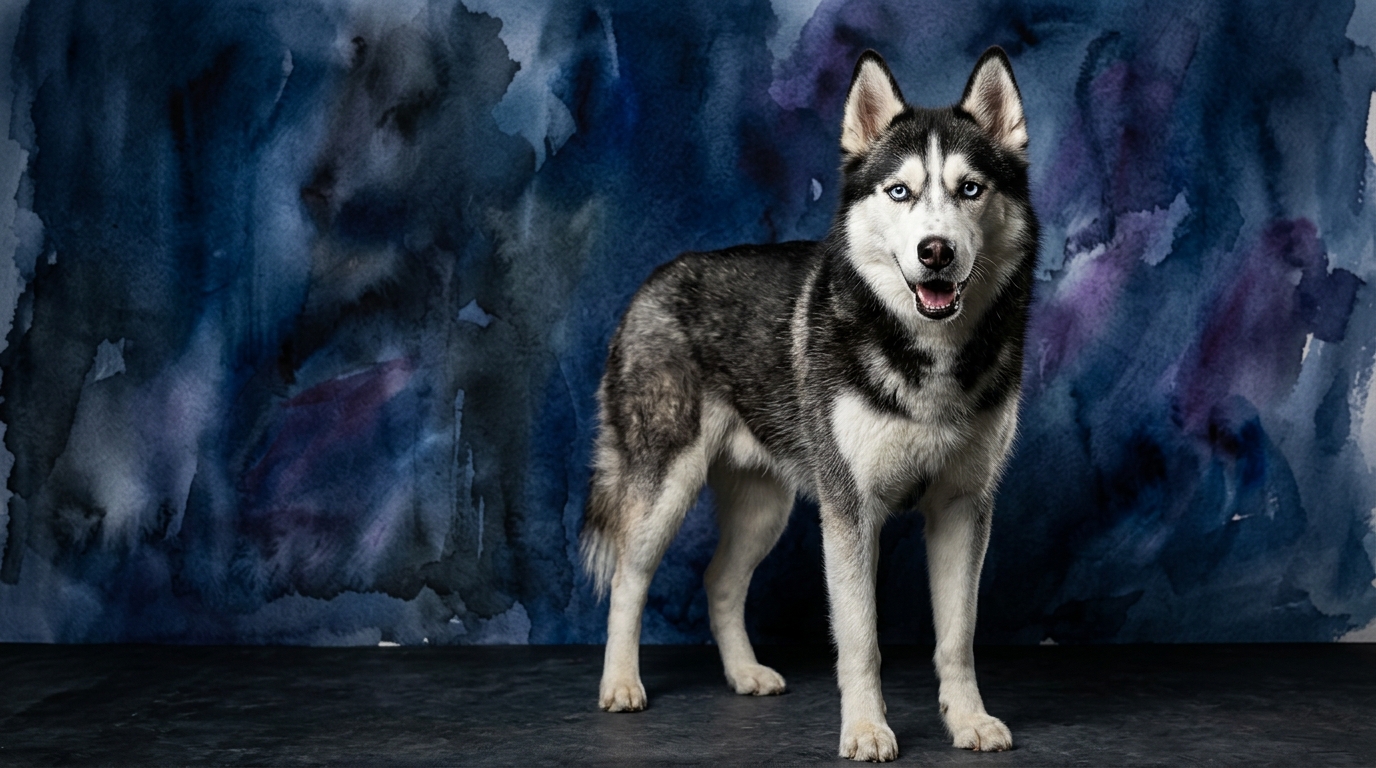

Side-by-Side IQ Profile: Siberian Husky vs. English Cocker Spaniel
Delving into the cognitive makeup of these two breeds reveals distinct strengths and operational styles. The Siberian Husky, with a Coren rank of #45, exhibits strong problem-solving at 4/5, often demonstrating independent thought to navigate obstacles or achieve self-motivated goals. Their training speed is 2/5, reflecting a selective compliance rather than a lack of understanding, driven by an exceptional instinctive drive of 5/5 for running and exploration. Social intelligence stands at 3/5, indicating adequate pack interaction without intense people-pleasing, and memory is robust at 4/5, aiding their navigational prowess.
In contrast, the English Cocker Spaniel, ranked #18 by Coren, matches the Husky's problem-solving at 4/5, but often applies it with more focus on handler-oriented tasks, such as intricate scent work. Their training speed is a swift 4/5, signifying a keen desire to learn and cooperate, supported by an outstanding memory of 5/5 for retaining commands and complex information. While their instinctive drive is 3/5, it is highly channeled towards specific hunting tasks, and their social intelligence is 3/5, fostering strong, amiable bonds within their family unit.
Where the Siberian Husky Wins Cognitively
The Siberian Husky's cognitive strengths shine particularly in areas demanding independent action and robust physical engagement. Their problem-solving capacity, rated 4/5, isn't about solving puzzles for human reward, but often about practical navigation and resourcefulness. For instance, a Husky might meticulously plan an escape route from a yard or devise strategies to access food left on a counter, demonstrating a clever, self-serving ingenuity that highlights their self-reliance.
Furthermore, their instinctive drive, a perfect 5/5, isn't merely a physical attribute; it underpins their mental fortitude for sustained effort in challenging environments. They are thinkers who thrive on overcoming physical obstacles and navigating complex terrain, using their memory (4/5) to recall routes and potential challenges. This combination allows them to adapt and persist in environments where sheer will and independent thought are paramount, such as long-distance sledding or extensive wilderness exploration.
Where the English Cocker Spaniel Wins Cognitively
The English Cocker Spaniel demonstrates distinct cognitive advantages, particularly in areas of biddability and precision in task execution. Their training speed, a remarkable 4/5, highlights their inherent desire to collaborate and absorb commands swiftly. This isn't just about quick learning; it's about a deep responsiveness to human direction, making them exceptionally pliable in structured learning environments for obedience, agility, or scent work.
Their memory, a perfect 5/5, is a cornerstone of their working ability, enabling them to recall intricate scent patterns, the precise location of retrieved items, and a vast repertoire of commands with accuracy. This superior recall is vital for their role as sporting dogs, where remembering specific instructions and locations under pressure is critical. Their problem-solving (4/5) often manifests in focused, persistent intelligence aimed at achieving a defined objective alongside their handler.
Training Dynamics: Husky vs. Cocker Spaniel
When considering ease of training, the English Cocker Spaniel clearly holds an advantage due to its inherent temperament and historical role. With a training speed of 4/5 compared to the Husky's 2/5, Cockers possess a strong desire to please and a natural inclination towards cooperative work. They are often eager to engage with their handler, quickly forming associations between commands and actions, and responding exceptionally well to positive reinforcement. Their keen memory (5/5) ensures they retain these lessons effectively, building upon their knowledge base with consistency.
In contrast, the Siberian Husky's independent spirit and high instinctive drive (5/5) mean they often prioritize their own motivations, such as exploring or running, over immediate compliance. While intelligent in problem-solving (4/5), their training requires immense patience, creativity, and a deep understanding of their unique drive. A Husky might understand a command perfectly but choose not to execute it if a more enticing distraction is present, reflecting their self-directed nature rather than a lack of comprehension. Their historical role demanded self-sufficiency, not strict obedience, leading to a different approach to learning.
Matching Breeds to Lifestyles: Active vs. Engaged Owners
For truly active owners seeking a canine partner for extensive outdoor adventures, the Siberian Husky is an unparalleled choice. Their powerful instinctive drive (5/5) and need for sustained physical activity mean they thrive in environments offering long runs, challenging hikes, or even sledding. They are not content with short walks; their mental and physical well-being relies on covering significant distances and engaging their problem-solving skills (4/5) in navigating varied terrain. This breed demands an owner who is equally committed to an active lifestyle and understands the nuances of managing a strong-willed, high-energy companion.
Conversely, for owners who appreciate activity but lean towards more structured, cooperative engagement rather than raw endurance, the English Cocker Spaniel is an excellent fit. While active, their drive (3/5) is often channeled into focused tasks like retrieving, scent work, or agility, making them suitable for owners who enjoy consistent training sessions, dog sports, and daily walks or runs. They are adaptable to a wider range of activity levels, provided their need for mental stimulation and companionship is met. A truly relaxed or sedentary owner would likely struggle with the energy demands of either breed, but especially the Husky, whose inherent drives are a constant force.
The Verdict
Choose the Siberian Husky if you are an experienced, highly active owner who embraces an independent, resourceful companion with immense endurance for outdoor adventures and a unique, self-directed approach to problem-solving.
Opt for the English Cocker Spaniel if you seek a biddable, eager-to-please companion who excels in cooperative training, dog sports, and forms strong bonds, thriving on focused activity and a close partnership.
🧠 Find Your Pet's IQ Score
Our Pet IQ Lab assessment covers 25+ tests across 5 cognitive dimensions — personalized to your breed.
Take the Full IQ Test →Frequently Asked Questions
Does a Siberian Husky's lower training speed mean it isn't intelligent?
Not at all. A Husky's lower training speed (2/5) reflects their independent nature and strong self-preservation instincts rather than a lack of cognitive ability. They possess excellent problem-solving skills (4/5) and memory (4/5), but their historical role as sled dogs prioritized self-sufficiency over strict obedience, meaning they often choose whether to comply based on their own motivations.
How does the English Cocker Spaniel's memory benefit its owners?
The English Cocker Spaniel's exceptional memory (5/5) is a significant asset for owners, especially in training and daily life. It allows them to quickly learn and retain a wide array of commands, routines, and even complex scent discrimination tasks, making them very consistent and reliable partners in activities like obedience, agility, or scent work.
Can a Siberian Husky and an English Cocker Spaniel live together harmoniously?
Yes, with proper introductions and management, a Husky and a Cocker Spaniel can coexist. Their differing energy levels and play styles might require supervision, but both breeds are generally social (Husky 3/5, Cocker 3/5). The key is ensuring both dogs receive adequate individual attention and exercise tailored to their specific needs to prevent any frustration or behavioral issues.