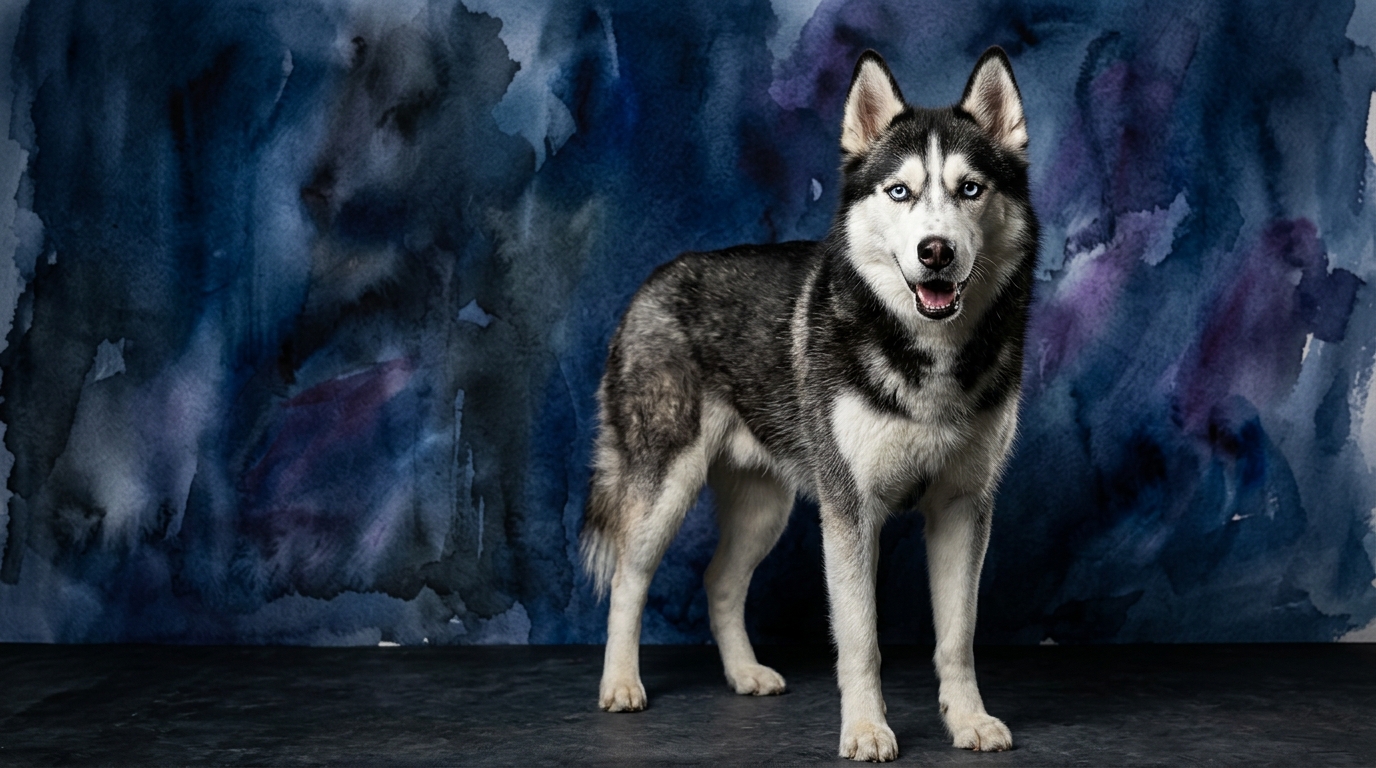

Side-by-Side IQ Profile: Siberian Husky vs. English Setter
The Siberian Husky, a resilient sled dog from the Working Group (Coren rank #45), presents a unique cognitive profile forged by centuries of demanding work. Their problem-solving ability (4/5) shines in independent situations, enabling them to strategize escapes or locate resources without human direction. Training speed (2/5) is slower, reflecting a strong will and preference for self-guided action. Social intelligence (3/5) indicates they understand pack dynamics but often maintain a degree of independence, observing rather than always seeking interaction. Their instinctive drive (5/5) is profound, encompassing a powerful urge to run, pull, and a high prey drive. Memory (4/5) is robust, aiding their recall of successful strategies and routes.
In contrast, the graceful English Setter, a Sporting Group member (Coren rank #37), showcases a different set of mental strengths geared towards cooperative hunting. Their problem-solving (4/5) is adept in field scenarios, strategically navigating terrain to find game, often in cooperation with a handler. Training speed (4/5) is significantly higher, driven by a desire to please and a readiness to learn complex commands. Social intelligence (3/5) means they bond deeply with their human families, showing sensitivity to moods and thriving on companionship. Their instinctive drive (3/5) is focused on scenting and pointing, a cooperative hunting instinct, rather than independent wandering. Memory (4/5) is excellent for learned tasks and environmental details crucial for their work.
Where the Siberian Husky Wins Cognitively
The Siberian Husky's cognitive strength lies in its profound self-reliance and independent problem-solving. With a 4/5 rating in problem-solving and a 5/5 instinctive drive, these dogs excel at autonomously navigating complex situations to achieve their own objectives. This manifests as ingenious escape artistry, figuring out how to open gates or scale fences, or strategically obtaining food. Their memory (4/5) reinforces these abilities, allowing them to recall past successful tactics. This isn't about following human directives, but about a deep-seated capacity for self-directed ingenuity, often requiring them to outwit their environment or their owners.
Where the English Setter Wins Cognitively
The English Setter's cognitive edge emerges in cooperative intelligence and directed task execution. Their 4/5 problem-solving, coupled with a 4/5 training speed, enables them to quickly grasp and apply solutions within a human-directed context. This includes complex scent discrimination in the field or understanding multi-step commands. Their social intelligence (3/5) fosters a strong desire to work with and please their handler, making them highly receptive to instruction. They excel at focused, sustained attention on tasks that require precision and a nuanced understanding of human communication, leveraging their memory (4/5) for consistent performance.
Trainability: A Tale of Two Temperaments
Comparing trainability, the English Setter is unequivocally easier to guide. Their 4/5 training speed reflects an inherent willingness to cooperate and a keen responsiveness to human cues. They actively seek to understand and execute commands, thriving on positive reinforcement and the shared experience of learning. Their instinctive drive (3/5) is inherently cooperative, focusing on tasks like scenting and pointing that can be readily shaped by training, leading to faster, more consistent obedience.
Conversely, the Siberian Husky presents a significant training challenge, indicated by their 2/5 training speed. While capable of understanding commands, their independent nature and powerful 5/5 instinctive drive often lead them to prioritize their own agenda over compliance. Their strong desire to run, explore, and hunt means they require an extraordinary level of consistency, patience, and highly motivating rewards to achieve reliable obedience. Training a Husky often involves channeling their considerable mental and physical energy rather than simply directing it.
Matching Canine Cognition to Owner Lifestyle
For active owners seeking a true partner in outdoor adventure, the Siberian Husky is an undeniable fit. They demand owners who not only provide extensive physical exercise, often miles of running or hiking daily, but also understand and appreciate a dog with an independent mind and powerful drives. Their cognitive profile suits individuals who enjoy managing a clever, self-reliant animal that consistently seeks new challenges and opportunities for exploration. This breed thrives on engagement that respects its inherent wanderlust and problem-solving ingenuity.
The English Setter, while also requiring regular activity, offers a different dynamic for active owners. They suit those who enjoy cooperative dog sports, long walks, or field training, where the dog works alongside them. Their cognitive strengths make them excellent companions for shared pursuits, readily engaging in directed activities. For owners who also appreciate a calmer, more companionable presence indoors after exercise, the Setter is often a better match. They are active but channel their energy more readily into human-centric activities, making them suitable for active families seeking a cooperative, sensitive companion.
The Verdict
Choose a Siberian Husky if you seek an independent, athletic companion for adventures, are prepared for significant training challenges, and appreciate a dog that uses its mind to pursue its own strong drives.
Opt for an English Setter if you desire a cooperative, sensitive partner for shared activities, value quicker trainability, and appreciate a graceful dog that thrives on companionship and directed tasks.
🧠 Find Your Pet's IQ Score
Our Pet IQ Lab assessment covers 25+ tests across 5 cognitive dimensions — personalized to your breed.
Take the Full IQ Test →Frequently Asked Questions
Do Siberian Huskies or English Setters make better family pets?
Both can be wonderful family dogs, but their needs differ. English Setters are generally more compliant and sensitive, often integrating smoothly into family routines, while Huskies require a family prepared for their independent spirit and significant exercise demands.
Which breed is more prone to behavioral problems if not properly stimulated?
The Siberian Husky, with its profound instinctive drive and independent problem-solving, is more prone to destructive behaviors, escape attempts, and vocalizations if its extensive physical and mental stimulation needs are not met. The English Setter's issues are more likely to stem from lack of social interaction or insufficient exercise leading to restlessness.
Is the English Setter truly 'smarter' than the Siberian Husky based on Coren rank?
Coren rank primarily reflects a dog's obedience and working intelligence, meaning how quickly they learn and obey commands. The English Setter's higher rank (37 vs 45) indicates greater trainability and willingness to comply, but doesn't necessarily mean superior overall cognitive capacity, especially in areas like independent problem-solving where the Husky excels.