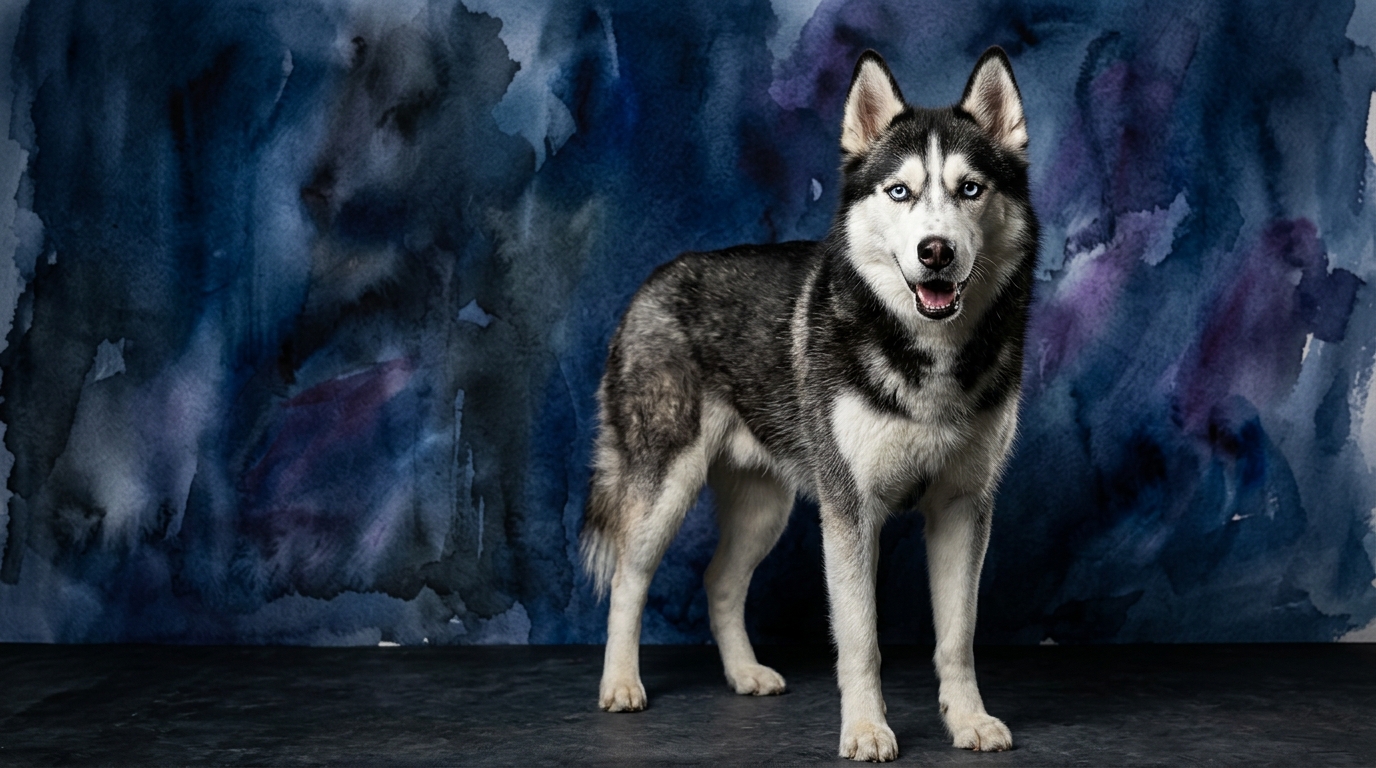

Side-by-Side IQ Profile: Husky vs. Toy Spaniel
At The Cosmic Pet Pet IQ Lab, we analyze canine cognition across five critical dimensions to provide a nuanced understanding of each breed's mental aptitudes. The Siberian Husky, a Coren-ranked breed at #45, presents a profile reflecting its working heritage, while the English Toy Spaniel, though not Coren-ranked, showcases a different, equally valid set of cognitive strengths tailored for companionship.
The Siberian Husky's cognitive profile emphasizes independence and robust physical drive: their Problem Solving ranks at a commendable 4/5, indicative of resourceful thinking and adaptability. Training Speed, however, registers at 2/5, reflecting their independent spirit rather than a lack of capacity. Social Intelligence is rated 3/5, suggesting a balanced interaction style, while their Instinctive Drive soars at 5/5, highlighting their inherent need for activity and purpose. Finally, their Memory is strong at 4/5, allowing them to retain complex information and experiences.
In contrast, the English Toy Spaniel's IQ profile leans towards a more companion-focused intellect. Their Problem Solving is a solid 3/5, enabling them to navigate daily routines and learn household norms effectively. Training Speed comes in at 3/5, indicating a moderate responsiveness and a desire to engage with their human companions. Social Intelligence, also 3/5, means they are well-attuned to human emotions and social cues, fostering deep bonds. Instinctive Drive is a moderate 3/5, reflecting a preference for comfort over intense physical exploits. Their Memory is rated 3/5, sufficient for remembering routines, people, and basic commands within a companion setting.
Where the Siberian Husky Excels Cognitively
The Siberian Husky's cognitive advantages are deeply rooted in its history as a sled dog, requiring independent decision-making and endurance. Their superior Problem Solving (4/5) is evident in their ability to figure out complex challenges, whether it’s finding a way around an obstacle on a trail or ingeniously opening a 'secure' gate. This isn't just about following commands; it's about active, adaptive thinking when faced with novel situations, a trait invaluable in challenging environments. They are not merely reactive but proactive in their mental approach to their surroundings.
Furthermore, their Instinctive Drive (5/5) is a cognitive powerhouse, manifesting as an unwavering motivation for sustained physical activity and exploration. This translates into a mental tenacity that allows them to push through fatigue, maintain focus during long journeys, and pursue goals with intense dedication. This drive isn't just physical; it's a mental engine that fuels their adventurous spirit and willingness to engage with demanding tasks. Paired with a Memory score of 4/5, they can recall complex routes and learned sequences, making them highly effective in repeated, intricate tasks like navigating specific trails or performing multi-step routines.
Where the English Toy Spaniel Shines Cognitively
The English Toy Spaniel's cognitive strengths lie in their aptitude for domestic life and deep human connection. While their Problem Solving is 3/5, it's perfectly calibrated for understanding household dynamics and the nuances of family life, rather than navigating a frozen wilderness. This allows them to quickly learn preferred routines, recognize specific cues from their owners, and adapt to the ebb and flow of a home environment with remarkable ease. Their intelligence is finely tuned to the subtleties of human-canine interaction, making them exceptional at reading moods and responding appropriately.
Their Training Speed, also 3/5, while not top-tier, reflects a willingness to engage in learning that often surpasses what one might expect from a breed with lower instinctive drives. This moderate responsiveness, combined with their strong desire for human approval, makes them highly amenable to positive reinforcement training for companion behaviors. Their Social Intelligence (3/5) is particularly impactful in its application: they excel at forming profound emotional bonds, offering comfort and companionship. This isn't about leading a pack, but about being a deeply empathetic and intuitive partner, a cognitive strength often overlooked in traditional intelligence metrics but paramount in a companion animal.
Training Dynamics: Husky's Independence vs. Spaniel's Eagerness
When considering ease of training, the Siberian Husky and English Toy Spaniel present markedly different experiences. The English Toy Spaniel, with its moderate Training Speed (3/5) and lower Instinctive Drive (3/5), is generally considered easier to train for the average pet owner. They possess a natural inclination to please their human companions, responding well to positive reinforcement and praise. Their temperament allows them to focus on the trainer and the task at hand without the strong independent urges that characterize many working breeds. Basic obedience commands, house-training, and polite leash manners typically come with consistent, gentle methods, as they value the bond and approval of their family.
The Siberian Husky, conversely, presents a more significant training challenge, despite their high Problem Solving and Memory scores. Their Training Speed of 2/5 isn't due to a lack of ability, but rather their inherent independence and strong instinctive drives (5/5). Huskies were bred to make decisions far from their human handlers while pulling a sled, leading to a 'what's in it for me?' attitude. They require creative, engaging training methods that make tasks feel like a game or a challenge they choose to conquer, rather than a command they must obey. Consistency, patience, and understanding their motivations are crucial; simply repeating commands often leads to selective deafness. Their strong prey drive and wanderlust also necessitate early, thorough recall training and secure environments.
Lifestyle Match: Active Adventurer vs. Calm Companion
The cognitive and behavioral profiles of these two breeds naturally align with very different owner lifestyles. The Siberian Husky is unequivocally suited for highly active, experienced owners who are prepared to channel their immense physical and mental energy. Their 5/5 Instinctive Drive means they thrive on structured activities that engage both their body and mind, such as sledding, canicross, extensive hiking, or agility. An owner who understands their independent Problem Solving (4/5) will provide stimulating puzzles and training challenges that prevent boredom and destructive behaviors. This breed needs a 'job' and consistent mental engagement to be content, making them ideal for individuals or families with an adventurous, outdoor-oriented lifestyle.
In contrast, the English Toy Spaniel is the quintessential companion for owners seeking a more relaxed pace of life. Their moderate Instinctive Drive (3/5) and strong focus on Social Intelligence (3/5) mean they are happiest when their primary role is that of a devoted family member. They enjoy short, leisurely strolls, indoor play, and, most importantly, ample cuddle time on the sofa. An owner who appreciates their gentle nature and values close human interaction will find this breed incredibly rewarding. They are perfectly content with a quiet home environment, thriving on affection and the consistent presence of their loved ones, making them excellent companions for less active individuals or those living in smaller spaces.
The Verdict
Choose the Siberian Husky if you are an active, experienced owner ready to engage a resourceful, independent dog in demanding physical and mental challenges.
Opt for the English Toy Spaniel if you seek a devoted, calm companion who thrives on close human connection and a more relaxed, affectionate lifestyle.
🧠 Find Your Pet's IQ Score
Our Pet IQ Lab assessment covers 25+ tests across 5 cognitive dimensions — personalized to your breed.
Take the Full IQ Test →Frequently Asked Questions
Is a Siberian Husky a good first dog?
A Siberian Husky is generally not recommended as a first dog due to their strong independence, high exercise needs, and challenging training requirements. Their problem-solving skills and instinctive drives demand an experienced owner who can provide consistent guidance and extensive mental and physical stimulation.
How much exercise does an English Toy Spaniel need daily?
The English Toy Spaniel has moderate exercise needs, typically satisfied with one or two short daily walks and indoor play. They prefer gentle activity and companionship over strenuous exertion, making them suitable for owners who enjoy a more relaxed pace.
Do English Toy Spaniels get along with other pets?
English Toy Spaniels generally get along well with other pets, including other dogs and cats, especially if properly socialized from a young age. Their social intelligence and adaptable nature make them amiable companions within a multi-pet household, provided introductions are managed positively.