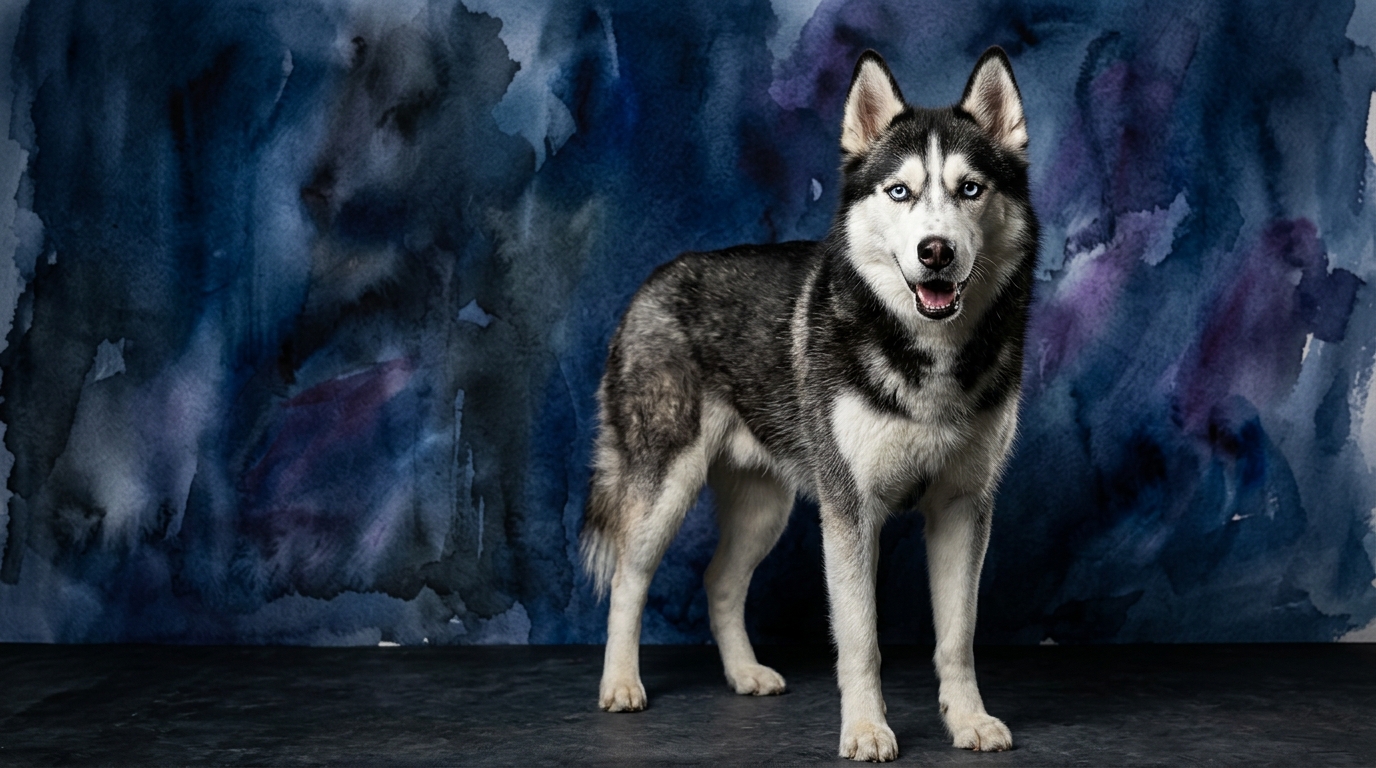
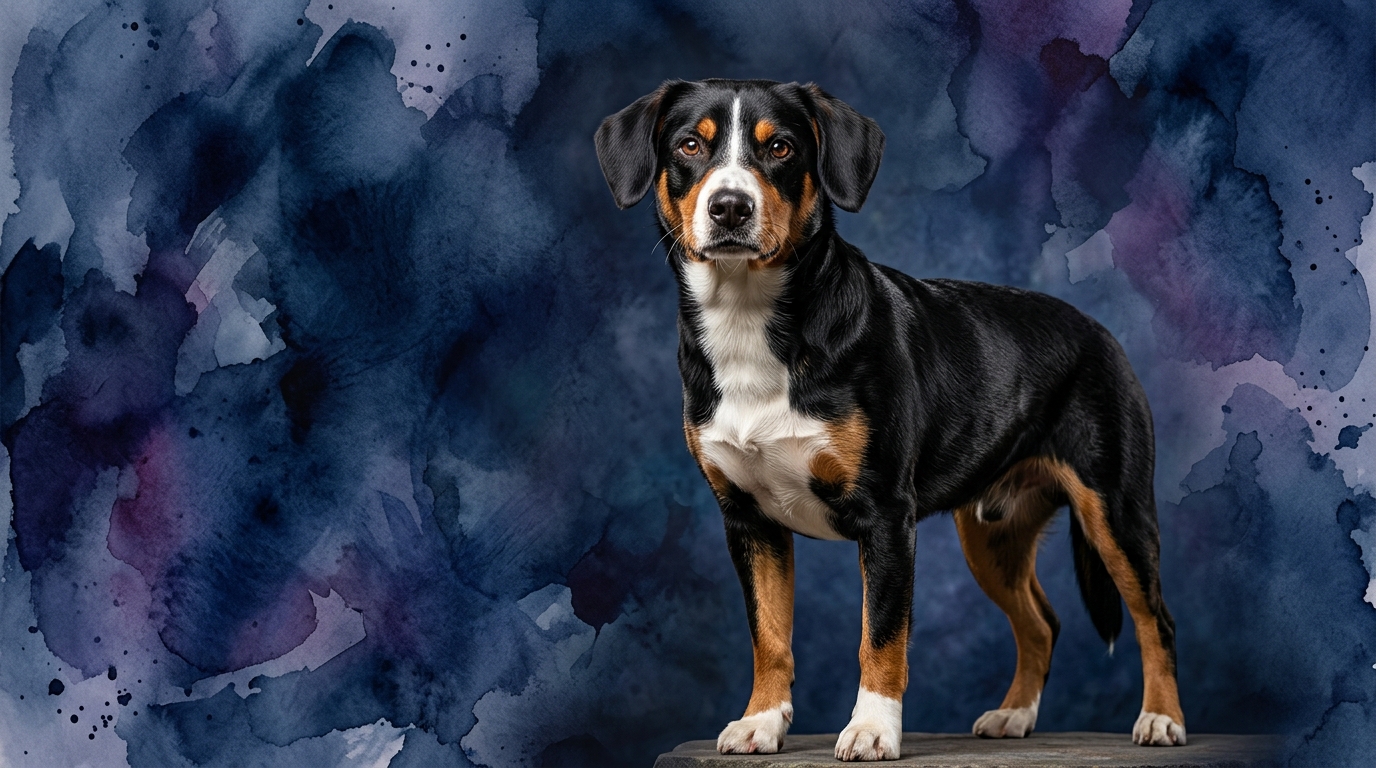
Side-by-Side IQ Profile: Siberian Husky vs. Entlebucher Mountain Dog
The Cosmic Pet Pet IQ Lab employs five key dimensions to map canine intelligence, offering a detailed look at how different breeds process the world. For the Siberian Husky, ranked #45 by Coren, we observe a Problem Solving score of 4/5, indicating a clever and often ingenious mind, adept at figuring things out, sometimes to their owner's surprise. Their Training Speed stands at 2/5, reflecting an independent nature that can make them less eager to follow commands if it doesn't align with their immediate interests. Social Intelligence is 3/5, suggesting they are generally good-natured with both humans and other dogs, but not overly focused on pleasing. A standout Instinctive Drive of 5/5 highlights their powerful urge to explore, chase, and run, a remnant of their sled dog heritage. Finally, their Memory is strong at 4/5, enabling them to retain learned information and recall past experiences with clarity.
In contrast, the Entlebucher Mountain Dog, a Herding breed not ranked by Coren, presents a different cognitive profile. Their Problem Solving ability rates 3/5, demonstrating competence in navigating challenges, though perhaps with less inventiveness than the Husky. They show a Training Speed of 3/5, indicating a more responsive and willing learner, eager to engage with their handler. Social Intelligence is also 3/5, signifying a devoted connection to their family while often maintaining a reserved demeanor around strangers. Their Instinctive Drive is 3/5, encompassing their herding and guarding tendencies, a more controlled drive compared to the Husky's wanderlust. Their Memory scores 3/5, meaning they are capable of remembering commands and routines, though perhaps without the Husky's exceptional recall for specific events.
Where the Siberian Husky Wins Cognitively
The Siberian Husky truly shines in areas demanding independent thought and self-directed action. Their Problem Solving score of 4/5, higher than the Entlebucher's 3/5, illustrates a breed that excels at figuring out how to achieve its goals, often creatively. This manifests in their ability to escape enclosures, open doors, or even strategize to obtain desired objects, skills honed by generations of surviving and working autonomously in harsh environments. This isn't about obedience but about ingenious adaptation. Furthermore, their Instinctive Drive, rated a perfect 5/5 compared to the Entlebucher's 3/5, grants them an unparalleled capacity for sustained physical exertion and an intense drive for exploration. This powerful, innate urge to run and investigate makes them exceptional partners for long-distance activities and provides them with a profound ability to navigate and remember complex terrains, a cognitive advantage rooted in their sledding history. Their memory of locations and routes is often exceptional, aiding their exploratory ventures.
Where the Entlebucher Mountain Dog Wins Cognitively
The Entlebucher Mountain Dog demonstrates a cognitive edge in areas centered around cooperation and focused task execution. Their Training Speed of 3/5, surpassing the Husky's 2/5, immediately points to a greater willingness to engage in structured learning and a quicker grasp of new commands when working with a handler. This responsiveness is a direct reflection of their herding lineage, where paying attention to and acting upon human direction was paramount for their work. Unlike the Husky’s independent problem-solving, the Entlebucher's cognitive strengths lie in their ability to process and apply instructions, making them more receptive to intricate training sequences and nuanced cues. Their instinctive drive, while lower at 3/5 compared to the Husky, is channeled towards specific tasks like herding and guarding, requiring a focused intelligence to manage livestock or protect their territory, rather than simply exploring. This directed drive, coupled with their willingness to learn, makes them more predictable and reliable in performing learned tasks.
Which is Easier to Train and Why
When it comes to ease of training, the Entlebucher Mountain Dog generally presents a more straightforward path than the Siberian Husky. The Entlebucher's Training Speed of 3/5 indicates a dog that is more inclined to cooperate and respond to cues, often eager to please its family. Their herding background instilled a desire to work alongside humans and follow directions, making them receptive to positive reinforcement methods and consistent instruction. Owners often find Entlebuchers pick up basic obedience commands and even more complex tasks relatively quickly. In stark contrast, the Siberian Husky's Training Speed of 2/5 stems from their profound independence and lower intrinsic desire to please. Their high Instinctive Drive (5/5) means they are often more interested in pursuing their own agenda – exploring, running, or chasing – than in listening to a human. This independence can make recall particularly challenging; a Husky off-leash might decide the thrill of a scent trail outweighs any command. Training a Husky requires immense patience, creativity, and a deep understanding of their motivations, often needing to convince them that complying is more rewarding than their self-directed pursuits.
Which Suits Active Owners vs. Relaxed Owners
Neither the Siberian Husky nor the Entlebucher Mountain Dog are suited for truly relaxed owners, as both breeds require significant mental and physical engagement. However, their specific needs differentiate them for varying levels of activity. The Siberian Husky, with its 5/5 Instinctive Drive and 4/5 Problem Solving, thrives with exceptionally active owners who can meet their intense need for sustained exercise and mental challenges. These are dogs for runners, hikers, and those who enjoy sledding, skijoring, or long-distance adventuring. Their independent problem-solving also means they need engaging activities like puzzle toys, scent work, or agility to prevent boredom-induced mischief. For owners seeking a partner for structured activities and consistent mental work, the Entlebucher Mountain Dog is an excellent fit. While still requiring substantial daily exercise, their 3/5 Instinctive Drive and 3/5 Training Speed suggest they are better suited for owners who enjoy consistent training, dog sports like obedience or agility, and providing clear tasks. They appreciate a routine that incorporates purposeful activity, rather than just endless running. An Entlebucher might be a better choice for an active family looking for a devoted companion who enjoys working with them, whereas a Husky is for the owner who appreciates a partner who might sometimes prefer to work alongside them, or even independently.
The Verdict
Choose the Siberian Husky if you are an exceptionally active individual or family prepared for an independent, clever companion with an unparalleled drive for exploration and physical exertion, and you appreciate a dog that thinks for itself.
Opt for the Entlebucher Mountain Dog if you seek a devoted, cooperative, and trainable companion for structured activities and family life, and you are ready to provide consistent mental and physical engagement tailored to their working heritage.
🧠 Find Your Pet's IQ Score
Our Pet IQ Lab assessment covers 25+ tests across 5 cognitive dimensions — personalized to your breed.
Take the Full IQ Test →Frequently Asked Questions
Are Huskies difficult to train?
Yes, Huskies can be challenging to train due to their strong independence and lower desire to please, often preferring to follow their own instincts. Consistent, positive reinforcement and understanding their motivations are crucial for success.
What is the Entlebucher Mountain Dog known for?
The Entlebucher Mountain Dog is known for its diligent herding background, deep devotion to its family, and protective instincts. They are also recognized for their cooperative nature and enthusiasm for structured training.
Which breed is better for a first-time dog owner?
Neither breed is ideal for truly novice owners due to their high energy and specific needs. However, the Entlebucher's more cooperative nature and willingness to train might be slightly more manageable for a dedicated first-time owner than the Husky's profound independence.