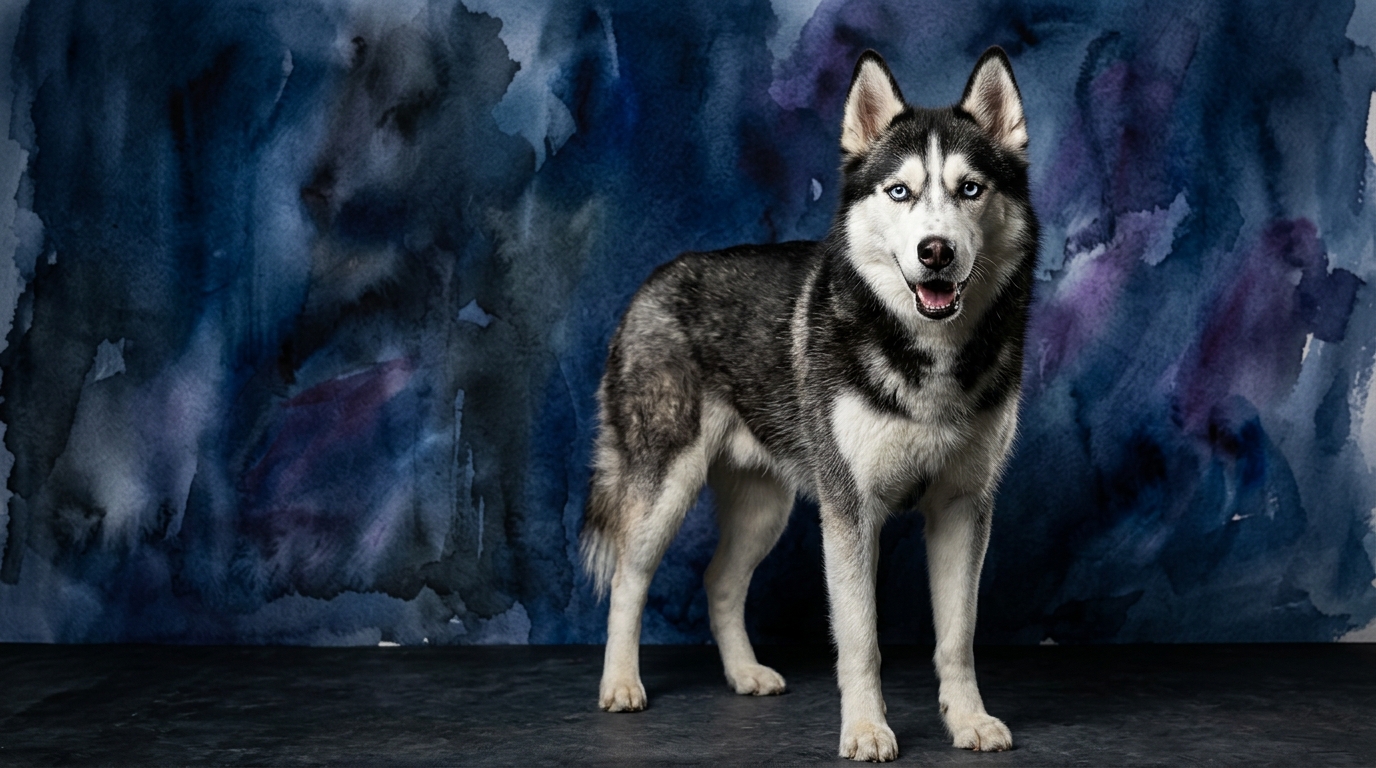
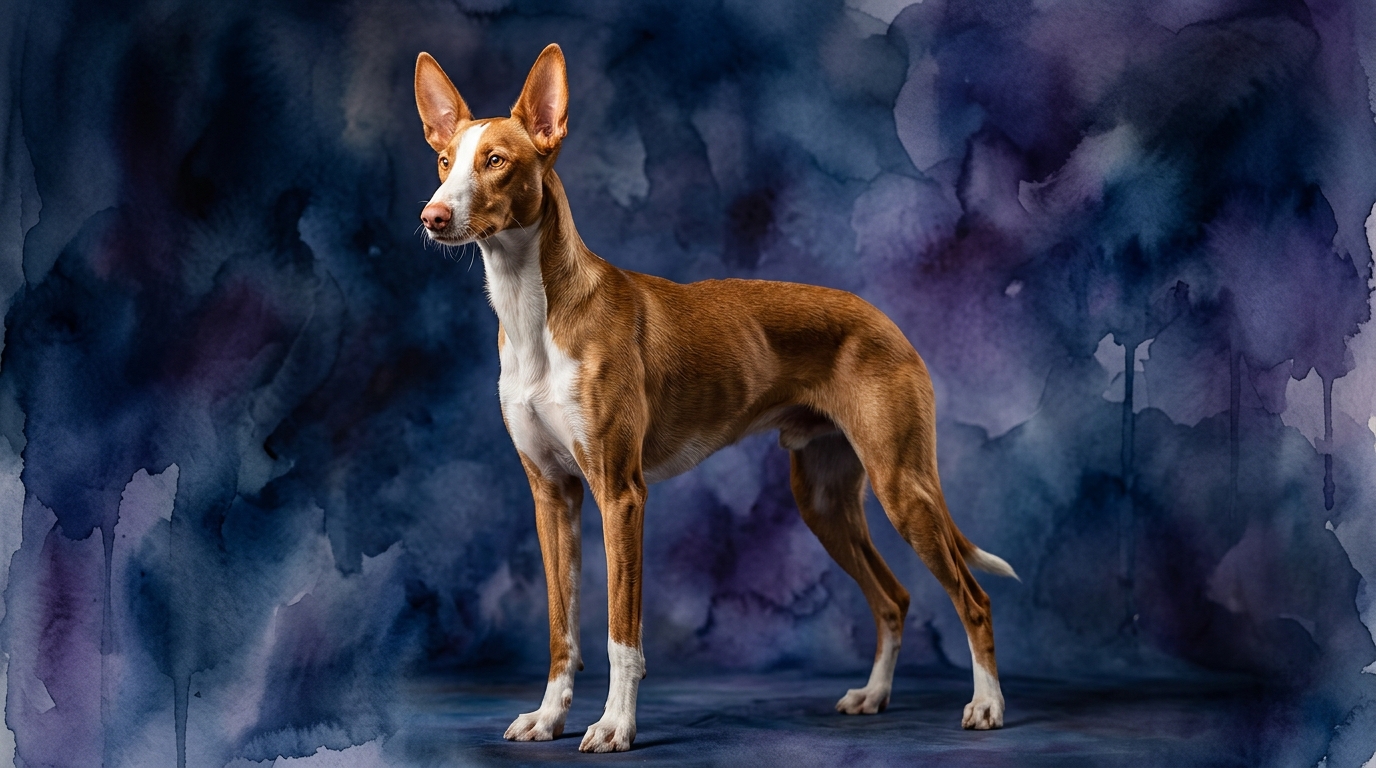
Side-by-Side Cognitive Profile
The Siberian Husky, ranked #45 by Coren, presents a cognitive profile sculpted by its demanding history as a sled dog. Their problem-solving ability scores a robust 4 out of 5, reflecting their capacity to navigate complex terrains and overcome obstacles independently. However, their training speed is a modest 2 out of 5, often attributed to a strong-willed nature that prioritizes self-reliance over immediate obedience. Social intelligence stands at 3 out of 5, indicating an ability to interact within a pack structure but perhaps not always seeking human direction. A defining characteristic is their instinctive drive, an impressive 5 out of 5, fueling their endurance and powerful prey drive. Their memory is also formidable at 4 out of 5, crucial for remembering routes and past experiences.
In contrast, the Ibizan Hound, with a Coren rank of #53, showcases a different set of cognitive priorities, honed by centuries of sight hunting. Their problem-solving capacity is rated 3 out of 5, demonstrating an aptitude for strategic pursuit and navigating varied landscapes during a hunt. Their training speed is a more accommodating 3 out of 5, suggesting a greater willingness to engage in cooperative learning, though still possessing a hound's independent streak. Social intelligence mirrors the Husky at 3 out of 5, indicating an ability to work in groups or with a handler. Their instinctive drive is a balanced 3 out of 5, strong enough for sustained pursuit but less overwhelming than the Husky's. Memory is also rated 3 out of 5, sufficient for recalling hunting patterns and familiar environments.
Where the Siberian Husky Excels Cognitively
The Siberian Husky's cognitive strengths are deeply rooted in their ancestral role. Their superior problem-solving score of 4/5 is not merely about puzzles; it reflects an innate capacity for independent decision-making in challenging environments. A Husky might ingeniously figure out how to open a gate, escape an enclosure, or find a creative path around an obstacle during a run, all without human intervention. This cognitive flexibility was essential for lead sled dogs navigating blizzards or finding their way back to camp. Furthermore, their memory, at 4/5, is particularly acute for spatial awareness and recalling sequences of events or routes, enabling them to remember where food might have been hidden or the precise path taken on a previous journey, a vital trait for survival and navigation in vast, undifferentiated landscapes.
Their immense instinctive drive, a perfect 5/5, also represents a cognitive triumph in a specific domain: endurance and sustained effort. While not 'intelligence' in the traditional sense, this drive allows them to maintain focus and motivation over long periods, translating into an incredible work ethic when engaged in activities that tap into their natural inclinations, such as pulling or extended vigorous exercise. This deep-seated drive, coupled with their problem-solving skills, means they are adept at tasks requiring perseverance and a degree of self-direction, making them formidable in activities that mimic their ancestral duties.
Where the Ibizan Hound Shines Cognitively
The Ibizan Hound’s cognitive profile, while less extreme in certain areas than the Husky’s, reveals specific advantages for its role. Their training speed, at 3/5, surpasses the Husky’s 2/5, indicating a comparatively higher responsiveness to human instruction. This doesn't mean they are robotic followers, but rather that they are generally more inclined to form a cooperative working relationship with their handler, learning commands and routines with greater efficiency. This trait is invaluable for a hunting dog that needs to respond to subtle cues and hand signals from a distance, coordinating with their human partner in the field.
While their problem-solving (3/5) and memory (3/5) scores are moderate, they are perfectly tailored for the demands of a sight hound. Their problem-solving manifests as strategic pursuit, adapting quickly to a quarry's evasive maneuvers, rather than complex environmental manipulation. Their memory is effective for recalling the visual patterns of prey, the layout of a hunting ground, and learned signals, rather than intricate long-distance routes. The Ibizan Hound's more balanced instinctive drive (3/5) also means that while they possess a strong prey drive, it is often more manageable and directed, allowing them to switch between intense focus on a target and responsiveness to their handler more readily than a Husky, whose 5/5 drive can be all-consuming.
Which is Easier to Train and Why
When considering ease of training, the Ibizan Hound generally presents a more straightforward path than the Siberian Husky, primarily due to differences in their training speed and instinctive drive. The Ibizan Hound’s training speed of 3/5 suggests a greater inherent willingness to learn and comply with human direction. While still a hound with an independent nature, their slightly higher score indicates they are more receptive to classical and operant conditioning, often showing a quicker grasp of commands and a more consistent desire to please their handler. They are less likely to view training as an optional suggestion, provided the motivation is compelling, often responding well to positive reinforcement.
The Siberian Husky, with a training speed of 2/5 and an instinctive drive of 5/5, often poses a greater challenge. Their strong independent nature and high drive mean they are constantly assessing whether a command aligns with their own immediate goals. A Husky might understand a command perfectly but choose not to execute it if they perceive a more interesting or rewarding alternative, such as chasing a squirrel or exploring a new scent. This isn't a lack of cognitive ability to learn, but rather a strong self-determination and a history of making their own decisions in a survival context. Training a Husky requires immense patience, consistency, and a deep understanding of their motivations, often needing to convince them that complying with a command is more beneficial than following their own agenda. Their tendency to 'selective hearing' is a real behavioral manifestation of their low training speed and high drive.
Suitability for Active vs. Relaxed Owners
The Siberian Husky is undeniably suited for highly active owners who thrive on outdoor adventure and can consistently provide immense physical and mental stimulation. Their 5/5 instinctive drive demands outlets for sustained energy expenditure, such as long runs, hikes, or sledding. Owners who understand and embrace their problem-solving prowess (4/5) and strong memory (4/5) will engage them in activities that challenge their minds, like advanced scent work, agility, or competitive obedience (though their training speed can make this a journey). A relaxed owner would quickly find a Husky’s boundless energy and independent problem-solving leading to destructive behaviors or escape attempts, as their cognitive and physical needs are not being met.
The Ibizan Hound, while still an active breed, fits a slightly broader spectrum of owners. Their 3/5 instinctive drive and 3/5 training speed make them excellent companions for owners who enjoy regular, vigorous exercise but perhaps not the extreme endurance required by a Husky. Activities like lure coursing, tracking, or long walks and runs are ideal, allowing them to use their sight hound instincts in a controlled environment. They can also be content with periods of relaxation indoors, provided their daily exercise needs are met. An Ibizan Hound's cognitive profile means they appreciate consistent training and clear communication, making them a rewarding partner for owners who enjoy engaging in structured activities without the intense negotiation often required with a Husky. They are not suited for entirely sedentary owners but can adapt more readily to a home life with active bursts rather than constant motion.
The Verdict
Choose the Siberian Husky if you are an experienced, highly active individual or family seeking a fiercely independent, problem-solving companion for extreme outdoor pursuits and can commit to managing their formidable energy and strong prey drive.
Opt for the Ibizan Hound if you are an active owner who appreciates a cooperative yet independent partner for activities like lure coursing and enjoy consistent training, understanding their need for regular exercise balanced with periods of calm.
🧠 Find Your Pet's IQ Score
Our Pet IQ Lab assessment covers 25+ tests across 5 cognitive dimensions — personalized to your breed.
Take the Full IQ Test →Frequently Asked Questions
Do Siberian Huskies easily escape enclosures?
Yes, Siberian Huskies are notorious for their escape artistry due to their high problem-solving ability (4/5) and immense instinctive drive (5/5). They can ingeniously figure out how to open gates, climb fences, or dig under barriers if not properly stimulated or if they perceive an opportunity for exploration.
Are Ibizan Hounds good at recall during walks?
Ibizan Hounds can be challenging with recall, particularly if they spot something interesting, as their natural sight hound instincts are strong (3/5 instinctive drive). While their training speed is moderate (3/5), a high-value distraction can often override learned commands, necessitating secure, fenced areas or long lines for off-leash exercise.
Which breed is better for first-time dog owners?
Neither breed is typically recommended for first-time dog owners due to their independent natures and specific needs. However, the Ibizan Hound, with its slightly higher training speed and more manageable instinctive drive, might present fewer initial challenges than the Siberian Husky's intense independence and profound energy requirements.