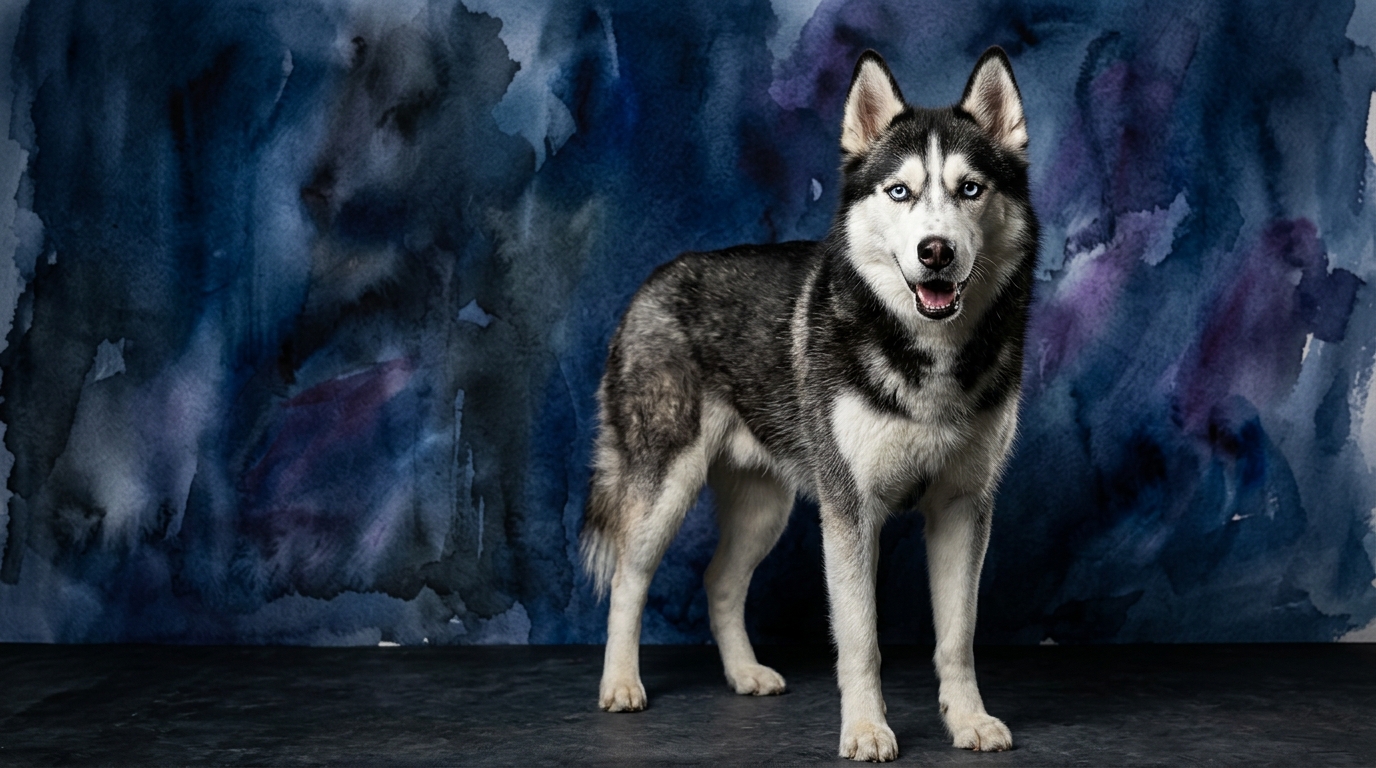
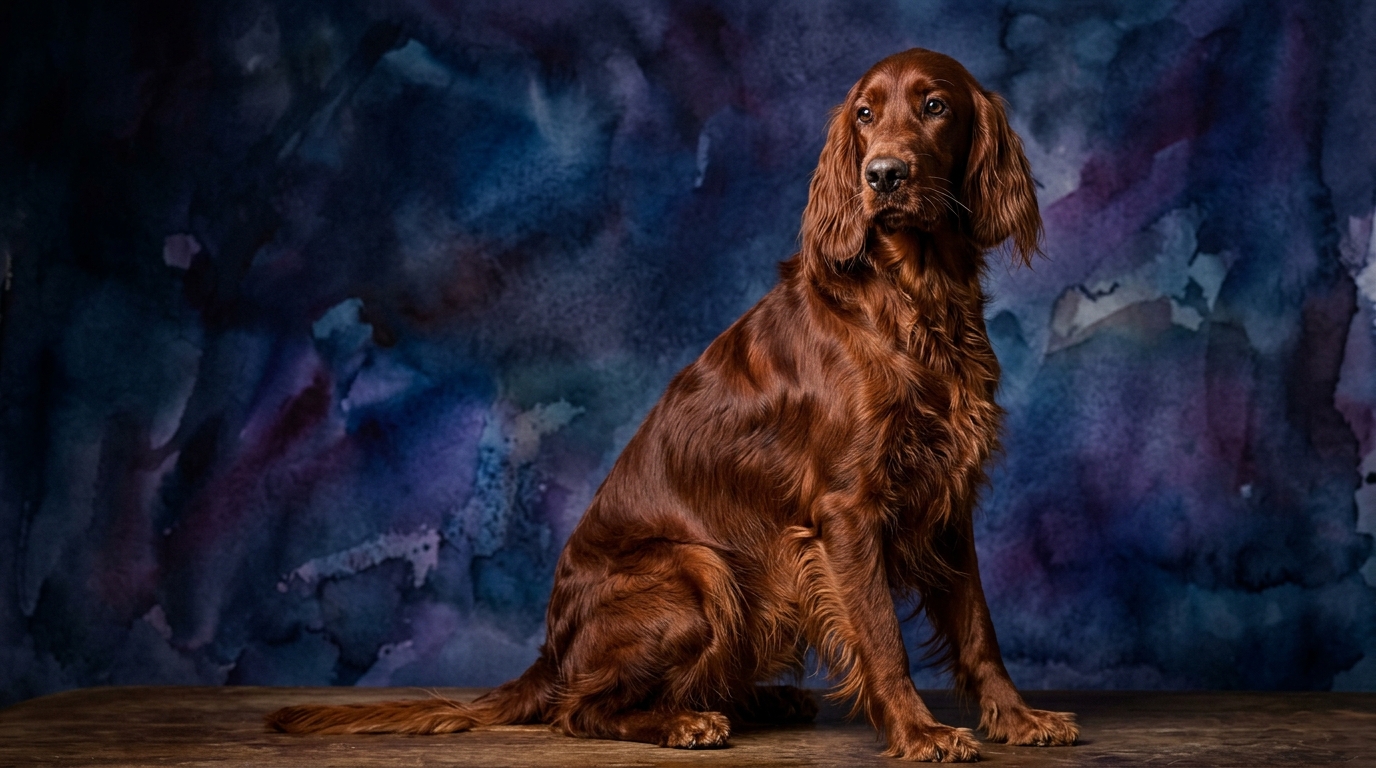
Side-by-side IQ profile
The Cosmic Pet Pet IQ Lab provides a detailed breakdown of canine intelligence across five critical dimensions. Understanding these scores for both the Siberian Husky and the Irish Setter illuminates their inherent cognitive strengths and predispositions. Let's delve into what each dimension signifies for these breeds.
For the Siberian Husky, a breed originally developed for endurance sledding in harsh conditions, their cognitive profile reflects their need for independence and survival. Their Problem Solving is rated at 4/5, indicating a strong capacity for independent thought and devising solutions to achieve their own objectives, such as escaping enclosures or finding hidden resources. Training Speed scores 2/5, highlighting that learning new commands is a deliberate process, often requiring significant repetition due to their independent and sometimes stubborn nature. Social Intelligence is 3/5; while generally friendly, Huskies often prioritize their pack dynamics or personal pursuits over strict human directives. Their Instinctive Drive is an exceptional 5/5, reflecting a powerful urge to run, explore, and a strong prey instinct deeply ingrained in their heritage. Memory is 4/5, meaning they retain routines, learned behaviors, and environmental details, including escape routes, with notable accuracy.
The Irish Setter, bred as a gun dog to work closely with hunters, presents a cognitive profile geared towards cooperation and responsiveness. Their Problem Solving is also 4/5, demonstrating strong abilities, particularly in tasks related to their sporting purpose, like locating hidden items or navigating complex terrain to find game. Training Speed is rated 4/5, indicating they learn new commands with considerable speed and enthusiasm, a testament to their desire to engage and cooperate with their human companions. Social Intelligence is 3/5; known for their affable and outgoing personalities, they are sociable, though their high energy can sometimes lead to distractibility. Their Instinctive Drive is 3/5, a moderate drive centered on finding, pointing, and retrieving game in a cooperative manner, rather than independent hunting. Memory is 4/5, showing a strong capacity for retaining learned behaviors, familiar faces, and the location of favored items over extended periods.
Where Siberian Husky wins cognitively
The Siberian Husky truly excels in its unparalleled Instinctive Drive (5/5), which is more than just a physical trait; it’s a deep cognitive blueprint for endurance, exploration, and self-sufficiency. This manifests as an innate, powerful urge to move and investigate. Their Problem Solving (4/5) often intertwines with this drive, manifesting as an exceptional ability to navigate complex environments, find ways around obstacles, or even outwit human attempts to contain them when their wanderlust calls. This cognitive independence means they are adept at making decisions in novel situations without constant human input, a trait crucial for a sled dog covering vast distances. Their robust Memory (4/5) further supports this by allowing them to recall terrain, routes, and past successes in achieving their objectives, whether it's finding a shortcut or remembering how they previously opened a gate. This combination of intense drive, independent problem-solving, and reliable memory makes them highly self-reliant and resourceful thinkers.
Where Irish Setter wins cognitively
The Irish Setter shines brightly in its Training Speed (4/5), significantly outpacing the Husky in this domain. This cognitive advantage stems from their strong desire to cooperate and engage with their human partners, a hallmark of a sporting breed developed to work closely with hunters in the field. Their Problem Solving (4/5) is often directed towards tasks that involve human interaction, such as figuring out how to retrieve a specific item from a complex setup or understanding intricate sequences of commands during a training session. While their Social Intelligence (3/5) is similar to the Husky's, the Setter's sociability is often expressed through an eagerness to please and participate in shared activities, making them inherently more receptive to instruction. This quicker learning curve means they can master a wider repertoire of commands and tricks more readily, making them a joy for owners who value rapid progress in obedience and skill acquisition and enjoy a highly responsive companion.
Which is easier to train and why
Based on their cognitive profiles, the Irish Setter is unequivocally easier to train than the Siberian Husky. The Irish Setter's Training Speed score of 4/5, compared to the Husky's 2/5, directly indicates a greater natural aptitude for learning and consistently responding to human instruction. This difference isn't about one breed possessing more overall intelligence, but rather about their inherent motivations and behavioral tendencies. Irish Setters were selectively bred to work collaboratively with hunters, requiring them to be attentive, responsive, and eager to follow commands in the field. Their desire to please and engage with their handler makes them highly receptive to positive reinforcement and repetition, leading to quicker concept grasp. In contrast, Siberian Huskies, bred for independent sled work over long distances, possess a strong-willed, self-sufficient nature. They often weigh the value of following a command against their own interests, such as exploring a captivating scent or maintaining their pace, rather than simply complying. Their lower training speed reflects this independent streak; while they can learn, it demands more patience, consistency, and a deeper understanding of their intrinsic motivations.
Which suits active owners vs relaxed owners
For truly active owners who thrive on adventure and can provide consistent, engaging mental and physical outlets, the Siberian Husky is an exceptional match. Their extreme Instinctive Drive (5/5) demands vast opportunities for running, exploring, and engaging their independent problem-solving skills. Owners who understand and can channel this drive into activities like canicross, skijoring, hiking, or even competitive obedience (with a patient, motivation-based approach) will find a rewarding partnership. A relaxed owner, or one unable to meet these substantial needs, would likely find a Husky overwhelming, leading to behavioral challenges born from unfulfilled cognitive and physical requirements. The Irish Setter, while certainly active, suits owners who enjoy consistent daily exercise, structured training, and interactive play, perhaps with a focus on field work or dog sports like agility. They require regular activity to satisfy their Instinctive Drive (3/5) for retrieving and working, but their energy is often more directed and less prone to independent wanderlust than a Husky's. They are a better fit for active owners who also appreciate a strong bond and cooperative work, rather than the Husky's more independent spirit.
The verdict
When contemplating a new canine companion, the choice between a Siberian Husky and an Irish Setter hinges on aligning their distinct cognitive strengths with your lifestyle and expectations, ensuring a harmonious partnership for years to come.
The Verdict
If you are an experienced, highly active owner who values an independent, resourceful companion and can provide extensive outlets for their intense drive for exploration and endurance, the Husky is an unparalleled choice.
Opt for an Irish Setter if you desire a highly trainable, enthusiastic partner for structured activities and sports, and appreciate a cooperative spirit and a dog that thrives on working closely with its human.
🧠 Find Your Pet's IQ Score
Our Pet IQ Lab assessment covers 25+ tests across 5 cognitive dimensions — personalized to your breed.
Take the Full IQ Test →Frequently Asked Questions
Are Siberian Huskies difficult to train because they aren't smart?
Huskies are certainly intelligent, especially in problem-solving (4/5) and memory (4/5), but their independent nature and high instinctive drive (5/5) mean they aren't always eager to comply with human commands. Their "training speed" (2/5) is lower because they often prioritize their own interests over human direction, requiring more patient and consistent motivation.
Do Irish Setters have a strong prey drive like some other sporting breeds?
Irish Setters possess a moderate instinctive drive (3/5) that includes a prey drive, primarily focused on finding and pointing game rather than chasing and catching. This drive is often channeled into cooperative field work or retrieving tasks, making them less prone to independent hunting excursions than a breed with a higher score.
How does Coren Rank relate to the IQ scores provided?
Coren Rank primarily measures "working and obedience intelligence," reflecting a dog's ability to learn and respond to human commands. The Irish Setter's higher rank (#35) and "training speed" (4/5) align, indicating greater amenability to obedience. The Husky's lower rank (#45) and "training speed" (2/5) also align, showcasing their more independent learning style.