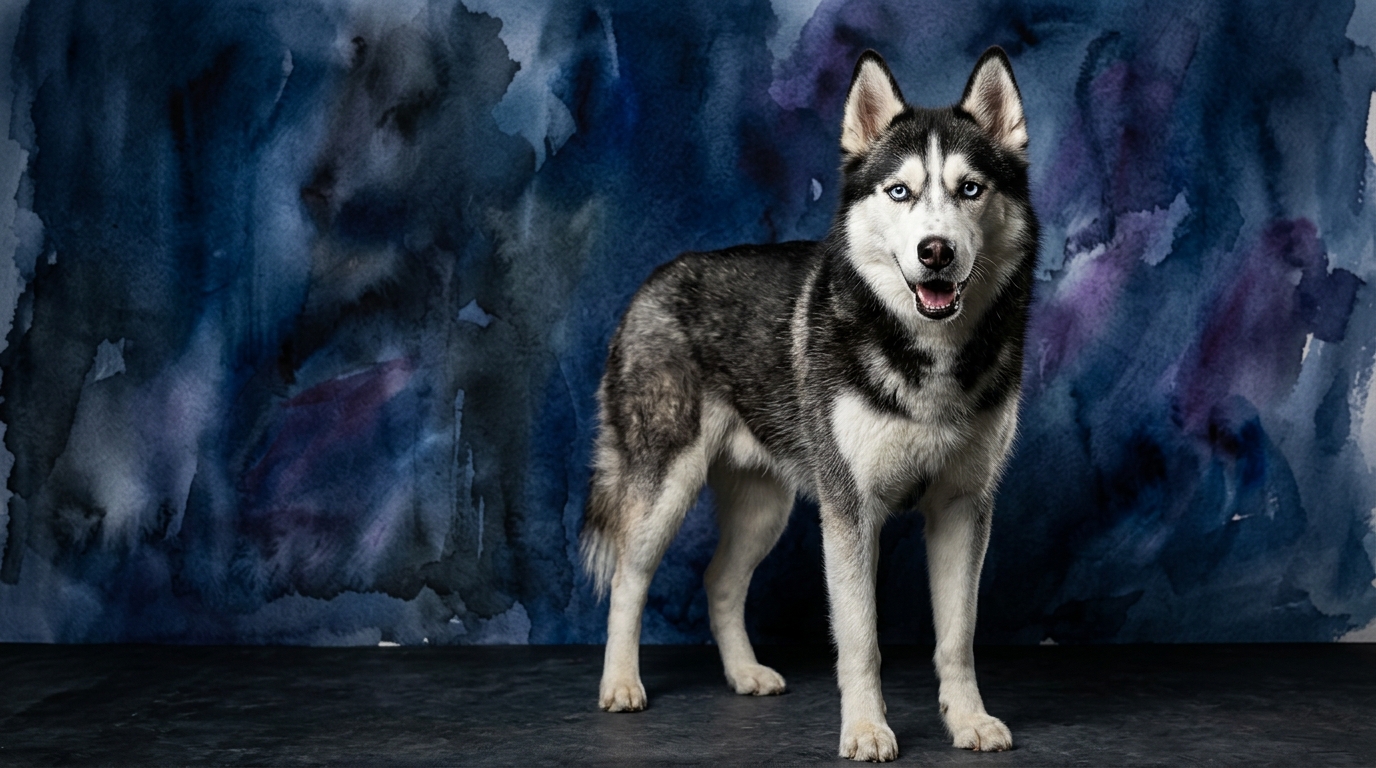
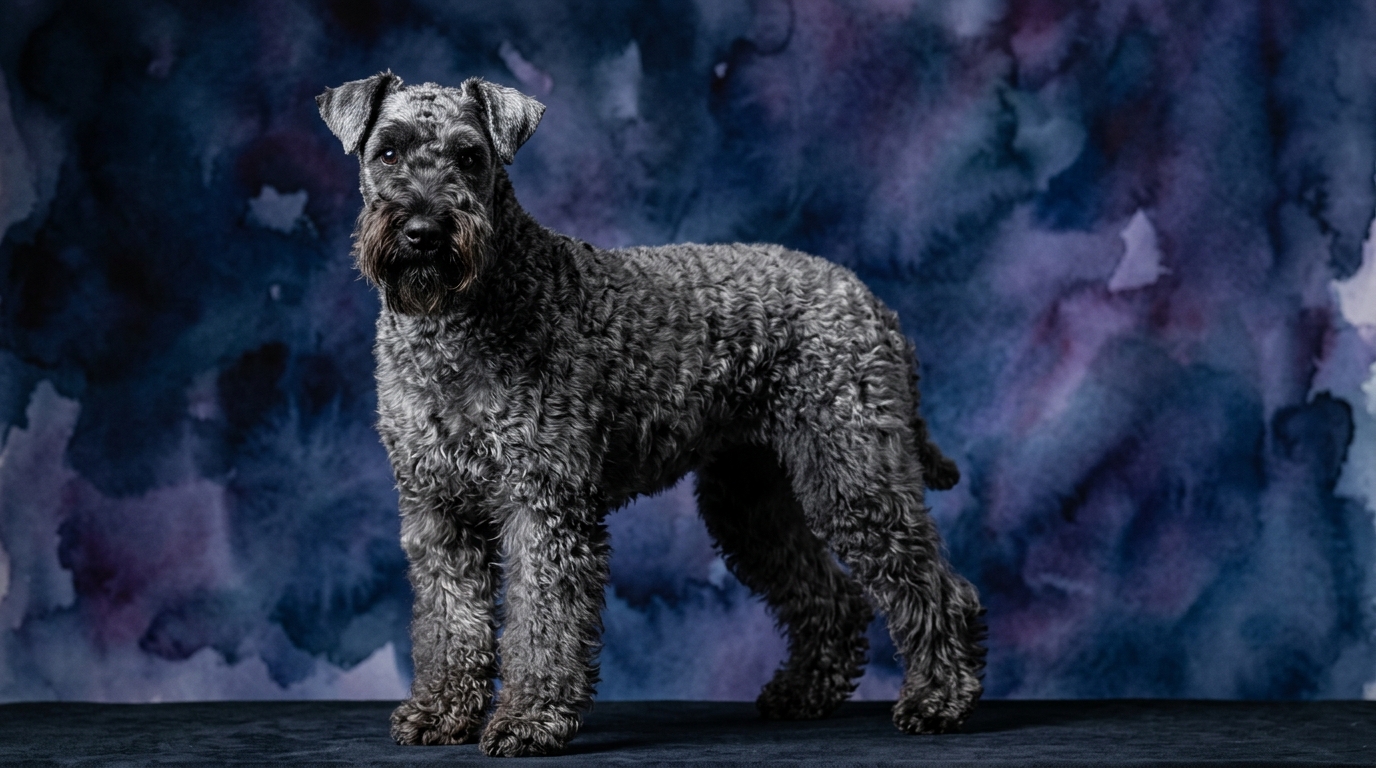
Side-by-Side Cognitive Profiles: Husky vs. Kerry Blue
To understand the unique mental landscapes of these two breeds, The Cosmic Pet Pet IQ Lab employs a five-dimensional framework for assessing canine intelligence. Each dimension provides insight into how these dogs perceive, process, and interact with their world.
The Siberian Husky's profile reflects its heritage as an endurance working dog. Its Problem Solving is rated at 4/5, indicating a strong capacity for independent thought and creative solutions to environmental challenges. Training Speed stands at 2/5, suggesting a deliberate learning pace often influenced by their strong will. Social Intelligence is 3/5, demonstrating an ability to thrive in a pack structure while maintaining a degree of independence. An outstanding Instinctive Drive of 5/5 highlights their profound urge to run, pull, and explore. Finally, Memory is rated 4/5, allowing them to recall complex routes and experiences over significant periods.
In contrast, the Kerry Blue Terrier's cognitive scores paint a picture of a focused and persistent hunter. Its Problem Solving is 3/5, showing a practical approach to overcoming obstacles, often tied to a specific goal. Training Speed is 3/5, indicating a moderate ability to grasp commands, though tempered by terrier tenacity. Social Intelligence also scores 3/5, reflecting loyalty to family coupled with a discerning approach to strangers. Instinctive Drive is 3/5, primarily manifested in a strong prey drive for vermin, rather than the Husky's expansive endurance. Memory is rated at 3/5, allowing for reliable recall of learned behaviors and social interactions.
Where the Siberian Husky Excels Cognitively
The Siberian Husky distinctly excels in areas demanding independent strategic thinking and endurance-based cognitive mapping. Their problem-solving score of 4/5, combined with a 4/5 memory, allows them to master environmental challenges with remarkable ingenuity. This isn't just about figuring out how to open a door; it's about evaluating terrain, remembering complex routes over miles, and assessing the most efficient path to a destination. Their 5/5 instinctive drive, focused on running and pulling, further integrates with their cognitive strengths, enabling them to make decisions on the fly during demanding physical tasks, adapting to changing conditions without constant human input. This capacity for self-directed navigation and sustained effort in complex, dynamic environments is a hallmark of their mental architecture, differentiating them from many breeds whose cognitive strengths lie in handler-focused obedience. Their spatial awareness and ability to learn from large-scale environmental interactions are particularly pronounced.
Where the Kerry Blue Terrier Shines Cognitively
While the Kerry Blue Terrier might not possess the Husky's aptitude for independent long-distance navigation or grand escapism, their cognitive strengths are rooted in a different kind of tenacity and focus. Their problem-solving (3/5) is often directed towards tasks requiring persistence, such as figuring out how to extract a toy from a tight space or successfully cornering a perceived 'prey.' Their moderate training speed (3/5) and social intelligence (3/5) suggest a cognitive profile more amenable to structured, consistent training within a family unit, where their loyalty can be leveraged. They excel in tasks requiring focused attention on a specific objective, often demonstrating a determination to complete a task once engaged, a trait invaluable for their original purpose as vermin hunters. Their cognitive success is often measured by their ability to apply learned strategies repeatedly and persistently towards a goal, rather than innovating entirely new solutions to escape. Their intelligence is keenly applied to tasks requiring precision and unwavering commitment.
Trainability: Husky's Independence vs. Terrier's Tenacity
Determining which breed is 'easier' to train is nuanced, as it largely depends on the owner's goals and training methodology. The Kerry Blue Terrier, with a training speed of 3/5, generally presents a more straightforward training journey for many owners. Their moderate instinctive drive and desire to please their primary family members mean they often respond well to consistent positive reinforcement. While they possess terrier stubbornness, their cognitive focus on specific tasks and willingness to engage with their handler allows for more predictable learning outcomes. They are often eager to participate in activities that challenge their intellect and physical agility, provided they see the value in the interaction.
In contrast, the Siberian Husky, with a training speed of 2/5 and a profound independent streak, often poses a greater challenge. Their 5/5 instinctive drive for running and exploration means they are frequently more interested in their environment than in immediate obedience. Training a Husky demands exceptional patience, creativity in motivation, and a deep understanding of their innate drives, often requiring an owner to make training feel like a game or an opportunity for them to 'choose' the desired behavior. Huskies are not difficult because they are unintelligent; they are challenging because their intelligence is geared towards independent action rather than compliant service, making motivation the key hurdle. Their problem-solving acumen can even be turned against their owners if not managed, as they quickly learn how to outsmart conventional barriers.
Matching Breed to Owner Lifestyle: Active vs. Relaxed
The choice between a Siberian Husky and a Kerry Blue Terrier also hinges significantly on an owner's lifestyle. The Siberian Husky, with its overwhelming 5/5 instinctive drive, is unequivocally suited for highly active owners. These are dogs that thrive on extensive physical exercise, such as daily long runs, hiking, or even specialized activities like sledding or canicross. Their cognitive profile, particularly their problem-solving and memory, also demands significant mental stimulation to prevent boredom, which can lead to destructive behaviors. A relaxed owner, or one unable to commit to several hours of vigorous activity and mental engagement daily, would likely find a Husky overwhelming and unfulfilled. Their need for expansive outdoor activity is not merely physical; it's a deep-seated cognitive requirement.
The Kerry Blue Terrier, while certainly an active breed, falls into a more moderate category. Their 3/5 instinctive drive means they require regular exercise, including walks, playtime, and perhaps some dog sports, but their needs are generally less extreme than a Husky's. They can adapt more readily to a moderately active household, enjoying family activities and structured playtime without the same intensity of demand for vast distances or constant exploration. A moderately active owner who enjoys daily walks and engaging play would find a Kerry Blue a suitable companion. They appreciate consistent engagement and mental tasks, but their fulfillment does not hinge on covering vast distances or constantly challenging physical boundaries in the same way a Husky's does.
The Verdict
Choose a Siberian Husky if you are an exceptionally active owner seeking an independent, clever companion for outdoor adventures and are prepared for a consistent, creative training approach to channel their profound drives.
Opt for a Kerry Blue Terrier if you desire a loyal, tenacious family companion who enjoys moderate activity and structured engagement, and you appreciate a dog whose intelligence is expressed through focused determination.
🧠 Find Your Pet's IQ Score
Our Pet IQ Lab assessment covers 25+ tests across 5 cognitive dimensions — personalized to your breed.
Take the Full IQ Test →Frequently Asked Questions
Are Siberian Huskies difficult to train?
Huskies are not inherently difficult due to a lack of understanding, but rather their strong independence and high instinctive drive (2/5 training speed) mean they require consistent, patient, and highly motivating training methods to encourage compliance.
Do Kerry Blue Terriers need a lot of exercise?
Kerry Blue Terriers have a moderate instinctive drive (3/5) and require regular, engaging exercise, such as daily walks, playtime, and mental stimulation, but generally not to the same extreme degree as a high-endurance working breed.
Which breed is better with children?
Both breeds can be good with children when properly socialized and trained. Huskies are generally good-natured but can be boisterous, while Kerry Blues are loyal and protective but may require supervision around very young children due to their terrier assertiveness.