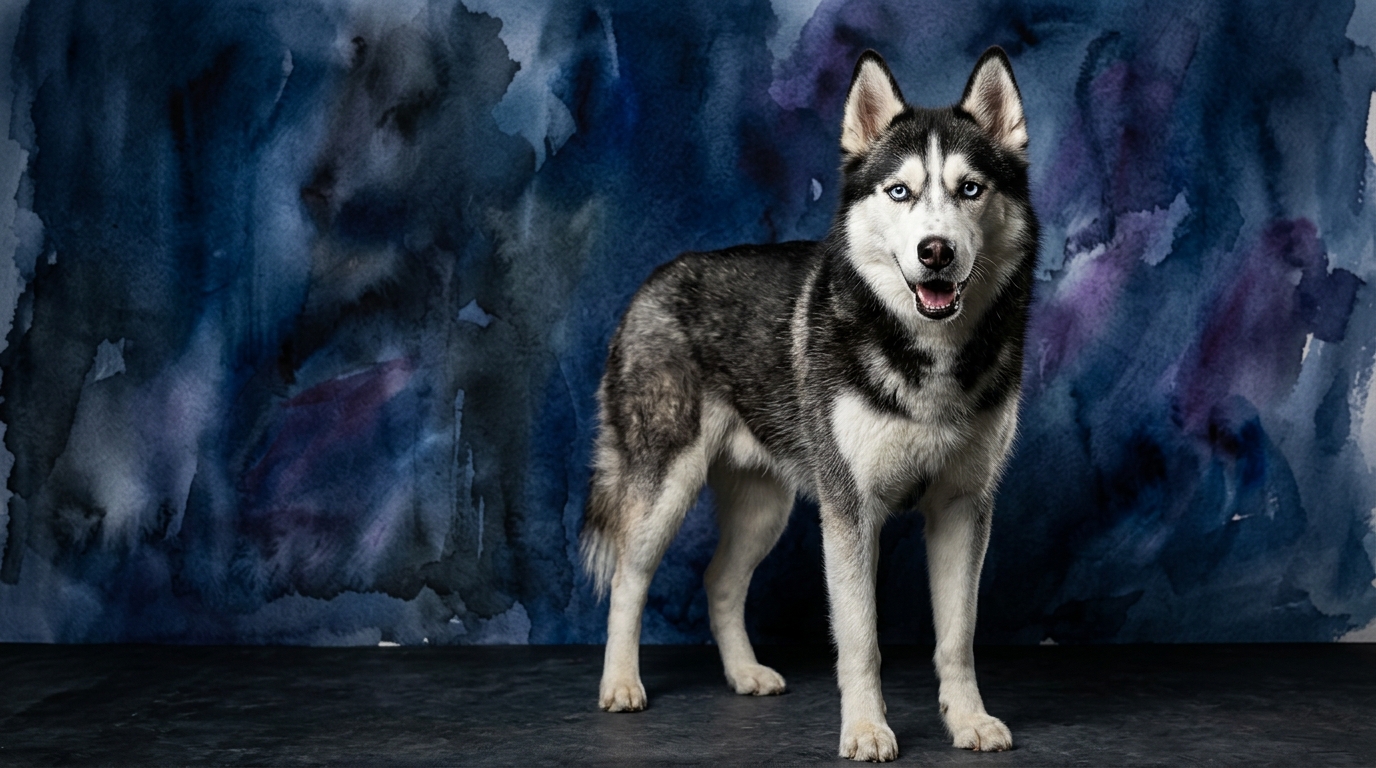
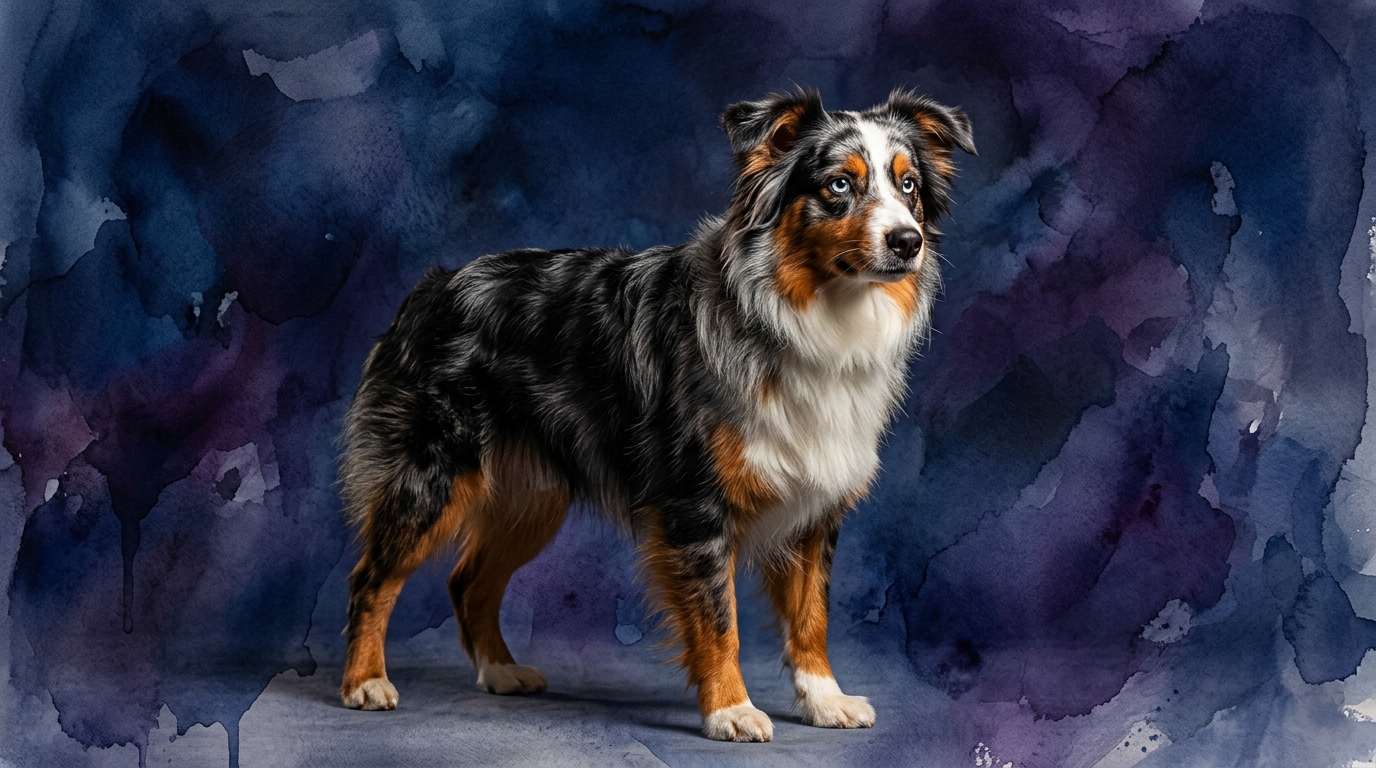
Side-by-Side IQ Profile: Siberian Husky vs. Miniature American Shepherd
The Siberian Husky, a breed purpose-bred for endurance sledding, holds a Coren rank of #45, indicating a respectable capacity for working and obedience intelligence. Our Pet IQ Lab assessment gives them a 4/5 for problem-solving, showcasing a resourceful and often ingenious mind capable of navigating complex environmental challenges, such as escaping enclosures or figuring out novel ways to achieve goals. However, their training speed is rated 2/5, reflecting a characteristic independence and a tendency to prioritize their own motivations over human directives. Social intelligence sits at 3/5, meaning they can form strong bonds but often display a selective engagement with social cues. Their instinctive drive is a robust 5/5, manifesting as a powerful urge to run, explore, and hunt, deeply rooted in their heritage. Finally, their memory is a solid 4/5, allowing them to retain learned behaviors and spatial information effectively, even if applying that learning during training requires extra motivation.
The Miniature American Shepherd, a vibrant herding breed, is not currently listed on the Coren ranking, yet their cognitive profile reveals a well-rounded and adaptable intellect. Our Pet IQ Lab assessment assigns them a 3/5 for problem-solving, suggesting they can tackle challenges methodically, though perhaps with less spontaneous ingenuity than a Husky. Crucially, their training speed is rated 3/5, indicating a more eager and cooperative disposition towards learning and responding to commands, a hallmark of many herding breeds. Social intelligence also scores 3/5, much like the Husky, meaning they are capable of forming strong bonds and reading social situations adequately, but might not always be overtly demonstrative. Their instinctive drive is a balanced 3/5, present but typically directed towards tasks like herding or active play rather than independent exploration. Their memory is also rated 3/5, allowing for consistent retention of training and routines without the exceptional recall seen in some other breeds.
Where the Siberian Husky Wins Cognitively
The Siberian Husky's cognitive strengths primarily lie in their impressive problem-solving capabilities and formidable instinctive drive. Their 4/5 problem-solving score means they are adept at independent thought, often devising creative solutions to get what they want, whether it's opening a pantry door or outsmarting a leash. This isn't about rote memorization but rather an inherent ability to assess situations and experiment with actions until a desired outcome is achieved. They demonstrate a remarkable capacity for environmental manipulation and strategic thinking when motivated.
Furthermore, their 5/5 instinctive drive is a double-edged sword that, when channeled correctly, represents immense cognitive power. This drive manifests as an unparalleled endurance and a relentless pursuit of goals, whether it's pulling a sled for miles or tracking a scent. While it can make them challenging companions, it also signifies a deep connection to their ancestral purpose and a powerful motivation to engage with the world on their own terms, demonstrating a robust internal compass and self-directed motivation. Their 4/5 memory supports this by allowing them to recall successful strategies and navigate complex environments they've encountered before, remembering escape routes or resource locations with precision.
Where the Miniature American Shepherd Wins Cognitively
The Miniature American Shepherd truly shines in its balanced cognitive profile, particularly in its more accessible training speed compared to the Husky. With a 3/5 rating for training speed, the MAS demonstrates a greater inclination to learn and respond to human cues, making them generally more receptive to formal obedience and task-oriented instruction. This isn't about being 'smarter' in a problem-solving sense, but rather possessing a heightened willingness to engage with their human partners and process commands efficiently, making them more pliable students.
Their moderate 3/5 instinctive drive, while not as intense as the Husky's, means their drives are more easily directed and managed within a domestic setting. This translates to less self-directed, independent exploration and a greater focus on handler interaction, which is a significant cognitive advantage for many owners seeking a cooperative companion. This blend of moderate problem-solving, good training speed, and manageable drive creates a highly adaptable and eager-to-please cognitive framework, allowing them to excel in structured learning environments and partnership-based activities.
Which is Easier to Train and Why
When it comes to ease of training, the Miniature American Shepherd generally presents a more straightforward path for most owners. Their 3/5 training speed, coupled with a 3/5 instinctive drive, means they are typically more focused on their handler during sessions and possess a stronger inherent desire to please and comply. They are often highly motivated by positive reinforcement and respond well to consistent, clear commands, making them excellent candidates for advanced obedience, agility, or rally. Their herding background primes them to work in partnership with humans, actively seeking guidance and exhibiting a strong work ethic, which translates into a more responsive and less distracting training experience.
In stark contrast, the Siberian Husky's 2/5 training speed and formidable 5/5 instinctive drive make them considerably more challenging to train for the average owner. Huskies possess a high degree of independence; their ancestral role required them to make decisions autonomously on the trail, often ignoring a musher's commands if their instincts dictated otherwise. This translates into a dog that may understand a command perfectly but choose not to execute it if something more interesting, like a squirrel or a scent, captures their attention. Training a Husky requires immense patience, creativity, and a deep understanding of their motivations, often leveraging their high prey drive and desire to run rather than relying solely on traditional obedience methods, making consistency and engagement paramount.
Which Suits Active Owners vs. Relaxed Owners
Both breeds require active engagement, but their cognitive demands and physical needs align with different types of active owners. The Siberian Husky, with its 5/5 instinctive drive and boundless energy, is ideally suited for owners who thrive on extreme outdoor activities, long-distance running, hiking, or even competitive dog sports like canicross or skijoring. Their independent problem-solving (4/5) means they appreciate mental challenges that allow them to use their ingenuity, rather than just following commands. A relaxed owner would quickly find themselves overwhelmed by the Husky's need for extensive physical exertion and mental stimulation, which, if unmet, often leads to destructive behaviors born of boredom and frustration, like digging or excessive vocalization.
The Miniature American Shepherd, while also active, aligns better with owners who enjoy a consistent routine of varied activities, such as daily walks, backyard play, agility training, or disc dog. Their 3/5 instinctive drive means they are driven to work and play but are generally more content with structured activities alongside their owner, seeking engagement rather than independent exploration. Their 3/5 training speed makes them excellent partners for owners who wish to engage in dog sports or advanced obedience, where cooperation and responsiveness are key. A relaxed owner might struggle with the MAS's need for mental engagement and physical exercise, but they are generally more adaptable to a slightly less intense daily schedule compared to the relentless, self-directed demands of a Husky.
The Verdict
Choose a Siberian Husky if you are an experienced dog owner seeking a truly independent, highly driven companion for extreme outdoor adventures and are prepared to meet their profound needs for physical exertion and mental stimulation with creative problem-solving challenges.
Opt for a Miniature American Shepherd if you desire a cooperative, eager-to-please companion for active family life, dog sports, or consistent training, appreciating a balanced drive and a more responsive approach to learning.
🧠 Find Your Pet's IQ Score
Our Pet IQ Lab assessment covers 25+ tests across 5 cognitive dimensions — personalized to your breed.
Take the Full IQ Test →Frequently Asked Questions
Are Siberian Huskies difficult to live with due to their independence?
While their independence (low training speed, high instinctive drive) can make them challenging in training and off-leash situations, it also contributes to their unique charm. Owners prepared for their needs often find them rewarding, but it demands significant dedication to management and enrichment.
Can a Miniature American Shepherd live in an apartment?
A Miniature American Shepherd can adapt to apartment living if their significant exercise and mental stimulation needs are consistently met. Daily long walks, playtime, and engaging training sessions are crucial to prevent boredom and ensure their well-being in a smaller space.
How do their social intelligence scores of 3/5 compare?
Both breeds, with a 3/5 social intelligence score, are capable of forming strong bonds and reading social cues, but it means they might not be as overtly people-focused or universally friendly as some other breeds. Their social interactions are often more nuanced and selective, requiring owners to understand their individual communication styles rather than expecting constant demonstrative affection.