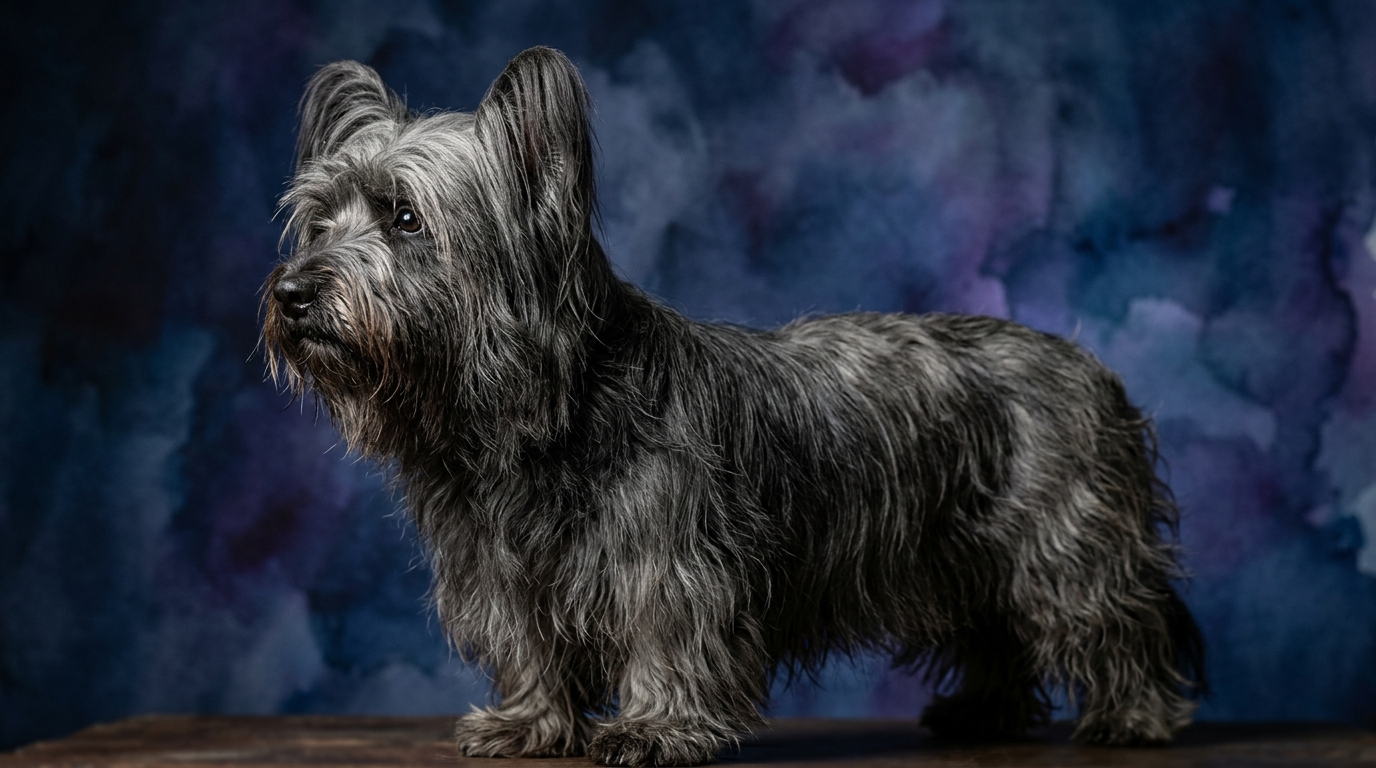
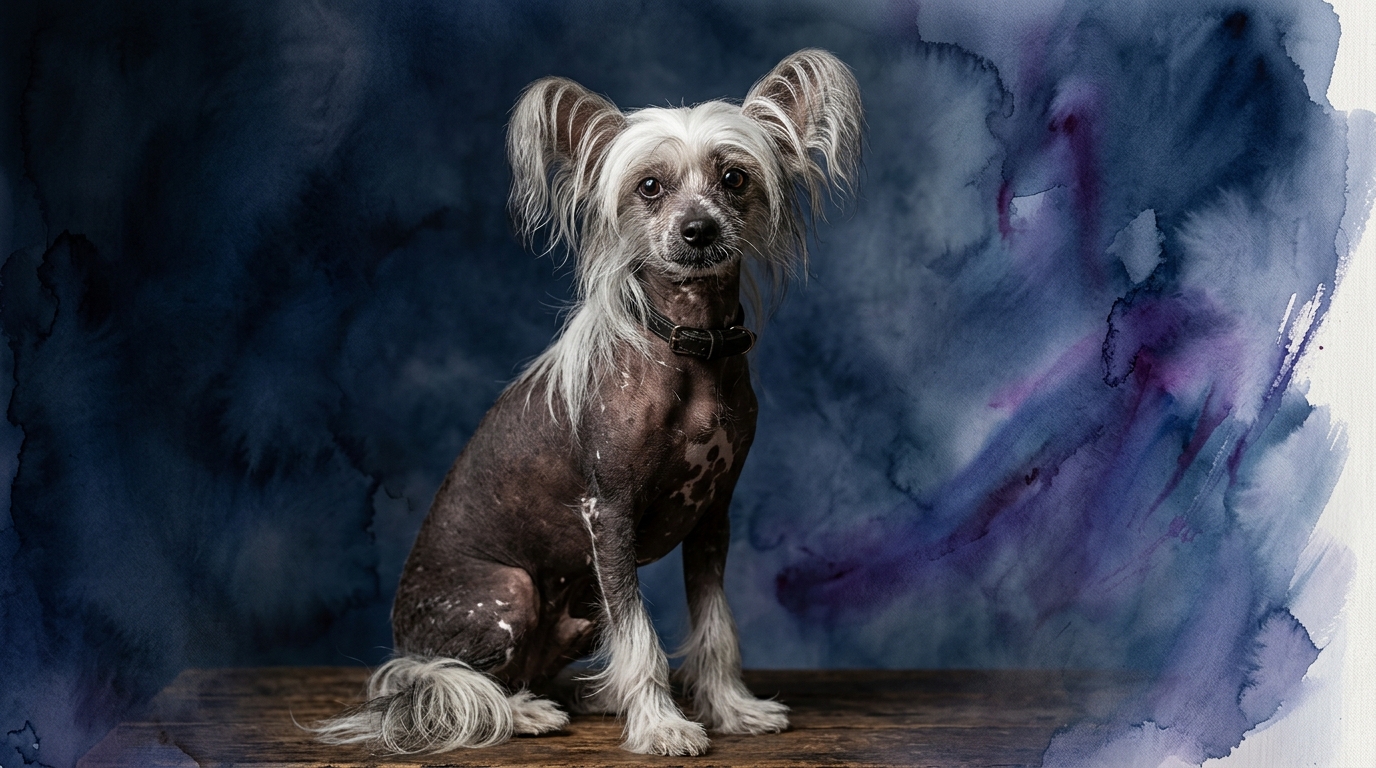
Side-by-Side IQ Profile: Skye Terrier vs. Chinese Crested
At The Cosmic Pet Pet IQ Lab, both the Skye Terrier and the Chinese Crested register a consistent 3 out of 5 across all five cognitive dimensions. While the numerical score is identical, the manifestation of these abilities is shaped profoundly by their breed's historical purpose and inherent temperament. Understanding this nuance is key to appreciating their individual forms of intellect.
**Problem Solving (3/5):** The Skye Terrier's moderate problem-solving score suggests a capacity for independent thought in novel situations. They can strategize to achieve goals, like finding hidden objects, often relying on persistence and a practical, goal-oriented approach rooted in their vermin-hunting history. For the Chinese Crested, a 3/5 indicates an adequate ability to adapt and learn from experience. They can solve moderate puzzles and understand cause-and-effect, often manifesting their problem-solving in clever ways to gain attention or secure comfort from their human.
**Training Speed (3/5):** A 3/5 for Skye Terriers signifies a moderate learning pace for new commands. They acquire obedience skills with consistent, patient training, though their independent terrier nature means they may require varied motivation and find repetition tedious. The Chinese Crested also scores 3/5, suggesting they learn at a reasonable rate. They typically enjoy engaging with owners and pick up commands fairly quickly with positive reinforcement, their desire for companionship often making them eager to please.
**Social Intelligence (3/5):** A Skye Terrier's 3/5 in social intelligence suggests a moderate understanding of social cues. They form strong family bonds and navigate familiar interactions, but can be reserved with strangers, interpreting moods and intentions with a discerning, not effusive, manner. This same 3/5 for the Chinese Crested indicates a good grasp of social dynamics. They are often very attuned to their owners' emotions, thriving on interaction, effectively communicating needs, though their sensitivity can make them easily overwhelmed in chaotic settings.
**Instinctive Drive (3/5):** A 3/5 for the Skye Terrier reflects a moderate expression of innate terrier behaviors like digging, chasing, and territorial guarding. These natural instincts are present but manageable, requiring appropriate outlets and training for constructive channeling. For the Chinese Crested, this 3/5 means moderate inherent drives, often manifesting as a strong desire for comfort and companionship, alongside a surprising prey drive for a toy breed. Their instincts are generally channeled towards human interaction rather than independent pursuits.
**Memory (3/5):** A Skye Terrier's 3/5 in memory indicates a solid ability to retain learned behaviors, routines, and experiences. They remember commands, boundaries, and past interactions, contributing to their reliability and consistent performance once trained. The Chinese Crested's 3/5 suggests a reliable memory for commands, routines, and social interactions. They recall past training and recognize familiar faces, supporting strong bonds and understanding their place within the family structure.
Where the Skye Terrier Wins Cognitively
While both breeds share identical 3/5 scores, the Skye Terrier's cognitive strengths often lean towards independent application and resilience. Their problem-solving, though moderate, is frequently coupled with the terrier's characteristic tenacity; they might not find the quickest solution, but they are less likely to give up. This persistent drive means they can work through challenges with a self-reliant determination, a trait honed by their historical purpose of hunting independently. Their memory, combined with their instinctive drive, allows them to consistently apply learned strategies in field-like scenarios or when pursuing a scent, exhibiting a practical, enduring form of intellect.
Where the Chinese Crested Wins Cognitively
The Chinese Crested, despite matching scores, often excels in the nuanced application of social intelligence and adaptability within a domestic setting. Their moderate social intelligence is frequently expressed as a keen sensitivity to human emotions and subtle cues, allowing them to anticipate needs or comfort their owners. This empathetic understanding, combined with their memory, makes them adept at navigating complex household dynamics and forming incredibly strong, reciprocal bonds. Their problem-solving is often geared towards interacting with their humans, creatively finding ways to solicit attention or secure a favored spot, demonstrating a highly relational form of intellect.
Which is Easier to Train and Why
Given their identical 3/5 training speed scores, 'easier' is relative, depending more on the owner's approach and the specific behavioral goals. The Chinese Crested's strong desire for human companionship and eagerness to please often makes them more receptive to positive reinforcement methods; they typically thrive on praise and interaction, which can accelerate their learning curve. However, their sensitivity means they can become timid or shut down with harsh corrections, potentially slowing progress. Skye Terriers, while also capable learners, possess a more independent and sometimes stubborn streak, typical of their terrier heritage. Their training requires more patience, consistency, and creative motivation to overcome their self-directed nature. They are less likely to be 'people pleasers' and more likely to question the necessity of a command, meaning an owner needs to make training engaging and worthwhile from the Skye's perspective. Therefore, the Chinese Crested might feel 'easier' for owners who enjoy a highly responsive and affectionate training partner, while the Skye Terrier demands a more experienced, firm, yet positive handler who appreciates a dog with an opinion.
Which Suits Active Owners vs. Relaxed Owners
The choice between these two breeds for active versus relaxed owners hinges on the type of activity and relaxation preferred. Skye Terriers, with their moderate instinctive drive and historical working background, benefit from regular, purposeful activity. This doesn't necessarily mean long-distance running, but rather engaging walks, scent work, or earthdog trials that satisfy their desire to explore and 'work.' They can adapt to a more relaxed home life but will require mental stimulation and structured play to prevent boredom. Chinese Crested dogs, while capable of bursts of energy, are generally more suited to a relaxed, indoor lifestyle. Their moderate instinctive drive often manifests as a desire for comfort and closeness. They enjoy short walks and playtime but are equally content snuggling on the couch with their owners. Their minimal grooming needs for the hairless variety also align well with a less demanding daily routine, making them ideal companions for those seeking a devoted, low-key presence, though they still appreciate daily engagement.
The Verdict
Opt for a Skye Terrier if you appreciate a resilient, independent companion with a moderate drive for exploration and purpose, and are prepared for consistent, engaging training that respects their terrier spirit.
Select a Chinese Crested if you seek an affectionate, sensitive, and highly companionable dog that thrives on close human interaction and a generally relaxed, indoor lifestyle.
🧠 Find Your Pet's IQ Score
Our Pet IQ Lab assessment covers 25+ tests across 5 cognitive dimensions — personalized to your breed.
Take the Full IQ Test →Frequently Asked Questions
Do Skye Terriers and Chinese Crested dogs perform similarly in dog sports?
While both have a 3/5 for problem solving and training speed, their breed traits influence their suitability for sports. Skye Terriers might excel in earthdog trials or scent work due to their natural instincts, showing persistence. Chinese Crested dogs often shine in agility or obedience, leveraging their desire to please and strong bond with their handler, but both require consistent motivation.
How do their social intelligence scores (3/5) manifest differently in family life?
A Skye Terrier's 3/5 social intelligence often means they are devoted to their immediate family but can be reserved with strangers, interpreting social cues with a discerning eye. The Chinese Crested's 3/5 manifests as a deep attunement to their human family's emotions, often seeking comfort or offering gentle companionship, yet they can be sensitive to overstimulation in busy social settings.
Can either breed be left alone for long periods, given their memory and social intelligence scores?
Both breeds, with moderate social intelligence and memory, form strong bonds and generally prefer companionship. Skye Terriers, while more independent, can still develop separation anxiety if left alone too often. Chinese Crested dogs are particularly prone to loneliness due to their strong attachment to their owners, making neither ideal for prolonged solitude without careful preparation.