Side-by-Side IQ Profile: Skye Terrier vs. Saluki
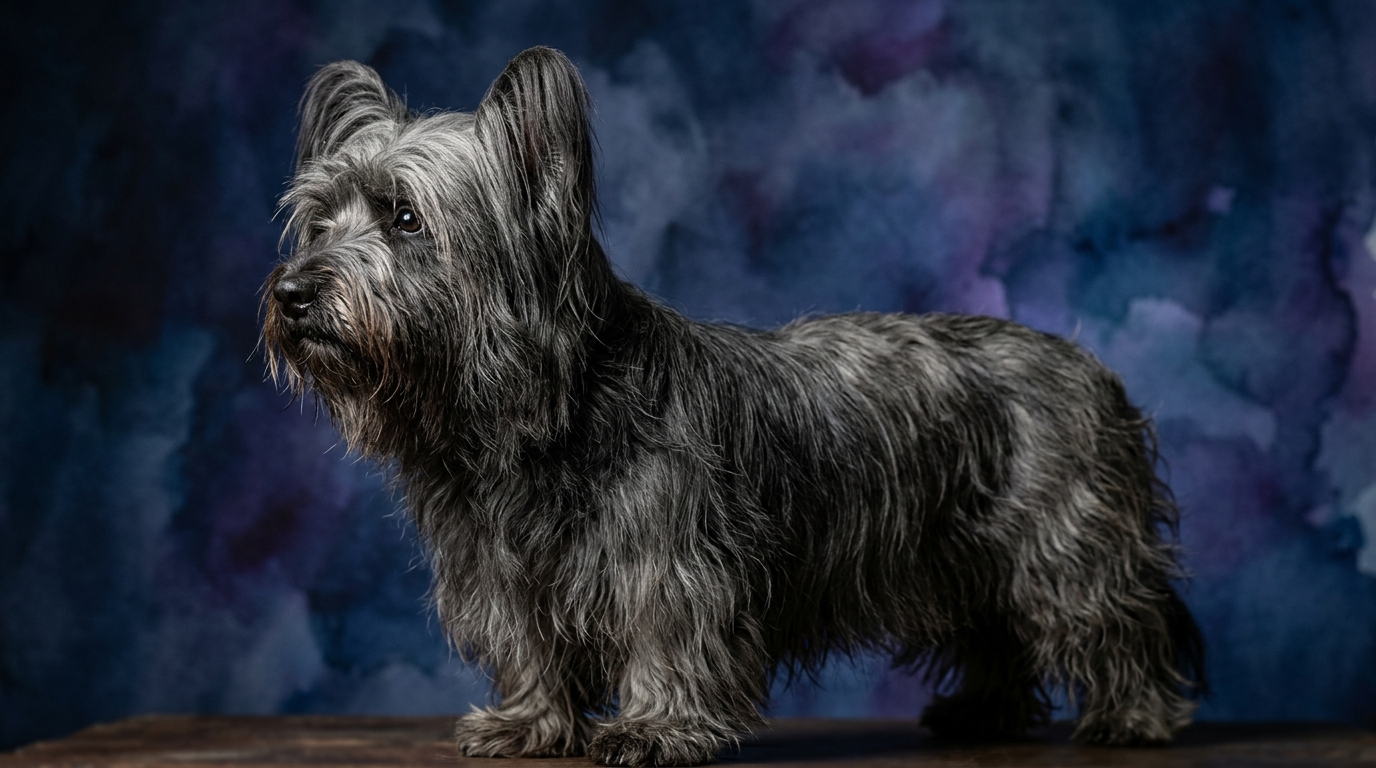
**Skye Terrier (Terrier Group):** This breed often applies its cognitive faculties to tasks requiring persistence and independent thought, particularly when it involves navigating confined spaces or locating hidden objects. Their Problem Solving (3/5) might manifest as finding the weak point in a fence or devising a strategy to retrieve a dropped toy from under furniture, driven by a tenacious spirit and a desire to achieve their goal. For Training Speed (3/5), Skye Terriers can grasp new commands, but their independent nature means they often decide if and when to perform them. They learn quickly when motivated by high-value rewards or when the task aligns with their inherent drives, yet their selective compliance means they might require more repetitions or varied approaches to solidify consistent responses across different situations. In Social Intelligence (3/5), a Skye Terrier forms deep bonds with its inner circle, demonstrating a nuanced understanding of their human family's moods and routines. While capable of reading social cues within their trusted group and forming deep emotional bonds, they can be reserved or discerning with strangers and new situations, indicating a selective application of their social awareness and a preference for established relationships. Their Instinctive Drive (3/5) is primarily rooted in their terrier heritage: a strong inclination to chase small, fast-moving objects and a persistent desire to dig. These instincts contribute to their tenacity and focus, often leading them to pursue small critters with single-minded determination, but require consistent management and appropriate outlets to prevent unwanted digging or chasing behaviors. Skye Terriers possess a solid Memory (3/5) for commands, routines, and significant events or locations. They recall training cues and house rules reliably, though their independent streak means they might choose to 'forget' a command if a more compelling instinct or perceived self-interest arises, demonstrating a practical rather than purely rote recall.
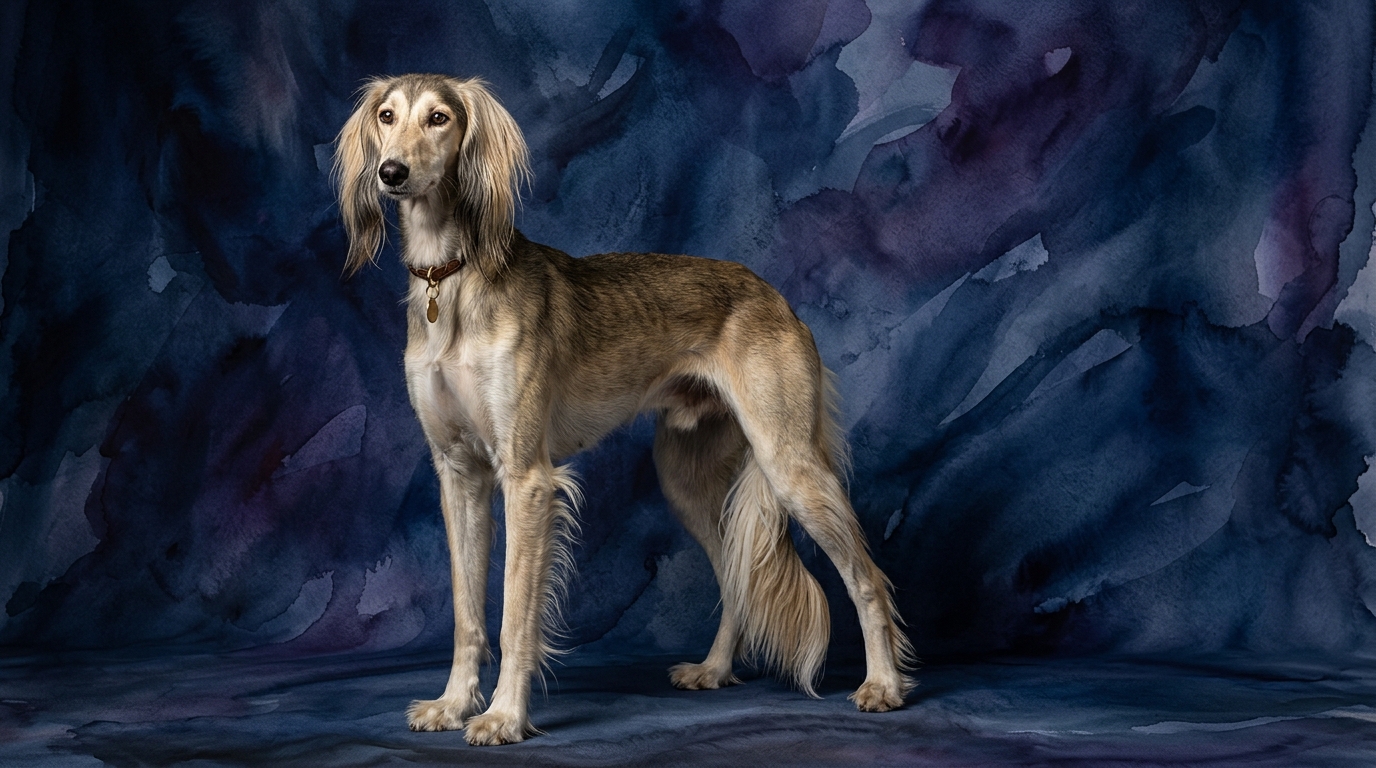
**Saluki (Hound Group):** Salukis typically apply their problem-solving skills to spatial reasoning and object tracking, excelling in scenarios that demand quick assessment of distance, speed, and trajectory. Their Problem Solving (3/5) efforts are often geared towards efficient pursuit, such as navigating complex terrain to intercept a moving target or finding the optimal path during a lure course, showcasing intelligence focused on dynamic environmental interaction. For Training Speed (3/5), Salukis can learn commands with reasonable speed, but their sighthound nature means they are often most engaged when training involves movement, play, or tasks that tap into their natural pursuit drive. Repetitive drills might bore them, leading to a perceived lack of cooperation or disengagement, even if they have understood the command, suggesting that engagement is key to unlocking their learning potential. In Social Intelligence (3/5), Salukis exhibit a quiet sensitivity, often picking up on subtle emotional shifts in their human companions. They are generally polite and observant, often preferring to engage on their own terms and with a quiet dignity, which reflects a discerning rather than deficient social understanding, especially towards those outside their immediate family. The Saluki's primary Instinctive Drive (3/5) is a powerful inclination to chase, fixating intensely on anything that moves quickly and at a distance. This ancestral drive is deeply ingrained, making them formidable athletes but also requiring careful management in environments with potential prey, as their focus can narrow intensely on a moving target. Salukis show good Memory (3/5) for established routines, familiar people, and the layout of their environment. They remember training cues, especially those associated with positive experiences and consistent routines, but their independent nature means their memory retrieval can be selective, particularly if a strong visual stimulus or an opportunity for chase distracts them from a less appealing task.
Where the Skye Terrier Wins Cognitively
While both breeds register a 3/5 in problem-solving, the Skye Terrier often demonstrates a particular tenacity and ingenuity in deciphering challenges related to confinement, object manipulation, or overcoming obstacles in their immediate environment. Their terrier grit means they are less likely to abandon a puzzle until they've found a solution, especially if it involves reaching a desired item or navigating a complex indoor space with tight corners. This persistence, combined with their compact size and inherent drive to investigate, allows them to excel at tasks requiring detailed, close-range investigation and sustained focus on a singular, tangible objective, rather than broad, distant movements. They excel at thinking 'around' an obstacle or methodically working to achieve a specific, localized goal.
Where the Saluki Wins Cognitively
Conversely, the Saluki's cognitive strengths shine in environments demanding expansive spatial awareness, rapid visual processing, and the ability to strategize over long distances. Their 3/5 problem-solving manifests as an uncanny ability to calculate trajectories, assess distances, and predict the movement of objects, making them exceptionally adept at tasks involving pursuit over open ground. They can quickly process and react to fast-moving stimuli at great distances, a distinct advantage in activities like lure coursing where split-second decisions about course correction, speed, and anticipating the lure's path are crucial. This ability to integrate visual information and execute a plan over a wide, dynamic area gives them an edge in tasks requiring broad environmental scanning, sophisticated navigation, and swift, athletic responses to moving targets.
Training Dynamics: Which is Easier and Why?
Both breeds present unique considerations for training, despite their matching 3/5 training speed rating, highlighting that 'speed' isn't the sole metric of trainability. The Skye Terrier's independent and often stubborn nature means that while they understand commands quickly, their willingness to comply consistently can vary significantly based on their motivation and perceived value of the task. They require a patient, consistent, and positive reinforcement approach, where trainers must consistently demonstrate the rewarding outcome of cooperation over their inherent terrier self-reliance and strong personal opinions. On the other hand, the Saluki, with its deep-seated sighthound instincts, learns quickly but can be easily distracted by movement or the prospect of a chase, often prioritizing an instinctual response over a learned command. Their training often requires an engaging, varied approach that incorporates their natural drives and avoids excessive repetition, as drills can quickly lead to disinterest. Therefore, neither is inherently 'easier' to train; rather, the *approach* to training must be meticulously tailored to their distinct motivational landscapes – the Skye requiring sustained motivation to override independence, and the Saluki needing compelling engagement to overcome powerful environmental distractions.
Lifestyle Match: Active vs. Relaxed Owners
The Skye Terrier, despite its smaller stature, often suits an owner who appreciates a dog with a robust personality and a moderate, but consistent, need for engagement. While they enjoy regular walks, interactive play, and mental challenges, their exercise requirements are generally manageable within a daily routine, making them suitable for owners who enjoy consistent, but not necessarily intense or extreme, physical activity. Their independent streak means they can be content with periods of quiet companionship, often resting nearby, though they truly thrive on mental stimulation through training and close interaction with their human family. The Saluki, however, is a breed built for speed, agility, and endurance, making them an ideal match for active owners who can provide daily opportunities for vigorous, high-speed exercise, such as long runs, secure off-leash play in expansive, fenced areas, or participation in dog sports like lure coursing. Their profound need to stretch their legs and satisfy their powerful chase drive means a relaxed, sedentary owner might find it profoundly challenging to meet their significant physical and mental demands, potentially leading to an unfulfilled and restless companion.
The Verdict
Choose a Skye Terrier if you appreciate a tenacious, independent companion who thrives on close family bonds and enjoys moderate daily activity, and you are prepared for a dog with a strong will and a charmingly stubborn streak.
Choose a Saluki if you lead an active lifestyle, can provide ample opportunities for high-speed exercise in secure environments, and you admire a graceful, sensitive, and somewhat aloof companion with a powerful chase instinct.
🧠 Find Your Pet's IQ Score
Our Pet IQ Lab assessment covers 25+ tests across 5 cognitive dimensions — personalized to your breed.
Take the Full IQ Test →Frequently Asked Questions
Do Skye Terriers and Salukis learn at the same pace?
Both breeds are rated 3/5 for training speed, indicating they can grasp new concepts at a similar moderate pace. However, their motivation and focus differ: Skye Terriers might be more stubborn, while Salukis can be easily distracted by prey drive, meaning the *effectiveness* of training can depend on the method used.
How do their social skills compare?
Both breeds score 3/5 in social intelligence, but they express it differently. Skye Terriers bond deeply with their family but can be reserved with outsiders. Salukis are quietly observant and sensitive to their family's moods, often appearing aloof to strangers, reflecting a discerning nature rather than a lack of social capacity.
Which breed is better for puzzle toys?
While both have 3/5 problem-solving, a Skye Terrier might engage more persistently with puzzle toys that require manipulation or uncovering hidden treats due to their tenacious, close-range investigative nature. A Saluki might solve them, but could lose interest quicker if the puzzle doesn't simulate a chase or involve expansive movement.