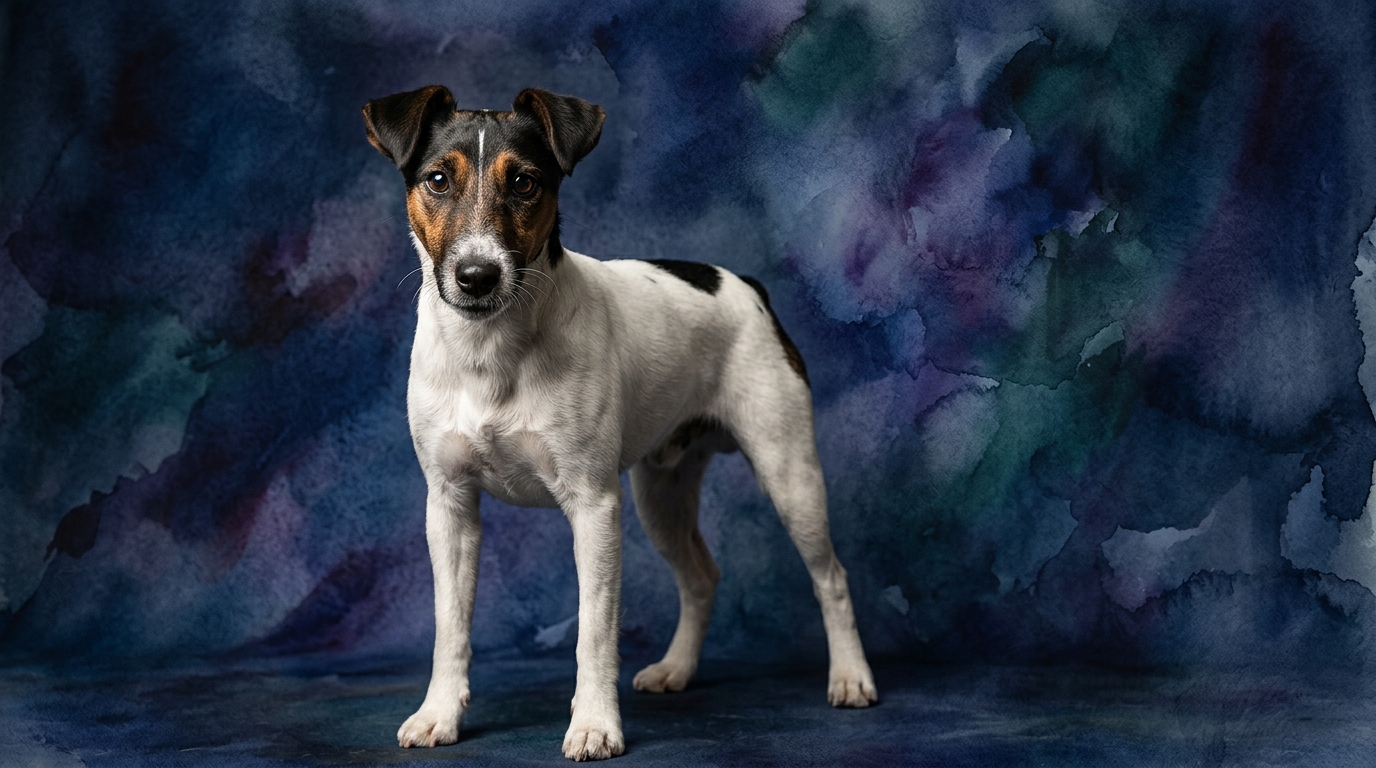
Side-by-Side IQ Profile: Smooth Fox Terrier
Problem Solving (3/5): The Smooth Fox Terrier exhibits a tenacious, independent approach to challenges, often relying on their own cleverness and persistence to navigate obstacles or achieve goals, a hallmark of their terrier heritage. They excel at figuring out how to get to something they want, whether it's a hidden toy or an escape route, through sheer determination and trial-and-error.
Training Speed (3/5): These dogs can grasp new commands with reasonable quickness, often picking up patterns and associations quite readily; however, their independent spirit means that "learning" a command doesn't always translate to immediate, consistent "obedience," requiring engaging, reward-based methods to maintain focus.
Social Intelligence (3/5): Smooth Fox Terriers display a moderate level of social awareness, capable of forming strong bonds with their immediate family and understanding household dynamics, though they might be less inclined to seek approval or follow complex social cues from strangers. Their social interactions are often direct and purposeful, reflecting their self-assured nature.
Instinctive Drive (3/5): Their instinctive drive is profoundly shaped by their original purpose: hunting small game. This manifests as a strong prey drive, an urge to dig, bark, and investigate every rustle, making them alert and persistent in pursuing perceived targets. This drive is a powerful motivator but can also be a significant distraction in other contexts.
Memory (3/5): Smooth Fox Terriers possess a practical and associative memory, capable of remembering routines, learned commands (even if selectively applied), and the locations of favored items or "trouble spots" in their environment. Their memory serves their independent problem-solving and persistent nature well.
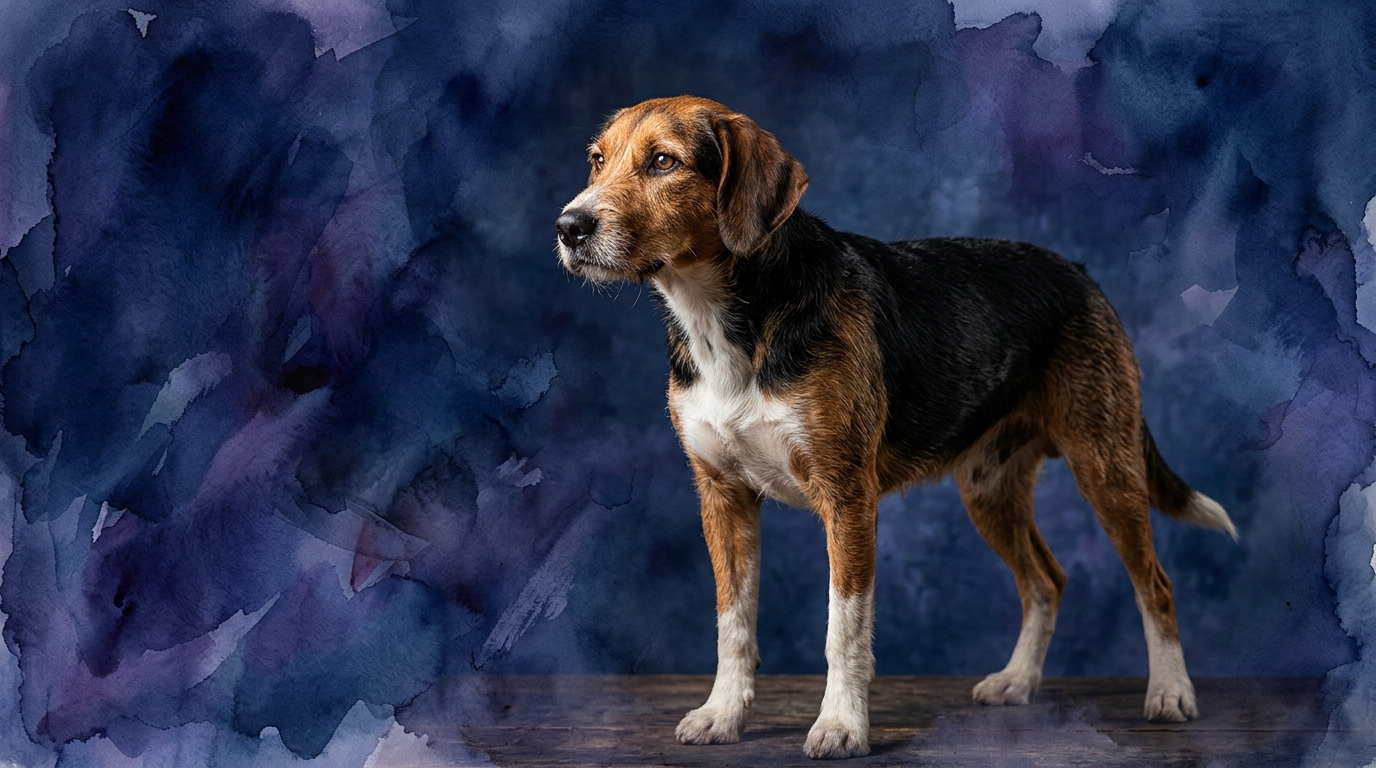
Side-by-Side IQ Profile: Harrier
Problem Solving (3/5): Harriers approach problem-solving with a distinct sensory focus, primarily utilizing their exceptional scenting abilities to unravel mysteries, such as locating a hidden treat or following a complex trail. Their cognitive efforts are often directed towards collaborative tasks within a "pack" context, rather than solitary, abstract challenges.
Training Speed (3/5): While capable of learning, Harriers can sometimes appear slower to pick up new commands compared to breeds driven by quick verbal cues, primarily because their attention is often tethered to their olfactory world. Consistency, patience, and scent-based rewards are key to solidifying their understanding.
Social Intelligence (3/5): Harriers are inherently social creatures, thriving in a pack environment and displaying a strong desire for companionship, whether with other dogs or their human family. They are attuned to the moods and activities of their social group, often seeking to participate and maintain harmony.
Instinctive Drive (3/5): The Harrier's instinctive drive is overwhelmingly dominated by their powerful nose and an innate desire to track. This drive is a fundamental part of their being, compelling them to follow fascinating scents with unwavering focus and endurance, making them tireless workers in their chosen field.
Memory (3/5): Harriers demonstrate a robust memory for routes, scent trails, and the locations of familiar people and places, especially those associated with their pack or hunting activities. Their memory is finely tuned to their sensory world, enabling them to recall complex environmental details critical for their purpose.
Where the Smooth Fox Terrier Wins Cognitively
The Smooth Fox Terrier's cognitive edge often shines in situations demanding independent thought and quick, adaptive decision-making without explicit human direction. Their Problem Solving score of 3/5, while numerically matching the Harrier, manifests as a distinct terrier tenacity—an ability to quickly assess a new situation and devise a solution through trial and error, often involving clever manipulation of objects or surroundings. For example, a Smooth Fox Terrier might more readily figure out how to open a child-proof gate or retrieve a toy from an inaccessible spot using tools like their paws or nose, driven by an unwavering internal motivation.
Their specific brand of social intelligence, scoring 3/5, allows them to navigate complex household dynamics with a certain self-assuredness, often understanding boundaries and expectations without needing constant reinforcement. They can be remarkably adept at 'training' their owners through charming persistence or by subtly guiding them towards desired outcomes, showcasing a nuanced understanding of social influence within their immediate family unit. This self-directed cognitive style makes them particularly resilient in novel environments where a more pack-oriented dog might hesitate.
Where the Harrier Wins Cognitively
The Harrier's cognitive strengths are profoundly rooted in their sensory processing, particularly their exceptional olfactory intelligence, which gives them a distinct advantage in tasks requiring scent discrimination and sustained focus. Their 3/5 Problem Solving capability is channeled into intricate scent puzzles, allowing them to follow faint trails over vast distances and through varied terrain with remarkable accuracy and endurance, a feat few breeds can match. This isn't just about having a good nose; it's about the cognitive processing power to interpret complex scent information and maintain a 'mental map' of a trail.
Their social intelligence, also rated 3/5, is geared towards collaborative effort and pack cohesion. Harriers excel in situations where teamwork is beneficial, demonstrating a natural ability to work alongside other dogs or their human companions towards a common goal, such as flushing game or navigating a group activity. This pack-oriented cognition fosters a sense of shared purpose and can lead to a synchronized effort that is less common in more independently minded breeds. Their memory, scoring 3/5, is particularly strong for recalling complex scent patterns and environmental layouts associated with group activities or hunting expeditions.
Which is Easier to Train and Why
Both breeds hold a 3/5 rating for Training Speed, yet the experience of training each can feel vastly different due to their underlying behavioral drivers. The Smooth Fox Terrier, with its independent spirit and strong prey drive (Instinctive Drive 3/5), often learns commands quickly but may choose to obey only when it suits them or when the reward is sufficiently enticing. Their problem-solving acumen can extend to figuring out how to 'game' the training system or test boundaries, meaning consistent, varied, and engaging training sessions are crucial to keep them motivated and prevent boredom-induced mischief.
Conversely, the Harrier's training speed, also 3/5, is heavily influenced by their powerful scent drive (Instinctive Drive 3/5). While they are eager to please their 'pack,' a captivating scent can instantly override any learned command, making off-leash reliability a significant challenge without extensive, specialized training. Harriers respond well to positive reinforcement, especially when treats or praise are linked to their natural desire to work as part of a team. Their learning curve might appear slower for abstract commands, but once a behavior is genuinely understood and reinforced, their pack loyalty can make them remarkably consistent, provided there are no competing olfactory distractions.
Which Suits Active Owners vs. Relaxed Owners
Neither the Smooth Fox Terrier nor the Harrier is well-suited for relaxed owners seeking a sedentary companion; both breeds demand substantial physical and mental engagement. The Smooth Fox Terrier thrives with active owners who can provide consistent outlets for their boundless energy, sharp wit, and strong prey drive. They need challenging games, structured training, and opportunities to explore safely, often excelling in dog sports like agility or earthdog trials where their problem-solving and tenacity are rewarded. An owner who enjoys interactive play and can provide varied mental stimulation will find a rewarding partnership.
The Harrier, with its deep-seated hound instincts, requires an owner committed to providing extensive daily exercise, ideally incorporating opportunities for scent work or long, brisk walks. Their stamina is considerable, and their desire to follow a trail is paramount, meaning owners must be prepared for a dog that will enthusiastically pursue scents. They are best suited for individuals or families who embrace outdoor activities, understand the intricacies of hound behavior, and can manage a dog with a potent, single-minded focus when on a scent. A relaxed owner would quickly find themselves overwhelmed by the Harrier's need for purposeful activity.
The Verdict
Opt for a Smooth Fox Terrier if you appreciate an independent, clever companion who will keep you on your toes with their spirited problem-solving and require engaging, varied mental challenges. They are ideal for active owners who enjoy interactive play and can channel their terrier tenacity into productive outlets.
Select a Harrier if you are an active, outdoor-oriented individual or family who understands and embraces the powerful instincts of a scent hound, desiring a collaborative companion for long treks and scent-based activities. They thrive with owners who can provide ample opportunities for their nose to lead the way and appreciate their pack-oriented social nature.
🧠 Find Your Pet's IQ Score
Our Pet IQ Lab assessment covers 25+ tests across 5 cognitive dimensions — personalized to your breed.
Take the Full IQ Test →Frequently Asked Questions
Do Smooth Fox Terriers and Harriers have similar exercise needs?
Both breeds are energetic and require significant exercise, but the type differs. Smooth Fox Terriers need varied physical activity and mental challenges to prevent boredom, while Harriers require extensive, often long-duration, exercise focused on running and scent work.
Are either of these breeds good for first-time dog owners?
Neither breed is typically recommended for first-time dog owners due to their strong instincts, independent streaks, and high energy levels. Both require consistent training, experienced handling, and a deep understanding of their breed-specific needs.
How do their social behaviors differ with other pets?
Smooth Fox Terriers, with their strong prey drive, might view smaller pets as game, requiring careful supervision and early socialization. Harriers are generally more amiable with other dogs due to their pack nature but their scent drive might lead them to ignore or "hunt" smaller, non-canine pets if not properly introduced and managed.