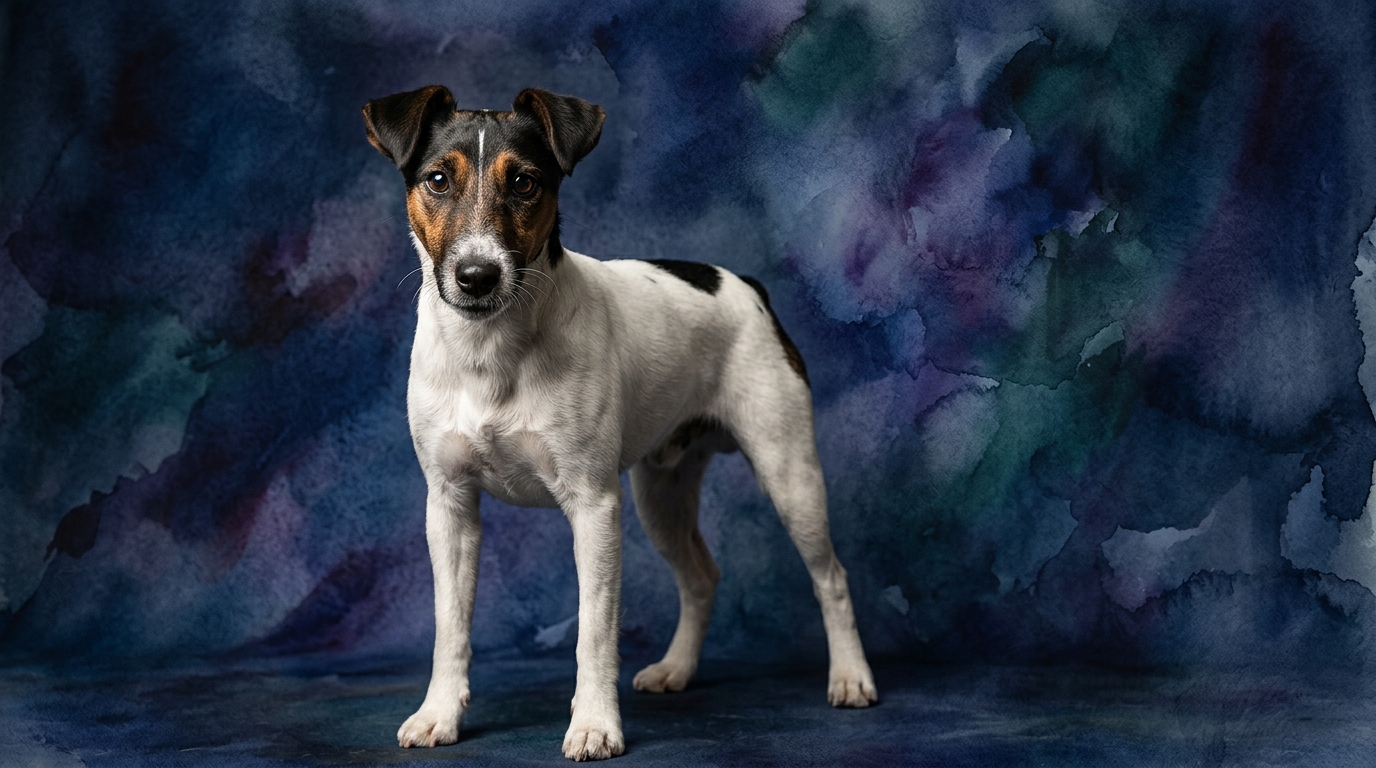

Side-by-Side IQ Profile: Smooth Fox Terrier vs. Lhasa Apso
**Smooth Fox Terrier (Terrier Group):** This breed’s cognitive strengths are deeply rooted in its heritage as a keen hunter. Its **Problem Solving (3/5)** prowess excels at figuring out how to achieve a goal, particularly when it involves navigating obstacles or strategizing to outwit small prey, often requiring clever manipulation of their environment. For **Training Speed (3/5)**, Smooth Fox Terriers can grasp new commands and concepts with reasonable speed; however, their independent spirit and strong prey drive mean that while they learn quickly, they might also choose to 'unlearn' or ignore commands if something more stimulating captures their attention. In **Social Intelligence (3/5)**, they are perceptive observers of their human families, understanding routines and moods, but with other dogs, they can be assertive, sometimes misinterpreting subtle social cues due to their confident nature. Their **Instinctive Drive (3/5)** is robust, manifesting primarily as a keen hunting instinct, a propensity for digging, and an insatiable curiosity to explore. Finally, their **Memory (3/5)** is good for commands, routines, and particularly for places where interesting things (like squirrels or potential digging spots) were encountered, retaining training well but also remembering past opportunities for mischief.
**Lhasa Apso (Non-Sporting Group, Coren Rank #68):** The Lhasa Apso’s cognitive profile reflects its ancient role as a discerning sentinel. Its **Problem Solving (3/5)** prowess is often directed towards optimizing comfort and security within its home environment, being clever at figuring out how to get attention, secure a prime spot on the sofa, or subtly influence household dynamics to its advantage. For **Training Speed (3/5)**, Lhasas learn at a moderate pace, capable of understanding commands; however, their independent and sometimes willful nature means their willingness to *perform* a command is often contingent on their perception of its value or necessity. In **Social Intelligence (3/5)**, they are highly attuned to their human family's emotions and routines, demonstrating a sophisticated understanding of their social structure, and while often reserved with strangers, they excel at discerning intentions and moods within their trusted circle. Their **Instinctive Drive (3/5)** is rooted in their role as alert sentinels, manifesting as a strong territorial instinct, a tendency to be watchful, and a readiness to vocalize alerts at perceived threats. Finally, their **Memory (3/5)** is good, particularly for individuals, past interactions (both positive and negative), and established household routines, remembering who offers treats and who is a stranger, influencing their future responses.
Where the Smooth Fox Terrier Wins Cognitively
The Smooth Fox Terrier's cognitive strengths shine brightest in scenarios demanding independent initiative and physical problem-solving. Their terrier lineage imbued them with a unique cognitive toolkit for navigating complex, dynamic outdoor environments. They excel at quickly assessing a situation, like finding the weakest point in a fence or the most efficient path to an intriguing scent, and then executing a plan with minimal human direction. This manifests as a superior ability to devise and implement strategies for physical access or pursuit, often requiring spatial reasoning and agile decision-making on the fly. Owners frequently observe their Terriers figuring out puzzle toys with a determined, hands-on approach, or mapping out the most direct route to a perceived 'prey' item in the yard, demonstrating a cognitive edge in practical, action-oriented challenges.
Where the Lhasa Apso Wins Cognitively
The Lhasa Apso, conversely, demonstrates a distinctive cognitive advantage in areas of social observation and strategic manipulation within a structured home environment. Originating as watchdogs in isolated monasteries, their intellect evolved to keenly observe human behavior, predict routines, and subtly influence outcomes for their own benefit or for the perceived security of their family. They possess an exceptional ability to 'read the room,' understanding complex human emotional states and using this insight to secure attention, comfort, or avoid unwanted interactions. This manifests as a nuanced social intelligence, where they might strategically position themselves for affection, or employ vocalizations at precisely the right moment to signal an intruder – whether real or imagined. Their strength lies in their astute interpretation of their immediate social world and their capacity for clever, often subtle, influence.
Training: A Tale of Two Temperaments
Assessing which breed is 'easier' to train requires understanding their inherent motivations and behavioral differences. The Smooth Fox Terrier, while possessing a 3/5 training speed, can be both a joy and a challenge. They learn commands quickly, often with a zest for engagement, but their independent streak and powerful prey drive mean they can be easily distracted or decide that their own agenda is more pressing. Training a Smooth Fox Terrier demands consistency, high-value rewards, and engaging, varied sessions to maintain their interest and channel their energy productively. Their quick wit means they’ll pick up on inconsistencies in your commands or routines.
The Lhasa Apso, also rated 3/5 for training speed, presents a different set of considerations. Their training journey is often characterized by their selective obedience. They learn, but their willingness to comply is deeply tied to their perception of the command's benefit, or their mood. A Lhasa Apso might understand 'sit' perfectly but choose to ignore it if they'd rather remain standing, or if the reward isn't compelling enough. Their ancient role as independent watchdogs fostered a self-reliant mindset. Training them requires immense patience, positive reinforcement, and a deep understanding of their desire for comfort and control. They respond best to fair, consistent methods that respect their independent nature, rather than forceful tactics, which they will often resist. Neither breed is inherently 'easy,' but their challenges stem from different cognitive and behavioral roots.
Matching Breeds to Lifestyles: Active vs. Relaxed Owners
For active owners seeking a companion for adventures, the Smooth Fox Terrier is often the more suitable choice. Their robust instinctive drive and problem-solving abilities thrive on varied physical and mental stimulation. They enjoy long walks, interactive games, agility, earthdog trials, or simply exploring new environments, constantly engaging their senses and intellect. An owner who can provide consistent outlets for their boundless energy and inquisitive nature will find a truly engaged and eager partner. Without sufficient activity, their cleverness can be channeled into less desirable behaviors like digging or excessive barking.
Conversely, the Lhasa Apso generally aligns better with more relaxed owners, though this doesn't imply a lack of mental engagement. While they appreciate moderate daily walks, their primary 'activity' often revolves around their role as a vigilant household guardian and a devoted, albeit independent, companion. They thrive in environments where they can observe their surroundings, patrol their domain, and enjoy close companionship without the need for constant, high-intensity physical exertion. Owners who appreciate a dog with a strong personality, a watchful demeanor, and who are content with less rigorous outdoor adventures will find the Lhasa Apso a rewarding presence, provided they still offer consistent mental enrichment through training and interaction.
The Verdict
Opt for a Smooth Fox Terrier if you are an active, consistent owner who relishes engaging a dog with spirited independence, a keen problem-solving mind for physical challenges, and a strong drive for exploration and interactive play.
Select a Lhasa Apso if you appreciate a discerning, watchful companion with refined social intelligence, a strong sense of self, and who thrives on observing and interacting within a stable home environment, requiring patient and understanding guidance.
🧠 Find Your Pet's IQ Score
Our Pet IQ Lab assessment covers 25+ tests across 5 cognitive dimensions — personalized to your breed.
Take the Full IQ Test →Frequently Asked Questions
Do Smooth Fox Terriers bark a lot?
Smooth Fox Terriers can be vocal, especially if their strong instinctive drive isn't adequately channeled. They will bark to alert, express excitement during play, or when they perceive something worth investigating, requiring consistent training to manage.
Are Lhasa Apsos good with children?
Lhasa Apsos can be good with older, respectful children who understand how to interact with a dog that values its personal space. Due to their watchful and sometimes reserved nature, they may not tolerate rough play or constant intrusion from very young children, requiring careful supervision and early socialization.
Which breed is more prone to separation anxiety?
Both breeds can develop separation anxiety if not properly socialized or if left alone for excessive periods, but their expressions differ. Smooth Fox Terriers might become destructive due to boredom and energy, while Lhasa Apsos might vocalize more due to their guarding instincts and strong attachment to their family.