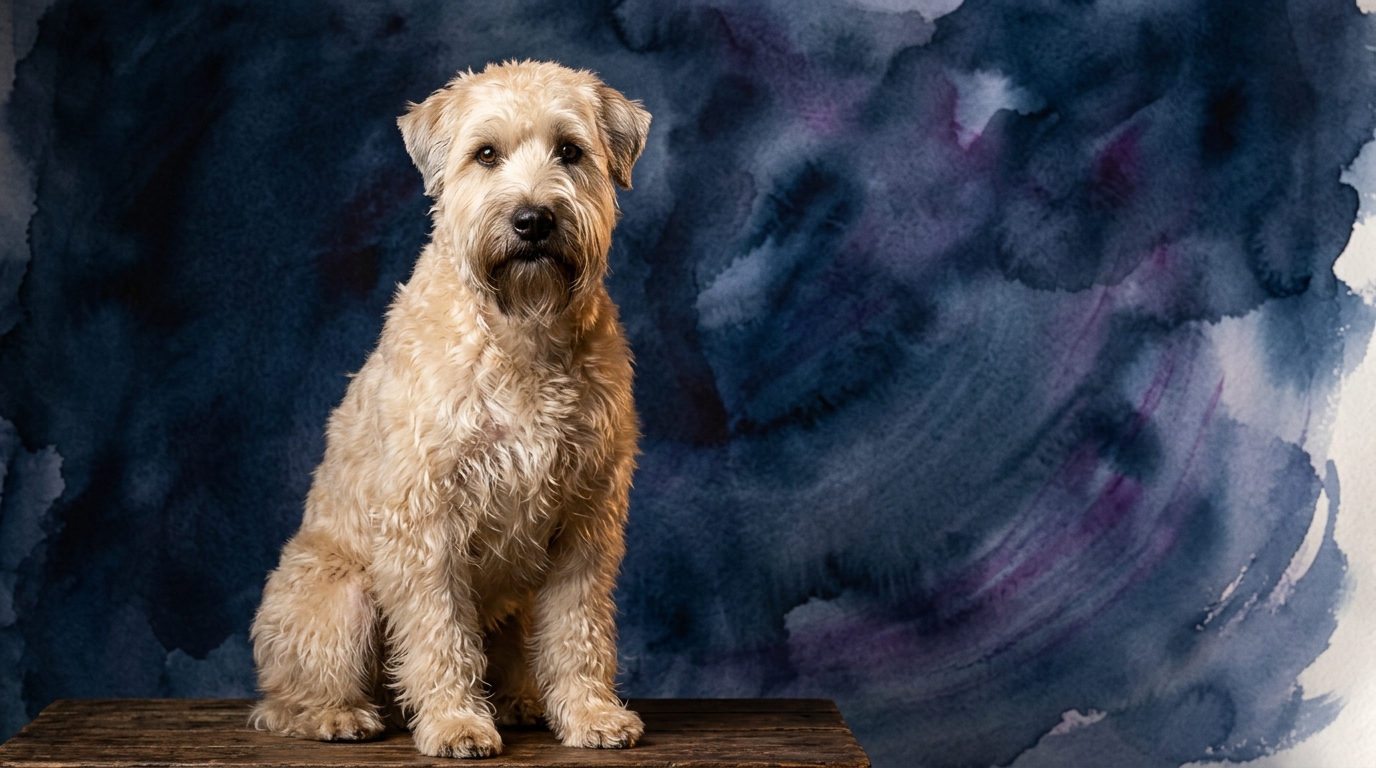
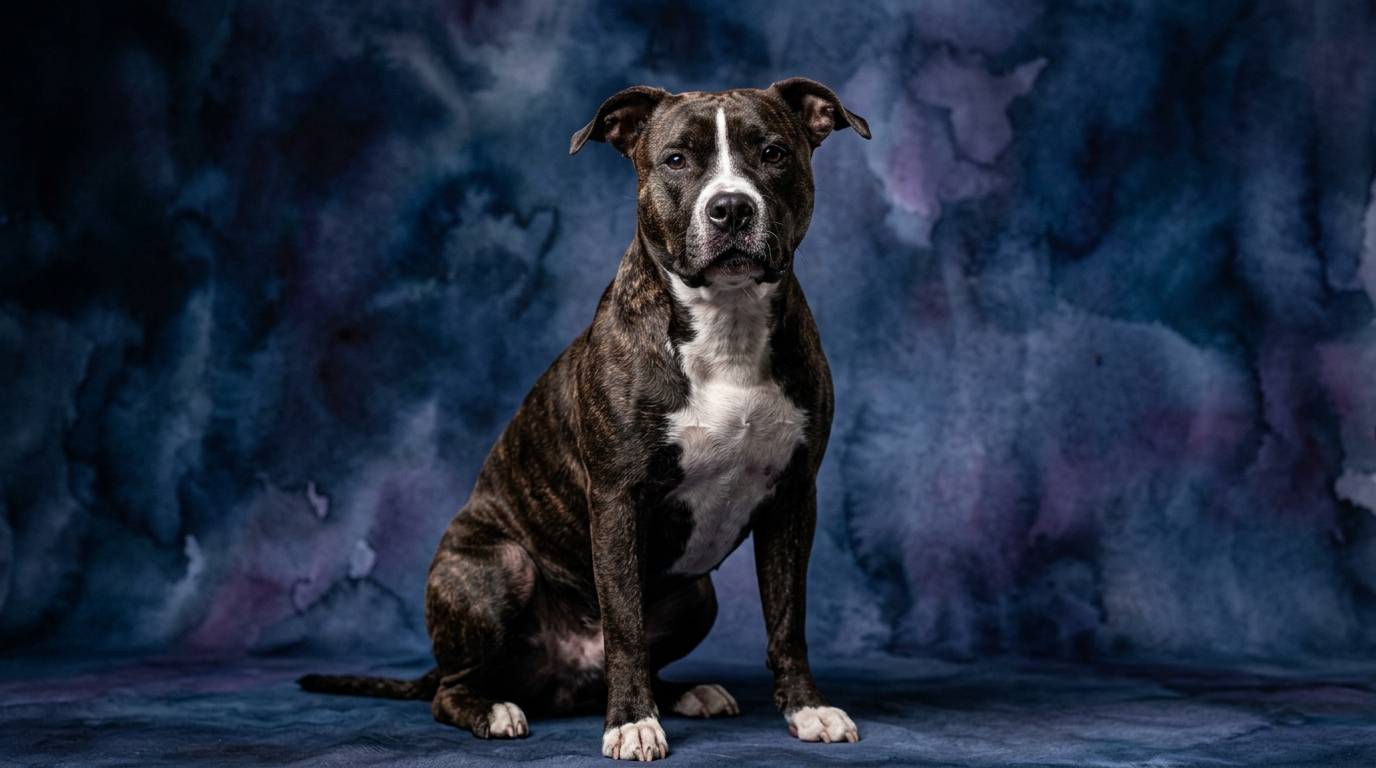
Side-by-Side IQ Profile: Soft Coated Wheaten Terrier vs. American Staffordshire Terrier
Delving into the cognitive profiles of the Soft Coated Wheaten Terrier and the American Staffordshire Terrier reveals more common ground than stark contrasts, with one significant differentiator. Both breeds score a 3/5 in Problem Solving, indicating a moderate capacity for independent thought. They can navigate challenges and learn to work through puzzles with guidance, applying practical solutions rather than abstract reasoning. Similarly, their Training Speed is rated 3/5, meaning both require a consistent, patient approach to learning new commands and routines. Repetition and positive reinforcement are essential for effective behavioral embedding.
In Social Intelligence, both also score 3/5, demonstrating a moderate understanding of social cues from both humans and other animals. This allows for adaptable, though not always perfectly compliant, interactions. Their Instinctive Drive is likewise 3/5, suggesting a balanced expression of innate behaviors; for Wheatens, this might be moderate chase or digging instincts, while for AmStaffs, it could be a moderate protective drive or desire for physical play. The primary distinction lies in Memory: the Soft Coated Wheaten Terrier holds a 3/5, retaining learned information reasonably well but potentially needing refreshers. The American Staffordshire Terrier, however, boasts a 4/5 in Memory, signifying a more robust capacity for recalling past lessons, commands, and social interactions, which can lead to more durable learned behaviors.
Where the Soft Coated Wheaten Terrier Wins Cognitively
Given their largely similar cognitive scores, the Soft Coated Wheaten Terrier's 'wins' are often subtle, stemming from how its cognitive profile aligns with its temperament and physical attributes. While its memory is 3/5, its overall cognitive balance, paired with a generally less physically intense presence than an AmStaff, suggests an adaptable, 'even keel' approach to daily life. Its moderate instinctive drive (3/5) is often channeled into enthusiastic, engaging play rather than persistent, singular focus, making it potentially easier to redirect than a more powerfully built dog with the same drive score. The Wheaten's social intelligence, while rated 3/5, frequently manifests in an overtly charming, less imposing manner, facilitating smoother interactions in diverse social settings. Its problem-solving, though moderate, often serves its desire for comfort or engagement with its family, aligning well with its role as a companion.
Where the American Staffordshire Terrier Wins Cognitively
The American Staffordshire Terrier's clear cognitive advantage lies in its 4/5 memory score, surpassing the Wheaten's 3/5. This enhanced recall significantly improves its ability to retain learned commands, complex routines, and even specific positive or negative experiences over the long term. For training that demands consistent adherence to rules, this superior memory is a crucial asset, reducing the necessity for frequent refreshers once a behavior is established. While both breeds share a 3/5 training speed, the AmStaff's better memory ensures that once a concept is grasped, it tends to stick more reliably. This robust memory also extends to social understanding, aiding in the formation of strong bonds and the recollection of specific individuals or situations, which underpins their renowned loyalty and protective instincts. Their 3/5 problem-solving and instinctive drive, when coupled with this excellent memory, often results in more consistent application of past solutions to new challenges.
Which is Easier to Train, and Why?
Both breeds share a 3/5 rating for training speed, indicating that neither is a lightning-fast learner, yet both are highly trainable with the right methodology. The AmStaff's superior memory (4/5 versus the Wheaten's 3/5) provides a notable advantage in the retention of learned behaviors, potentially making long-term training more efficient and reliable. However, 'easier to train' also encompasses initial manageability and engagement.
The Soft Coated Wheaten Terrier, despite its 3/5 training speed, brings a cheerful, sometimes spirited, but generally eager-to-please disposition to training. Their 3/5 social intelligence fosters a strong connection with their handler, and their moderate instinctive drive (3/5) is typically expressed through playful enthusiasm rather than intense single-mindedness. Training a Wheaten often succeeds by leveraging their desire for companionship and positive reinforcement, even if it requires more repetition. The American Staffordshire Terrier, also at 3/5 for training speed, demands patience. Yet, their physical strength and capacity for intense focus, combined with their excellent memory, mean that once they master a concept, they apply it with remarkable consistency. This characteristic requires clear boundaries and consistent leadership, as both good and undesirable habits can become deeply ingrained. Effective AmStaff training channels their moderate instinctive drive into productive activities. In summary, while both necessitate dedication, the AmStaff's superior memory can yield more reliable long-term results, especially crucial given their physical prowess. The Wheaten might feel 'easier' for initial handling due to its less formidable physical presence, but both thrive on consistent, positive training.
Suitability for Active vs. Relaxed Owners
Both Terriers generally benefit from active engagement, but their specific needs diverge. The Soft Coated Wheaten Terrier, with its moderate instinctive drive (3/5) and adaptable, effervescent nature, suits moderately active owners. They thrive on regular walks, interactive playtime, and mental stimulation, but are typically content to relax indoors with their family once their physical and mental needs are met. Their 3/5 social intelligence makes them excellent companions for family activities. While they can become restless without sufficient engagement, they don't usually demand extreme athletic feats. A relaxed owner who is still committed to daily walks, consistent interactive play, and mental challenges will find a Wheaten a good fit.
The American Staffordshire Terrier, conversely, benefits significantly from highly active owners due to its robust physique and moderate instinctive drive (3/5). Although their 4/5 memory helps them learn routines, they possess substantial physical capability and a strong desire for purpose. They excel in structured activities like agility, obedience, or long, vigorous hikes. Owners who enjoy regular, intense exercise and can provide consistent outlets to channel their AmStaff's energy and focus will see them flourish. For truly relaxed owners preferring minimal physical activity, an AmStaff may become under-stimulated, potentially leading to undesirable behaviors; they require consistent mental and physical challenges to be well-adjusted companions.
The Verdict
Choose the Soft Coated Wheaten Terrier if you seek a cheerful, moderately active companion who thrives on family interaction and offers a balanced cognitive profile for adaptable living.
Opt for the American Staffordshire Terrier when you desire a physically capable, loyal partner with a strong memory for consistent training, and you are prepared to provide structured activity and clear leadership.
🧠 Find Your Pet's IQ Score
Our Pet IQ Lab assessment covers 25+ tests across 5 cognitive dimensions — personalized to your breed.
Take the Full IQ Test →Frequently Asked Questions
Does the Coren rank indicate overall intelligence for these breeds?
The Coren ranking (AmStaff #48, Wheaten not ranked) primarily assesses 'working and obedience intelligence' based on trainability. While informative, it doesn't encompass the full spectrum of cognitive abilities like problem-solving or social intelligence, which are equally important for a well-rounded companion.
How does the AmStaff's superior memory impact daily life?
An American Staffordshire Terrier's 4/5 memory score means they retain learned commands, routines, and experiences more effectively. This translates to more consistent behavior over time, requiring fewer refreshers in training and enabling them to remember specific people or situations with greater reliability.
Are Soft Coated Wheaten Terriers difficult to train due to their 3/5 training speed?
A 3/5 training speed indicates that Soft Coated Wheaten Terriers are not quick learners, but they are certainly trainable. They require patience, consistency, and positive reinforcement, making them suitable for owners willing to invest time in engaging, reward-based methods. Their cheerful disposition often makes training a pleasant experience.