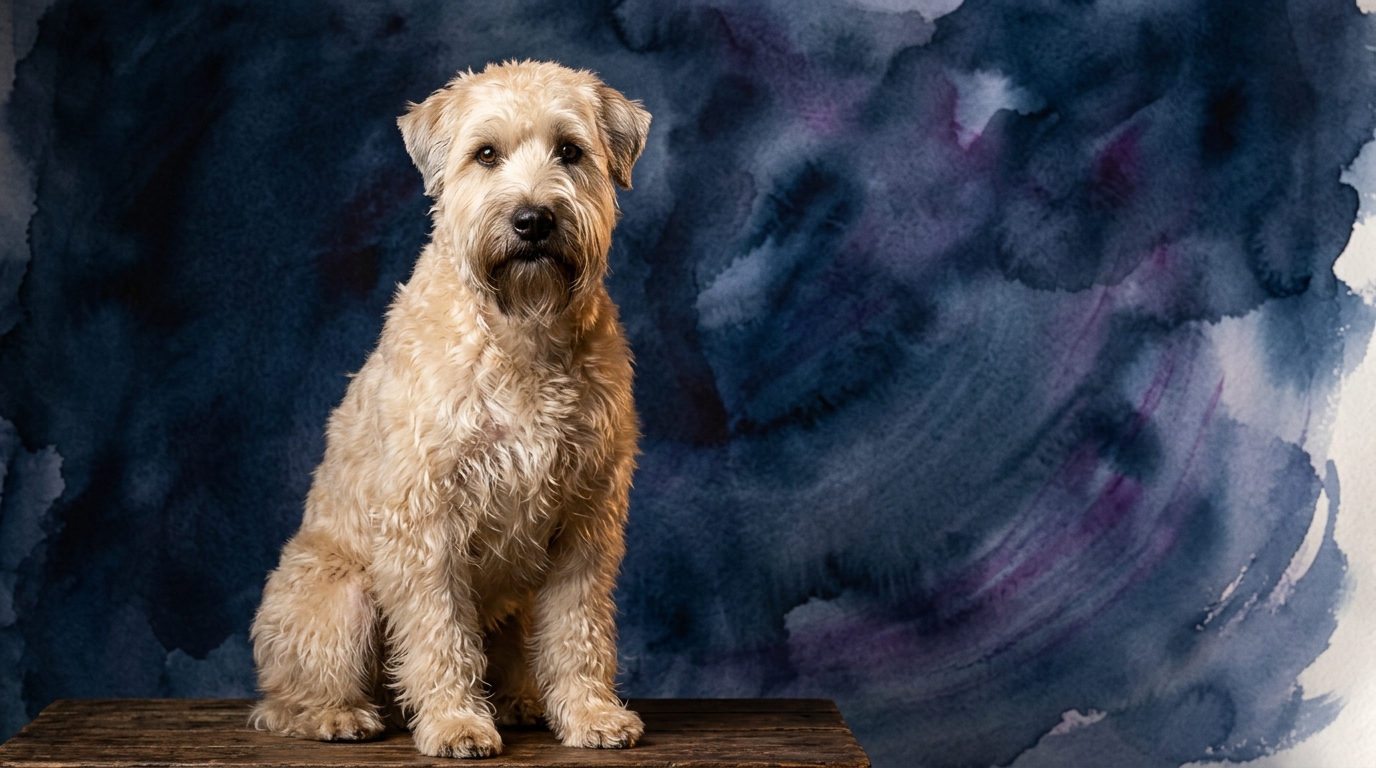
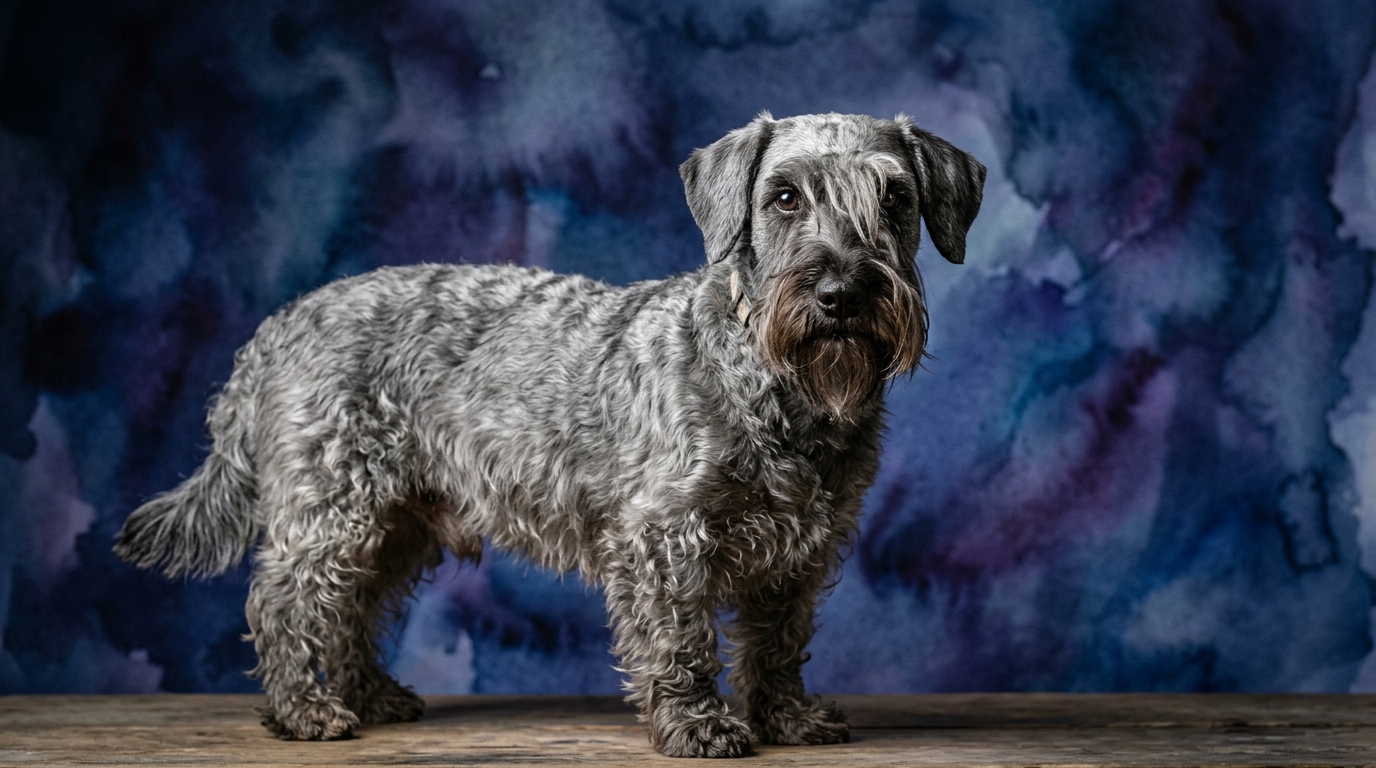
Side-by-Side Cognitive Profile: Wheaten vs. Cesky
**Problem Solving (3/5):** The Soft Coated Wheaten Terrier often approaches problems with a blend of charming persistence and social engagement, adept at figuring out how to enlist human help or garner attention. Their solutions frequently involve creative appeals to their people. The Cesky Terrier, however, tends toward more independent and deliberate problem-solving. Faced with a challenge, a Cesky might systematically assess and try practical, self-reliant methods like digging or manipulating objects, reflecting a breed bred for autonomous work.
**Training Speed (3/5):** Wheatens learn new commands at a moderate pace, often eager to please, though their buoyant energy can sometimes lead to a brief attention span. Consistency and positive reinforcement, making training feel like a fun interaction, are key to harnessing their willingness. Ceskys also learn moderately, but their independent terrier spirit means they require clear, firm consistency and compelling motivation. They need to be convinced of a task's worth, valuing purpose and reward over mere approval.
**Social Intelligence (3/5):** The Wheaten displays robust social intelligence, reading human moods and seeking interaction, forming strong, demonstrative bonds with family. They integrate smoothly, often acting as cheerful, empathetic companions. Ceskys possess a more nuanced social intelligence; deeply loyal to family, they are reserved and discerning with strangers. They observe carefully, understanding complex human signals, but prefer quiet, steady companionship to boisterous affection.
**Instinctive Drive (3/5):** Wheatens retain a moderate instinctive drive, enjoying chasing and exploring, but their urges are often balanced with a desire for human companionship and are generally manageable. Their active nature expresses through energetic play. The Cesky Terrier's instinctive drive is deeply focused on its specific hunting heritage, signifying persistent digging, tracking, and scent work. This is a directed, purposeful drive, requiring owners to provide appropriate outlets for these strong, ingrained tendencies.
**Memory (3/5):** Wheatens exhibit a good memory for routines, people, and specific locations, recalling training commands effectively, especially those associated with positive experiences. Their memory extends to anticipating familiar events. The Cesky Terrier also possesses a solid memory, particularly for spatial information, scent trails, and learned behaviors crucial for their hunting background. While they remember commands, their independent nature might lead to selective "forgetting" if a task lacks immediate reward, serving their pragmatic and self-directed activities.
Where the Soft Coated Wheaten Terrier Excels Cognitively
The Soft Coated Wheaten Terrier often shines in its capacity for social engagement and adaptable problem-solving within a family unit. Their ability to read and respond to human emotions, coupled with a charming persistence, means they are particularly adept at navigating the social complexities of a household. This breed excels at figuring out how to enlist human help or garner attention, making them highly responsive to cues and capable of adapting their strategies based on human reactions. Their cognitive strength lies in their fluid interaction with their environment, often using their innate sociability as a tool for success.
Where the Cesky Terrier Demonstrates Cognitive Strengths
The Cesky Terrier's cognitive strengths lie in its focused determination and independent reasoning. Unlike the Wheaten, the Cesky often prefers to assess and solve problems on its own terms, demonstrating a methodical approach to challenges that harks back to its specialized hunting role. This breed exhibits a remarkable tenacity in tasks requiring sustained effort, such as scent work or navigating complex physical obstacles. Their ability to concentrate deeply and work autonomously, without constant human prompting, marks a distinct cognitive advantage in tasks demanding self-reliance and purposeful application of their instincts.
Training Dynamics: Which Breed is Easier?
When considering ease of training, the Soft Coated Wheaten Terrier often presents a slightly more approachable path for novice owners. Their inherent desire for human connection and their generally cheerful disposition can make them more amenable to learning, especially with positive reinforcement that feels like a shared activity. While they possess a terrier stubbornness and can be excitable, their motivation to please and engage with their family often outweighs their independent streaks. The Cesky Terrier, conversely, requires a more experienced hand due to its pronounced independence and focused instinctive drives. While equally capable of learning, a Cesky needs clear, consistent boundaries and a compelling reason to comply. Their training demands patience, a deep understanding of terrier psychology, and a commitment to making commands meaningful, as they are less inclined to perform simply for human approval and more for perceived utility or reward.
Matching Breeds to Lifestyles: Active vs. Relaxed Owners
For active owners who enjoy engaging their dog in spirited play, social outings, and regular exercise, the Soft Coated Wheaten Terrier is often an excellent match. Their cheerful energy and desire to be involved in family activities make them a lively companion for hikes, games of fetch, or even dog sports. They thrive on interaction and can become bored or mischievous without sufficient mental and physical stimulation. Conversely, the Cesky Terrier, while requiring daily exercise and mental engagement, can be a better fit for owners who appreciate a more reserved, yet equally dedicated, companion. They are active but often in a more focused, purposeful way, enjoying structured walks, scent games, or quiet time at home. Their independence means they might not constantly seek attention, making them suitable for owners who prefer a dog with a strong internal life, capable of self-amusement after their exercise needs are met.
The Verdict
Choose the Soft Coated Wheaten Terrier if you seek a socially intelligent, adaptable companion who thrives on family interaction and offers charming, often humorous, problem-solving. They are well-suited for owners who enjoy an energetic, engaging partner willing to learn through positive, collaborative training.
Opt for the Cesky Terrier if you appreciate a dog with independent thought, focused determination, and a strong, purposeful drive, ideal for owners ready to engage with their terrier's unique motivations. They suit those who value a loyal, reserved companion and are committed to consistent, understanding training methods.
🧠 Find Your Pet's IQ Score
Our Pet IQ Lab assessment covers 25+ tests across 5 cognitive dimensions — personalized to your breed.
Take the Full IQ Test →Frequently Asked Questions
Do Soft Coated Wheaten Terriers or Cesky Terriers adapt better to apartment living?
The Soft Coated Wheaten Terrier's need for social interaction and consistent exercise means they can thrive in an apartment if their mental and physical needs are met with regular outings and family engagement. The Cesky Terrier can also adapt well, provided they receive sufficient daily exercise and outlets for their instinctive drives, such as structured walks and scent games, as their independent nature allows for quieter indoor periods.
Which breed is more suitable for a multi-pet household, considering their social intelligence?
The Soft Coated Wheaten Terrier, with its generally outgoing and adaptable social intelligence, often integrates smoothly into multi-pet households, though early socialization is always beneficial. The Cesky Terrier can also coexist peacefully, but their more discerning social nature means they might prefer a quieter environment and require careful introductions, forming deep bonds with chosen companions rather than exhibiting universal friendliness.
How do their problem-solving approaches impact training challenges?
The Wheaten's social problem-solving means they might try to charm or outwit their owner during training, requiring consistent, firm, yet positive guidance to stay on task. The Cesky's independent, methodical problem-solving can make them resistant to commands if they don't see the immediate value, necessitating a trainer who can motivate them effectively and respect their self-reliant nature to achieve compliance.