
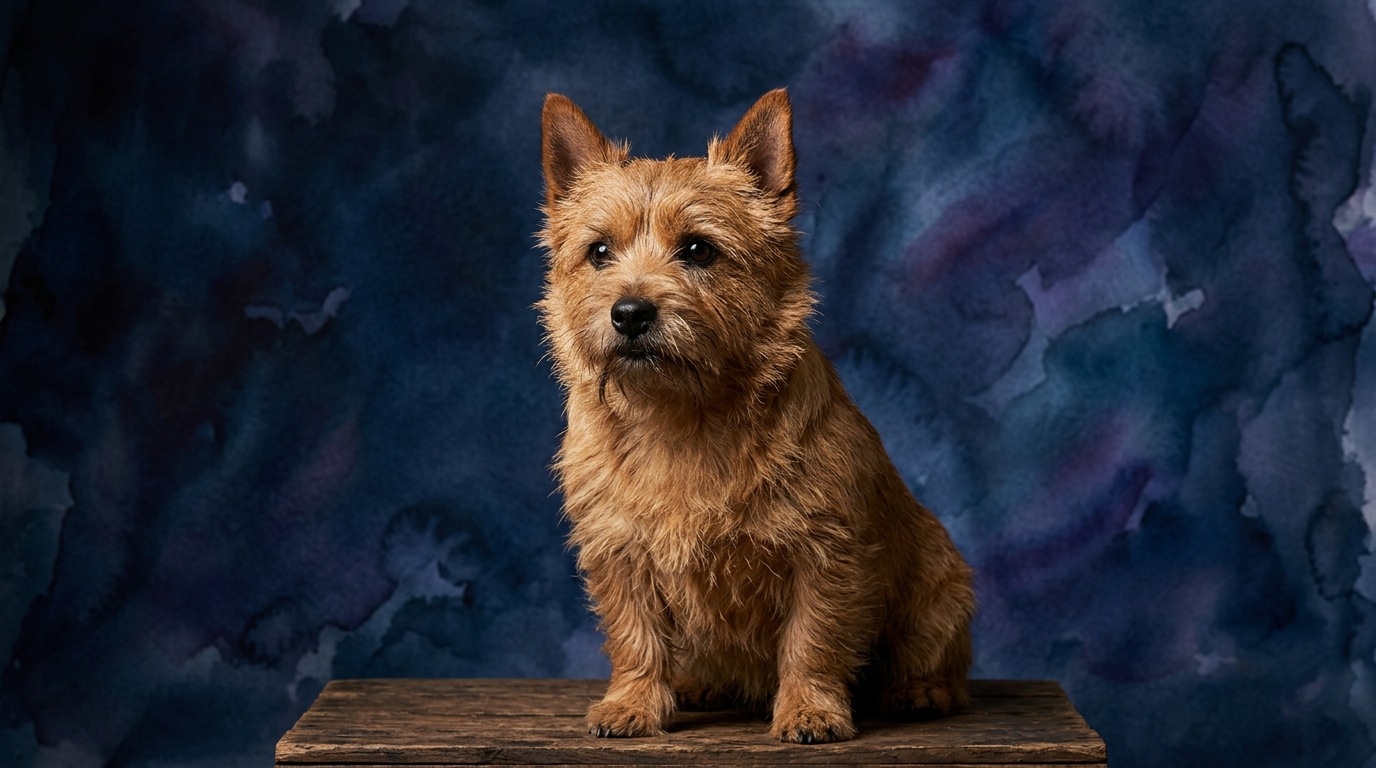
Side-by-Side IQ Profile: Unpacking Terrier Minds
At The Cosmic Pet Pet IQ Lab, we've assessed the Soft Coated Wheaten Terrier and the Norwich Terrier across five key cognitive dimensions. Interestingly, both breeds achieve a 3/5 rating in every category, suggesting a baseline of robust and practical intelligence. However, the manifestation of these scores differs due to their inherent breed characteristics and historical purposes.
Soft Coated Wheaten Terrier:
Problem Solving (3/5): The Wheaten often navigates novel situations with adaptable curiosity, using moderate trial and error to find solutions. Their persistence, driven by a desire for engagement, often leads to success through a blend of physical exploration and learned experience, rather than complex strategizing.
Training Speed (3/5): Wheatens generally pick up new commands at a moderate pace, thriving on positive reinforcement. Their exuberance can sometimes present as playful stubbornness, requiring consistent motivation to solidify responses, though they genuinely enjoy the interactive nature of training.
Social Intelligence (3/5): These dogs show a moderate ability to interpret human cues and adapt in social settings. Generally outgoing and people-oriented, they often seek interaction, displaying empathy, though their boisterous greeting style might need refining. They read intentions well but can be easily overstimulated.
Instinctive Drive (3/5): The Wheaten's terrier heritage results in a moderate prey drive, often expressed through chasing small critters, typically less intense than some terriers. They also possess a moderate drive for digging and guarding, reflecting an innate alertness to their surroundings without extreme focus.
Memory (3/5): Wheatens possess solid memory for routines, commands, and associations. Once a behavior is learned, it tends to stick, though consistent practice is key. Their recall for specific training sequences is reliable with ongoing reinforcement.
Norwich Terrier:
Problem Solving (3/5): Norwich Terriers display a practical, direct approach to problem-solving, using tenacity to overcome obstacles. Their solutions are often efficient, driven by independence and a clear objective, whether for a toy or navigating a fence. They prioritize effective, immediate action rather than elaborate plans.
Training Speed (3/5): Norwich Terriers learn commands at a moderate speed, responding best to short, engaging sessions to prevent boredom. Their independent streak necessitates a trainer who makes learning fun and rewarding, as they quickly assess if a task is worth their effort. Consistency and positive reinforcement are crucial.
Social Intelligence (3/5): These terriers exhibit moderate social understanding, often astute at reading human moods and adapting. Generally friendly, they possess a strong sense of self, engaging on their own terms, less prone to people-pleasing than some breeds. They observe and react thoughtfully.
Instinctive Drive (3/5): The Norwich Terrier’s instinctive drive is notably focused on vermin hunting. This translates to a moderate but keen prey drive, intense focus on small, moving objects, and a persistent digging instinct. Their alertness and vocal nature also reflect moderate guarding tendencies.
Memory (3/5): Norwich Terriers have a robust memory for routines, boundaries, and interactions. Learned behaviors are generally well-retained, especially if self-serving or rewarding. They remember friends and favored spots with impressive clarity, making them consistent in their habits.
Where the Soft Coated Wheaten Terrier Edges Ahead Cognitively
While both breeds share identical Pet IQ Lab scores, the Wheaten Terrier often demonstrates a slightly more adaptable and socially nuanced application of their cognitive abilities within a family context. Their social intelligence, rated at 3/5, frequently manifests with a greater eagerness to please and integrate into household dynamics, making them potentially more receptive to complex social cues over time. This isn't to say a Norwich lacks social acumen, but the Wheaten's inherent exuberance and desire for inclusion can make them appear more attuned to human emotional states, sometimes anticipating needs or reacting to subtle shifts in household mood. Their problem-solving, also 3/5, can lean towards creative, less direct solutions fueled by their playful nature, whereas a Norwich might opt for a more straightforward, tenacious approach. This creativity, coupled with their moderate memory, means they might form more intricate associations between actions and social outcomes in a household setting, adjusting their boisterousness based on family reactions, for instance, showing a more flexible social cognition.
Where the Norwich Terrier Shows Its Unique Cognitive Strengths
The Norwich Terrier, despite matching the Wheaten in cognitive scores, often shines in the practical application of its problem-solving and instinctive drives. Their 3/5 problem-solving score is frequently expressed through a tenacious, goal-oriented approach, making them particularly adept at figuring out how to achieve a specific, often self-serving, objective like escaping a yard or getting into a treat container. This isn't necessarily more 'intelligent' than a Wheaten, but it's a distinct cognitive style focused on practical outcomes. Their instinctive drive, also 3/5, is often more concentrated and purposeful, reflecting their heritage as working terriers. This focused drive, combined with their solid memory, allows them to excel at tasks requiring persistence and a clear objective, such as scent work or navigating agility courses where a specific path is required. They remember the sequence and the reward with a singular focus that can be incredibly powerful in structured activities, demonstrating a highly effective, directed intelligence.
Which is Easier to Train and Why
Given both breeds score 3/5 in training speed, neither is inherently 'easier' in a broad sense, but their training experiences differ significantly due to their behavioral nuances. The Soft Coated Wheaten Terrier, with its 'Wheaten Greetin'' and generally more people-oriented demeanor, often responds well to positive reinforcement that emphasizes connection and praise. Their exuberance can lead to a playful stubbornness, but their desire to be part of the family often motivates them to comply once they understand expectations. They might take a bit longer to settle into a command, but their willingness to engage and social nature can make the process feel more collaborative and rewarding for both dog and owner.
The Norwich Terrier, while equally capable of learning at a moderate pace, brings a strong independent streak to the training table. They need training to be engaging, consistent, and to clearly demonstrate 'what's in it for them.' Their focus on their own objectives means they can be less inclined to 'people-please' and more inclined to assess if a command is worth their effort. This requires a trainer who understands terrier tenacity and can make training feel like a fun game rather than a chore, rewarding their focus and quick decision-making. Neither is a 'set it and forget it' breed, but the Wheaten might offer more immediate social feedback during training, while the Norwich demands a more creative and persistent approach to harness its independent spirit, often requiring more patience and ingenuity from the trainer.
Which Suits Active Owners vs Relaxed Owners
For active owners seeking a dynamic companion, both breeds offer engagement, but with different energy profiles. The Soft Coated Wheaten Terrier often suits owners who enjoy consistent, moderate-to-high activity, including long walks, jogging, or dog sports like agility. Their playful energy and desire for interaction mean they thrive on being an integral part of family activities. They need consistent physical and mental stimulation to prevent boredom, and their social nature makes them excellent companions for outings and social events. Their 'bouncy' nature aligns well with an owner who enjoys an exuberant dog ready for sustained adventure.
The Norwich Terrier, while energetic and spirited, can often be a better fit for active owners who appreciate intensity in shorter bursts or structured activities rather than sustained, high-impact endurance. They enjoy brisk walks, exploring, and engaging in focused activities like earthdog trials or compact agility courses. Their smaller size makes them adaptable to various living situations, but their inherent terrier drive means they still require consistent outlets for their curiosity and hunting instincts. For a more relaxed owner, the Norwich might be manageable if daily mental and physical enrichment is prioritized, perhaps with shorter, more intense play sessions or puzzle toys, whereas a Wheaten's more sustained energy might overwhelm a truly relaxed household.
The Verdict
Select a Soft Coated Wheaten Terrier if you desire an exuberantly social companion eager to integrate into all family activities, valuing their adaptable problem-solving and generally more people-oriented training approach. They thrive with consistent, interactive engagement and owners who appreciate their playful, bouncy demeanor.
Opt for a Norwich Terrier if you appreciate a spirited, independent companion with a tenacious problem-solving style and a focused, purposeful drive, suitable for owners who enjoy engaging their dog in structured, goal-oriented activities. They excel with consistent, reward-based training that respects their self-assured nature.
🧠 Find Your Pet's IQ Score
Our Pet IQ Lab assessment covers 25+ tests across 5 cognitive dimensions — personalized to your breed.
Take the Full IQ Test →Frequently Asked Questions
Are Soft Coated Wheaten Terriers good with children?
Wheatens can be wonderful family dogs, often displaying a playful and affectionate nature with children, though their enthusiastic 'Wheaten Greetin'' might require guidance to prevent accidental knocking over of small children. Supervision and early socialization are key to harmonious interactions, helping them learn appropriate play boundaries.
Do Norwich Terriers bark a lot?
Norwich Terriers can be quite vocal, using their barks to alert their owners to perceived intruders, express excitement, or communicate their desires. Their history as ratters means they are alert and quick to sound the alarm, so early training and consistent management can help curb excessive or nuisance barking.
Which breed is better for apartment living?
Both breeds can adapt to apartment living if their exercise and mental stimulation needs are consistently met. The Norwich Terrier's smaller size might make it slightly more adaptable to compact spaces, but both require daily walks, play, and mental challenges to prevent boredom and destructive behaviors, regardless of living quarters.