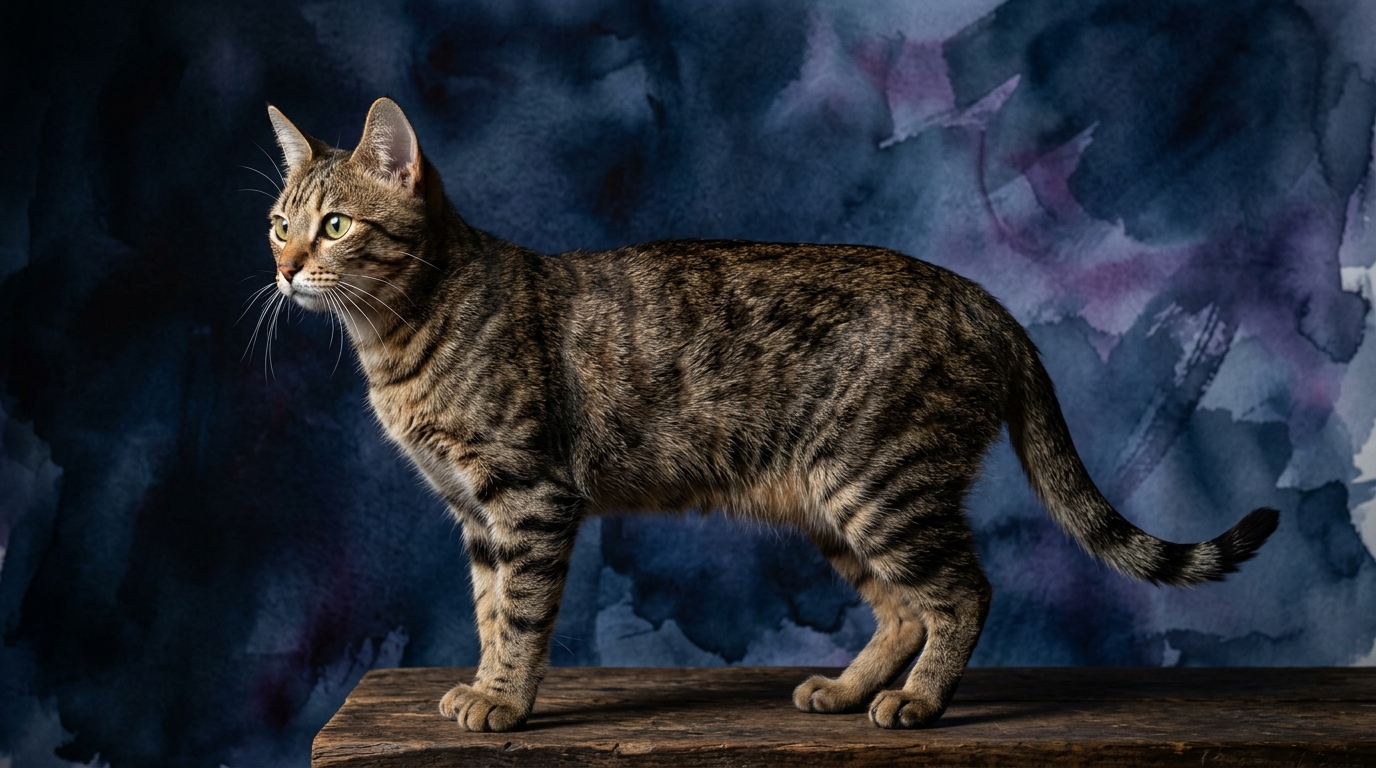
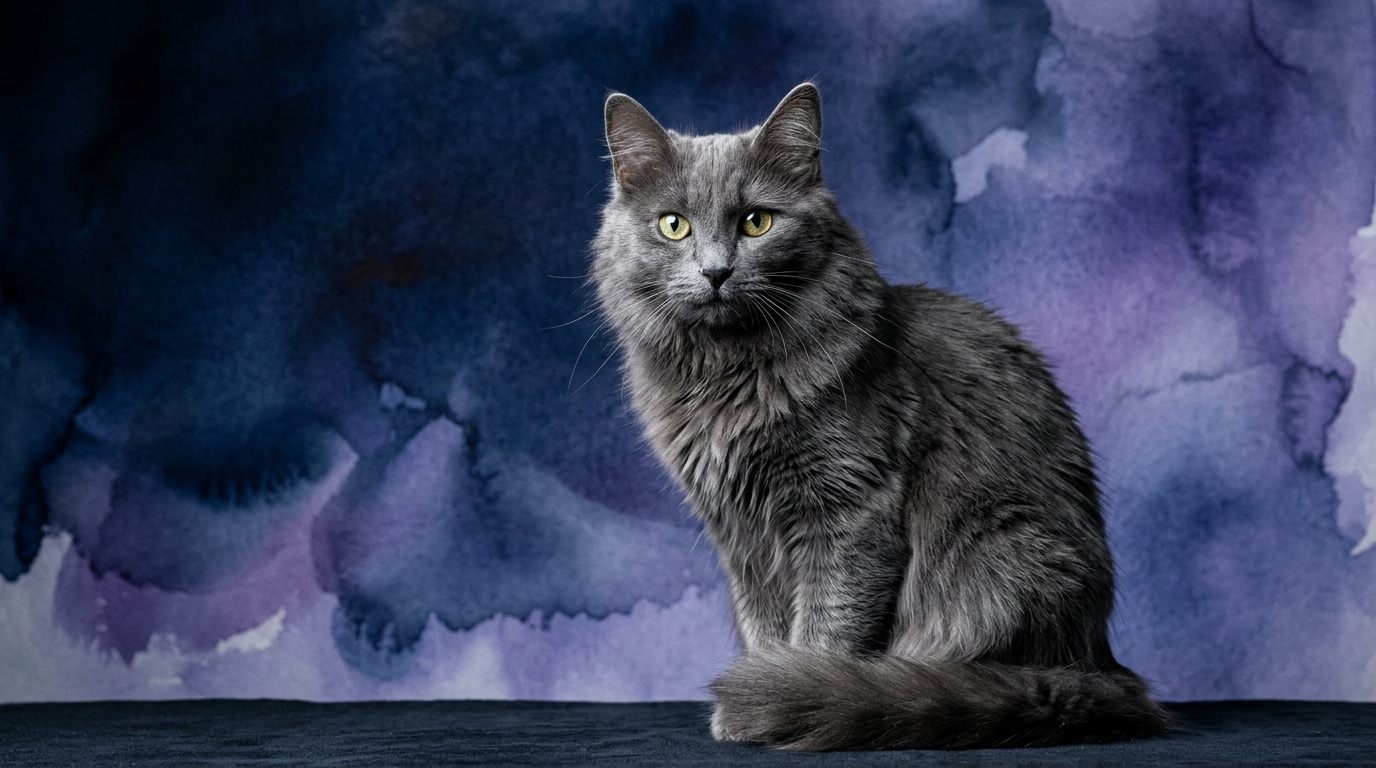
Side-by-Side IQ Profile: Unpacking Moderate Cognition
The Cosmic Pet Pet IQ Lab assesses feline intelligence across five key dimensions, each rated on a 1-5 scale. Interestingly, both the Sokoke and the Nebelung register a consistent 3/5 across all categories, suggesting a moderate and balanced cognitive capacity rather than extreme specialization. However, the *manifestation* of this moderate score differs significantly due to their distinct breed temperaments and natural inclinations.
For the Sokoke, a 'Problem Solving' score of 3/5 often translates into resourceful navigation of its environment. Originating from the forests of Kenya, this breed exhibits a practical cleverness, adept at figuring out how to reach high perches, open simple latches, or overcome physical obstacles to access desired areas or toys. Their 'Training Speed' at 3/5 indicates they can learn commands and tricks at a decent pace, particularly if the training is engaging, play-based, and offers a clear, high-value reward, though their independent spirit means they may choose whether or not to comply based on their mood. 'Social Intelligence' at 3/5 means they are observant of their chosen human's moods and routines, forming strong bonds, but they tend to be reserved with strangers, reading social cues to maintain personal space. Their 'Instinctive Drive' at 3/5 is pronounced, reflecting their wilder heritage with a strong urge to hunt, explore, and climb, requiring outlets for these natural behaviors. Finally, their 'Memory' at 3/5 is robust for remembering favored play routines, the location of cherished items, and the layout of their territory.
The Nebelung, conversely, interprets the same 3/5 scores through the lens of its more reserved and companion-oriented nature. Its 'Problem Solving' ability at 3/5 often manifests as a keen awareness of household routines and an ability to subtly manipulate situations to their advantage, such as figuring out how to get a favorite toy from a shelf or signaling for attention. 'Training Speed' at 3/5 indicates they are capable learners, often eager to engage in training sessions that strengthen their bond with their owner, making them moderately receptive to clicker training or learning household rules, though shyness might initially slow progress. Their 'Social Intelligence' at 3/5 is characterized by deep emotional attunement to their immediate family, understanding subtle cues and moods, and offering quiet companionship, though they are famously shy and cautious around unfamiliar people or situations. The Nebelung's 'Instinctive Drive' at 3/5 is present, often expressed through focused play that mimics hunting, but it is balanced with a strong drive for comfort, security, and affectionate interaction. Their 'Memory' at 3/5 is excellent for recalling established routines, the specific habits of their family members, and the location of preferred safe havens within the home.
Where Sokoke Wins Cognitively
Despite identical scores, the Sokoke's cognitive strengths lean towards practical application and environmental mastery, a direct reflection of its natural heritage. Its Problem Solving at 3/5 often outshines the Nebelung's in scenarios requiring physical ingenuity or navigating complex, multi-dimensional spaces. A Sokoke is more likely to devise a novel way to scale a bookshelf or open a cabinet with a tricky latch, demonstrating a hands-on, exploratory approach to challenges. This breed's Instinctive Drive, also 3/5, combined with its cognitive flexibility, means it excels at learning through doing and exploring, making it particularly adept at environmental awareness and adapting to varied stimuli in an active household. Their memory supports this by retaining spatial information and successful problem-solving strategies for future use, making them highly efficient at repeating past successes in similar situations.
Where Nebelung Wins Cognitively
The Nebelung's cognitive advantages, while rated identically at 3/5, are rooted in its sophisticated social attunement and ability to thrive within a structured domestic environment. Its Social Intelligence, though rated 3/5, often presents as a profound understanding of human emotions and household dynamics, allowing it to offer comfort or seek reassurance with remarkable sensitivity. This nuanced understanding makes them excellent communicators within their chosen family circle, often using subtle body language or vocalizations to convey needs or desires. Their Problem Solving, also 3/5, is particularly strong in scenarios involving routine and anticipating events, such as knowing when mealtime is approaching or when their favorite human is about to return home. This keen observational memory and social understanding allow them to navigate the complexities of family life with a quiet grace, often learning subtle cues that might be missed by more independent breeds.
Which is Easier to Train and Why
When it comes to trainability, both breeds are rated 3/5 for Training Speed, yet their differing motivations create distinct training experiences. The Nebelung, with its deep bond to family and preference for routine, can be surprisingly receptive to training. They often enjoy the one-on-one attention and mental stimulation that training provides, viewing it as another form of affectionate interaction. Consistency, positive reinforcement, and a calm environment are key, as their shy nature means harshness or impatience will quickly shut them down. They are generally eager to please their trusted human, making them good candidates for learning household rules, leash training, or simple tricks if approached gently and patiently.
The Sokoke, while equally capable of learning at a 3/5 pace, approaches training with a more independent and pragmatic mindset. They are less driven by a desire to please and more by what’s in it for them – typically, a high-value treat or an engaging play session. Training must be dynamic, fun, and tap into their natural curiosity and hunting instincts. While they can learn complex tricks, their compliance might be conditional on their interest level at any given moment. Their independence means they might choose to ignore a command if a more stimulating activity presents itself. For a Sokoke, training is a partnership where both parties benefit, rather than an act of submission, making it slightly more challenging for owners who expect immediate, consistent obedience.
Which Suits Active Owners vs. Relaxed Owners
The distinction between these two breeds, even with identical cognitive scores, becomes clearer when considering owner lifestyles. The Sokoke, with its robust Instinctive Drive (3/5) and practical Problem Solving (3/5), thrives with active owners who can provide ample mental and physical enrichment. They benefit from interactive play sessions that mimic hunting, puzzle toys that challenge their ingenuity, and opportunities for climbing and exploration. An owner who enjoys engaging their cat in structured play, perhaps even outdoor adventures on a leash in a safe environment, would find the Sokoke a stimulating and rewarding companion. They are not content to simply lounge all day; their cognitive and physical energy needs regular outlets.
Conversely, the Nebelung, while still enjoying play, is better suited for more relaxed owners who appreciate quiet companionship and a predictable home environment. Their Social Intelligence (3/5) makes them deeply affectionate with their family, often preferring to be near their human rather than constantly engaged in high-energy activities. They flourish in homes where routines are established, and they can feel secure and cherished. Owners who enjoy quiet evenings, gentle petting, and a cat who is a constant, albeit sometimes reserved, presence will find the Nebelung to be an ideal match. While they enjoy moderate play, their cognitive strengths lie more in observation and subtle interaction within a peaceful domestic setting.
The Verdict
Choose the Sokoke if you are an active owner seeking a resourceful, independent feline companion who thrives on exploration and engaging, interactive play.
Opt for the Nebelung if you prefer a gentle, deeply affectionate cat that flourishes in a calm home, offering quiet companionship and a strong, sensitive bond with its family.
🧠 Find Your Pet's IQ Score
Our Pet IQ Lab assessment covers 25+ tests across 5 cognitive dimensions — personalized to your breed.
Take the Full IQ Test →Frequently Asked Questions
Are Sokoke cats good with children?
Sokoke cats can be good with respectful children who understand feline boundaries. Their independent nature means they might tolerate interaction rather than actively seek it out, preferring play that mimics hunting or exploration rather than constant petting. Supervision is always recommended to ensure positive interactions for both cat and child.
Do Nebelung cats get along with other pets?
Nebelung cats can coexist peacefully with other calm, gentle pets, especially if introduced slowly and carefully. Their shy nature means they prefer a harmonious environment, and they may take time to warm up to new animal companions. They often do best with other quiet pets that respect their need for personal space.
What kind of enrichment do Sokoke cats need?
Sokoke cats require significant environmental enrichment to satisfy their strong instinctive drives. This includes plenty of vertical space for climbing, interactive puzzle feeders, regular engaging play sessions with wand toys, and potentially supervised outdoor access on a harness to satisfy their exploratory nature. Mental stimulation is as crucial as physical activity.