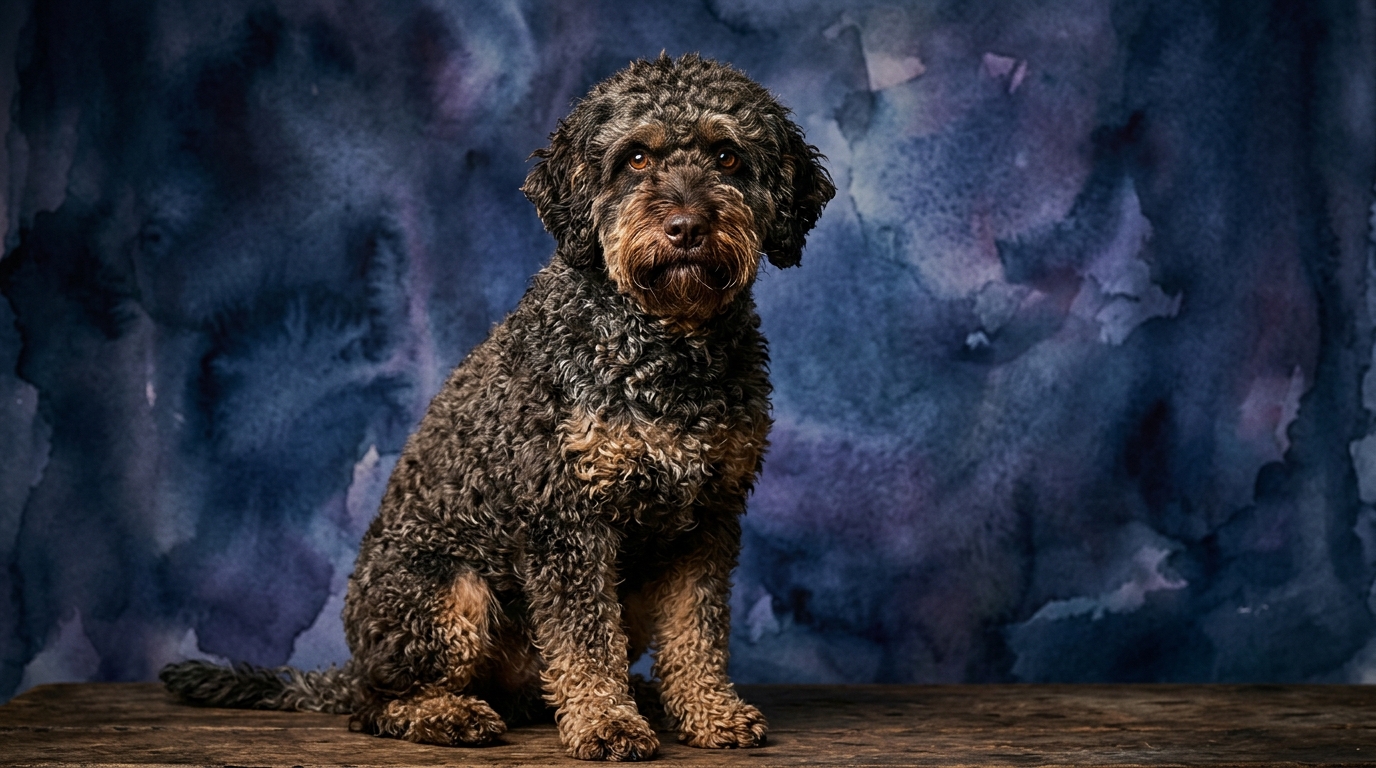
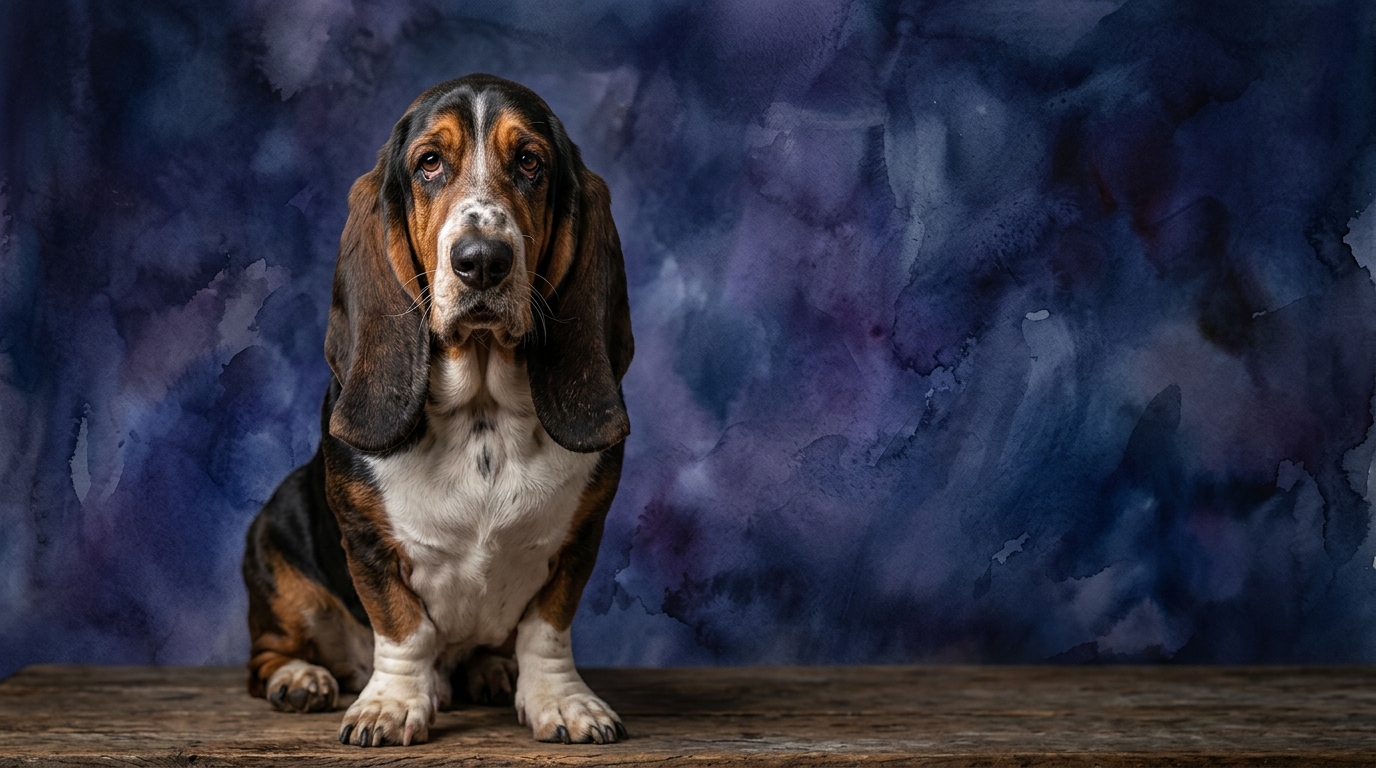
Side-by-Side IQ Profile: Herder vs. Hound
The Cosmic Pet Pet IQ Lab rates both the Spanish Water Dog (a Herding dog) and the Basset Hound (a Hound) with a consistent 3 out of 5 across all five measured cognitive dimensions. While these numerical scores are identical, the manifestation of these capabilities in daily life and their underlying motivations diverge significantly due to their ancestral roles.
For the Spanish Water Dog, Problem Solving at 3/5 reflects an adaptable mind capable of grasping varied tasks, from complex herding patterns to agility courses, often requiring cooperation with a handler. Their Training Speed, also 3/5, indicates a generally willing learner who can pick up commands at a steady pace, though an independent streak means they require consistent, engaging methods. Social Intelligence at 3/5 suggests they are attuned to their handler's cues and emotions, but can be reserved or discerning with strangers, taking time to assess new social situations. Their Instinctive Drive, rated 3/5, is a balanced mix of herding, guarding, and retrieving tendencies, driving them to work and interact with their environment purposefully. Memory, also 3/5, allows them to retain complex sequences of commands and routines, making them reliable partners in structured activities.
Conversely, the Basset Hound's Problem Solving at 3/5 is overwhelmingly focused on olfactory challenges; they excel at unraveling intricate scent puzzles, navigating complex terrains to follow a trail, rather than solving human-centric logic games. Their Training Speed, also 3/5, is characterized by a deliberate pace and a strong preference for following their nose over human instruction, meaning training requires immense patience and high-value rewards to capture their attention. Social Intelligence at 3/5 shows them as generally amiable and tolerant, but often more engrossed in their scent world than in human social subtleties, though they are affectionate with their families. Their Instinctive Drive, rated 3/5, is dominated by an incredibly potent scent drive and persistence in pursuit, making them formidable trackers but potentially challenging to recall. Memory, also 3/5, is exceptional for recalling scent trails and locations associated with specific odors, yet less focused on arbitrary tricks or commands that don't directly engage their primary drive.
Where the Spanish Water Dog Wins Cognitively
The Spanish Water Dog truly shines in cognitive areas requiring a partnership with humans and adaptability to diverse, handler-directed tasks. Their herding background imbues them with a proactive problem-solving approach to managing groups or navigating obstacles under guidance. This breed demonstrates a more immediate interest in engaging with human-initiated puzzles or learning new routines, often seeking to understand and fulfill a perceived role. Their cognitive strength lies in their versatility and eagerness to participate in a wide array of activities, from advanced obedience to canine sports, where quick understanding of novel commands and sequences is essential. They process and respond to human communication with a higher degree of focus, allowing for more nuanced interactions and quicker adjustments to changing environmental cues during training or work.
Where the Basset Hound Wins Cognitively
The Basset Hound's cognitive prowess is unparalleled in its specific domain: the world of scent. Their olfactory problem-solving is a marvel, allowing them to decipher complex scent trails that would baffle other breeds, demonstrating an incredible ability to focus intently for extended periods on a single sensory input. This persistence, combined with an independent decision-making capacity when on a trail, highlights a unique form of intelligence. While not conventionally 'quick' to learn arbitrary commands, their cognitive strength lies in their unwavering dedication to their primary instinct, showcasing deep memory for scent patterns and an inherent understanding of how to use their physical attributes to follow a trail. This specialized intelligence makes them exceptional at tasks like tracking, scent work, and even search and rescue, where human intervention is minimal once a scent is picked up.
Which Is Easier to Train and Why?
Despite both breeds scoring 3/5 in Training Speed, the practical experience of training them differs considerably. The Spanish Water Dog, with its heritage of working closely with shepherds, generally exhibits a more pronounced desire to please its handler and engage in reciprocal learning. While they possess an independent streak, their inherent drive to be a working partner means they are often more receptive to command-based training and respond well to positive reinforcement that involves interaction and praise. Their attention is more easily directed towards the trainer, making the initial stages of obedience training often feel more productive, provided the training is consistent and engaging.
The Basset Hound, conversely, presents a unique training challenge due to its profound scent drive. When a Basset Hound catches a compelling scent, its world narrows to that singular input, making human commands seem irrelevant. Their independence, a crucial trait for a hound expected to follow a trail without constant human direction, means they require extraordinary patience and highly motivating rewards to maintain focus. While they are capable of learning, their learning speed for commands is often hampered by their powerful instincts and selective hearing when a scent is present. Training a Basset Hound is less about speed and more about consistency, understanding their motivators (often food or scent games), and accepting that their nose will frequently take precedence over your voice. Their training is effective when it leverages their natural abilities, such as scent work, rather than fighting against them.
Which Suits Active Owners vs. Relaxed Owners?
For active owners seeking a canine partner for varied adventures and consistent engagement, the Spanish Water Dog is often the more fitting choice. Their moderate instinctive drive and problem-solving capabilities translate into a need for regular mental stimulation and physical activity. They thrive on having a 'job,' whether it's herding, agility, water sports, or advanced obedience. Owners who enjoy teaching new tricks, participating in dog sports, or simply having an attentive companion on long hikes will find the Spanish Water Dog's cognitive profile aligns well with their lifestyle, as they appreciate consistent interaction and purpose.
Relaxed owners who appreciate a more independent, albeit affectionate, companion might find the Basset Hound a better match. While Bassets require daily walks and benefit greatly from scent-based enrichment activities, their overall energy level is typically lower than that of a herding dog. They are content with lounging after a good sniff-session, and their contentment often stems from following their nose rather than constant human direction. Owners who value quiet companionship, are patient with an independent streak, and enjoy a leisurely pace will appreciate the Basset Hound's unique charm, especially if they can provide opportunities for scent exploration in a secure environment.
The Verdict: When to Choose Each
The Verdict
Choose the Spanish Water Dog if you're an active owner seeking a versatile, engaged partner for consistent training, dog sports, and a wide array of mentally stimulating activities. They thrive on having a purpose and working closely with their human.
Opt for the Basset Hound if you're a patient owner who values an independent, scent-driven companion, appreciating their unique focus and low-key demeanor after their daily scent adventures. They're best for those who can embrace their powerful nose and provide secure environments for exploration.
🧠 Find Your Pet's IQ Score
Our Pet IQ Lab assessment covers 25+ tests across 5 cognitive dimensions — personalized to your breed.
Take the Full IQ Test →Frequently Asked Questions
Are Basset Hounds difficult to train?
While not inherently 'difficult,' Basset Hounds present unique training challenges due to their overwhelming scent drive and independence. Training requires extreme patience, high-value rewards, and a deep understanding of their motivations, often leveraging their love for scent work.
Do Spanish Water Dogs need a lot of mental stimulation?
Yes, Spanish Water Dogs, with their herding background and moderate problem-solving abilities, require consistent mental stimulation to prevent boredom and destructive behaviors. They thrive on learning new commands, engaging in puzzles, and participating in dog sports.
How do their social behaviors differ?
The Spanish Water Dog is typically more handler-focused and can be reserved with strangers, evaluating new social situations. The Basset Hound is generally amiable and tolerant with people, but often more engrossed in their scent world than in human social cues, though affectionate with family.