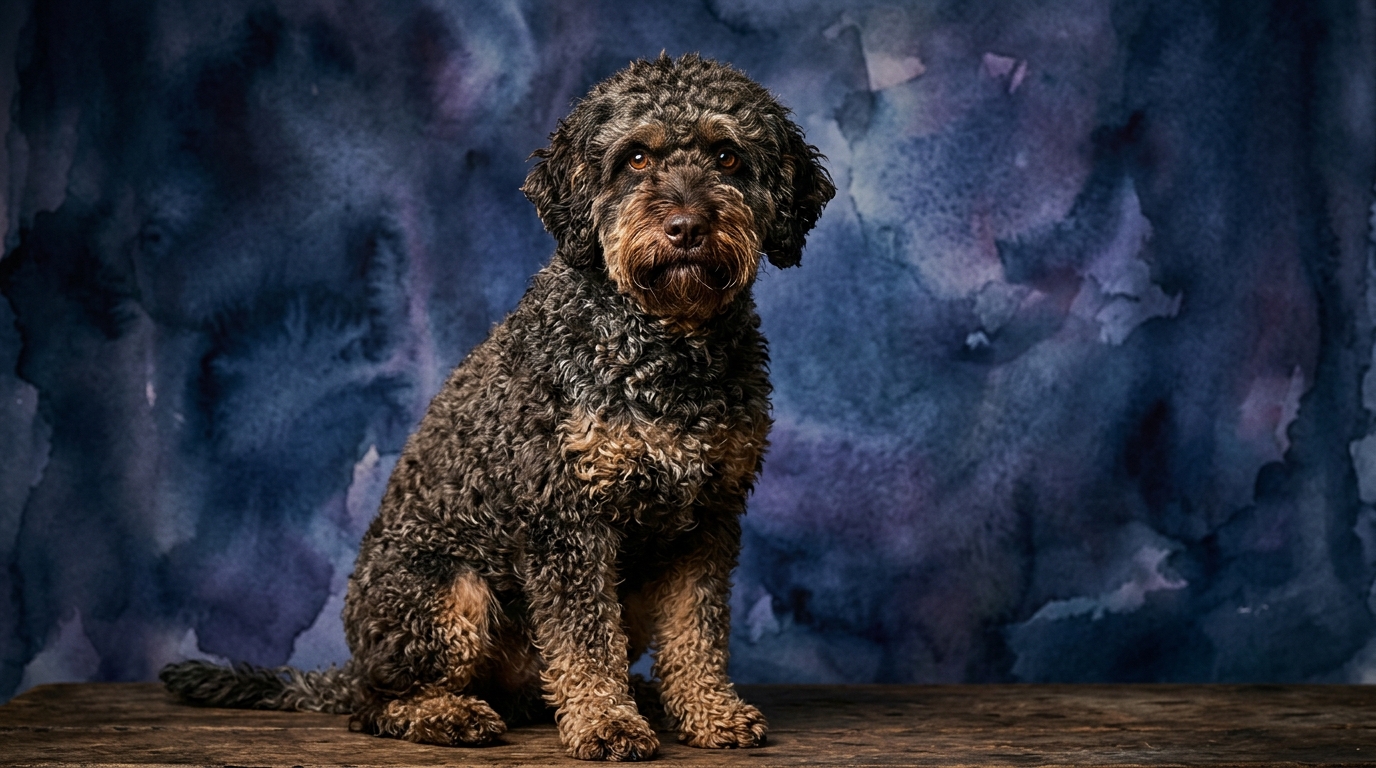
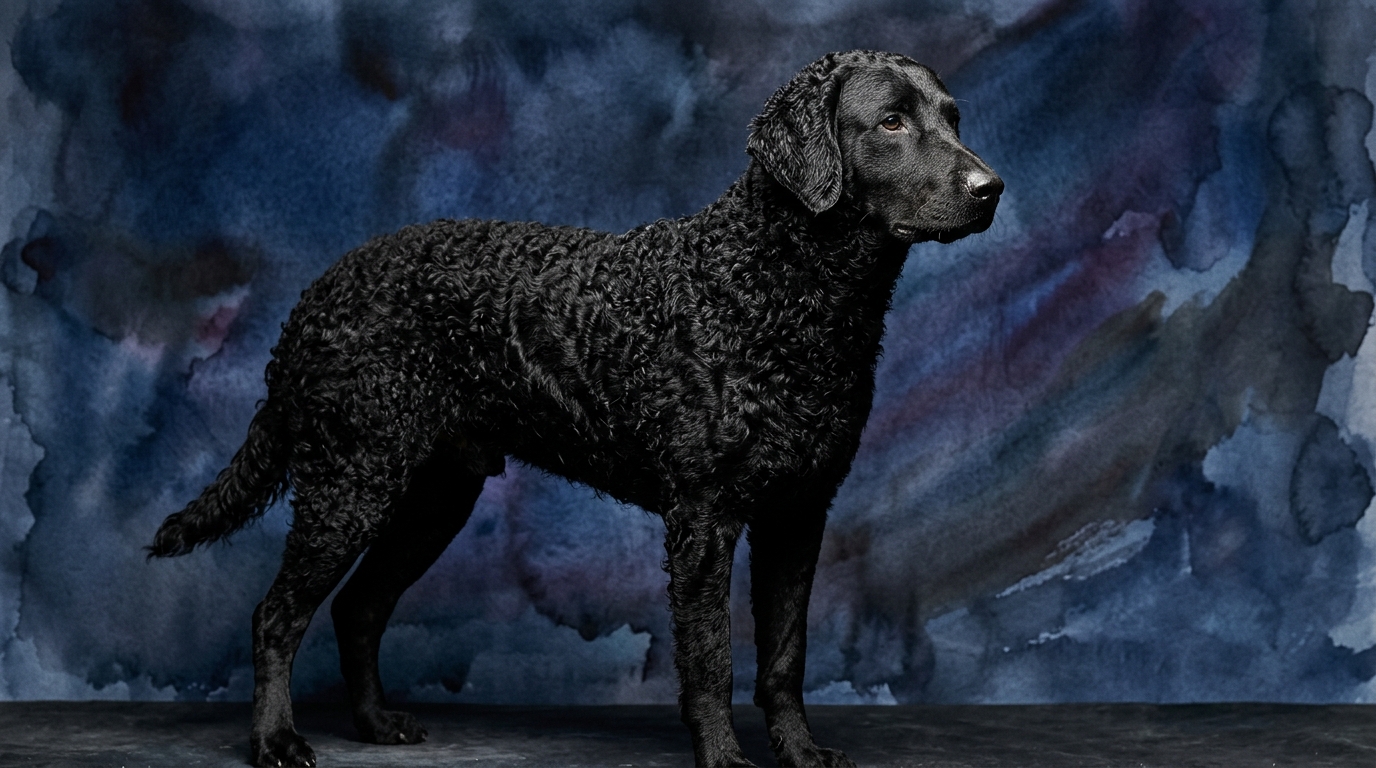
Side-by-Side IQ Profile: Spanish Water Dog vs. Curly-Coated Retriever
The Spanish Water Dog, a versatile herding breed, presents a balanced cognitive profile across the board. Their problem-solving ability, rated at 3 out of 5, reflects a capacity for independent thought and adaptive decision-making crucial for managing livestock in varied terrains. A training speed of 3/5 suggests they are capable learners, absorbing new commands and routines at a steady pace, while their social intelligence, also 3/5, indicates a good understanding of human cues and pack dynamics. Their instinctive drive, scoring 3/5, is channeled towards their herding heritage, showing a moderate yet persistent urge to gather and control, and their memory, a solid 3/5, supports retention of learned behaviors and environmental layouts.
In contrast, the Curly-Coated Retriever, a dedicated sporting dog, shares many of these foundational cognitive strengths but distinguishes itself with one key difference. Like the Spanish Water Dog, they exhibit a 3/5 for problem-solving, indicating a practical capacity to navigate challenges in their environment, and a 3/5 for training speed, suggesting a similar rate of command acquisition. Their social intelligence and instinctive drive also align at 3/5, demonstrating an aptitude for cooperative work with handlers and a well-defined retrieving impulse. However, the Curly-Coated Retriever truly shines in the memory department, boasting an impressive 4 out of 5, which is a significant asset for a breed whose historical role demands precise recall of multiple locations and complex sequences during retrieves.
Where the Spanish Water Dog Wins Cognitively
While the Spanish Water Dog's individual IQ scores might appear uniformly mid-range, their cognitive strengths lie in the nuanced application of these abilities, particularly within dynamic, unpredictable environments. Their 3/5 problem-solving and social intelligence are finely tuned for the fluid challenges of herding, where a dog must constantly assess livestock movement, anticipate changes, and make quick, independent decisions without explicit handler commands. This involves a specialized type of spatial reasoning and an intuitive understanding of animal behavior, allowing them to adapt their strategy on the fly.
The Spanish Water Dog's instinctive drive, rated 3/5, is not just about chasing, but about intelligent control and management. This requires a sophisticated blend of restraint and action, where their cognitive faculties enable them to maintain order in a chaotic situation. Their balanced memory and training speed, combined with this adaptive problem-solving, make them adept at learning complex, multi-step tasks that require flexibility rather than strict, repetitive execution. They excel in situations demanding a thinking partner who can interpret subtle cues from both their environment and their handler, adjusting their approach as needed.
Where the Curly-Coated Retriever Wins Cognitively
The Curly-Coated Retriever's cognitive edge is clearly demonstrated by its superior memory, scoring 4 out of 5. For a sporting dog, exceptional memory is not merely a convenience; it is a fundamental requirement for success in the field. This heightened ability allows them to accurately mark and recall the location of multiple fallen game birds, remember complex scent trails, and retain intricate handler directions over extended periods and distances. This precision in recall significantly enhances their efficiency and effectiveness as a retriever, minimizing lost game and maximizing their utility in hunting scenarios.
Furthermore, the Curly-Coated Retriever holds a distinct advantage through its Coren ranking of #41. While the Spanish Water Dog is not Coren-ranked, the Curly-Coated Retriever's placement signifies a higher capacity for what is termed 'obedience and working intelligence.' This ranking suggests they typically understand new commands with fewer repetitions and obey familiar commands on the first try a significantly higher percentage of the time compared to many other breeds. This inherent trainability, combined with their strong memory and 3/5 instinctive drive for retrieving, makes them exceptionally well-suited for structured learning and task execution, particularly in disciplines like obedience, field trials, and other dog sports that demand consistent performance and rapid comprehension.
Which is Easier to Train and Why
When considering ease of training, the Curly-Coated Retriever generally presents a more straightforward path for formal obedience. Their Coren rank of #41 is a strong indicator of their aptitude for understanding and executing commands efficiently, meaning they often grasp new concepts quicker and respond more reliably to cues. Coupled with their superior memory (4/5), they retain learned behaviors with impressive consistency, reducing the need for constant reinforcement and allowing for more complex training progressions.
The Spanish Water Dog, while possessing a respectable 3/5 for training speed, might require a slightly different approach. Their herding background fosters a degree of independent decision-making, which, while valuable in their working context, can sometimes translate to a less immediate or automatic response in formal obedience settings. Owners might find themselves needing to be more patient and creative in channeling the Spanish Water Dog's problem-solving and social intelligence, ensuring training methods engage their adaptable nature rather than relying solely on rote repetition.
Which Suits Active Owners vs. Relaxed Owners
Neither the Spanish Water Dog nor the Curly-Coated Retriever are suitable for truly relaxed owners; both breeds possess robust cognitive engines and physical stamina that demand consistent engagement. The Spanish Water Dog, with its balanced intelligence profile and herding heritage, thrives with active owners who can provide ample physical exercise alongside mentally stimulating 'jobs.' These can range from dog sports like agility or rally to complex puzzle toys and even tasks around the home that tap into their problem-solving and adaptable nature. Their need for purpose means an under-stimulated SWD can invent their own, potentially destructive, entertainment.
Similarly, the Curly-Coated Retriever is a poor match for a sedentary lifestyle. Their 4/5 memory and 3/5 instinctive drive for retrieving mean they require significant outlets for their talents, making them ideal for active owners deeply involved in activities like fetch, swimming, scent work, or advanced obedience and field trials. Their cognitive strengths are best utilized when given consistent, structured tasks that challenge their recall and problem-solving. Owners who cannot commit to daily engagement and mental enrichment will likely find both breeds to be restless and potentially challenging companions.
The Verdict
Choose the Spanish Water Dog if you appreciate a canine partner with nuanced, adaptable problem-solving skills for dynamic situations, thriving on independent thought within a cooperative framework. They are an excellent fit for owners who enjoy engaging with a dog whose intelligence is expressed through flexible, context-aware decision-making in active environments.
Opt for the Curly-Coated Retriever if you seek a highly trainable companion with exceptional memory and a strong drive for structured tasks, excelling in activities requiring precision and recall. Their cognitive strengths make them ideal for dedicated dog sports enthusiasts or those who value a consistent, obedient partner in various adventures.
🧠 Find Your Pet's IQ Score
Our Pet IQ Lab assessment covers 25+ tests across 5 cognitive dimensions — personalized to your breed.
Take the Full IQ Test →Frequently Asked Questions
Is the Spanish Water Dog harder to train than the Curly-Coated Retriever?
Generally, for formal obedience, the Curly-Coated Retriever tends to be easier due to its higher Coren rank and superior memory, leading to faster command acquisition and more reliable recall. The Spanish Water Dog's independent herding instincts can mean training requires more patience and a focus on channeling their adaptable problem-solving abilities.
How does a dog's memory score impact daily life?
A higher memory score, like the Curly-Coated Retriever's 4/5, means the dog will generally remember commands, routines, and even specific locations or events with greater accuracy and for longer periods. This can lead to more consistent behavior, faster learning of complex sequences, and a stronger ability to adapt to established household rules without constant reinforcement.
What does 'instinctive drive' mean for these breeds?
Instinctive drive refers to the innate motivations guiding a dog's behavior, such as a herding dog's urge to gather or a retriever's desire to fetch. For the Spanish Water Dog, a 3/5 drive means they possess a moderate, adaptable herding instinct, while the Curly-Coated Retriever's 3/5 drive manifests as a strong, but manageable, desire to retrieve and work alongside a handler in the field.