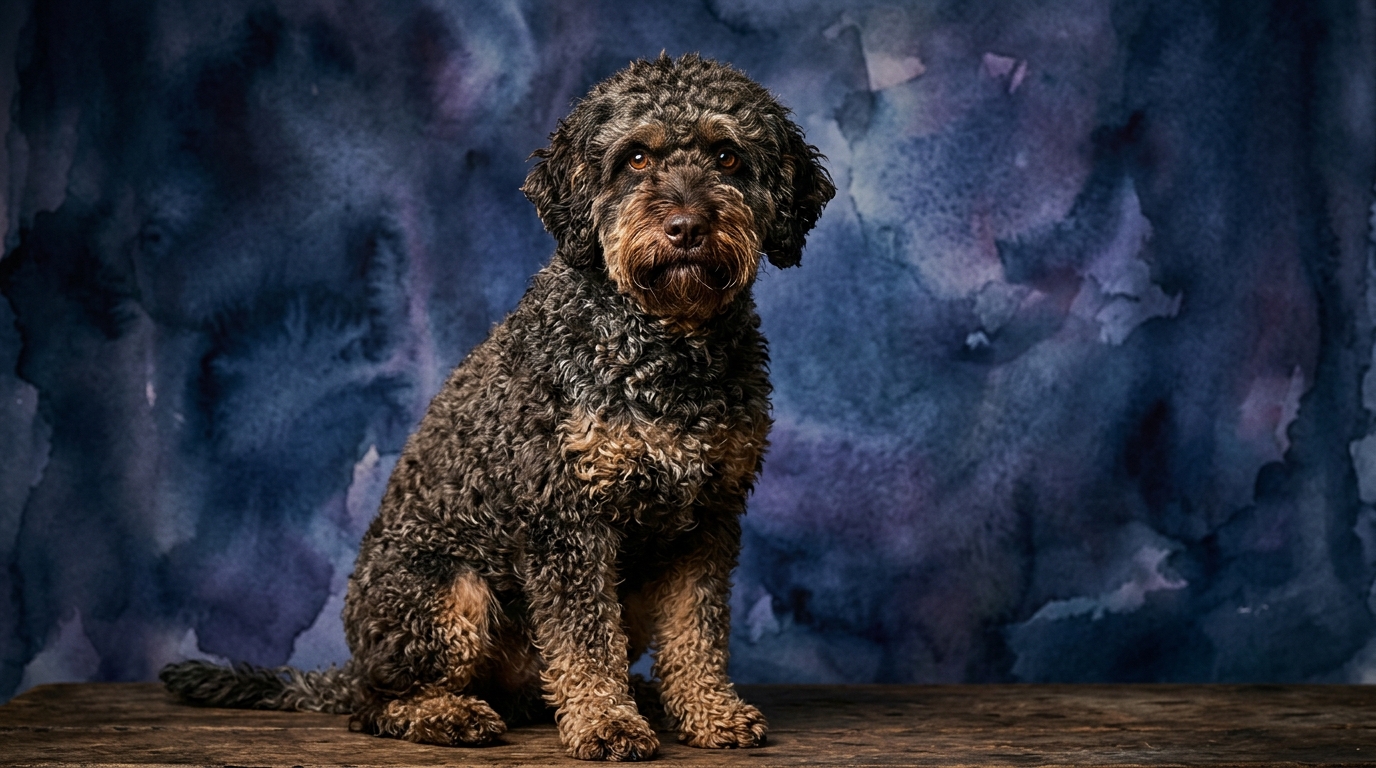
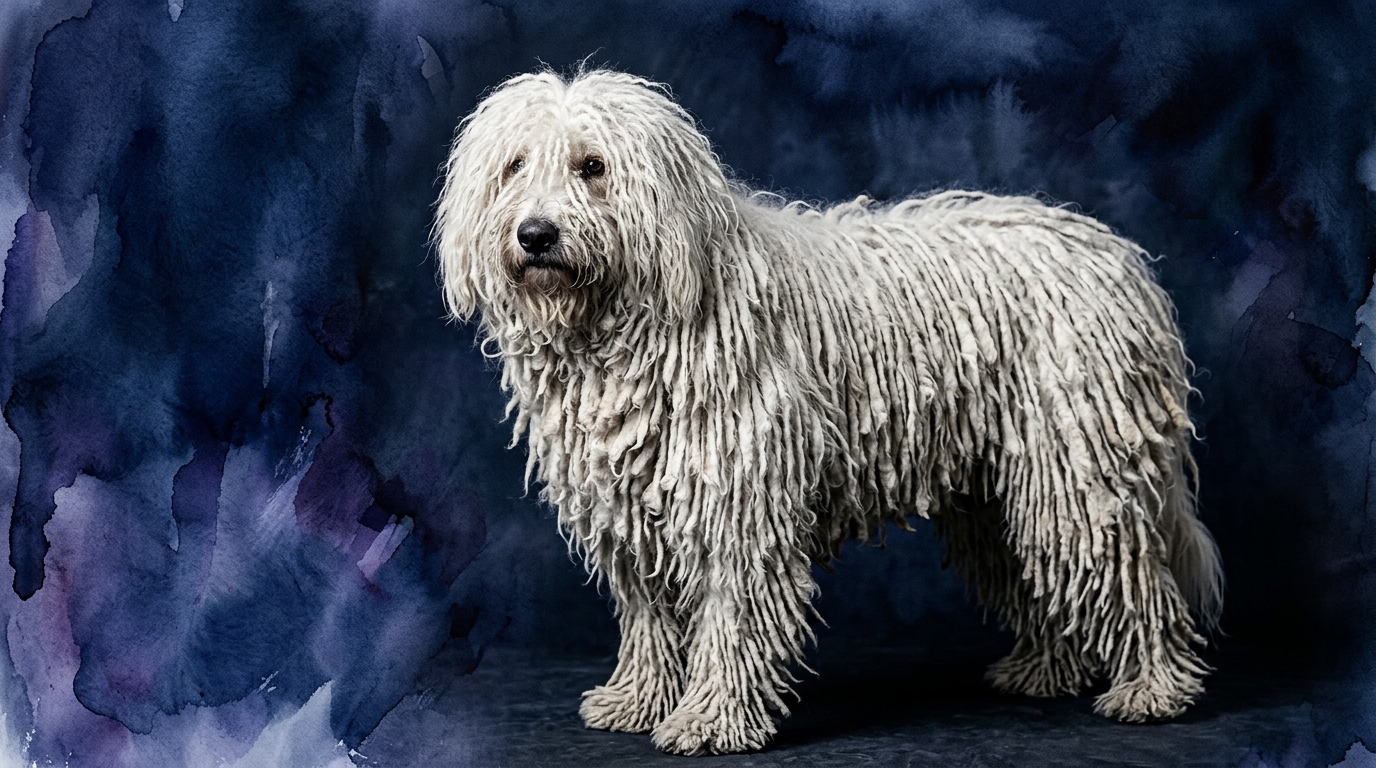
Side-by-Side IQ Profile: Herder vs. Guardian Cognition
The Cosmic Pet Pet IQ Lab assesses canine intelligence across five key dimensions, providing a nuanced view of how breeds process the world. While both the Spanish Water Dog and the Komondor share a 3/5 rating in each category, the *nature* of their intelligence, shaped by centuries of selective breeding for specific tasks, presents a compelling contrast.
**Problem Solving (3/5):** For the Spanish Water Dog, a versatile herding and water dog from Spain, this score reflects a practical, adaptable intelligence. They are adept at independently assessing and resolving dynamic situations, whether it’s redirecting a stubborn sheep, finding a lost animal in varied terrain, or figuring out how to open a gate. Their problem-solving is hands-on, agile, and often requires quick decision-making in ever-changing environments. In contrast, the Komondor’s 3/5 problem-solving is deeply intertwined with its role as a steadfast livestock guardian. Their intelligence is geared towards strategic vigilance: assessing potential threats, determining the safest course of action for their flock, and making independent decisions about when and how to intervene. This isn't about rapid physical maneuvering but rather a thoughtful, often patient, evaluation of their environment to maintain security.
**Training Speed (3/5):** The Spanish Water Dog's training speed reflects their cooperative nature and eagerness to engage. They typically grasp new commands and routines at a steady pace, driven by a desire to work alongside their handler. Their responsiveness to consistent, positive reinforcement allows them to integrate new skills efficiently, making them capable learners in various disciplines from obedience to dog sports. While also rated 3/5 for training speed, the Komondor’s learning approach is shaped by their inherent independence. They absorb information steadily, but their deep-rooted guardian instincts mean they often process commands through the lens of purpose and their own judgment. They learn best with clear, consistent methods and a handler who respects their thoughtful nature, understanding that their learning pace is often a deliberate, rather than slow, integration of new information.
**Social Intelligence (3/5):** For the Spanish Water Dog, social intelligence is finely tuned for cooperative interaction. They excel at reading subtle human cues, understanding intentions, and forming strong, responsive partnerships. This enables nuanced communication with their family and contributes to their adaptability in various social settings, making them sensitive companions who are attuned to the emotional landscape of their household. The Komondor’s social intelligence, while also 3/5, is distinctly focused on discerning members of their 'flock' from outsiders. They develop profound loyalty to their family, recognizing and remembering each individual. However, their interactions with strangers are often characterized by a reserved, watchful demeanor, reflecting their innate protective instinct to carefully evaluate new presences within their perceived territory.
**Instinctive Drive (3/5):** The Spanish Water Dog's 3/5 instinctive drive is a direct legacy of their herding ancestry, manifesting as a strong impulse to gather, direct, and manage. This drive fuels their need for a 'job' and can lead them to attempt to herd family members or other pets. It underscores their requirement for consistent mental and physical engagement, thriving when given tasks that allow them to utilize their natural working aptitudes. For the Komondor, their 3/5 instinctive drive is overwhelmingly expressed through their powerful protective urges. This inherent drive compels them to guard their family and territory with unwavering vigilance. They possess a deep-seated sense of responsibility, often patrolling and observing their surroundings with a quiet intensity, acting as a natural deterrent without needing constant human direction.
**Memory (3/5):** Spanish Water Dogs exhibit a reliable memory for routines, learned commands, and spatial layouts. This aids their ability to recall complex sequences in training, remember specific tasks, and navigate familiar environments with ease. Their memory retention supports their versatility and capacity to learn and apply a wide range of skills over time. The Komondor's memory is robust and highly functional, particularly concerning the identification of individuals within their protective sphere and the recognition of their territory. They remember established routines, past encounters, and the layout of their guarded area, which is crucial for their consistent protective behaviors and their ability to detect any anomalies in their environment.
Where the Spanish Water Dog Wins Cognitively
While both breeds share a 3/5 Problem Solving score, the Spanish Water Dog's cognitive advantage lies in its dynamic adaptability and agility in cooperative problem-solving. Their herding background cultivated a mind that rapidly processes changing environmental cues and adjusts strategies on the fly. They excel at creative solutions to novel challenges, particularly those involving movement, spatial reasoning, and cooperative effort with a human partner. This quick-thinking agility allows them to excel in activities requiring rapid decision-making and versatile application of learned skills, making them adept at navigating complex obstacle courses, intricate search tasks, or quickly understanding complex chains of commands. Their memory is finely tuned to sequences and handler cues, supporting their ability to learn and execute varied, multi-step tasks with precision.
Where the Komondor Wins Cognitively
The Komondor's cognitive strength, despite identical scores, shines in independent strategic assessment and unwavering, long-term vigilance. Their advantage in problem-solving is rooted in their solitary guardian role, where they must independently evaluate threats, determine appropriate responses, and maintain long-term protective strategies without constant human intervention. This manifests as a profound ability to discern subtle changes in their environment, recognize patterns of potential danger, and make sound judgments for the safety of their charges. Their social intelligence, while reserved, is exceptional at differentiating family and flock from potential intruders, forming a deep, discerning loyalty. Their memory is particularly acute for territory boundaries, past encounters, and the consistent recognition of individuals, enabling steadfast, reliable protective behavior over extended periods, making them truly autonomous guardians.
Which is Easier to Train and Why
Considering their 3/5 Training Speed, neither breed is inherently 'difficult' to train, but their *approach* to learning differs significantly. The Spanish Water Dog, with its cooperative Herding background and handler-focused social intelligence, generally presents as easier to train for obedience and performance tasks. They possess a strong desire to engage with their human partner and a readiness to respond to cues, viewing training as a collaborative effort. This means they are often more receptive to varied commands and eager to please, making the training process feel more fluid and responsive, especially when incorporating new tricks or sports. Their memory for sequences and commands is readily applied in structured learning scenarios.
In contrast, the Komondor's independent nature, a hallmark of its livestock guardian role, means they learn at the same pace but often require a handler to demonstrate the *value* or *purpose* of a command. They are not naturally inclined to blindly obey; their social intelligence prioritizes discernment and self-reliance, meaning training requires immense patience, consistency, and an understanding of their deep-seated protective drives. While they certainly *can* be trained to a high degree, their decision-making process is often more deliberative and rooted in their own assessment of the situation, making them less prone to 'mindless' repetition and more focused on practical application of what they learn.
Which Suits Active Owners vs. Relaxed Owners
The distinction between these two breeds becomes clearer when considering owner lifestyles. The Spanish Water Dog, with its 3/5 Instinctive Drive rooted in active herding, is unequivocally better suited for active owners. Their mental and physical needs demand regular, engaging activities that tap into their desire to work, move, and solve problems. Owners who enjoy hiking, running, dog sports like agility or dock diving, or have a 'job' for their dog will find the Spanish Water Dog thrives. Without sufficient outlets for their intelligent drive and problem-solving aptitude, they can become bored and potentially develop undesirable behaviors stemming from their cognitive energy. Their social intelligence makes them eager participants in family activities.
Conversely, while also possessing a 3/5 Instinctive Drive, the Komondor's drive is channeled into vigilant guardianship rather than constant physical exertion. While they need space to patrol and routine exercise, they are generally better suited for owners who appreciate a more relaxed, watchful companion rather than a high-octane adventure partner. Their 'activity' often involves surveying their territory and being present, making them more compatible with owners seeking a steadfast, protective presence who can provide a secure environment. Their independence means they are content with less direct, constant interaction, preferring to quietly observe and protect their family and domain, making them suitable for owners who value a calm, vigilant presence.
The Verdict
For owners seeking an agile, cooperative, and highly engaged partner for active pursuits and diverse training, the Spanish Water Dog is the superior choice, thriving on shared activity and intellectual engagement.
If your lifestyle calls for a steadfast, independent guardian with a reserved yet deeply loyal nature, capable of making autonomous decisions to protect its family and territory, then the Komondor will be a more fitting companion.
🧠 Find Your Pet's IQ Score
Our Pet IQ Lab assessment covers 25+ tests across 5 cognitive dimensions — personalized to your breed.
Take the Full IQ Test →Frequently Asked Questions
Are Spanish Water Dogs good family pets?
Yes, Spanish Water Dogs are loyal and form strong bonds with their families, but their energetic nature and need for consistent mental and physical stimulation mean they thrive in active households that can provide ample engagement and training.
Do Komondors get along with other pets?
Komondors can coexist peacefully with other pets, especially if raised with them from a young age, as their protective instincts often extend to all members of their perceived 'flock.' However, introductions to new animals should always be managed carefully and with supervision.
What kind of exercise does a Komondor need?
Komondors need moderate exercise, such as daily walks or having a large, securely fenced yard to patrol, which satisfies their instinctive drive for vigilance. While not as high-energy as some breeds, consistent physical activity helps maintain their health and mental well-being.