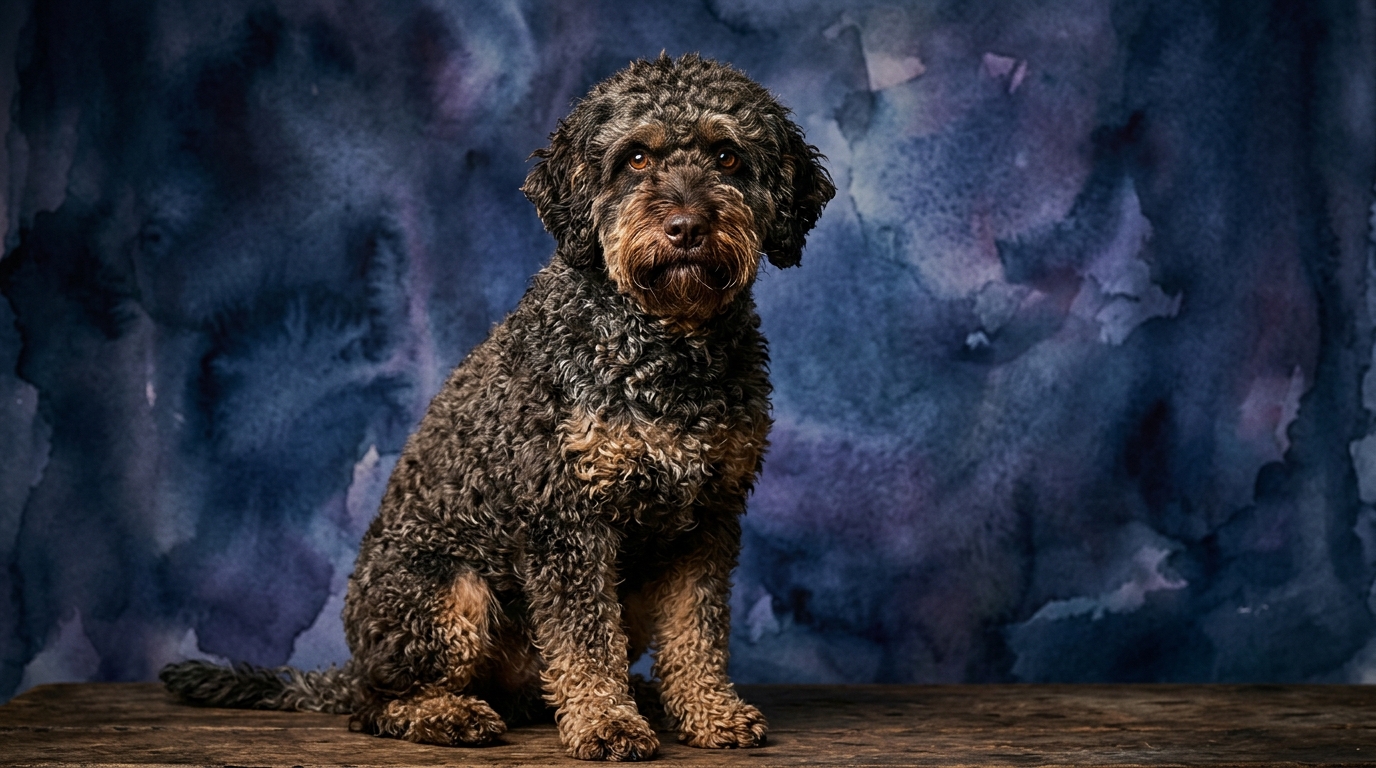

Side-by-Side IQ Profile: Spanish Water Dog vs. Lhasa Apso
Despite both breeds scoring 3/5 across all five dimensions of our Pet IQ Lab, their historical roles and inherent temperaments mean these scores manifest in distinctly different cognitive styles. Understanding these nuances is key to appreciating their individual intelligence.
The Spanish Water Dog (SWD), a Herding breed, exhibits a practical and active intelligence. Their Problem Solving at 3/5 means they often tackle challenges with physical engagement and a desire to complete tasks, figuring out how to achieve a goal through direct action or manipulation. Training Speed, also 3/5, indicates they learn new commands at a moderate pace, particularly when the training is engaging and aligns with their natural drives. Their Social Intelligence (3/5) is characterized by loyalty to their family and a discerning nature with strangers, allowing them to read familiar human cues effectively. The SWD’s Instinctive Drive (3/5) is strongly rooted in herding, retrieving, and guarding, providing significant internal motivation for engagement and activity. Finally, their Memory (3/5) is robust for routines, commands, and the specific locations of objects or family members, contributing to their strong bonds and task retention.
The Lhasa Apso (LA), a Non-Sporting breed, demonstrates a more independent and observational intelligence. Their Problem Solving at 3/5 often involves a deliberate, watchful approach, strategizing how to secure a favored spot or access a desired treat, favoring cunning over overt action. Their Training Speed, also 3/5, means they can master commands at a moderate pace, but their willingness to comply is often contingent on their perceived value of the task or the reward. Social Intelligence (3/5) in a Lhasa Apso is refined, particularly within their chosen inner circle, making them astute observers of human emotion and household dynamics, though they remain reserved with strangers. The LA’s Instinctive Drive (3/5) is primarily focused on their ancient role as watchdogs and companions, manifesting as keen alertness and a protective instinct towards their territory and family. Their Memory (3/5) is strong for routines, favored people, and past experiences, especially those that were highly rewarding or perceived as negative, contributing to their discerning nature.
Where the Spanish Water Dog Wins Cognitively
The Spanish Water Dog's cognitive strengths truly shine in dynamic, task-oriented environments. Their blend of 3/5 problem-solving and instinctive drive makes them particularly adept at engaging in activities that require sustained physical and mental effort. For instance, their ability to quickly adapt to changing conditions in herding or agility courses, coupled with their memory for complex sequences, gives them an edge in performance-based roles. They excel at understanding cause-and-effect in scenarios demanding physical manipulation or navigation, often exhibiting a creative athleticism in their solutions. Their social intelligence, while cautious with strangers, allows for a strong, communicative partnership with a dedicated handler in active pursuits, enabling them to anticipate and respond effectively to commands.
Where the Lhasa Apso Wins Cognitively
The Lhasa Apso's cognitive advantages are most apparent in their nuanced observational skills and independent strategic thinking. Their 3/5 problem-solving ability, combined with their strong memory, allows them to master household dynamics and routines with remarkable precision. They can often outwit their humans in subtle ways, such as finding the most comfortable spot undetected or subtly manipulating situations to their benefit. Their social intelligence, though selective, makes them exceptionally perceptive companions, capable of sensing shifts in mood and responding with comforting presence or playful antics. This breed's quiet determination and capacity for independent thought often lead to clever, less overt solutions to challenges, favoring mental cunning over physical exertion, especially in their role as a vigilant household guardian.
Training Dynamics: Spanish Water Dog vs. Lhasa Apso
Both breeds are rated 3/5 for training speed, but their underlying motivations and approaches to learning diverge significantly. The Spanish Water Dog, with its Herding group background and inherent drive to work alongside humans, often displays a greater eagerness to engage in structured training. They tend to view commands as a collaborative task, and their energetic nature means they thrive on having a purpose. Consistency and positive reinforcement will see them acquire skills at a steady pace, driven by their desire to please and participate in activities, making them responsive partners in learning new tasks and behaviors.
The Lhasa Apso, conversely, approaches training with a more independent mindset. While capable of learning just as quickly, their compliance is often more selective. Their ancient role as a sentinel means they were bred to think for themselves, not necessarily to follow every command without question. Training a Lhasa requires exceptional patience, creativity, and finding what truly motivates them – whether it's a high-value treat, a favored toy, or simply the comfort of being near their chosen human. They are less driven by a need to please and more by their own perceived benefit, making them 'thinkers' rather than 'doers' in the training arena. Their training journey can be incredibly rewarding, but it demands a handler who understands and respects their discerning nature and independent streak.
Lifestyle Match: Active Owners vs. Relaxed Owners
The choice between these two breeds largely hinges on an owner's lifestyle and expectations for canine companionship. The Spanish Water Dog, with its 3/5 instinctive drive and inclination for physical problem-solving, is a natural fit for active owners. They flourish in homes that offer regular, vigorous exercise, mental stimulation through training, and opportunities to engage their herding or retrieving instincts. Activities like hiking, swimming, agility, or canine sports are ideal for channeling their energy and satisfying their cognitive needs. An owner who enjoys an outdoor, engaged lifestyle will find a highly compatible partner in the SWD, thriving on shared adventures and purposeful activities.
The Lhasa Apso, while possessing a 3/5 instinctive drive for alertness and companionship, is better suited for more relaxed owners. Their exercise needs are moderate, consisting of daily walks and indoor play, but their mental stimulation comes more from observation, interaction within the home, and mastering their domestic environment. They thrive on close companionship and a predictable routine, enjoying the role of a watchful and loyal indoor companion. An owner who appreciates a discerning, independent, and affectionate lap dog who is content with a less physically demanding lifestyle will find the Lhasa Apso to be an ideal match, offering a calm yet perceptive presence in the home.
The Verdict
Opt for the Spanish Water Dog if you seek an engaged, active canine partner for outdoor adventures, dog sports, or a working role, appreciating their energetic problem-solving and collaborative spirit.
Select the Lhasa Apso if you desire a discerning, loyal, and observant companion who thrives in a relaxed home environment and values close bonds over constant activity.
🧠 Find Your Pet's IQ Score
Our Pet IQ Lab assessment covers 25+ tests across 5 cognitive dimensions — personalized to your breed.
Take the Full IQ Test →Frequently Asked Questions
Do both breeds have similar memory capabilities?
Yes, both the Spanish Water Dog and the Lhasa Apso score 3/5 in memory, indicating they possess a good capacity to recall routines, commands, and past experiences. This allows both breeds to form strong associations and learn from their environment over time.
How does their problem-solving differ despite the same score?
While both score 3/5 in problem-solving, the Spanish Water Dog tends towards active, physical solutions, often leveraging its agility and drive for tasks. The Lhasa Apso typically employs a more observant, strategic, and often independent approach, preferring mental cunning and careful assessment to achieve its goals.
Is one breed more social than the other?
Both breeds score 3/5 in social intelligence, but their expression differs; the Spanish Water Dog is loyal to its family and can be discerning with strangers, while the Lhasa Apso is highly perceptive within its chosen inner circle and reserved with outsiders, both exhibiting selective social engagement rather than indiscriminate friendliness.