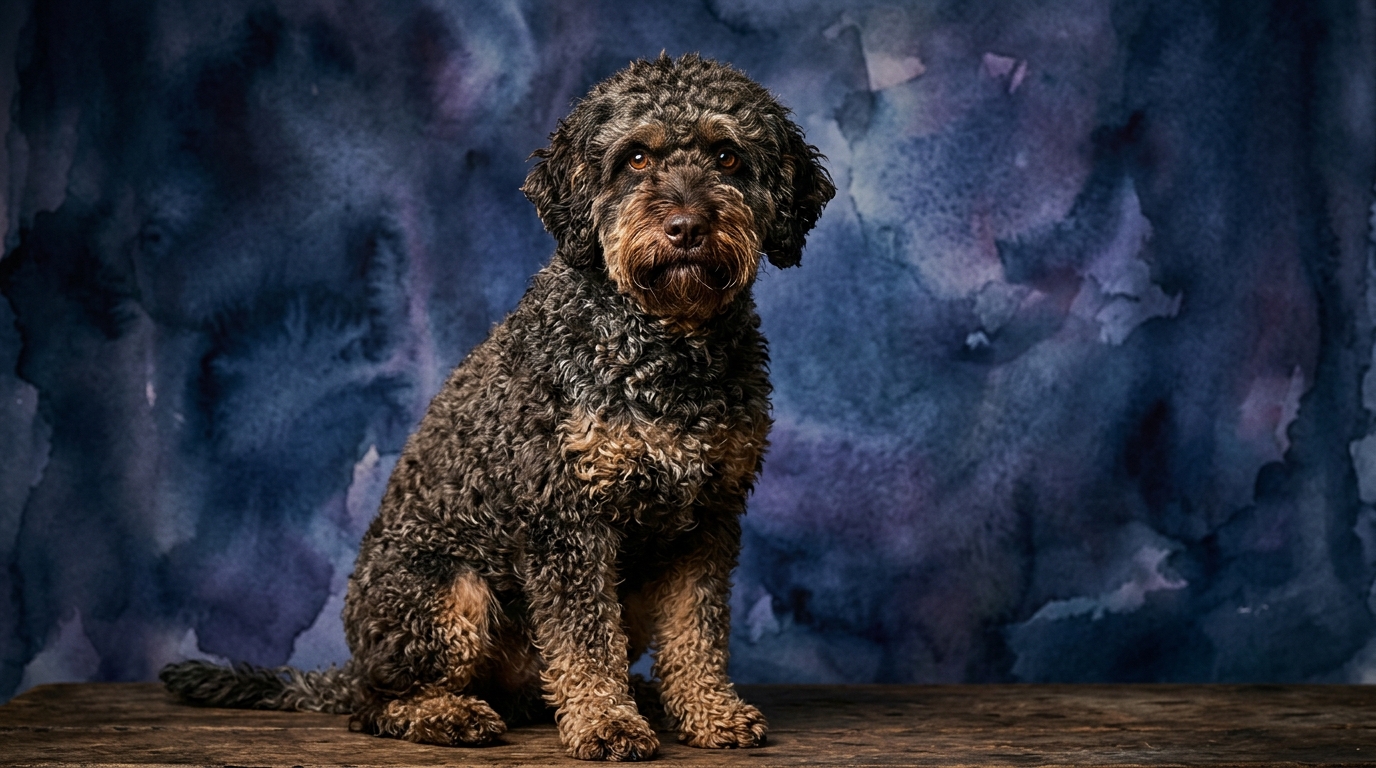
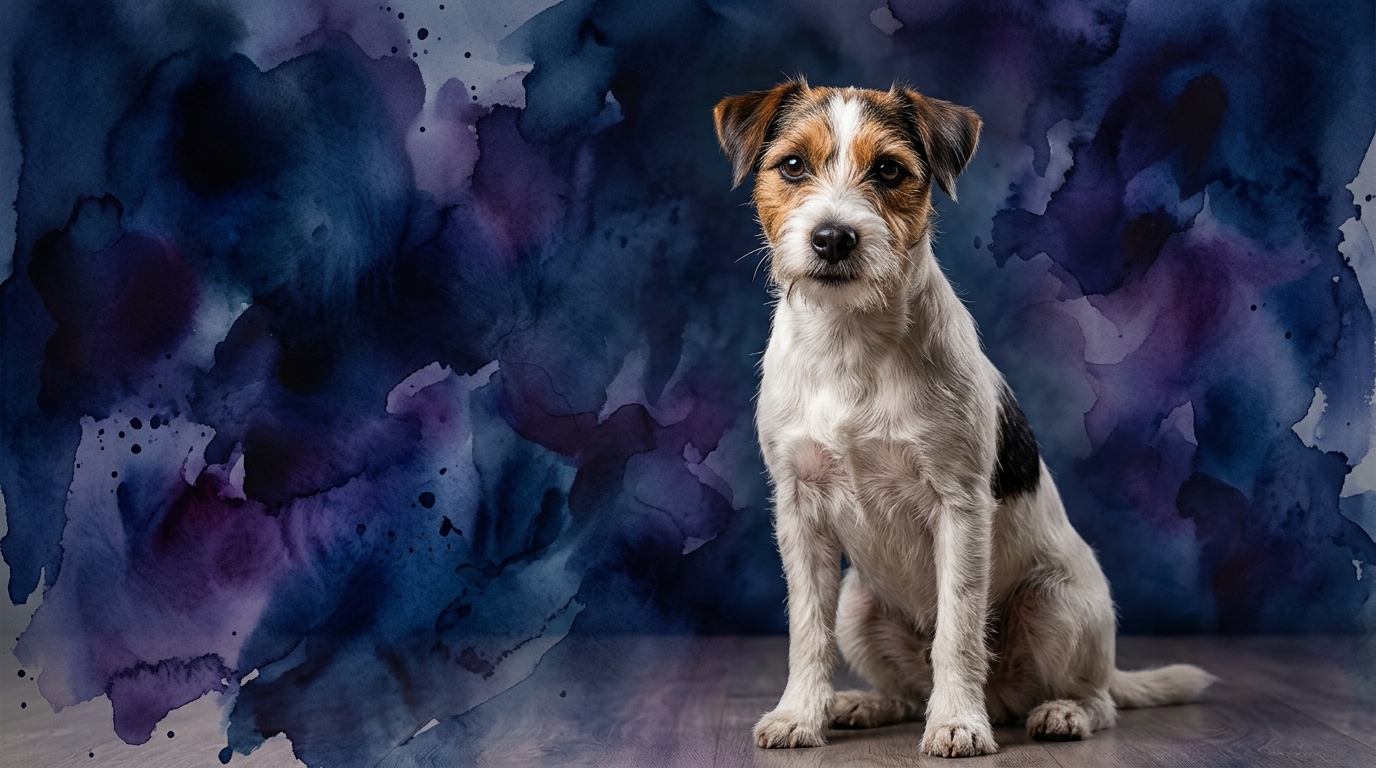
Side-by-Side IQ Profile: Herding Instinct vs. Terrier Tenacity
Both the Spanish Water Dog (SWD) and the Parson Russell Terrier (PRT) achieve a solid 3/5 across all five intelligence dimensions, indicating a moderate yet capable cognitive ability. For Problem Solving (3/5), both breeds demonstrate an adequate capacity to navigate novel situations, though the SWD might apply this to intricate tasks like manipulating gates or guiding livestock, while the PRT's problem-solving often manifests in figuring out how to access small spaces or outwit quarry. Training Speed (3/5) suggests a moderate pace of learning for both; they aren't instant learners but will reliably grasp commands with consistent, clear instruction. The SWD, with its cooperative herding background, often aims to please, potentially making training feel more like a collaborative effort, whereas the PRT's independent terrier spirit means it learns quickly but may choose when and if to comply based on perceived reward or interest.
Social Intelligence (3/5) for both breeds indicates a decent ability to interpret human and canine social cues. The SWD's social awareness often centers on its bond with its primary handler, understanding subtle shifts in mood or intention to better perform its duties. The PRT, while also socially aware, might use its understanding of social dynamics to assert itself or engage in boisterous play. Instinctive Drive (3/5) is where their paths diverge most significantly, despite the identical score. For the SWD, this drive is rooted in herding, retrieving, and guarding, exhibiting a natural inclination to gather, organize, and protect. For the PRT, the 3/5 drive is intensely focused on hunting, chasing, and digging, a relentless pursuit of small game that defines its very essence. Finally, Memory (3/5) means both breeds possess a solid recall of learned behaviors, routines, and experiences. An SWD will remember complex sequences of commands for a task, while a PRT will recall the exact location of a squirrel's nest or a particularly interesting scent from weeks prior, showcasing memory applied to their respective primary instincts.
Where the Spanish Water Dog Wins Cognitively
The Spanish Water Dog’s cognitive strengths are deeply intertwined with its herding heritage, allowing it to excel in areas requiring sustained focus, adaptability within a dynamic environment, and a strong partnership with a human. An SWD often demonstrates superior cognitive flexibility when managing multiple, moving elements, such as a flock of sheep or a group of children, requiring a nuanced understanding of spatial relationships and predictive behavior. Their problem-solving in these contexts isn't about brute force but about strategic positioning and subtle influence, a cognitive skill honed over centuries.
Furthermore, their breeding for close collaboration with shepherds means SWDs often exhibit a refined ability to interpret subtle human cues—gestures, tone of voice, even shifts in body language. This 'handler-centric' intelligence allows them to anticipate commands and adapt their actions in real-time, making them particularly adept at complex, multi-step tasks that require ongoing communication. This also extends to their recall and memory for elaborate routines, where they can retain and execute long sequences of commands with impressive consistency, a testament to their capacity for structured, cooperative learning.
Where the Parson Russell Terrier Wins Cognitively
The Parson Russell Terrier’s cognitive prowess shines in scenarios demanding independent thought, unwavering tenacity, and rapid, instinctive decision-making. Unlike the collaborative intelligence of the herding dog, the PRT's intellect is geared towards autonomous action, bred to pursue quarry underground without direct human guidance. This fosters a superior ability to problem-solve in confined, unpredictable spaces, often requiring creative solutions to overcome obstacles or navigate complex tunnel systems. Their cognitive 'win' lies in this self-reliance and ingenious persistence.
PRTs also demonstrate exceptional cognitive focus when engaged in a task that aligns with their prey drive. Once they lock onto a scent or a perceived 'quarry,' their ability to filter out distractions and maintain intense concentration is remarkable. This isn't merely stubbornness; it's a cognitive mechanism that allows them to single-mindedly pursue a goal, often against formidable odds. Their memory, while rated similarly, is often applied to remembering successful hunting strategies, the location of prime digging spots, or past interactions with small animals, demonstrating a practical, results-oriented retention of information crucial for their original purpose.
Which Is Easier to Train and Why
Despite both breeds having a Training Speed score of 3/5, the Spanish Water Dog generally presents as 'easier' to train for a wider range of activities due to its inherent desire to work cooperatively with its handler. Their herding background instills a natural inclination to follow direction and engage in structured tasks, often viewing training as a shared activity. This doesn't mean they are passive learners; SWDs are intelligent and require engaging methods, but their fundamental motivation is often to please and achieve a common goal with their human partner, leading to a more fluid and responsive training experience. They respond well to positive reinforcement and appreciate a clear, consistent routine.
The Parson Russell Terrier, while equally capable of learning quickly, presents a different training dynamic. Their strong independent drive and formidable prey instinct mean that while they can grasp commands rapidly, their motivation often hinges on personal interest or perceived reward. Training a PRT requires immense patience, consistency, and creativity to channel their boundless energy and tenacious focus. They are less inclined to simply 'obey' for the sake of it and more likely to question the utility of a command if it doesn't align with their instincts or offer immediate gratification. Their training journey often involves more management of their instinctual behaviors, such as impulse control around small animals or preventing digging, making it a more demanding endeavor for the owner.
Which Suits Active Owners vs. Relaxed Owners
Neither the Spanish Water Dog nor the Parson Russell Terrier are suited for truly 'relaxed' owners in the sense of minimal daily engagement. Both are energetic, working breeds requiring significant physical and mental stimulation to thrive. However, the *type* of activity they prefer differs, guiding which active owner type they suit. The Spanish Water Dog is an excellent match for active owners who enjoy structured activities, water sports, hiking, or dog sports like agility, dock diving, or herding trials. They thrive on having a 'job' and appreciate purposeful outdoor excursions that engage both their bodies and their minds. Owners who can provide consistent training, varied environments, and a strong sense of partnership will find the SWD a rewarding companion.
The Parson Russell Terrier, while equally active, suits owners who embrace a more spontaneous, high-energy lifestyle with an appreciation for a dog's independent spirit. They are ideal for owners who enjoy long, vigorous walks, chasing games, earthdog trials, or exploring new terrains where their keen senses and digging instincts can be safely indulged. PRTs need owners who are prepared for their tenacious pursuit of fun, their sometimes mischievous antics, and their need for consistent boundaries. They are not dogs to be left to their own devices in a small yard; their intelligence and drive will lead them to find their own 'entertainment,' which may not always align with an owner's preferences, making them better suited to owners who can actively manage and direct that robust energy.
The Verdict
Choose the Spanish Water Dog if you seek a highly cooperative, adaptable partner for structured activities and a strong, communicative bond, valuing their nuanced herding intelligence.
Opt for the Parson Russell Terrier if you appreciate a fiercely independent, tenacious companion for high-energy pursuits, valuing their clever, self-reliant problem-solving skills.
🧠 Find Your Pet's IQ Score
Our Pet IQ Lab assessment covers 25+ tests across 5 cognitive dimensions — personalized to your breed.
Take the Full IQ Test →Frequently Asked Questions
Do Spanish Water Dogs or Parson Russell Terriers shed much?
The Spanish Water Dog has a distinctive curly, woolly coat that is considered low-shedding but requires specific grooming to prevent matting and maintain its corded appearance. The Parson Russell Terrier has a dense, coarse coat that sheds moderately, especially if it's a rough or broken-coated variety, and benefits from regular brushing or hand-stripping.
Are these breeds good with children and other pets?
Both breeds can be good with children and other pets with proper socialization and training, though their approaches differ. Spanish Water Dogs are often protective and bond closely with their family, while Parson Russell Terriers can be playful and boisterous, though their strong prey drive requires careful management around smaller, non-canine pets.
What are the key differences in their exercise needs?
While both require substantial exercise, the Spanish Water Dog benefits from varied activities like swimming, hiking, and structured training, needing both physical and mental engagement. The Parson Russell Terrier thrives on vigorous play, chasing, and opportunities to dig and explore, needing outlets for its intense prey drive and boundless energy.