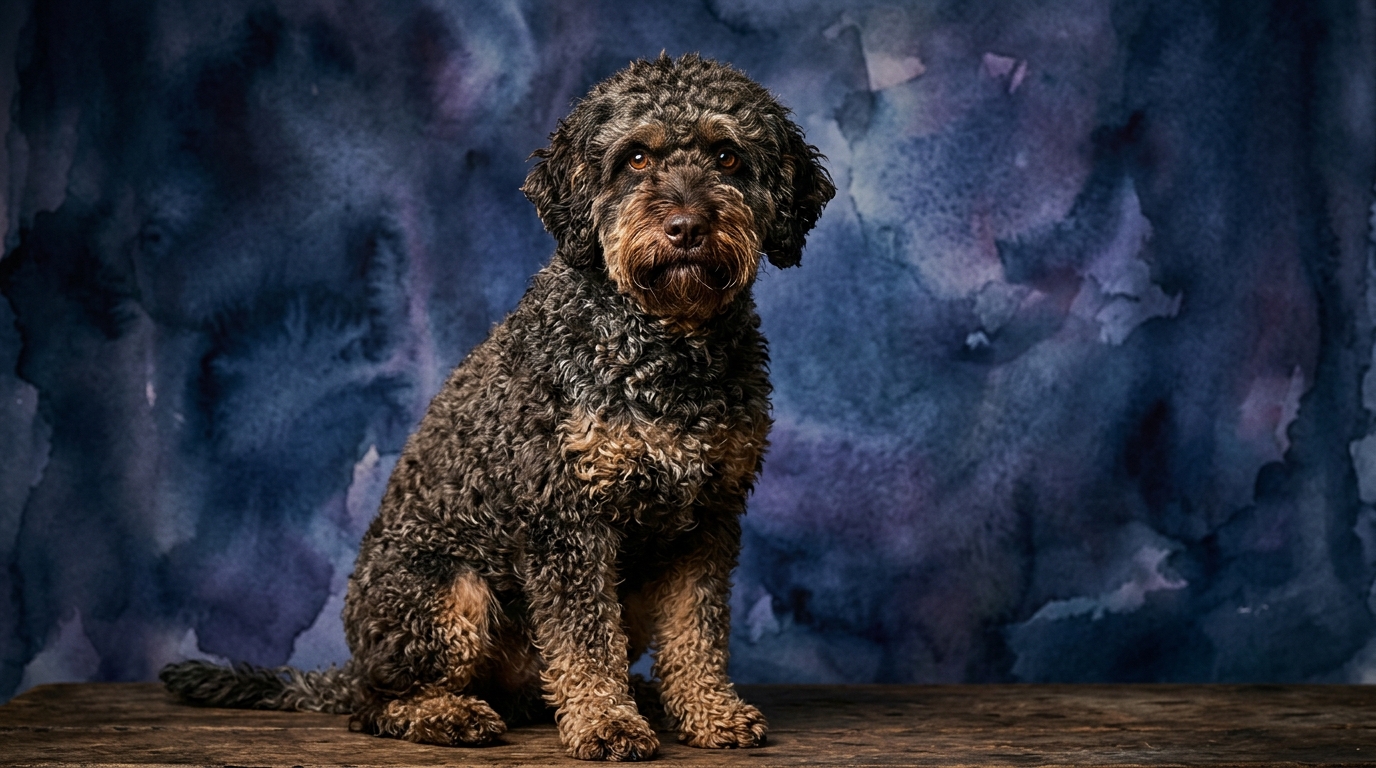
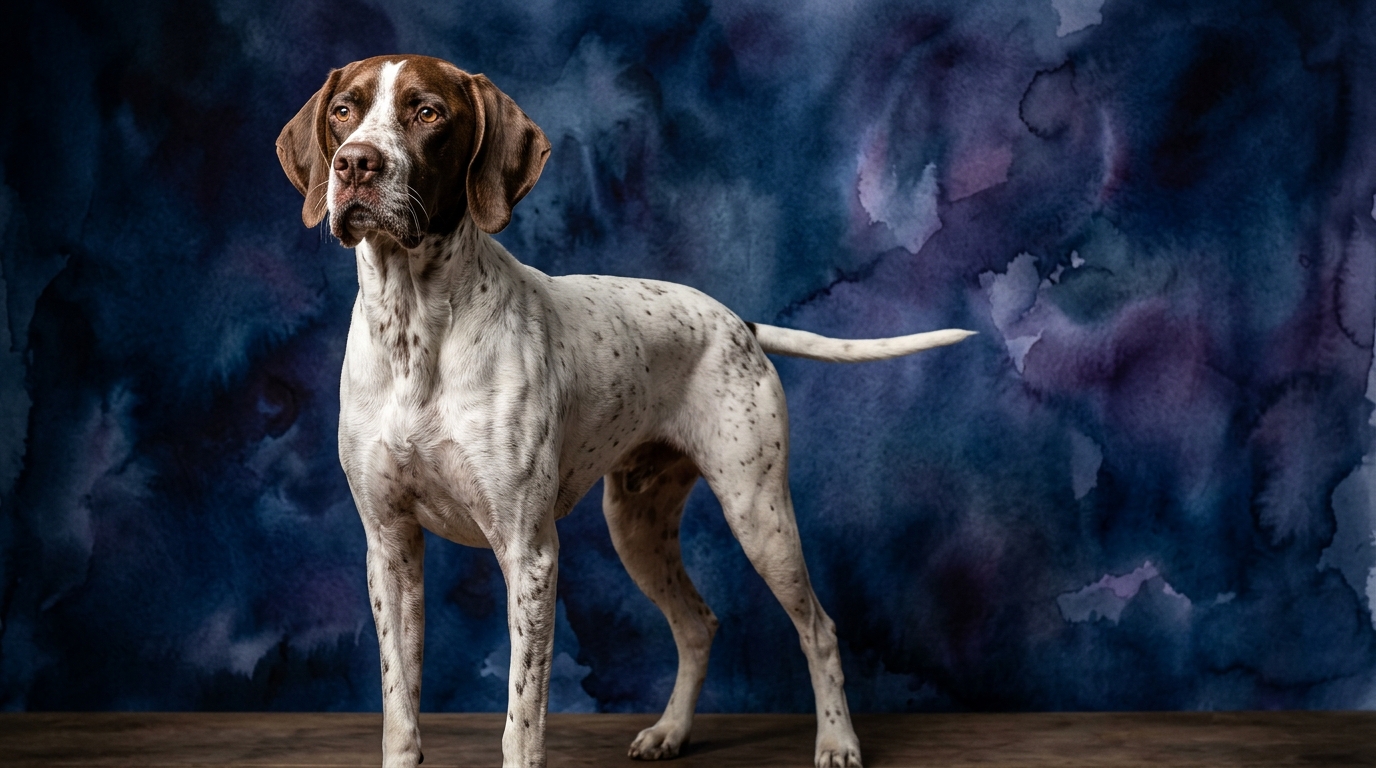
Side-by-Side IQ Profile: Spanish Water Dog vs. Pointer
The Cosmic Pet Pet IQ Lab assesses five crucial cognitive dimensions, rating each on a scale of 1 to 5. Both the Spanish Water Dog (SWD) and the Pointer score a 3/5 across the board, indicating a robust, capable cognitive foundation, yet their application of these abilities differs due to their breed-specific roles.
For the **Spanish Water Dog (Herding)**:
Problem Solving (3/5): The SWD demonstrates practical problem-solving, adept at assessing dynamic situations like flock movements or environmental obstacles on a farm. Their cognitive strength lies in devising real-time strategies to manage livestock or navigate varied terrain, often requiring independent judgment to achieve a goal.
Training Speed (3/5): These dogs learn efficiently when tasks are purposeful and engaging. Their herding background means they quickly grasp complex sequences and commands, especially if they perceive a meaningful job or outcome, though rote repetition without context might be less compelling.
Social Intelligence (3/5): SWDs form deep, discerning bonds with their primary family, understanding subtle human cues and pack dynamics. Their social intelligence also encompasses a keen awareness of strangers, often exhibiting a reserved or watchful demeanor as part of their protective herding nature.
Instinctive Drive (3/5): A robust herding drive is central to the SWD, manifesting as a strong desire to gather, organize, and control movement. This inherent motivation fuels their activity and provides a natural framework for their learning and engagement.
Memory (3/5): SWDs possess a reliable memory for routines, learned commands, and spatial layouts. This cognitive dimension supports their ability to consistently perform complex tasks and adapt effectively within familiar environments and established social structures.
For the **Pointer (Sporting)**:
Problem Solving (3/5): The Pointer's problem-solving acumen is highly specialized, focused on scent discrimination and strategic navigation in the field to locate game. They excel at deciphering complex scent trails and adapting their search patterns in varied environments, demonstrating persistent, goal-oriented cognitive effort.
Training Speed (3/5): Pointers respond readily to consistent training, particularly when it leverages their natural prey drive and desire to work in partnership. Their eagerness to please, combined with their focus on specific tasks like pointing or retrieving, allows for efficient learning of relevant commands and sequences.
Social Intelligence (3/5): These dogs are typically outgoing and companionable, forming strong, cooperative bonds with their human partners. Their social intelligence is geared towards understanding handler cues and working collaboratively in the field, thriving on interaction and shared purpose.
Instinctive Drive (3/5): The Pointer's instinctive drive is a powerful, unwavering prey drive, characterized by an intense desire to hunt, locate, and point game. This deeply ingrained motivation is a potent force, dictating much of their behavior and requiring appropriate outlets.
Memory (3/5): Pointers exhibit a strong memory for specific scent profiles, field locations, and intricate hunting patterns. This specialized recall is crucial for sustained performance in their demanding field work, allowing them to remember where game was found or specific terrain features.
Where the Spanish Water Dog Wins Cognitively
While both breeds share a 3/5 score, the Spanish Water Dog's cognitive strengths often lean towards versatile environmental problem-solving and nuanced social assessment. Their herding heritage demands independent thought and adaptability in dynamic, unstructured settings. An SWD might independently devise a new path to gather stray livestock or figure out how to circumvent an unexpected obstacle, relying less on direct human instruction and more on innate strategic thinking.
Their social intelligence, while rated similarly, expresses itself with a discerning quality. SWDs are adept at evaluating new people and situations, often initially reserved as they process social cues and potential implications for their 'flock' (family). This thoughtful assessment, rooted in their protective instincts, represents a specific cognitive advantage in discerning social hierarchies and potential threats, a different facet than the Pointer's more generalized affability.
Where the Pointer Wins Cognitively
The Pointer's cognitive edge shines brightest in areas directly tied to their specialized sporting role. Their Instinctive Drive, while a 3/5 for both, is singularly focused on scent work and game location. This translates into unparalleled concentration and persistence in tracking, making them masters of a specific, complex cognitive task. Their ability to maintain focus on a scent trail for extended periods, ignoring other distractions, is a testament to this specialized drive.
Furthermore, the Pointer's Memory for scent patterns and field locations can be exceptionally precise. While the SWD remembers routines, the Pointer's memory is a finely tuned instrument for recalling the exact spot where a scent was strongest or where game typically hides. This highly specialized spatial and olfactory memory allows them to build detailed mental maps crucial for effective hunting. Their Training Speed, while equal on paper, often benefits from their clear, singular drive, making them particularly responsive to tasks that align with their hunting purpose.
Which is Easier to Train and Why
Assessing 'easier to train' is nuanced, as both breeds have a 3/5 training speed, meaning they are capable learners but require thoughtful engagement. The Pointer often *appears* easier to train for specific obedience and task-oriented work, particularly if it involves scent games or retrieving. Their inherent desire to work cooperatively with a human partner in a shared 'hunt' goal fosters a compliance that responds well to positive reinforcement and clear, consistent commands. Their sensitivity means harsh methods are counterproductive, but their eagerness to please for a shared purpose can make them highly tractable.
The Spanish Water Dog, conversely, brings an independent streak to training, a legacy of their need to make decisions about livestock without constant human oversight. While they learn quickly, they require a trainer who understands this cognitive independence and provides mental stimulation alongside physical activity. Without clear purpose and engagement, an SWD might 'think for themselves' in ways an owner doesn't appreciate, such as herding family members or becoming self-employed with less desirable behaviors. Consistency and building a strong partnership based on trust are paramount to channel their cognitive abilities effectively.
Which Suits Active Owners vs. Relaxed Owners
Neither the Spanish Water Dog nor the Pointer is suited for truly relaxed owners; both breeds demand a significant commitment to physical exercise and mental engagement due to their 3/5 instinctive drive. An owner seeking a low-maintenance companion will likely be overwhelmed by either breed's needs.
Active owners will find a highly rewarding partner in both. The Spanish Water Dog thrives on varied activities that challenge both body and mind, such as agility, dock diving, herding trials, or long, exploratory hikes. Their intelligence requires complex tasks, not just repetitive exercise. The Pointer demands vast amounts of physical activity, excelling in running, extensive field work, or long, brisk walks. Their stamina is legendary, and mental stimulation often revolves around scent games and structured training that taps into their prey drive. Both will become restless and potentially destructive without sufficient outlets.
The Verdict: When to Choose Each
The Verdict
Choose the Spanish Water Dog if you seek a versatile, discerning companion who thrives on varied activities, from water sports to agility and herding, and appreciates a dog with an independent streak and a profound bond to their immediate family. They excel with structured jobs and mental puzzles that tap into their problem-solving nature.
Choose the Pointer if you are passionate about extensive outdoor activities, especially running, hiking, or hunting, and desire a highly focused, cooperative partner for endurance activities and scent-driven work. They flourish when given a clear purpose that taps into their profound and specialized prey drive.
🧠 Find Your Pet's IQ Score
Our Pet IQ Lab assessment covers 25+ tests across 5 cognitive dimensions — personalized to your breed.
Take the Full IQ Test →Frequently Asked Questions
Do Spanish Water Dogs or Pointers make better family pets?
Both breeds can be excellent family pets with proper socialization and training, adapting well to a family environment. Spanish Water Dogs often bond closely with their immediate family but can be reserved with strangers, while Pointers are generally more outgoing and affectionate with a wider circle, thriving on companionship. Their suitability largely depends on the family's lifestyle and ability to meet their substantial exercise and mental stimulation needs.
Are these breeds prone to common behavioral issues?
Without adequate exercise and mental engagement, both breeds can develop undesirable behaviors. Spanish Water Dogs might exhibit excessive herding of people or nipping, or become overly protective if their natural drives are not channeled. Pointers can become destructive, hyperactive, or bark excessively if their significant energy and prey drive are not appropriately managed and given outlets.
How do their grooming needs compare?
The Spanish Water Dog has a distinctive curly, woolly coat that requires specific care to prevent matting, often involving professional grooming or regular clipping, and should never be brushed. The Pointer has a short, dense coat that is relatively low-maintenance, requiring only occasional brushing to remove loose hair and maintain skin health.