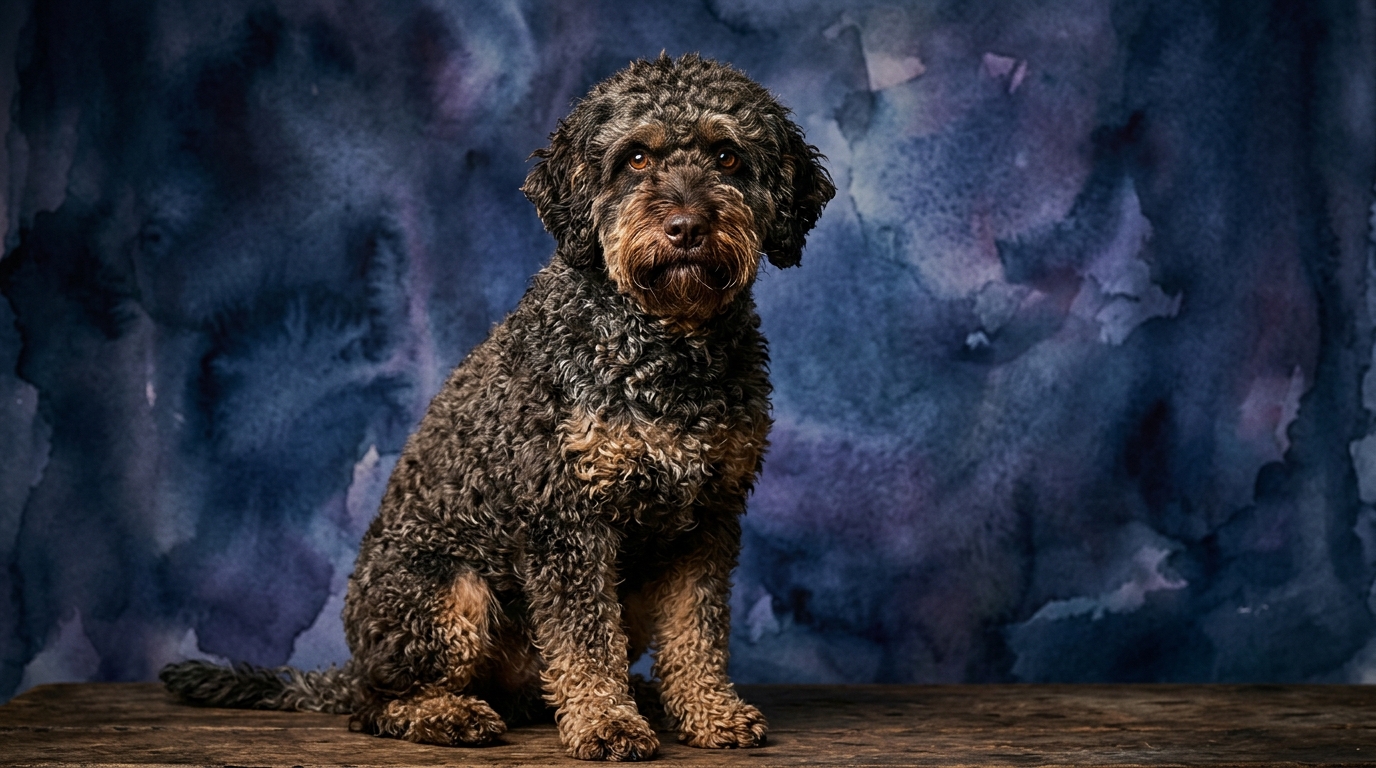
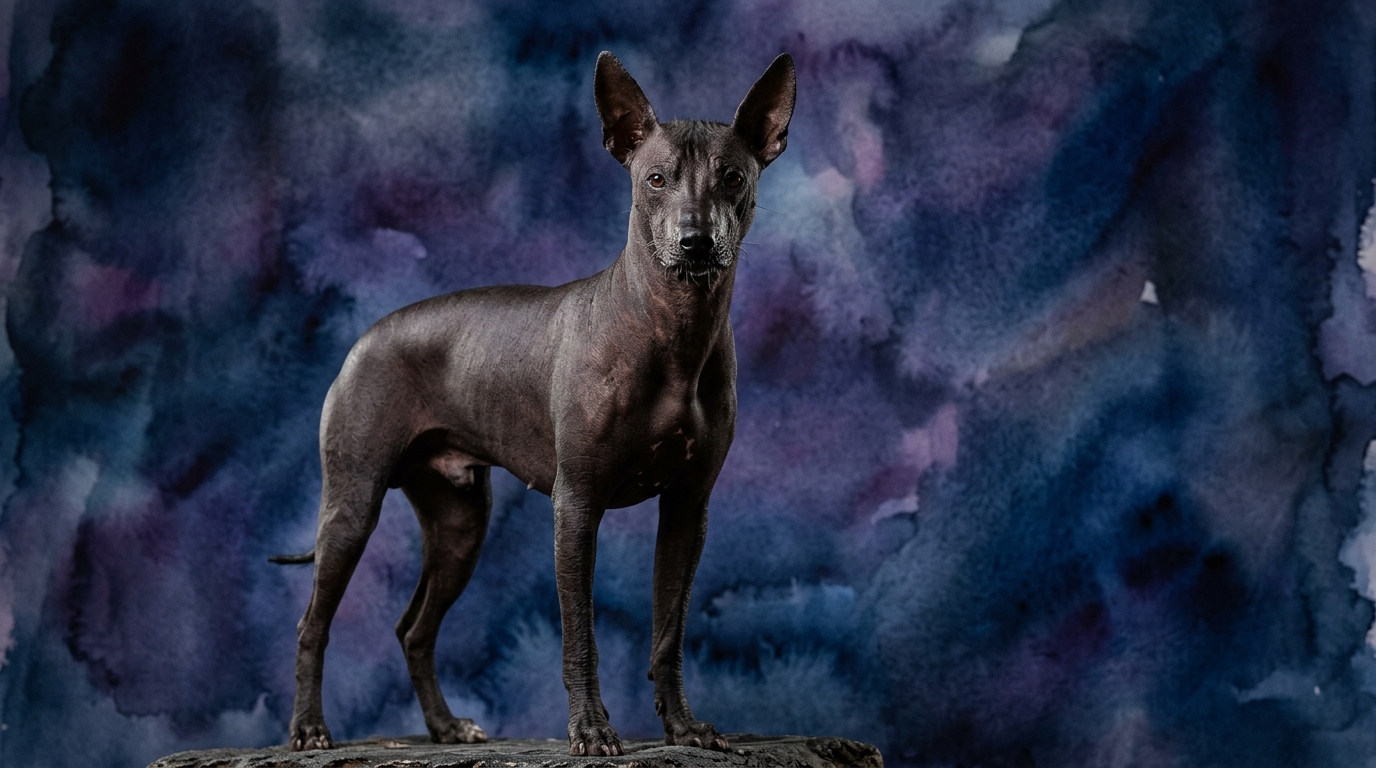
A Side-by-Side Look at Their Cognitive Profiles
The Cosmic Pet Pet IQ Lab assesses five key dimensions of canine intelligence: Problem Solving, Training Speed, Social Intelligence, Instinctive Drive, and Memory. Both the Spanish Water Dog and the Xoloitzcuintli register a consistent 3 out of 5 across all these categories, indicating a solid foundation of cognitive capability. However, the context of these scores within each breed's heritage paints a more detailed picture, showing how a '3' for a herding dog differs from a '3' for an ancient companion breed.
For Problem Solving, both breeds display a competent ability to navigate their environments and overcome obstacles (3/5). The Spanish Water Dog, rooted in herding and water work, often applies this skill to practical tasks like figuring out how to move livestock, retrieving items from complex watery terrains, or manipulating latches. Their problem-solving tends to be task-oriented, driven by an inherent desire to work and achieve a goal. The Xoloitzcuintli, on the other hand, might apply their 3/5 problem-solving to more domestic or social challenges, such as finding the warmest spot in the house, subtly communicating their desires to their family, or devising ways to gain attention or comfort. Their ingenuity often leans towards optimizing their personal well-being and social interactions within their inner circle.
In terms of Training Speed, both breeds are rated at 3/5, meaning they grasp new commands and routines at a moderate pace. The Spanish Water Dog's inherent eagerness to engage in activities and their strong working drive often translate into a willingness to learn, especially when training is framed as a task or a game. They can pick up complex sequences of commands, particularly those related to agility or obedience, with consistent and clear instruction. The Xoloitzcuintli, while equally capable of learning new commands at a 3/5 pace, might exhibit a more independent streak. Their learning is often most effective when rooted in positive reinforcement and when they perceive a clear benefit or connection to their human companion. They may not respond to rote repetition if they don't see the 'point,' requiring a trainer to be engaging and understanding of their unique sensitivity.
Social Intelligence, also at 3/5 for both, highlights their capacity to understand and respond to human cues and social dynamics. The Spanish Water Dog, accustomed to working closely with handlers, often demonstrates a keen awareness of their owner's mood and intentions, crucial for effective teamwork in herding or sport. They are generally responsive to direction and can adapt to different social situations, though they can be reserved with strangers. The Xoloitzcuintli's social intelligence, while equally strong, is typically focused intensely on their primary family unit. They are exceptionally attuned to their owner's emotional state, often acting as sensitive barometers of household moods. This sensitivity, combined with their aloofness towards outsiders, means their social intelligence is deeply intertwined with their strong bonds and protective instincts towards their chosen few.
Instinctive Drive, scoring 3/5 for both, reveals the natural predispositions that shape their behavior. The Spanish Water Dog possesses robust herding, retrieving, and guarding instincts, a legacy of their roles as versatile farm dogs. This drive manifests as a need for purpose and activity, often expressing itself in chasing movements, keen observation, and a desire to patrol their territory. For the Xoloitzcuintli, their 3/5 instinctive drive is less about physical labor and more about intense companionship and subtle protection. They have an innate desire for close physical contact, seeking warmth and proximity. Their guarding instincts are often expressed through vigilance and a reserved demeanor towards strangers, rather than overt herding or retrieving actions. This drive is deeply rooted in their ancient role as companion and guardian.
Finally, Memory, at 3/5, means both breeds possess a good ability to recall past experiences, commands, and routines. The Spanish Water Dog's memory serves them well in remembering training sequences, the layout of familiar environments, and the specific tasks they've learned. They can retain a vast repertoire of commands and will recall them reliably when prompted. The Xoloitzcuintli's memory is similarly effective, particularly for remembering routines, the identities of family members, and the nuances of past social interactions, both positive and negative. Their memory might be particularly strong for places of comfort and people who have shown them kindness or, conversely, those who have made them feel uncomfortable, underscoring their sensitive nature.
Where the Spanish Water Dog Shines Cognitively
Despite identical scores, the Spanish Water Dog's cognitive strengths distinctly align with their working heritage. Their 3/5 Problem Solving manifests powerfully in practical, task-oriented scenarios. They excel at deciphering how to achieve a physical objective, such as navigating an agility course, locating hidden objects, or performing complex retrieval tasks in varied environments. This breed's 3/5 Instinctive Drive for herding and water work fuels a cognitive ability to anticipate movements, manage space, and react quickly to environmental changes, making them particularly adept at dynamic problem-solving that requires sustained focus and physical exertion. Their memory (3/5) for learned behaviors is robust, allowing them to execute intricate command sequences with impressive consistency, a testament to their capacity for retaining detailed procedural knowledge.
Where the Xoloitzcuintli Excels Cognitively
The Xoloitzcuintli's cognitive triumphs, while also rated 3/5, are nuanced and deeply rooted in their ancient role as discerning companions. Their 3/5 Social Intelligence is where they truly stand out, demonstrating an exceptional capacity for reading subtle human emotional cues and responding with profound empathy. This sensitivity enables them to anticipate their owner's needs or moods with remarkable accuracy, often offering comfort or space precisely when required. Their Problem Solving (3/5) often manifests in a resourceful, rather than overtly physical, manner; they might subtly manipulate situations to secure comfort or attention, or ingeniously find ways to communicate their desires without direct commands. Their memory (3/5) is particularly acute for social nuances and routines that impact their comfort and security, remembering who is a trusted friend and who is an unfamiliar presence with striking clarity.
Trainability: Nuances Beyond the Score
Both breeds share a 3/5 Training Speed, suggesting they are moderately quick learners. However, their underlying behavioral differences significantly impact the training experience. The Spanish Water Dog, with its strong 3/5 Instinctive Drive for work and a desire for purpose, often approaches training with an eager 'what's next?' attitude. They thrive on consistency, clear expectations, and a job to do. While they can be independent thinkers, their drive to engage and please a trusted handler makes them generally responsive to positive reinforcement and structured training. Their cognitive focus is often on the task itself, making them receptive to learning new skills that challenge their intellect and physical capabilities.
The Xoloitzcuintli, despite the same 3/5 Training Speed, requires a more nuanced approach. Their 3/5 Social Intelligence makes them highly sensitive to their owner's tone and body language, meaning harsh corrections can be counterproductive, leading to withdrawal or stubbornness. While they are capable learners, their learning is often most effective when it strengthens their bond with their human and aligns with their innate desire for comfort and security. They may question the utility of a command if it doesn't seem relevant to them, requiring trainers to be patient, creative, and to foster a strong, trust-based relationship. Training a Xolo often feels more like a collaborative dance, where understanding their subtle cues is as important as delivering clear instructions.
Lifestyle Suitability: Active Companions vs. Reserved Guardians
Considering their cognitive profiles and inherent drives, these two breeds cater to different lifestyles. The Spanish Water Dog, with its strong 3/5 Instinctive Drive for work, its Problem Solving geared towards physical tasks, and its eager Training Speed, is an ideal fit for active owners. They require substantial mental and physical stimulation, thriving in environments where they can engage in dog sports like agility, dock diving, or herding. Owners who enjoy outdoor adventures, consistent training, and providing a 'job' for their dog will find the Spanish Water Dog a fulfilling and responsive companion. Their cognitive energy needs an outlet, and without it, they can become restless or develop unwanted behaviors.
The Xoloitzcuintli, while capable of activity, generally suits owners seeking a more reserved, deeply bonded companion. Their 3/5 Social Intelligence and Instinctive Drive for companionship mean they thrive on close family interaction and a predictable, comfortable home environment. They are not typically demanding in terms of strenuous physical exercise, though regular walks and play are appreciated. Owners who value quiet companionship, a dog deeply attuned to their emotions, and are comfortable with a breed that can be discerning with strangers will find the Xoloitzcuintli a profoundly rewarding presence. Their cognitive engagement often revolves around their human relationships and the subtle dynamics within the home, rather than external tasks.
The Verdict
Choose the Spanish Water Dog if you seek an active, engaged partner eager for structured tasks and outdoor adventures, thriving on consistent mental and physical challenges.
Opt for the Xoloitzcuintli if you desire a deeply bonded, sensitive companion who thrives on close family connection and a quieter, more predictable home environment.
🧠 Find Your Pet's IQ Score
Our Pet IQ Lab assessment covers 25+ tests across 5 cognitive dimensions — personalized to your breed.
Take the Full IQ Test →Frequently Asked Questions
Do identical IQ scores mean Spanish Water Dogs and Xoloitzcuintli are exactly alike in intelligence?
No, identical IQ scores (3/5 across all categories for both) indicate a similar baseline of cognitive potential, but their expression differs significantly. Their breed histories and inherent drives shape how these capabilities manifest in real-world behavior and problem-solving approaches.
Which breed is better for a first-time dog owner?
Neither breed is typically recommended for novice owners without prior research and commitment. The Spanish Water Dog's high energy and working drive require experienced handling, while the Xoloitzcuintli's sensitivity and independence benefit from an owner who understands subtle dog communication and patient, positive reinforcement.
How does 'Instinctive Drive' at 3/5 differ between these two breeds?
For the Spanish Water Dog, a 3/5 Instinctive Drive means strong herding, retrieving, and guarding tendencies, requiring outlets for these natural behaviors. For the Xoloitzcuintli, it signifies a deep drive for companionship, warmth, and a more subtle protective instinct towards their family, manifesting as intense loyalty and vigilance.