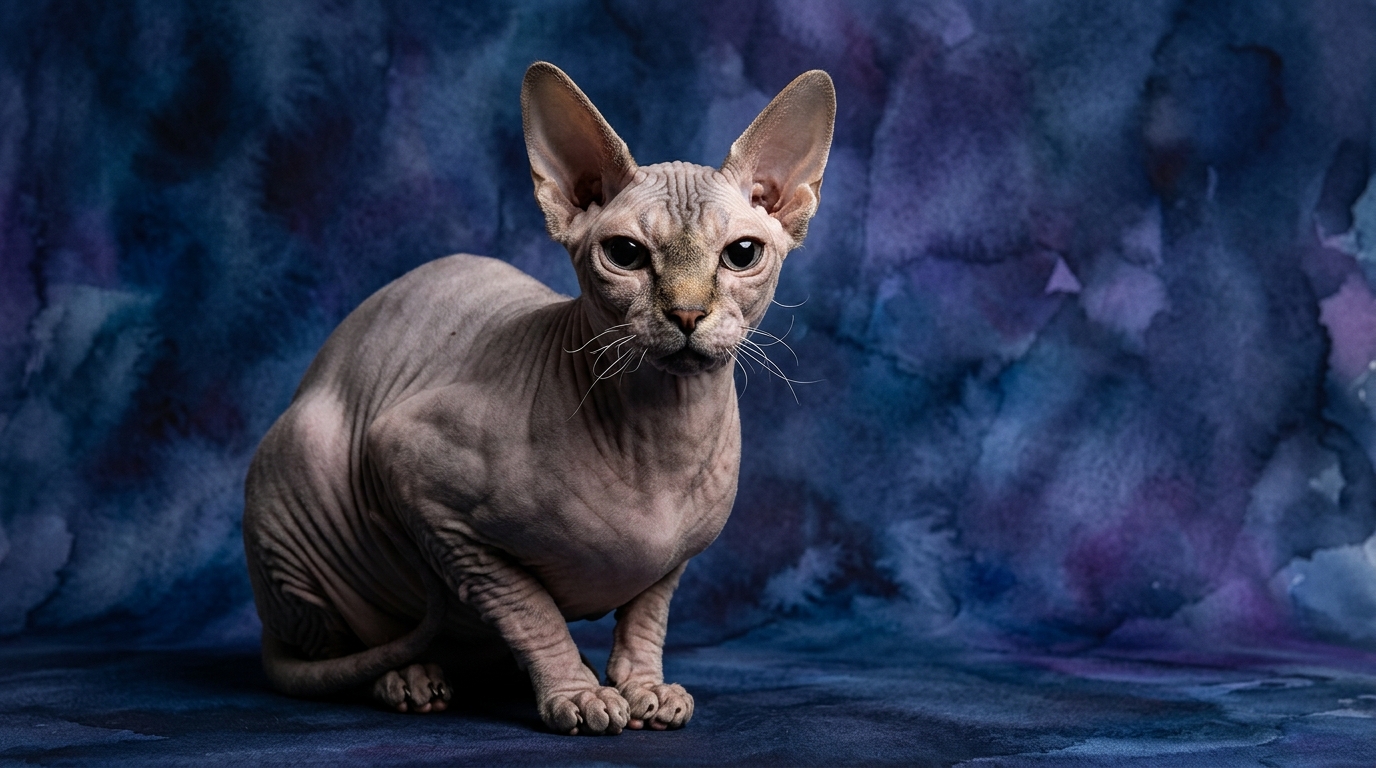
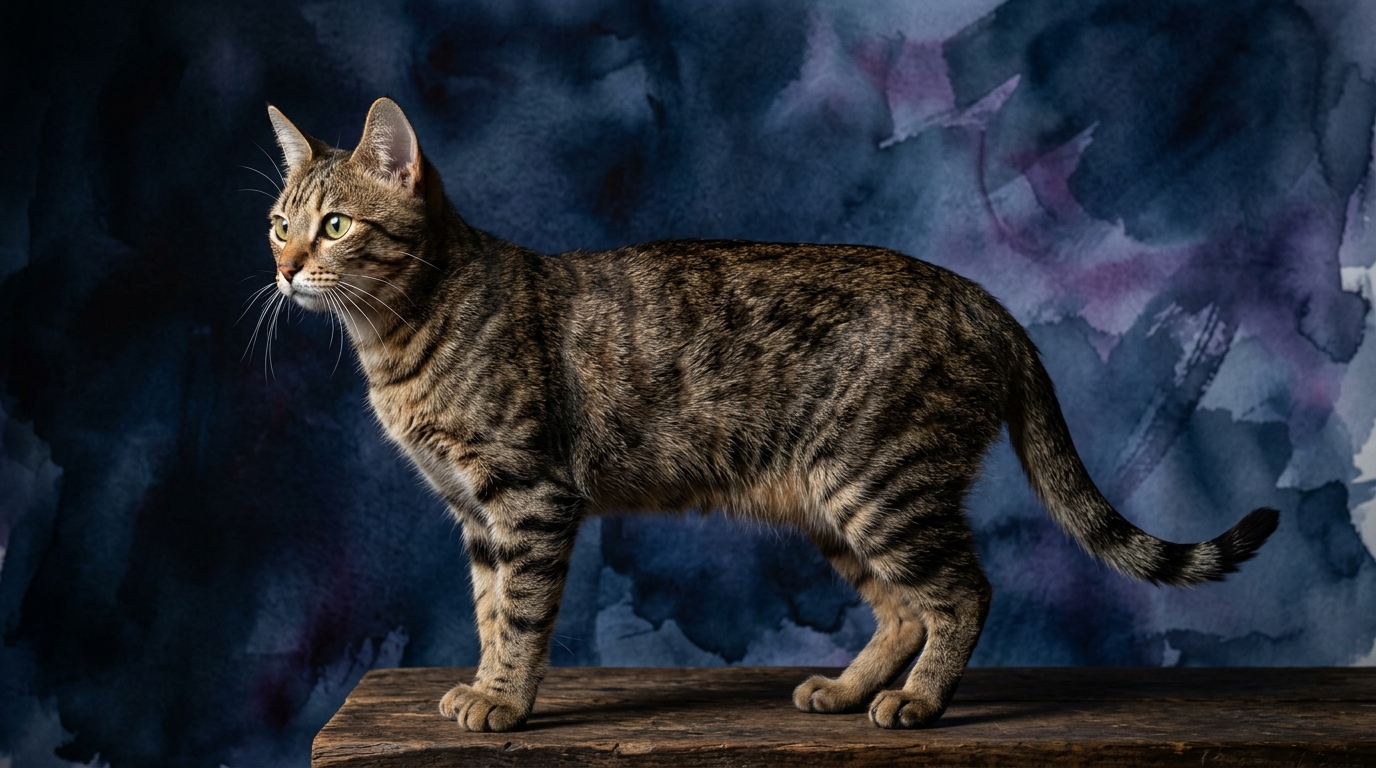
Side-by-Side Cognitive Profiles
The Cosmic Pet Pet IQ Lab provides a detailed breakdown of each breed's cognitive strengths across five key dimensions. For the Sphynx, we observe a Problem Solving score of 4/5, indicating a strong aptitude for figuring out puzzles, manipulating objects to achieve goals, and often observing human actions to learn new tricks. Their Training Speed is also 4/5, meaning they grasp new commands and routines with impressive quickness, often motivated by interactive play and rewards. Social Intelligence shines at 5/5, reflecting an exceptional capacity to interpret human emotions and social cues, forming deep, almost conversational bonds. Their Instinctive Drive sits at 3/5, suggesting a playful hunting instinct that is balanced, not overwhelming, and their Memory is a robust 4/5, allowing them to retain learned behaviors, routines, and specific experiences for extended periods.
In contrast, the Sokoke presents a more uniformly balanced cognitive profile. Their Problem Solving is rated 3/5, meaning they are capable of solving straightforward challenges but might require more repetition or simpler puzzles compared to a Sphynx. Training Speed is also 3/5; they learn at a steady pace, responding well to consistent, positive reinforcement, though they may not absorb concepts as rapidly. Social Intelligence is 3/5, indicating they are sociable and enjoy company, but perhaps less intensely focused on human social cues than a Sphynx, forming bonds that are affectionate yet allow for more independence. Their Instinctive Drive is 3/5, similar to the Sphynx, enjoying play that mimics hunting without it dominating their behavior. Finally, their Memory is 3/5, allowing them to adequately retain information, remembering familiar faces and routines, but perhaps with less intricate detail or duration than a Sphynx.
Where the Sphynx Excels Cognitively
The Sphynx demonstrates clear cognitive advantages, particularly in areas demanding intricate thought and social understanding. Their Problem Solving score of 4/5 means they are not just curious, but genuinely adept at understanding how things work. Owners frequently report Sphynx cats learning to open cabinet doors, manipulate latches, or figure out multi-stage puzzle toys, showcasing a capacity for sequential reasoning and experimentation. This isn't just playful batting; it's often a deliberate attempt to achieve a specific outcome, like accessing a favorite treat or exploring a forbidden space.
Furthermore, the Sphynx's paramount Social Intelligence, scoring a perfect 5/5, sets them apart. They are remarkably attuned to human emotions, often responding to subtle changes in an owner's voice or body language. This allows for an almost empathetic connection, where the Sphynx seems to anticipate needs or offer comfort. Their strong memory (4/5) reinforces this, as they recall past interactions and routines, strengthening their bond and allowing them to predict human behavior, making them extraordinarily responsive and interactive companions who thrive on deep, shared experiences.
Where the Sokoke Finds Its Cognitive Niche
While the Sphynx might outscore the Sokoke in several cognitive dimensions, the Sokoke's unique profile presents a distinct advantage for certain owners. Their balanced 3/5 scores across problem-solving, training speed, social intelligence, and memory indicate a reliably competent and adaptable feline companion, without the potential for the demanding intellectual needs or complex mischief sometimes seen in cats with higher scores. The Sokoke demonstrates a practical, grounded intelligence; they learn what they need to navigate their environment effectively and interact pleasantly, but they aren't constantly seeking to unravel the mysteries of sealed cupboards or complex puzzle feeders, leading to a less 'high-maintenance' cognitive presence.
This means less potential for over-thinking or 'getting into trouble' through intricate schemes. Their independence, reflected in a moderate social intelligence, can be a 'win' for owners who appreciate a cat that enjoys company but is also content with self-amusement and doesn't require constant, intense social engagement. The Sokoke offers a more laid-back yet still engaging companionship, proving that a consistent, practical intelligence can be just as rewarding as a more complex one, especially for those seeking a cat that integrates smoothly into a variety of household dynamics without demanding constant mental stimulation.
Training Aptitude: Sphynx vs. Sokoke
When it comes to training, the Sphynx typically proves to be the more facile student, primarily due to their superior Training Speed (4/5) and Social Intelligence (5/5). Their innate desire for interaction and their ability to quickly grasp cause-and-effect relationships make them highly receptive to training. Sphynx cats often view training sessions as engaging play, eager to perform for attention and treats. They excel at learning tricks, responding to clicker training, and even adapting to leash walks, driven by their deep connection with their human companions and their quick processing of new information.
The Sokoke, with a Training Speed of 3/5, is certainly trainable but requires more patience and consistency. They respond well to positive reinforcement and clear cues but might take longer to internalize commands or complex sequences. Their moderate social intelligence means they are motivated by rewards and affection, but perhaps less by the sheer collaborative aspect of training that so enthralls a Sphynx. Owners should expect a steady learning curve with a Sokoke, focusing on short, consistent sessions and celebrating small victories, rather than anticipating rapid mastery of intricate behaviors.
Matching Personalities: Active vs. Relaxed Owners
The distinct cognitive profiles of the Sphynx and Sokoke naturally align with different owner lifestyles. An active owner, one who enjoys consistent interaction and mental exercises, will find the Sphynx an ideal companion. Their high social intelligence and problem-solving prowess mean they thrive on engagement, interactive toys, and learning new things. A Sphynx craves consistent interaction and mental exercises; an owner who enjoys teaching tricks, engaging in extended play sessions, or even having a cat 'participate' in daily activities will find their Sphynx a willing and enthusiastic participant, demanding a significant investment of time and intellectual engagement.
Conversely, the Sokoke's balanced cognitive profile makes them an excellent fit for more relaxed owners. While they enjoy play and affection, their cognitive needs are less intense. A Sokoke is content with regular play and affection but doesn't demand constant intellectual challenges or intense social engagement. They are adaptable and can amuse themselves, making them suitable for owners who appreciate a capable, affectionate cat that integrates smoothly into the household rhythm without requiring constant stimulation. Their independence, while still sociable, allows for a comfortable balance of interaction and self-sufficiency.
The Verdict
Choose the Sphynx if you seek a highly interactive, socially astute, and intellectually engaging companion who thrives on shared activities and deep, communicative connection.
Opt for the Sokoke if you appreciate a capable, adaptable cat that enjoys companionship but is comfortable with more independent play and a less demanding social dynamic.
🧠 Find Your Pet's IQ Score
Our Pet IQ Lab assessment covers 25+ tests across 5 cognitive dimensions — personalized to your breed.
Take the Full IQ Test →Frequently Asked Questions
Are Sphynx cats prone to mischief due to their problem-solving abilities?
Yes, their 4/5 problem-solving score means Sphynx cats are quite capable of figuring out how to open cabinets, doors, or manipulate objects. This can lead to playful mischief if their environment isn't cat-proofed or if they lack sufficient mental stimulation.
How does the Sokoke's moderate social intelligence manifest in daily life?
A Sokoke's 3/5 social intelligence means they are affectionate and enjoy company, but they might not be as constantly 'in your face' as a Sphynx. They appreciate attention but are also content to observe or amuse themselves, offering a balanced level of interaction that is less demanding.
Can a Sphynx be left alone for long periods given their high social intelligence?
Due to their 5/5 social intelligence, Sphynx cats thrive on interaction and can become lonely or anxious if left alone for extended periods regularly. They generally do best in households where they receive consistent human companionship or have another compatible pet.