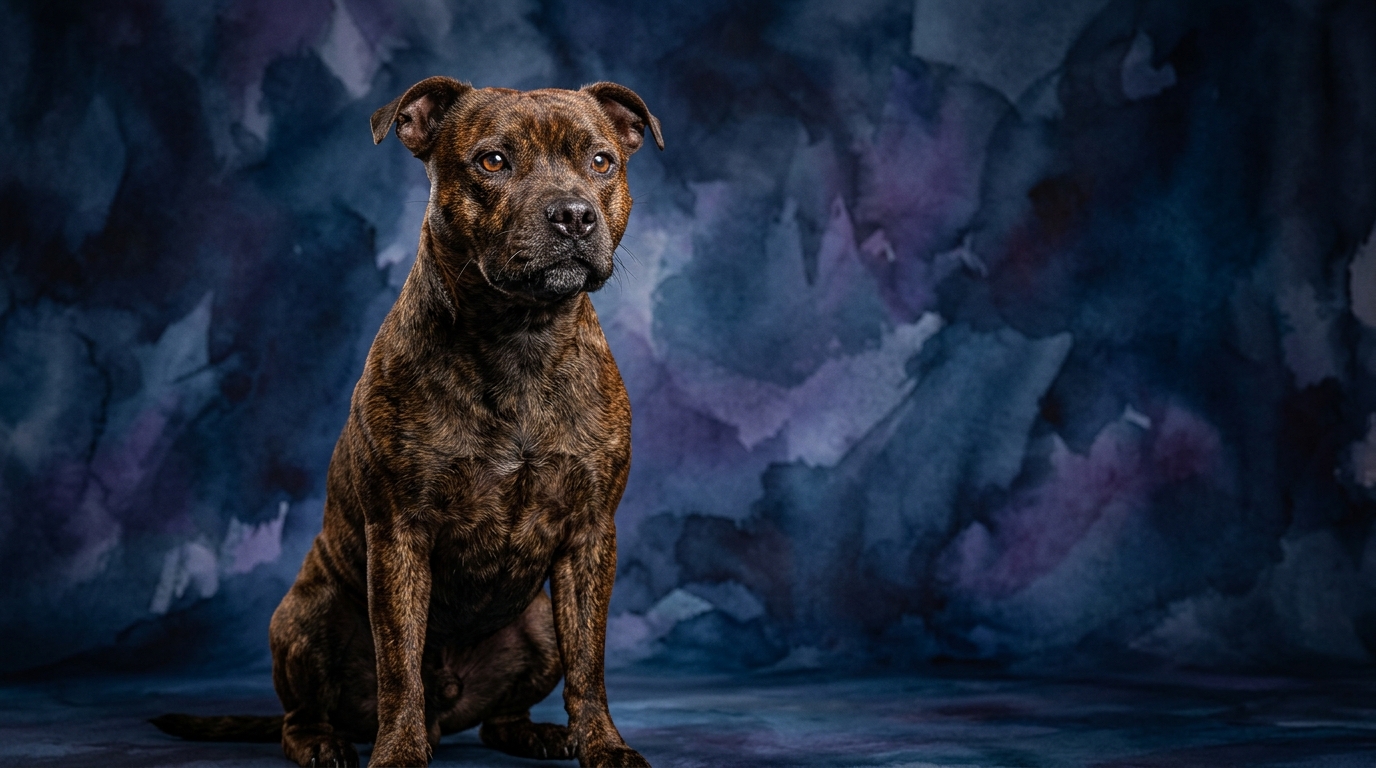
Side-by-Side IQ Profile: Staffordshire Bull Terrier
The Staffordshire Bull Terrier approaches challenges with a determined, often direct mindset. Their problem-solving (3/5) typically involves persistence and a robust physical approach, stemming from a history where resilience and straightforward action were paramount. They excel at figuring out how to overcome physical barriers or persist until a desired outcome is achieved, rather than intricate, multi-step mental puzzles.
With a 3/5 in training speed, Staffies are generally receptive to learning, especially when training is consistent, positive, and engaging. Their eagerness to please their beloved humans makes them keen participants, though their strong will and occasional stubbornness mean that motivation must be maintained through praise and rewards. They learn commands at a moderate pace, but truly internalize them with patient repetition.
Staffies exhibit a strong social intelligence (3/5) within their established family unit, often displaying a remarkable ability to read human emotions and respond with empathy. They are incredibly attuned to their human companions' moods and needs, forming deep, affectionate bonds. Outside their immediate “pack,” their social interactions can be more reserved or assertive, requiring careful socialization to ensure graceful encounters with unfamiliar dogs and people.
Their instinctive drive (3/5) is a blend of their terrier heritage and their development as companion dogs. This includes a moderate prey drive, particularly towards small, fast-moving objects, and a strong desire for physical engagement and play. Their protective instincts towards their family are also a significant component, driving them to be vigilant and occasionally territorial.
Staffordshire Bull Terriers possess a good memory (3/5) for routines, learned commands, and the people and places associated with positive experiences. They can recall training cues effectively over time, especially those reinforced with consistency. Their memory also extends to social interactions, remembering individuals they have met and the nature of those encounters, both good and bad.
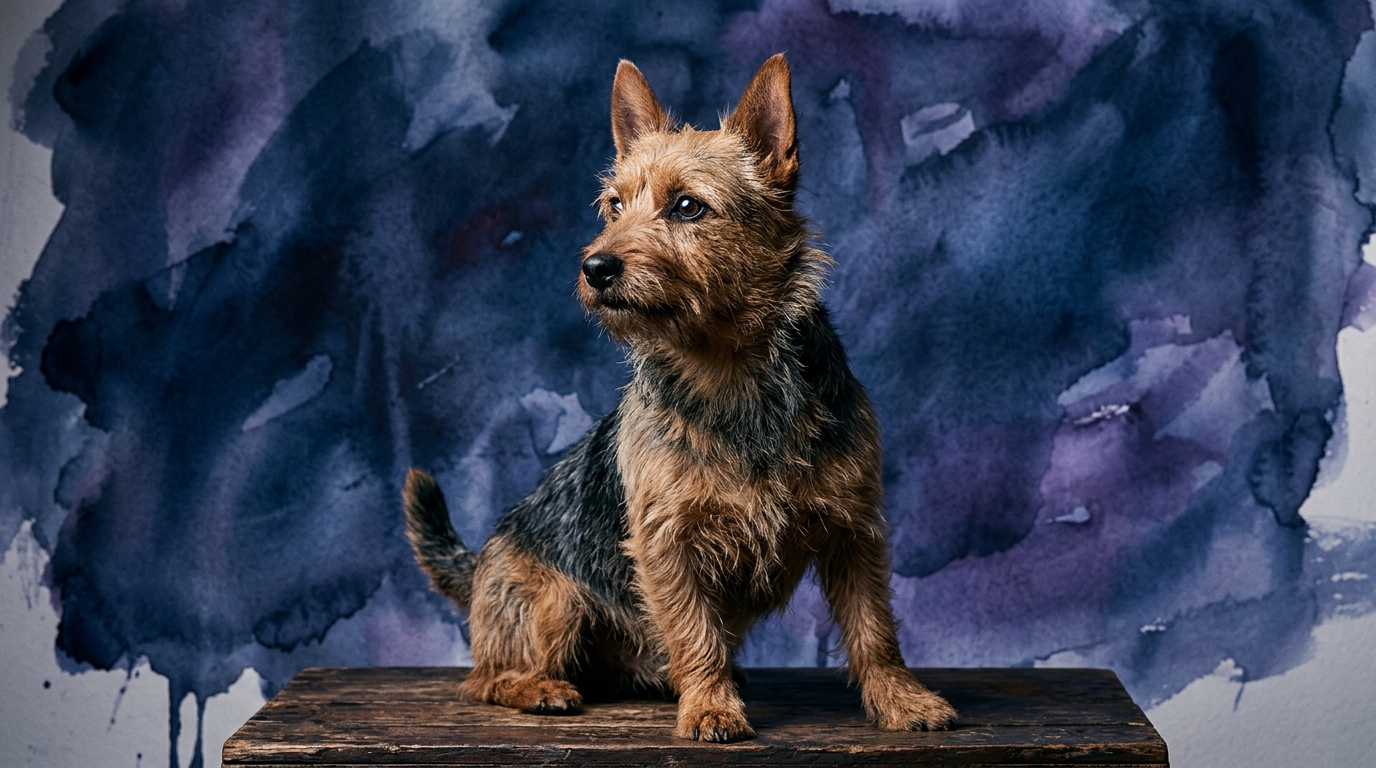
Side-by-Side IQ Profile: Australian Terrier
The Australian Terrier's problem-solving ability (3/5) leans towards independent thought and strategic action, honed by their vermin-hunting background. They are adept at figuring out how to access tight spaces, track scents, or outmaneuver small prey. This manifests as a clever, often self-reliant approach to challenges, where they might devise their own solutions rather than waiting for human direction, showcasing a resourceful intelligence.
Australian Terriers share a 3/5 training speed, meaning they are capable learners, but their independent terrier spirit can sometimes make them appear less compliant. They pick up new commands and tricks at a moderate pace, particularly when training is made fun and stimulating, tapping into their natural curiosity. Consistency and positive reinforcement are key to overcoming their occasional stubborn streak and reinforcing desired behaviors.
With a 3/5 in social intelligence, Australian Terriers are generally affable and enjoy interacting with their human family, often displaying a keen awareness of household dynamics. They can be discerning about strangers, using their intelligence to assess new individuals and situations before fully engaging. Their social acumen allows them to navigate complex family environments, often acting as alert watchdogs who can differentiate between welcome guests and potential threats.
The Australian Terrier's 3/5 instinctive drive is heavily influenced by their heritage as working terriers. This translates into a pronounced prey drive, an urge to dig, and a natural alertness that makes them excellent watchdogs. They have a strong desire to explore, investigate, and engage with their environment, often driven by scent or movement, showcasing their innate predatory and territorial instincts.
Australian Terriers exhibit a solid 3/5 memory, allowing them to retain training, remember specific locations where they've found interesting scents or activities, and recall social interactions with other animals or people. They can learn and execute complex sequences of commands over time, and their memory contributes to their ability to navigate familiar territories and remember routines, making them predictable companions once established.
Where Staffordshire Bull Terrier Wins Cognitively
While both breeds share identical numerical scores across the cognitive dimensions, the Staffordshire Bull Terrier's unique expression of these abilities offers distinct advantages, particularly in areas demanding focused loyalty and emotional attunement. Their 3/5 social intelligence, for instance, often manifests as an exceptional capacity for emotional resonance within their human family. Staffies frequently demonstrate an uncanny ability to perceive and respond to their owners' moods, offering comfort or initiating play with remarkable sensitivity, making them highly intuitive emotional companions. This isn't about superior raw processing power, but a unique application of their social acumen.
Furthermore, their 3/5 problem-solving, while not necessarily about complex strategy, shines in scenarios requiring unwavering determination and physical tenacity. A Staffordshire Bull Terrier will often tackle an obstacle with sheer will and persistence, whether it's navigating a tricky agility course or patiently retrieving a favorite toy from an awkward spot. This direct, robust approach to challenges means they are less likely to overthink and more likely to push through, making them formidable partners in activities that reward grit and steadfastness. Their memory (3/5) also contributes to this, as they reliably recall the routines and cues that lead to positive outcomes, reinforcing their persistent efforts.
Where Australian Terrier Wins Cognitively
The Australian Terrier, despite matching scores, showcases its cognitive strengths through a distinct lens of independent resourcefulness and environmental awareness, deeply rooted in its vermin-hunting past. Their 3/5 problem-solving ability often translates into a keen ingenuity when navigating their surroundings or pursuing a goal. An Australian Terrier might not just push through an obstacle; they might find an unexpected route around it, or cleverly manipulate objects to achieve their aim, demonstrating a more nuanced, exploratory form of intelligence. This often presents as a cleverness in finding novel solutions to everyday 'problems,' like escaping a pen or finding a hidden treat.
Their 3/5 instinctive drive is another area where their cognitive application stands out. While both breeds have drive, the Australian Terrier's is often channeled into a highly focused, almost strategic pursuit of scents and movements. This sharp environmental awareness and sustained focus make them exceptionally good at tasks requiring detailed investigation and persistent tracking. Their social intelligence (3/5) also plays a role in their alertness, allowing them to quickly assess new situations and individuals, making them discerning watchdogs who combine their keen senses with a quick mental assessment of their environment. This combination of self-reliance and acute perception gives them an edge in situations requiring independent thought and quick environmental adaptation.
Which is Easier to Train and Why
Evaluating which breed is 'easier' to train at a 3/5 training speed rating isn't about raw cognitive capacity but rather about how their inherent temperaments interact with training methodologies. The Staffordshire Bull Terrier, with its deep desire to please its human companions and strong pack mentality, often responds very well to positive reinforcement and consistent, reward-based training. Their strong social intelligence means they are highly motivated by praise and affection from their beloved people. However, their physical tenacity and occasional stubbornness mean that trainers must be patient and firm, ensuring that the Staffy understands the expectation without resorting to harsh methods that could backfire. They learn quickly when they see the value in cooperation and when their strong bond with their owner is leveraged.
Conversely, the Australian Terrier, while equally capable of learning at a 3/5 speed, presents a different training dynamic due to its independent, self-reliant nature. Their terrier spirit means they can sometimes be more inclined to follow their own instincts, especially if a more interesting scent or sound captures their attention. Training an Australian Terrier often requires a more creative approach, making sessions engaging and fun to hold their focus. They respond well to puzzle-solving games and tasks that tap into their natural curiosity and problem-solving skills. While they are quick to pick up commands, consistency is crucial to ensure they don't decide that following a command is optional. Owners who appreciate a dog with a bit of a clever, independent streak might find the Australian Terrier's training journey uniquely rewarding, even if it demands a slightly different approach than the Staffy's more direct eagerness to please.
Which Suits Active Owners vs. Relaxed Owners
When considering an owner's lifestyle, both breeds, despite their identical 3/5 instinctive drive, cater to different types of activity. The Staffordshire Bull Terrier, with its robust build and powerful musculature, thrives with active owners who can provide consistent physical exercise and engaging mental stimulation. They enjoy vigorous play, long walks, and interactive games that allow them to expend their energy and utilize their determination. While they appreciate downtime snuggled with their family, neglecting their need for activity can lead to boredom and potentially destructive behaviors. They are well-suited for owners who enjoy regular, structured activities like hiking, agility, or even just intense fetch sessions, providing an outlet for their physical and mental vigor.
The Australian Terrier, while also possessing a 3/5 instinctive drive, channels its energy differently. Their smaller stature and strong prey drive mean they require regular opportunities for mental engagement and specific types of physical activity. They excel at activities that involve scent work, digging (in designated areas!), and chasing, making them ideal for owners who enjoy interactive games that stimulate their hunting instincts. While they can adapt to apartment living with sufficient exercise, they are not content to be couch potatoes. Relaxed owners might find their persistent curiosity and need for exploration challenging if not adequately met. They suit owners who appreciate a lively, inquisitive companion for adventures, even if those adventures are confined to a backyard with digging pits or engaging puzzle toys, rather than long, strenuous runs.
The Verdict
For those seeking a deeply affectionate, emotionally intuitive companion who thrives on strong human bonds and direct, determined engagement, the Staffordshire Bull Terrier is an excellent choice. They offer unwavering loyalty and a robust presence for active, dedicated owners.
Conversely, if you value an independent, clever companion with a keen sense of curiosity and a knack for resourceful problem-solving, the Australian Terrier will be a perfect match. They require owners who appreciate their spirited nature and can provide ample opportunities for mental stimulation and exploratory play.
🧠 Find Your Pet's IQ Score
Our Pet IQ Lab assessment covers 25+ tests across 5 cognitive dimensions — personalized to your breed.
Take the Full IQ Test →Frequently Asked Questions
Do Staffordshire Bull Terriers and Australian Terriers learn at the same pace?
Based on The Cosmic Pet's IQ Lab, both breeds share a "3/5" training speed. This indicates they are capable learners but require consistent, positive reinforcement. The difference lies in their motivation: Staffies are often driven by a desire to please, while Australian Terriers benefit from engaging, curiosity-driven training.
Which breed is better with children, considering their social intelligence?
Both breeds score "3/5" in social intelligence, but their expression differs. Staffordshire Bull Terriers are often lauded for their deep family loyalty and emotional attunement, earning them the "nanny dog" reputation with proper socialization. Australian Terriers are also good family dogs, but their independent nature means they might be more discerning or reserved with new interactions, requiring careful introductions.
How do their problem-solving skills differ despite identical scores?
While both have a "3/5" in problem-solving, the Staffordshire Bull Terrier typically employs a direct, persistent, and physically robust approach to overcome challenges. The Australian Terrier, drawing from its hunting background, often exhibits a more resourceful, independent, and clever approach, finding unique ways to navigate or manipulate its environment.